
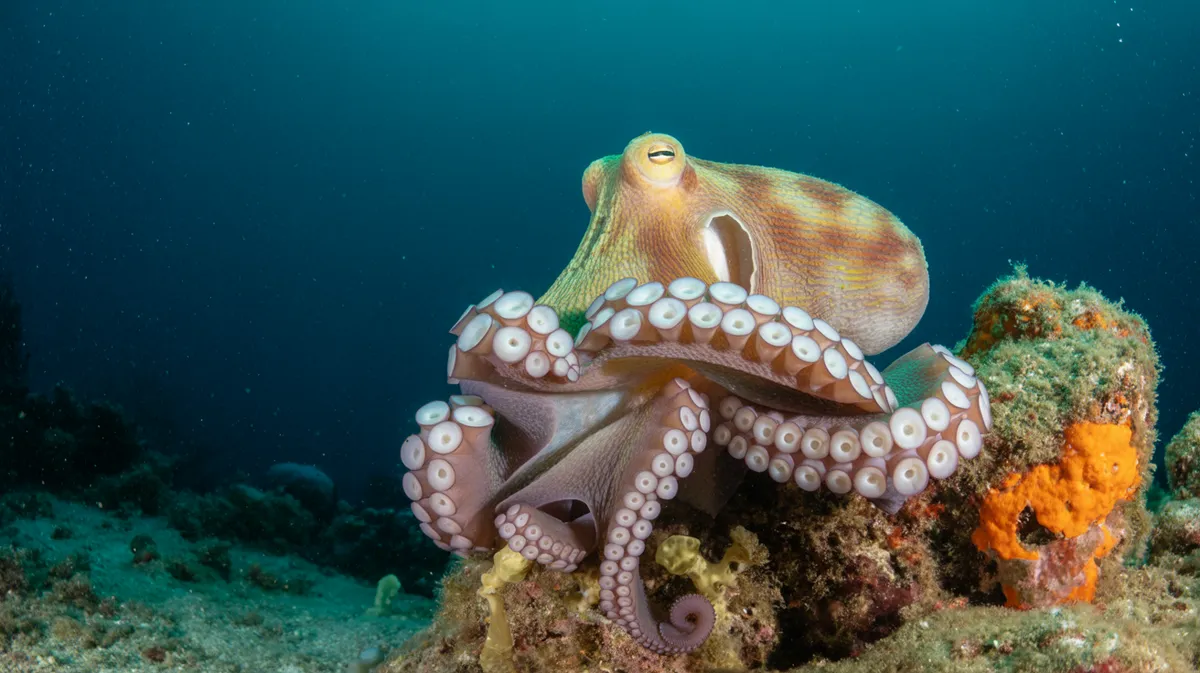
Octopuses are so strange that fact and fiction blur easily — they've been cast as mindless invertebrates and as monstrous krakens, and the truth is stranger and more wonderful than either. This entry in our Animal Myths, Debunked series sets the record straight on the ocean's most alien intelligence.
From blue blood to a brain spread through its arms, the real octopus rewrites what we think a mind can be. Here are seven myths worth dropping. See also snakes and cats in the series.
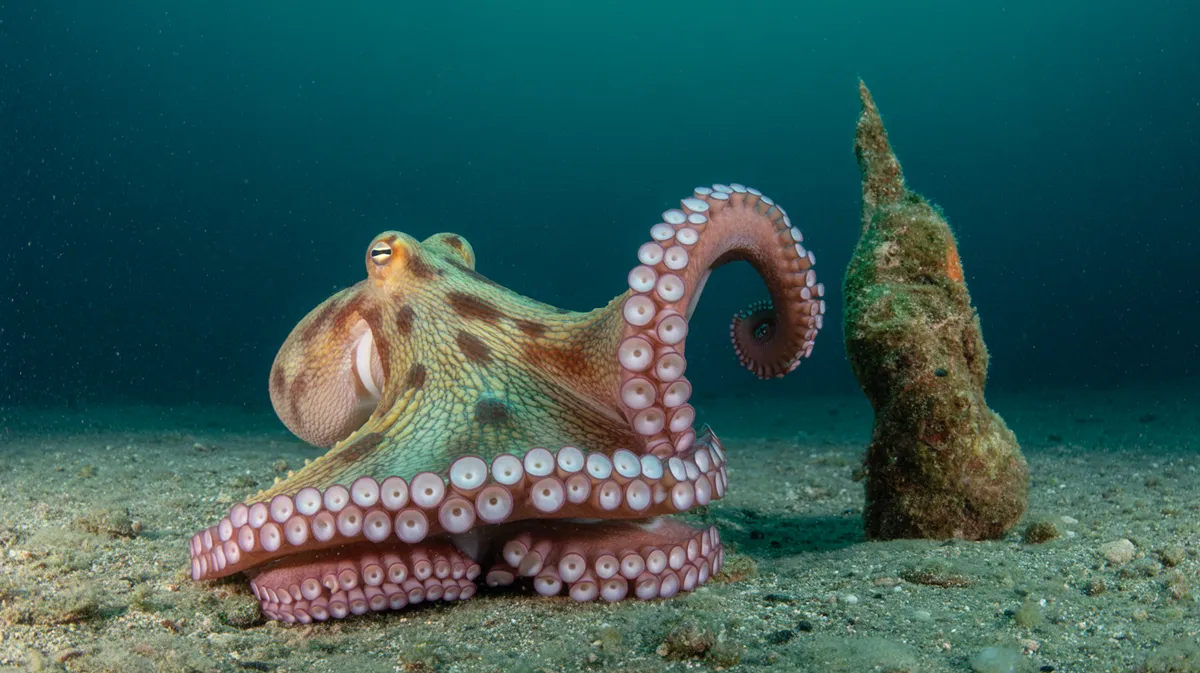
Myth 1: Octopuses are mindless invertebrates
Lacking a backbone, octopuses are often dismissed as simple, instinct-driven creatures.
In fact they're among the most intelligent animals alive — they open jars, solve mazes, use coconut shells as portable shelters, and recognise individual human keepers. Their intelligence evolved completely separately from ours, making it the closest thing to an alien mind on Earth.
Some have been filmed unscrewing jars from the inside, navigating mazes, and squirting jets of water at lights they dislike. In captivity they are notorious escape artists that methodically probe every weakness in a tank.
Myth 2: An octopus has eight tentacles
"Tentacles" is the word everyone reaches for, but it isn't quite right.
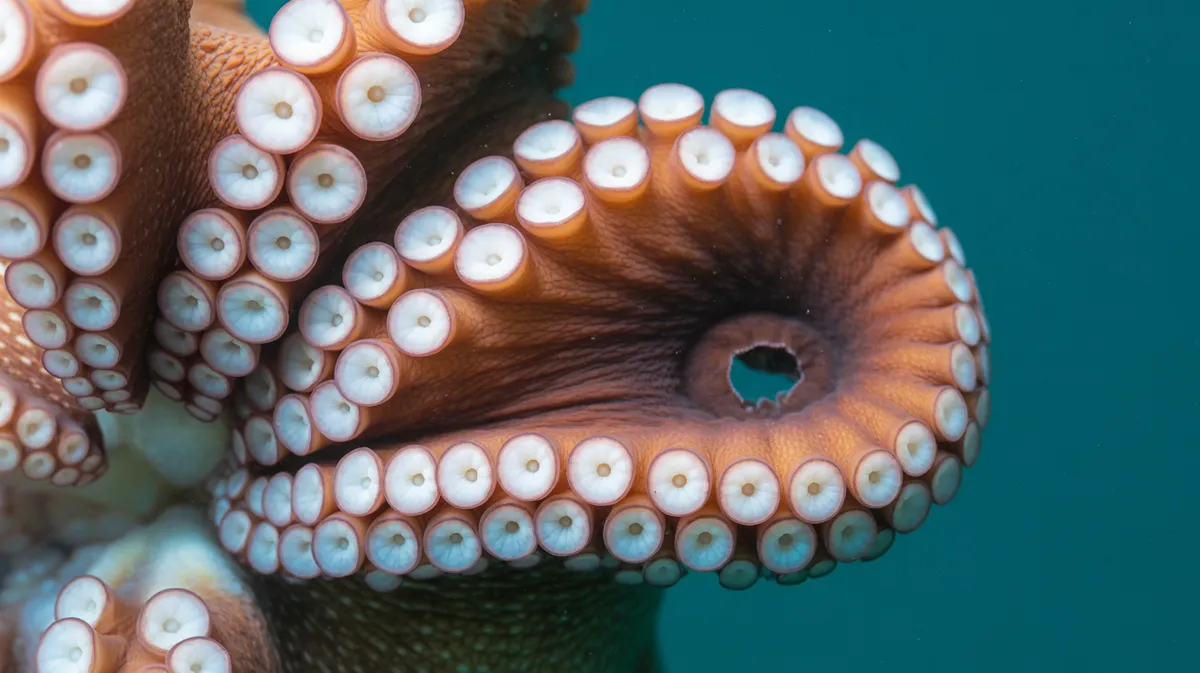
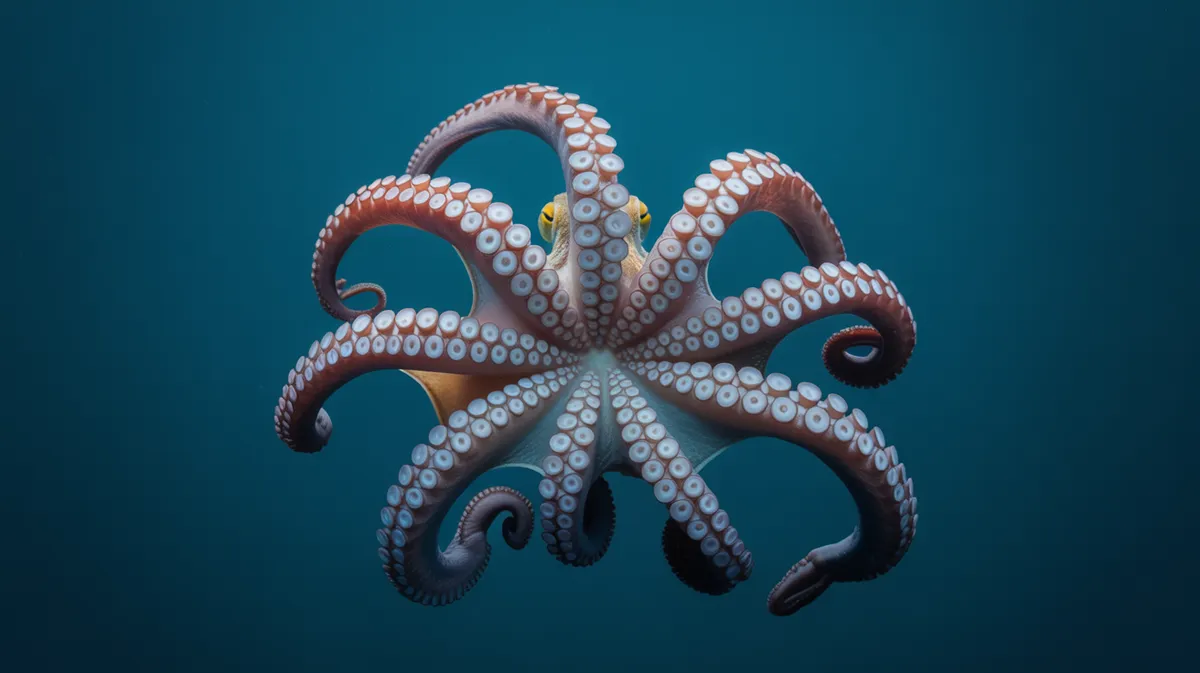
An octopus has eight arms. Biologically, tentacles are a different structure with suckers only at the tip — which is why squid and cuttlefish, with their eight arms plus two long feeding tentacles, are described differently. The octopus is all arms.
Each arm is lined with hundreds of suckers that can taste as well as grip, effectively letting the octopus "taste" everything it touches. Calling them tentacles undersells just how sophisticated those eight arms really are.
Myth 3: Octopus blood is red
We assume all blood is red, like ours.
Octopus blood is blue. Instead of iron-based haemoglobin, it uses copper-based haemocyanin to carry oxygen, which is far more efficient in cold, low-oxygen water — and turns the blood blue.
Haemocyanin is less efficient than our haemoglobin in warm water, which is one reason octopuses struggle in low-oxygen, warming seas. In the cold deep, though, blue blood is a genuine advantage.
Myth 4: Octopuses are aggressive monsters
Centuries of kraken legends paint the octopus as a ship-dragging menace.
Real octopuses are shy and curious, not aggressive. They spend most of their time hiding in dens and will go to great lengths to avoid a confrontation, preferring camouflage or a cloud of ink to a fight.
The kraken legends almost certainly grew from rare sightings of giant squid, not octopuses, then ballooned in the retelling. A real octopus meeting a diver is far likelier to investigate with curiosity — or flee — than to attack.
Myth 5: An octopus thinks with a single brain
Like most animals, an octopus is assumed to do all its thinking in one central brain.
Around two-thirds of its neurons are actually distributed through its arms, each of which can taste, touch, and react with a degree of independence. It's often described as having "nine brains" — one central, and a mini-brain in every arm.
This distributed nervous system lets an octopus set its arms to solve problems semi-independently while the central brain handles the big picture. Even a severed arm will keep reaching for food on its own.
Myth 6: Octopuses live long lives
Given how clever they are, people assume octopuses must be long-lived.
Most live just one to two years. In a poignant twist, they're semelparous — they reproduce only once and then die, the mother starving as she guards her eggs until they hatch. Their brilliance is packed into a very short life.
Scientists found that a single gland controls this self-destruct programme; remove it and the octopus lives longer. It is a stark reminder that brilliance and longevity don't always come together.
Myth 7: All octopuses are harmless (or all are deadly)
People tend to swing to one extreme or the other about octopus danger.
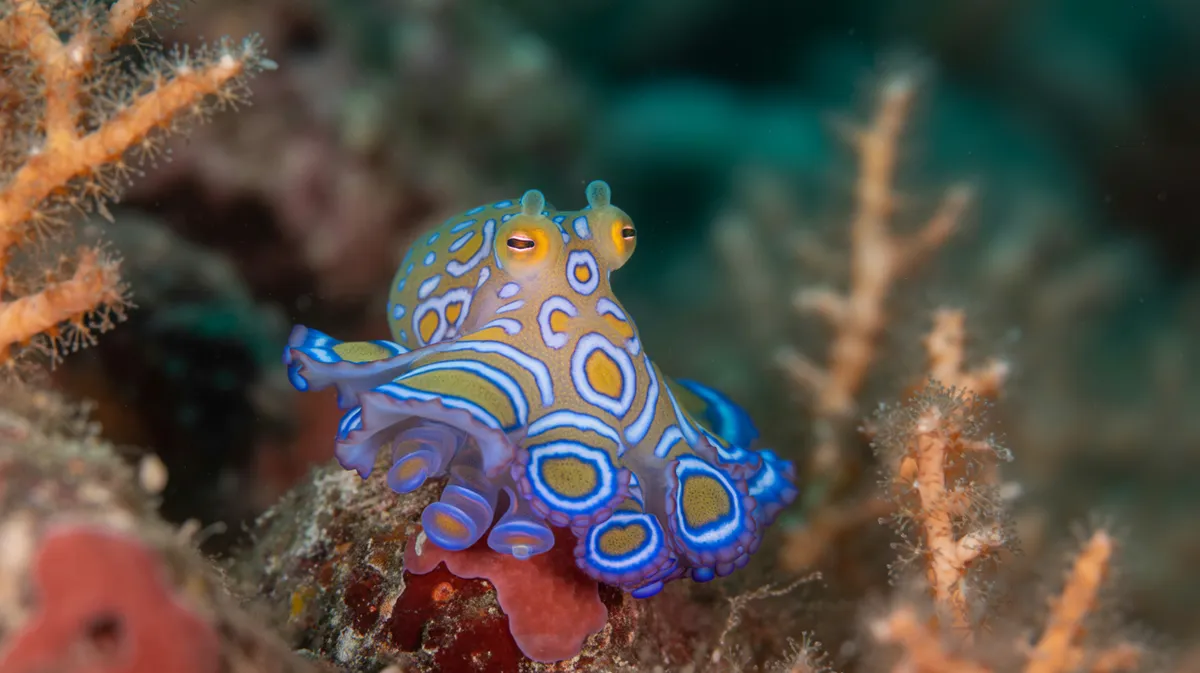
Nearly all octopuses are harmless to humans — with one famous exception. The tiny blue-ringed octopus carries deadly tetrodotoxin and should never be handled. Respect that one; the rest are gentle.
The blue-ringed octopus flashes its vivid rings as a warning, and there is no antivenom — survival depends on someone keeping the victim breathing. For every other species, the right response is admiration, not fear.
Three more myths, quickly
"Octopus ink is poisonous" — It is mostly melanin. The ink screens the octopus's escape and can dull a predator's sense of smell, but it is not venom.
"An octopus can live out of water" — It can haul itself briefly between rock pools, absorbing a little oxygen through its skin — but it dries out and dies quickly on land.
"All octopuses are huge" — Most are small, some barely the size of a coin. The giant Pacific octopus is the striking exception, not the rule.
Why octopuses defy our expectations
Octopuses break almost every rule we have about intelligence, biology, and even what a "brain" is. They're a reminder that nature has invented sophisticated minds more than once — and at least one of them lives in the sea.
Frequently asked questions
Are octopuses intelligent? Extremely — they use tools, solve problems, and recognise individuals, with an intelligence that evolved independently of ours.
What colour is octopus blood? Blue, because it uses copper-based haemocyanin instead of iron-based haemoglobin.
Do octopuses have tentacles or arms? Arms — eight of them. True tentacles have suckers only at the tip, which octopuses lack.
How long do octopuses live? Most live only one to two years, dying shortly after they reproduce.
Do octopuses feel pain? The evidence suggests they do, which is why several countries now include them in animal-welfare legislation.
Can an octopus change texture as well as colour? Yes. It can raise bumps and ridges in its skin to match rock, coral, or seaweed.
How many hearts does an octopus have? Three. Two pump blood through the gills, and a third pumps it around the rest of the body.
Continue with 7 myths about cats, debunked, or revisit 7 myths about snakes.