
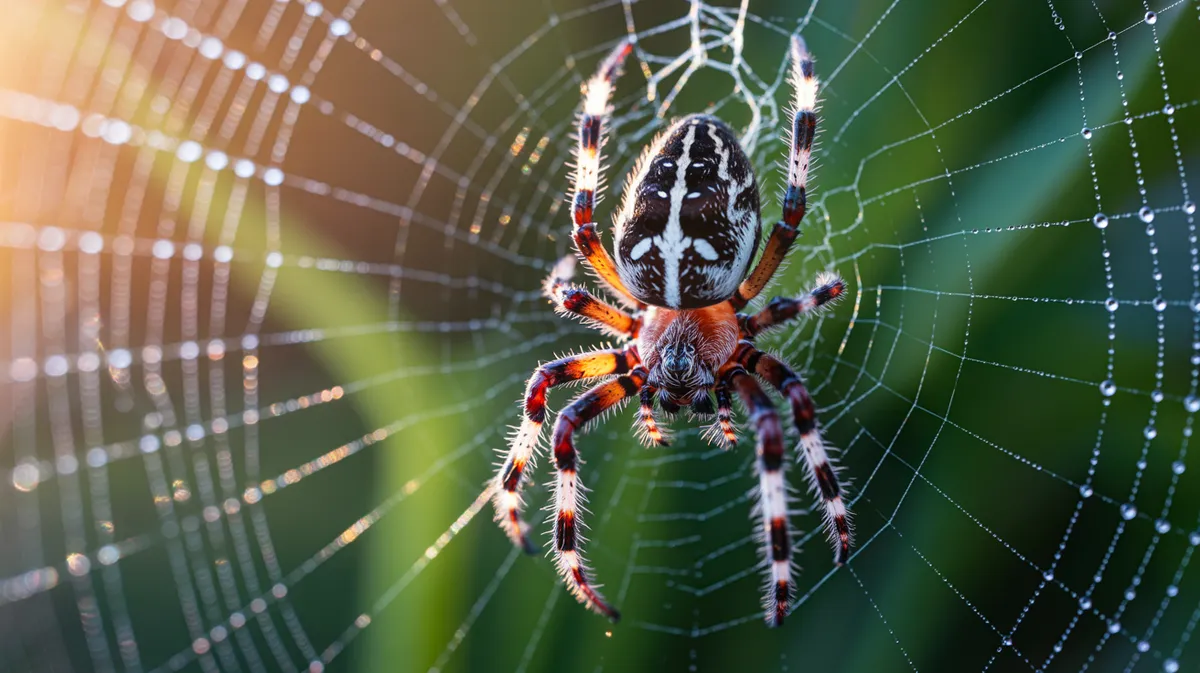
Spiders trigger more myths — and more unnecessary fear — than almost any other creature. We're told we swallow them in our sleep, that the "daddy longlegs" is the deadliest of all, and that any mysterious skin bump must be a spider bite. It's almost all false. This entry in our Animal Myths, Debunked series untangles the truth about our eight-legged housemates.
The reality: spiders are shy, overwhelmingly harmless, and quietly keeping the insect world in check. Here are seven myths worth dropping. See also wolves and bats in the series.
Myth 1: You swallow spiders in your sleep
The "fact" that you eat several spiders a year while sleeping is one of the internet's most viral myths — and it was reportedly invented to show how easily falsehoods spread.
A sleeping human is a giant, breathing, heart-thumping source of vibration — exactly what a spider instinctively avoids. Your mouth is the last place a spider wants to be.
The story is often traced to a 1990s article that reportedly invented the "fact" to show how readily people believe what they read. To a spider, a sleeping person is essentially an erupting volcano of breath, heat, and heartbeat — something to flee, not crawl into.
Myth 2: All spiders are dangerous to humans
People often assume every spider is a venomous threat.
Of the 50,000+ known spider species, only a small handful have venom medically significant to humans, and most spiders' fangs are too small to even pierce our skin. The vast majority are completely harmless.
In most of the world you can live your entire life without meeting a spider capable of harming you. Even among the few medically significant species, bites are rare and effective antivenoms exist.
Myth 3: Daddy longlegs are the most venomous spiders alive
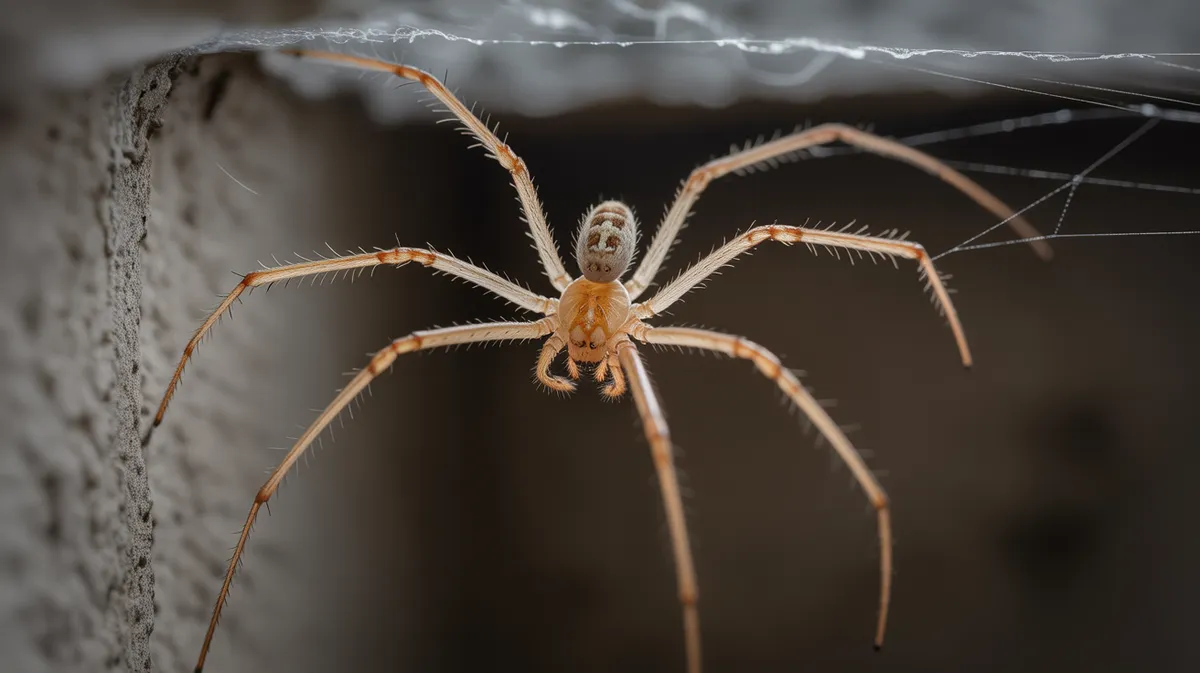
You've probably heard that daddy longlegs are deadly but their fangs are too short to bite. It's a classic playground myth.
It also confuses several different animals: harvestmen (which aren't even spiders and have no venom glands) and cellar spiders (which are harmless). There's no truth to the "most venomous" claim either way.
Harvestmen produce neither venom nor silk, while cellar spiders have unremarkable venom and fangs perfectly able to deliver a (completely harmless) nip. The whole legend falls apart the moment you ask which animal it is even describing.
Myth 4: Spiders are insects
Spiders are routinely lumped in with bugs and insects, but they belong to a different group entirely.
They're arachnids: eight legs, two body segments, and no antennae or wings — unlike insects, which have six legs, three body segments, and usually antennae. Their closest relatives are scorpions, ticks, and mites.
This is more than trivia: because spiders are not insects, many insecticides act differently on them, and their biology — from book lungs to silk glands — is genuinely distinct. Spiders have also roamed the Earth far longer than many insect groups.
Myth 5: It's always kinder to put a house spider outside
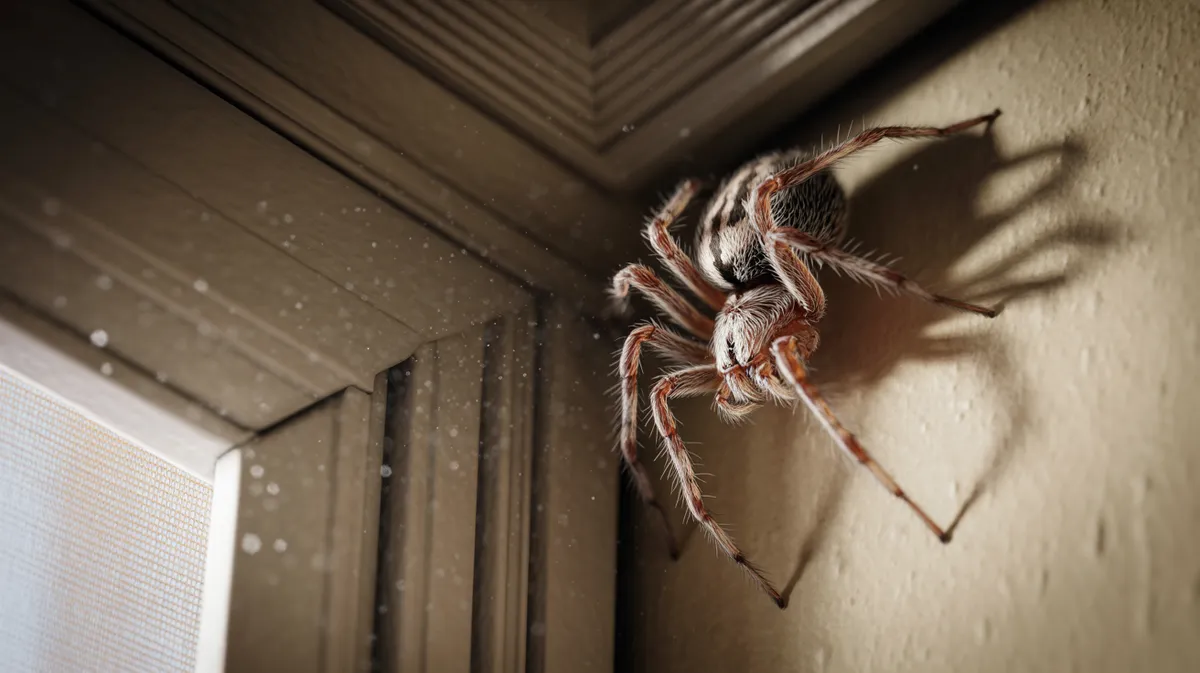
Scooping a spider outdoors feels like the humane choice, but it isn't always.
Many common house spiders are a distinct, indoor-adapted type that may not survive long outside in the cold. If it's a true house spider, it was doing just fine where it was — quietly eating other pests.
If you would rather not share your home, the gentlest option is to move the spider to a shed or garage rather than the open cold. Better still, leave it be — it is quietly eating flies and mosquitoes for free.
Myth 6: Spiders are aggressive and out to bite you
Horror films cast spiders as lurking attackers waiting to sink their fangs into us.
In truth spiders have no interest in humans — we're far too big to eat and a serious threat to them. Bites are rare, almost always defensive, and usually happen only when a spider is trapped against skin.
Most "aggressive" encounters are really a spider frantically trying to escape, not attack. Even notorious species like widows will usually flee or play dead long before biting a creature thousands of times their size.
Myth 7: That weird skin lesion is a spider bite
Any unexplained red, swollen sore tends to get blamed on a spider.
Doctors find that most so-called "spider bites" are actually bacterial infections (often MRSA) or other skin conditions. Genuine spider bites are far less common than the diagnosis suggests — most people never get bitten at all.
Studies of suspected spider bites repeatedly find the true cause to be a bacterial infection, an insect bite, or another skin condition — often in places with no dangerous spiders at all. Confirming a real bite essentially requires catching the spider in the act.
Three more myths, quickly
"All spiders spin webs" — Fewer than half do. Wolf spiders and jumping spiders hunt actively on foot, and trapdoor spiders ambush prey from a burrow.
"The big ones are the dangerous ones" — Size is a terrible guide. Most large spiders, tarantulas included, are fairly harmless, while some medically serious species are small and unremarkable.
"Spiders lay eggs under your skin" — Complete fiction. No spider does this, anywhere, and the story appears to be pure urban legend.
Why we fear spiders more than we should
A mix of evolution, horror movies, and viral misinformation has made spiders seem far scarier than they are. In reality they're shy pest-controllers that almost never harm us. A little knowledge turns dread into something closer to gratitude.
Frequently asked questions
Do you really swallow spiders in your sleep? No — it's a made-up myth. Spiders avoid the vibrations of a sleeping person.
Are daddy longlegs the most venomous spiders? No. The claim is false, and it often refers to harvestmen, which aren't spiders and have no venom.
Are spiders insects? No — they're arachnids, with eight legs and two body segments, related to scorpions and ticks.
That's three myths busted. Revisit 7 myths about wolves and 7 myths about bats — and watch for more animals in the Animal Myths, Debunked series.