
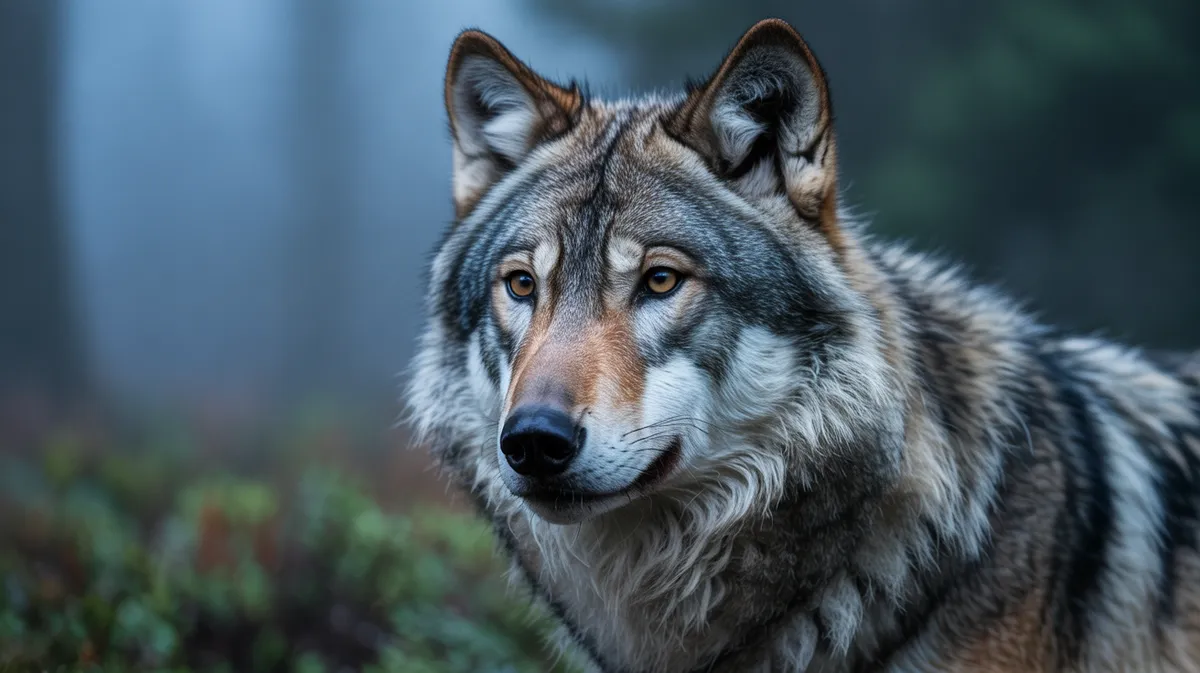
Few animals are as mythologized as the wolf. From fairy tales to nature documentaries, wolves have been cast as moon-howling villains, ruthless killers, and rigid tyrants ruled by an "alpha." Almost none of it holds up to modern science. This is the first entry in our Animal Myths, Debunked series, where we separate the folklore from the facts — starting with one of the most misunderstood predators on Earth.
The truth about wolves is, if anything, more impressive than the legend: they're devoted family animals and ecosystem engineers. Let's clear up seven of the most stubborn myths. When you're done, see what we got wrong about bats and spiders.
Myth 1: Wolves howl at the moon
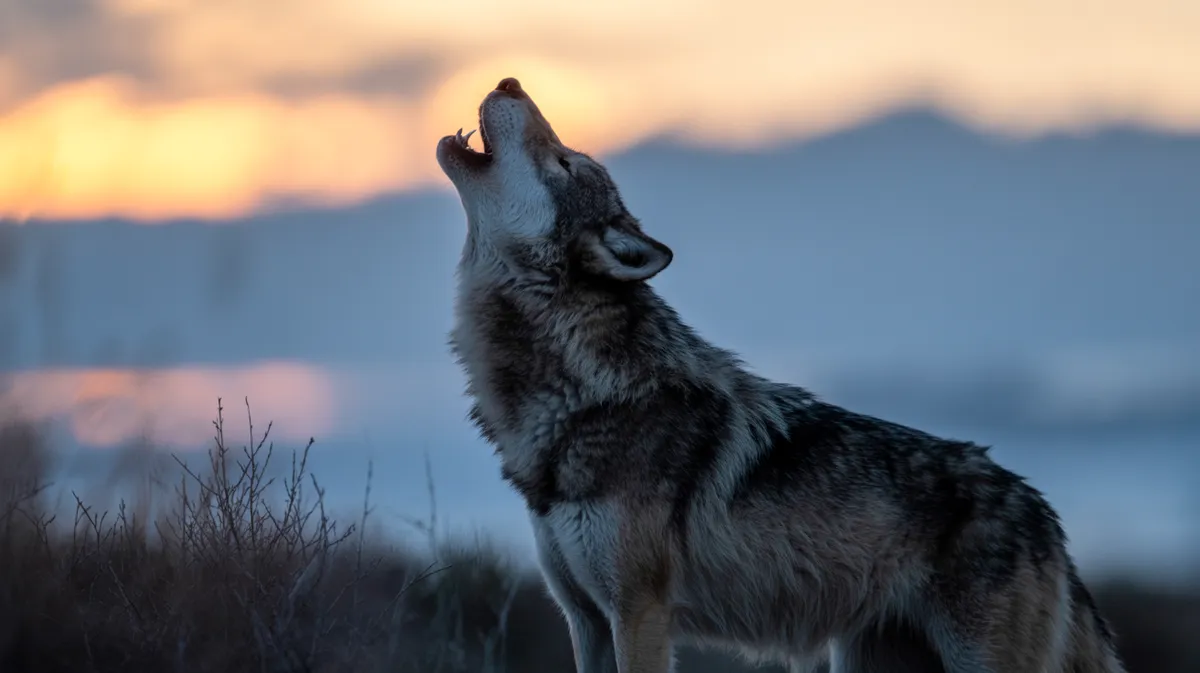
The image of a wolf silhouetted against a full moon is pure theatre. Wolves don't howl at the moon, and the lunar phase has nothing to do with it.
They howl to reassemble a scattered pack, to mark territory, and to bond. Wolves point their muzzles upward simply because it projects the sound farther — exactly as you'd cup your hands and lift your chin to call across a valley.
Wolves actually howl more at night simply because they are most active then and sound carries farther in cool, still air — which is probably how the moon got the credit. Each wolf even has its own recognisable voice, and packs may deliberately howl on different pitches to sound larger to rivals.
Myth 2: Every pack has an "alpha" that rules by force
The idea of a dominant "alpha wolf" clawing its way to the top is one of the most damaging myths in all of pop biology.
It came from a 1940s study of unrelated wolves crammed together in captivity. In the wild, a pack is simply a family — a breeding pair and their offspring. The "alphas" are just the parents. The researcher who popularized the term, David Mech, has spent years trying to retract it.
In a natural pack the parents lead because they are the parents, exactly as in a human family — there is no ladder to climb and no coups to stage. Forcing unrelated captive wolves together created the artificial tension that the old "alpha" model mistook for normal behaviour.
Myth 3: A "lone wolf" is a weak outcast
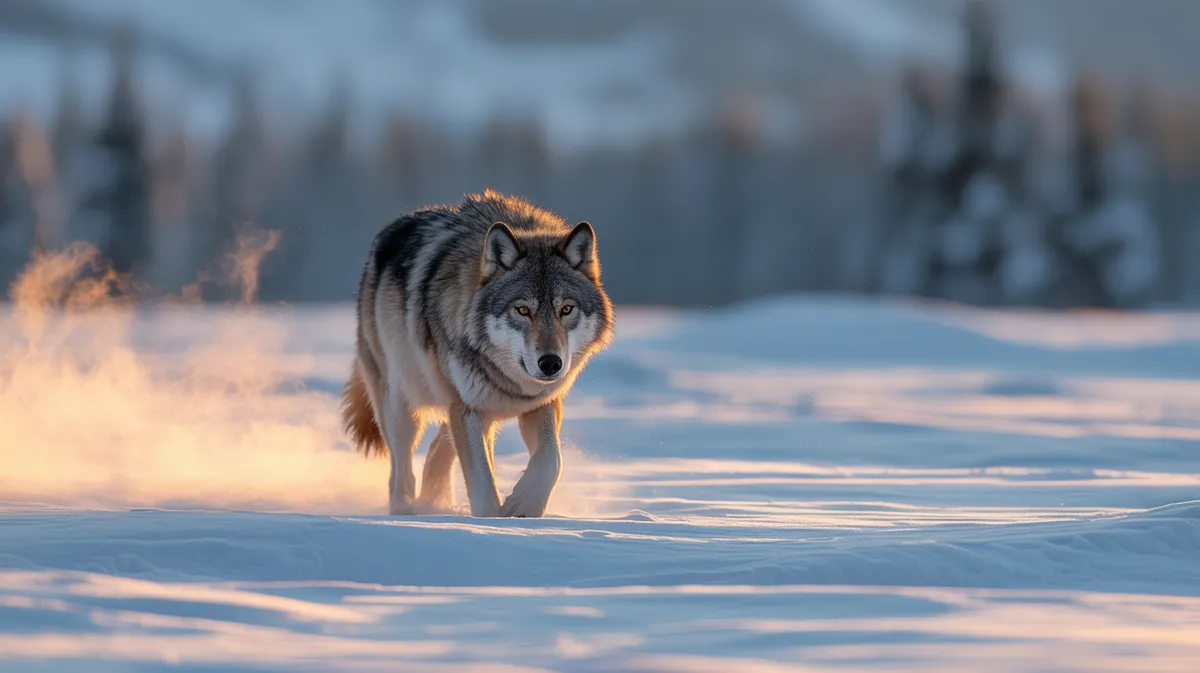
Lone wolves aren't misfits driven out in disgrace. The phrase has been twisted into a symbol of the rugged loner, but the reality is ordinary.
A lone wolf is almost always a young adult that has left its birth pack to find a mate and establish territory of its own — a normal, even essential, stage of wolf life. Most don't stay alone for long.
This dispersal is vital to the species, spreading genes between populations and founding new packs across the landscape. A single dispersing wolf may travel hundreds of kilometres in search of unclaimed territory and a mate.
Myth 4: Wolves are a serious danger to people
Centuries of folklore painted the wolf as a man-eater lurking at the forest's edge. Modern data tells a very different story.
Healthy wild wolves are shy of humans, and verified attacks are vanishingly rare — you are far more likely to be hurt by a domestic dog, a cow, or a bee. Wolves generally want nothing to do with us.
The rare incidents that do occur are usually linked to wolves that have been fed and have lost their fear of people, or to rabies — not to predatory intent. Statistically, your daily commute is far more dangerous than any wolf in the woods.
Myth 5: Wolves destroy ecosystems and must be controlled
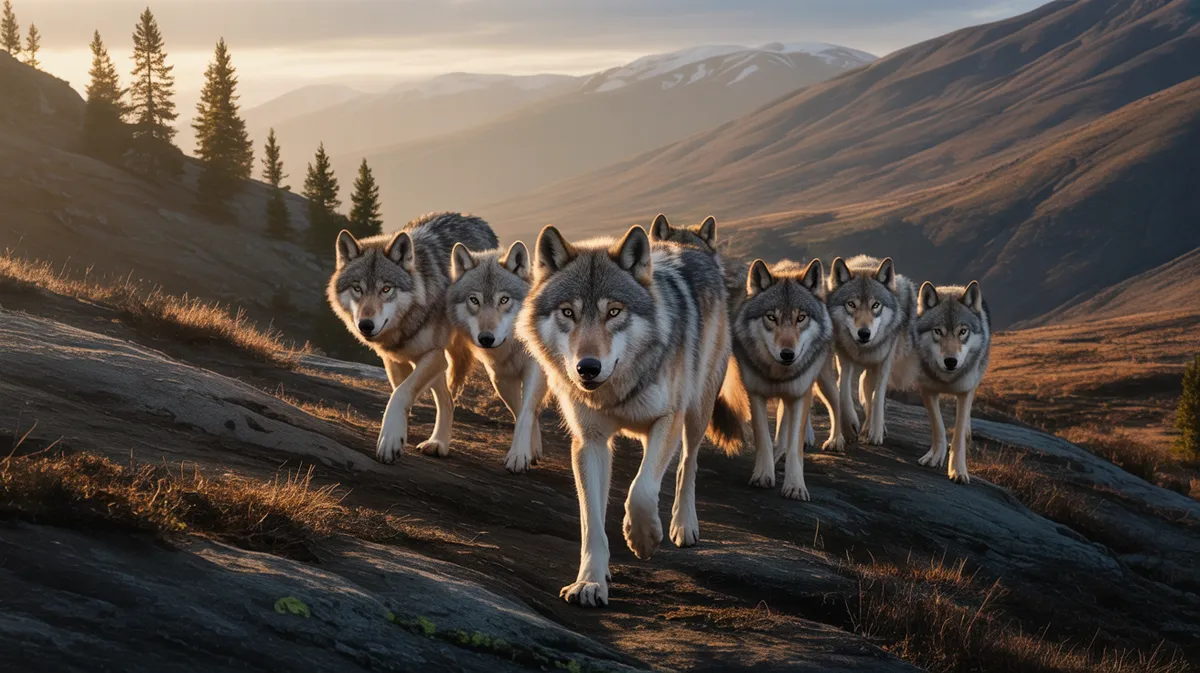
Wolves are often blamed for wiping out deer and livestock, but they're actually keystone predators that make ecosystems healthier.
The famous reintroduction to Yellowstone triggered a "trophic cascade": by keeping elk on the move, wolves let vegetation recover, which brought back beavers, birds, and even reshaped riverbanks. Predation on livestock, meanwhile, accounts for a tiny fraction of losses.
By thinning and constantly moving large herbivores, wolves prevent the overgrazing that strips landscapes bare, indirectly benefiting fish, songbirds, and scavengers alike. Remove the wolf and the whole web can unravel — which is why so many regions are now working to restore them.
Myth 6: Wolves and dogs are basically the same animal
It's tempting to think of a dog as a tame wolf, but they aren't the same species behaving differently.
Dogs and grey wolves share a common ancestor, but they diverged long ago and differ deeply in temperament, development, and how they relate to humans. A husky may look the part, but it is not a wolf in a costume.
Genetically, dogs split from the ancestor they share with wolves tens of thousands of years ago and have been reshaped by domestication ever since. Hand-raising a wolf does not turn it into a dog — it remains a wild animal with wild instincts.
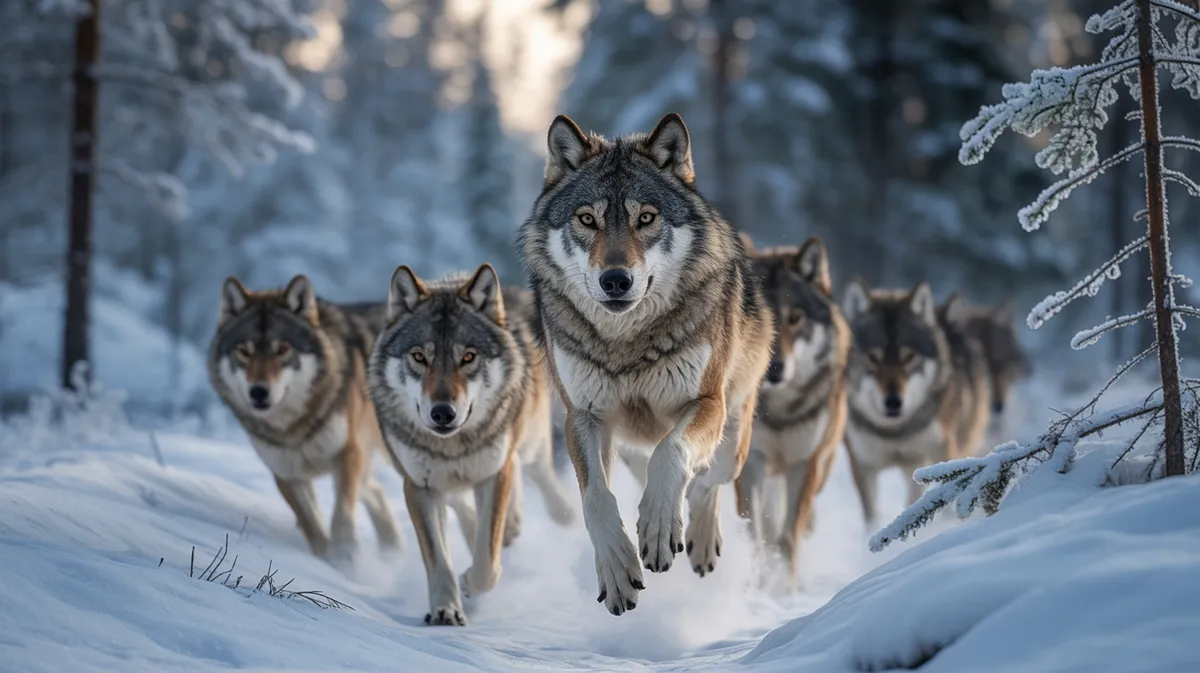
Myth 7: Wolves kill for fun
Stories of wolves slaughtering whole flocks feed the idea that they kill for sport.
So-called "surplus killing" is rare and tied to unusual circumstances, like deep snow trapping prey. Hunting is dangerous, exhausting work for wolves, and most hunts end in failure — they kill to survive, not for amusement.
When surplus killing does happen, wolves usually return to feed on the carcasses later, or are caching food in unusually harsh conditions. With hunts failing far more often than they succeed, wasting energy on sport would be a fatal luxury.
Three more myths, quickly
"Wolves mate for life, always" — Breeding pairs often do stay together for years, but if a mate dies the survivor will usually find another. Lifelong pairing is common, not unbreakable.
"A howling wolf is about to attack" — Howling is conversation — regrouping the pack, marking territory, keeping in touch. A hunting wolf is silent; a howling wolf is talking, not stalking.
"Wolves are just wild dogs" — It runs the other way round. Dogs descend from an ancestor they share with wolves, and a wolf is emphatically not a dog that has gone feral.
Why the wolf myths persist
Most wolf myths come from a mix of old folklore and one badly flawed captive study. Strip them away and you find a social, intelligent, family-oriented animal that holds whole ecosystems together. The real wolf deserves respect, not fear.
Frequently asked questions
Do wolves really howl at the moon? No — they howl to communicate with their pack and mark territory. Pointing upward just helps the sound carry.
Is the "alpha wolf" real? Not as usually described. Wild packs are families led by the breeding parents, not by a wolf that fought its way to dominance.
Are wolves dangerous to humans? Very rarely. Healthy wild wolves avoid people, and attacks are extremely uncommon.
Next in the series: the flying mammals everyone gets wrong — the 7 biggest myths about bats, and the eight-legged ones in 7 myths about spiders, debunked.