
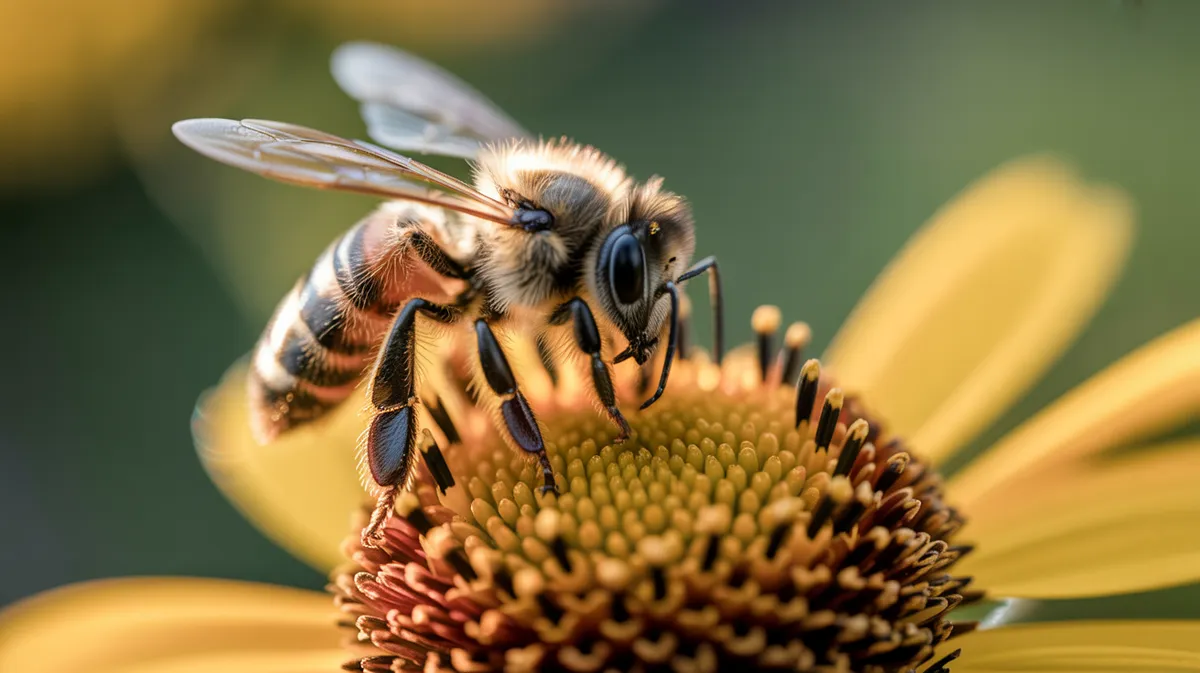
Imagine being one of fifty thousand sisters in a single, humming city of wax — a city that must feed itself, defend itself, and stay precisely 35°C, all without a leader giving orders. This is the world of the honeybee. In this opening entry of our A Day in the Life series, we follow a single worker bee, now in the foraging stage of her short life, through one summer's day.
Her day is a masterclass in cooperation, navigation, and sheer hard work. When you've followed her from dawn to dark, meet two very different daily routines in a day in the life of a meerkat and a day in the life of a hummingbird.
Before dawn
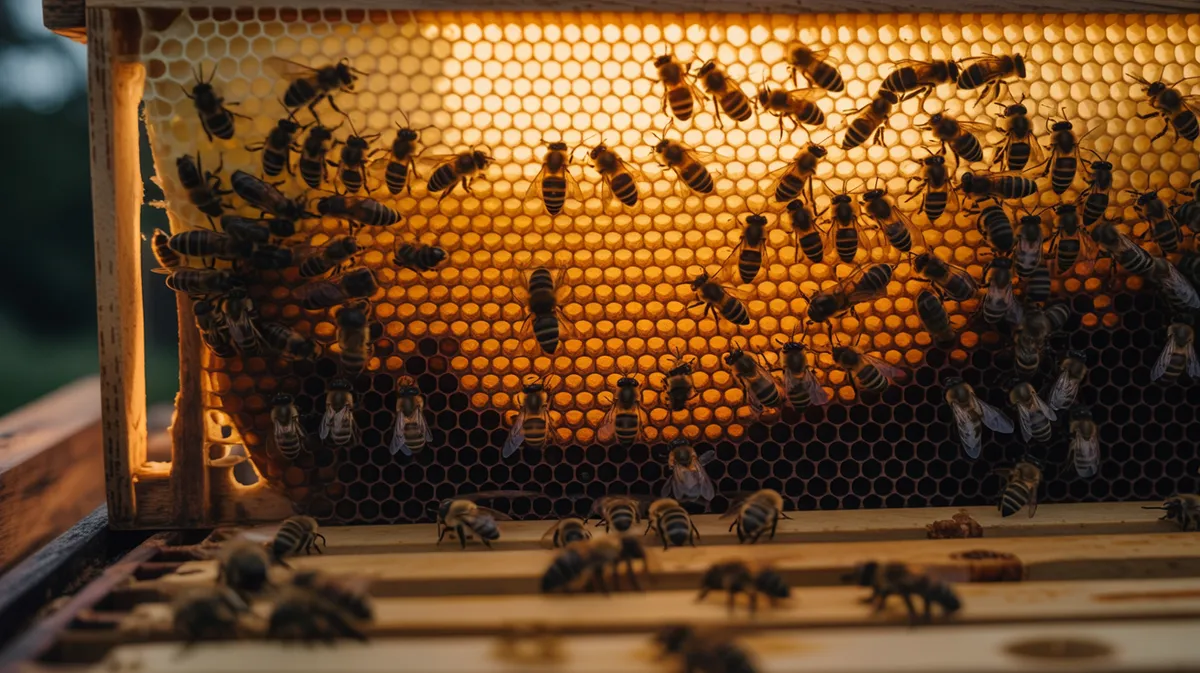
While the world outside is still dark and cool, the hive is already awake and thrumming. Thousands of bees shiver their flight muscles to keep the colony warm, holding the brood nest at a steady 35°C no matter the weather outside.
Our forager waits near the entrance. She is too cold to fly yet — bees need the air to warm before their muscles will work efficiently — so she grooms herself and trades tiny mouthfuls of nectar with her sisters, gathering energy for the day ahead.
The colony's warmth comes entirely from muscle power, so on a cold night the cluster tightens and the bees on the chilly outside slowly rotate inward, making sure none of them freeze.
Sunrise
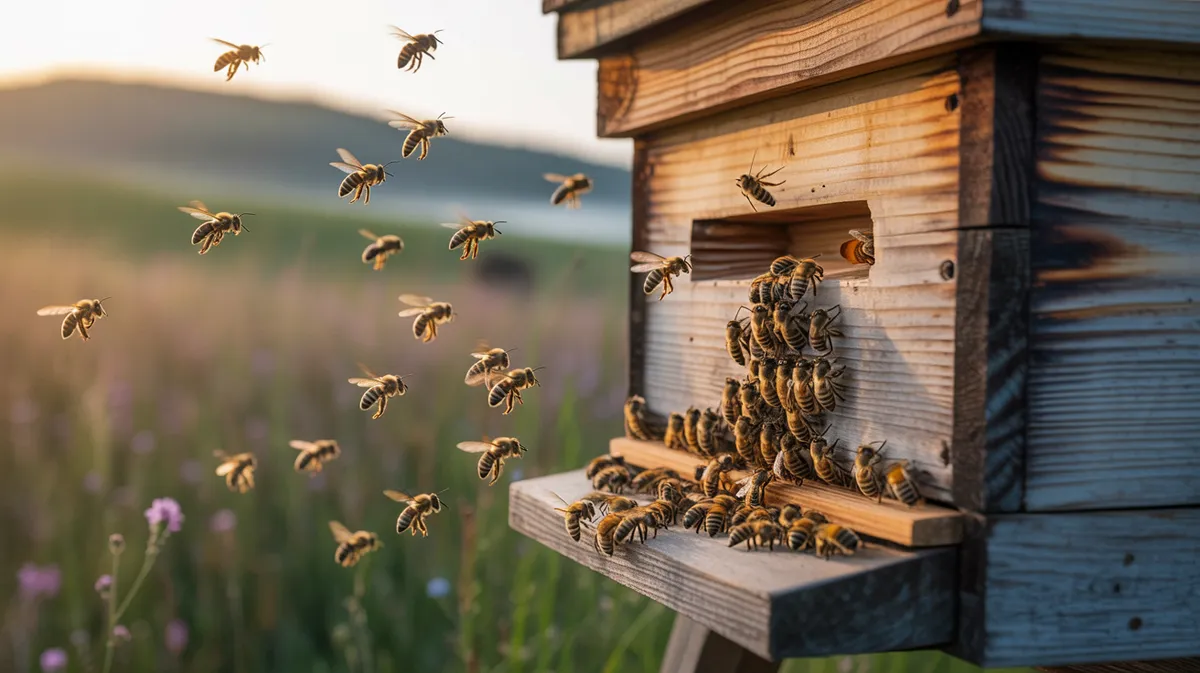
As the first warmth touches the hive entrance, the first scouts launch into the morning air. They have already found the day's best flowers, and now they return to perform the famous waggle dance — a figure-eight strut that encodes the exact direction and distance to the food.
Our bee reads a dance with her antennae, decoding an invisible map drawn in movement and angle to the sun. Moments later she's airborne, flying in a near-straight line toward a patch of clover a kilometre away.
Experienced foragers like her have learned the richest flower patches and the safest routes, knowledge that makes the whole colony's search dramatically more efficient.
Midday
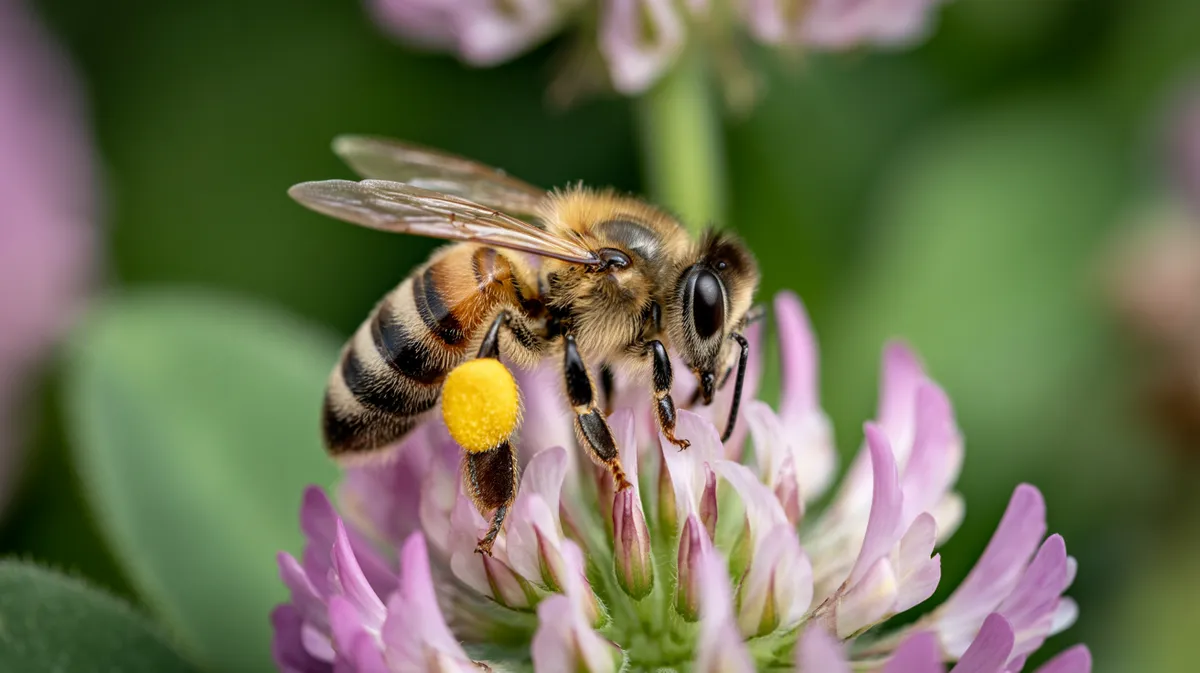
Now the day hits full stride. Our forager works flower after flower, drinking nectar into a special "honey stomach" and combing loose pollen into the bright baskets on her hind legs. A single foraging trip may take in dozens or even hundreds of blossoms.
With every visit she also dusts pollen from one flower onto the next, quietly performing the pollination that much of our food depends on. She navigates by the sun, correcting for its movement across the sky with an internal clock of remarkable accuracy.
Her eyesight is tuned to ultraviolet patterns invisible to us — secret "landing strips" on petals that guide her straight to the nectar.
Afternoon
Heavy with her haul, she returns to the hive and passes her nectar, mouth to mouth, to the younger "house bees" who will process it into honey. Then she turns straight around for another trip — a forager may make a dozen or more flights in a single day.
On the hottest afternoons her job may switch to water-carrying: bees collect droplets and spread them inside the hive, then fan their wings to evaporate it, air-conditioning the colony through the heat.
Several house bees sample each returning forager's nectar, and if the flow is rich, more dancers recruit extra foragers to exploit the find before it fades.
Dusk
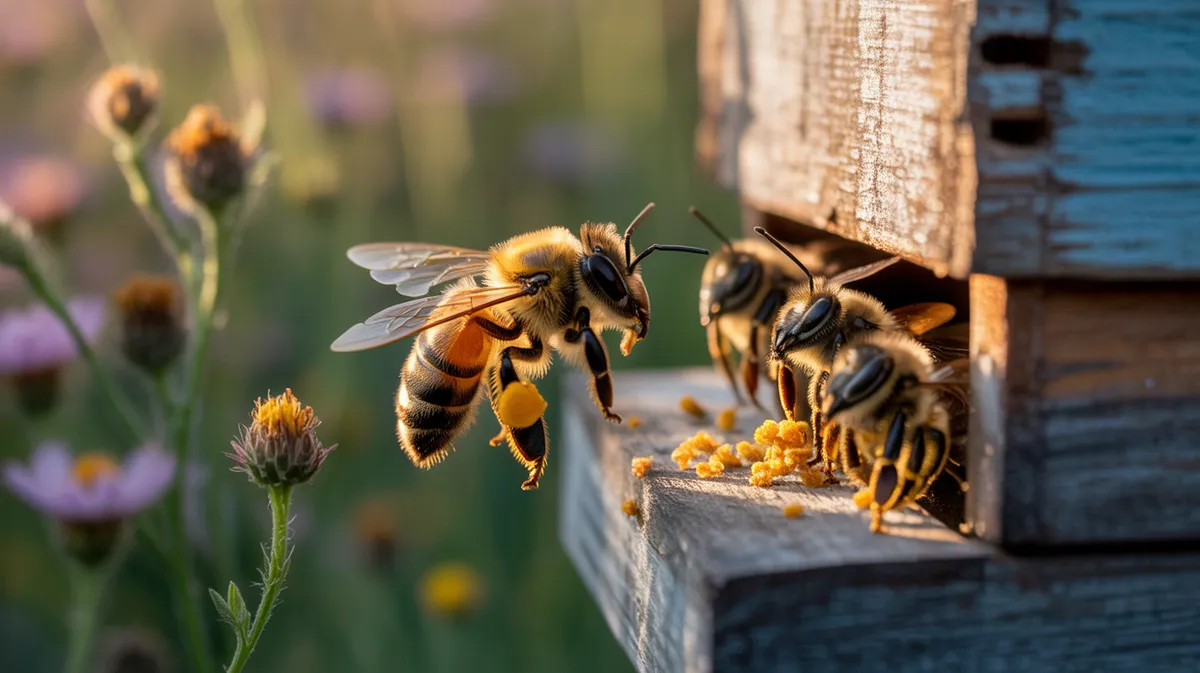
As the light fades and the air cools, foraging winds down and the last bees stream home. The hive's focus shifts inward to the night shift of processing: house bees fan thousands of wings over the fresh nectar, thickening it drop by drop into honey.
At the entrance, guard bees check every returning sister by scent, turning away robbers and wasps. Our forager, her wings frayed from the day's flying, finally rests among the comb.
A foraging bee essentially works herself to death: her wings fray after a few hundred miles of flight, and that wear, not old age, often marks her end.
After dark
The hive never truly sleeps, but at night it quiets to a low, steady hum. Deep inside, the queen continues laying eggs — up to a couple of thousand a day — while nurse bees tend the growing brood around the clock.
Clustered together for warmth, the colony idles through the darkness, conserving energy until the sun returns and the whole cycle begins again.
Even in darkness the bees keep communicating by scent and touch, the colony behaving less like 50,000 separate insects and more like a single, distributed organism.
A Career That Changes With Age
Our forager was not always a forager. A worker bee moves through a whole series of careers, and which job she does depends almost entirely on how old she is.
She begins as a cleaner, scrubbing out cells for the queen to lay in. Days later she becomes a nurse, feeding the larvae; then a builder, secreting wax; then a receiver, taking nectar from returning foragers; then a guard at the entrance.
Only in the final stretch of her life does she graduate to foraging — the most dangerous job of all, and the one that will wear her wings out and kill her. The hive spends its oldest, most expendable workers on its riskiest task.
What a day reveals
In her roughly six weeks of life, a single worker bee will fly the equivalent of a long road trip yet produce only about a twelfth of a teaspoon of honey. Her day shows how a colony with no boss achieves staggering feats through pure cooperation — every bee a tiny, tireless part of a single living whole.
Frequently asked questions
How far does a honeybee travel in a day? A forager may fly several kilometres over many trips, visiting hundreds of flowers.
What is the waggle dance? A figure-eight movement bees use to tell hive-mates the direction and distance to good food.
How much honey does one bee make? Only about a twelfth of a teaspoon in her entire lifetime.
How long does a worker bee live? Around six weeks in summer, though winter bees can live for months.
How many bees are in a hive? A strong colony can hold 50,000 or more in peak season.
How far will a forager fly? Commonly a few kilometres from the hive, and further if food is scarce.
What does the queen do all day? She lays eggs — up to a couple of thousand a day — and little else.
Next in the series: sentries, sunbathing and scorpion hunts in a day in the life of a meerkat, and a life lived on the edge of starvation in a day in the life of a hummingbird.