
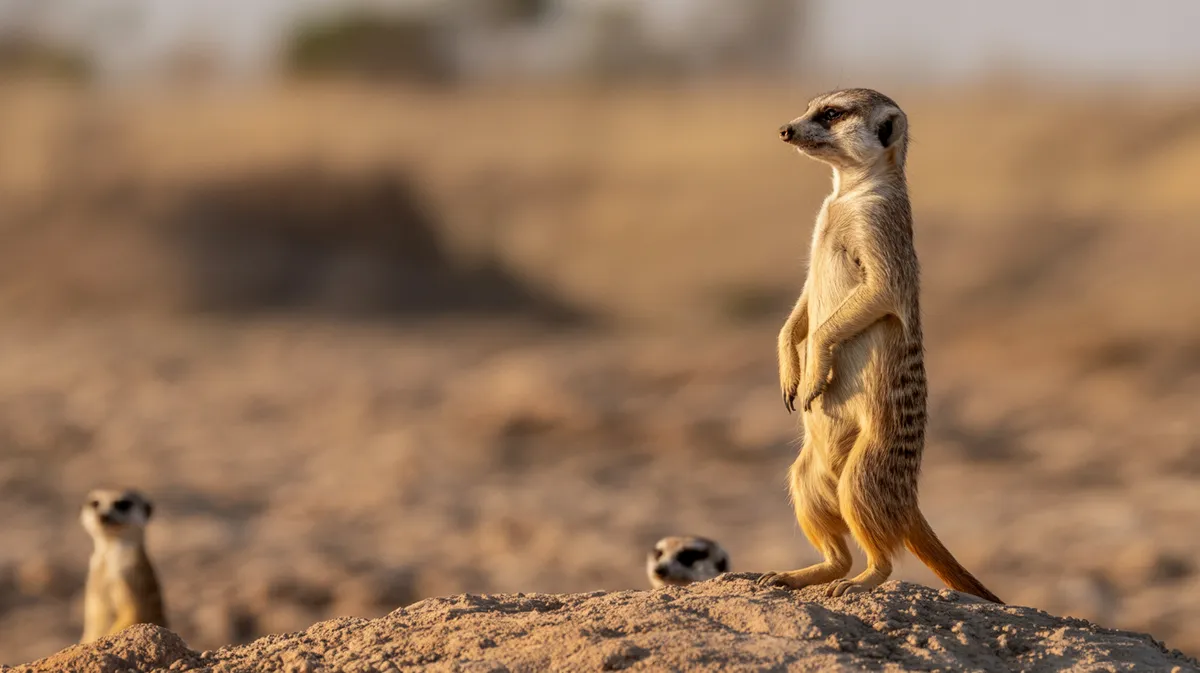
In the harsh, open scrub of the Kalahari, survival is a team sport — and no animal plays it better than the meerkat. A mob of these small mongooses lives or dies by cooperation: standing guard for one another, raising pups together, and braving venomous prey as a unit. In this entry of our A Day in the Life series, we follow a meerkat mob through one day in the desert.
Their day is a finely tuned routine of warmth, watchfulness, and teamwork. See also the cooperative city of a day in the life of a honeybee and the frantic pace of a day in the life of a hummingbird.
Before dawn
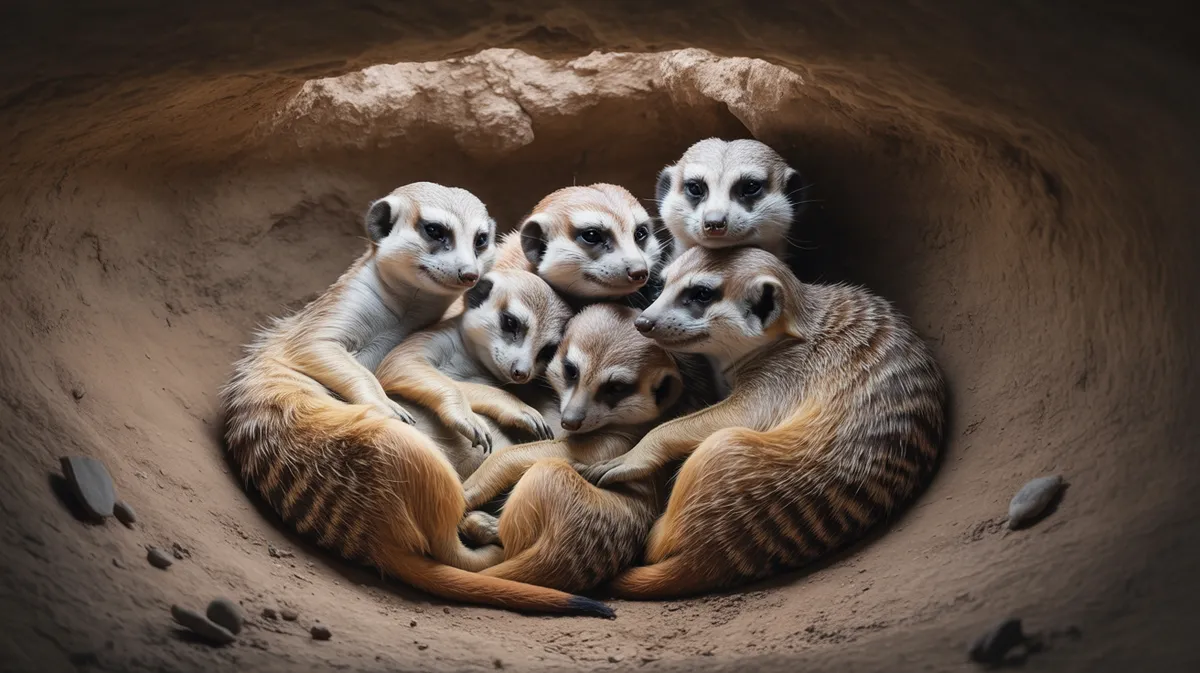
Deep in their network of tunnels, the mob is still huddled together against the desert night, which can turn surprisingly cold. The burrow's earth buffers the temperature, keeping the group safe from both the chill and the predators that hunt in the dark.
As the sky begins to lighten, the first heads cautiously appear at the burrow mouth, noses testing the air for any sign of danger before the day begins.
A dominant pair leads the mob, and it's usually their pups the whole group cooperates to raise — a system of shared parenting that biologists call alloparenting.
Sunrise
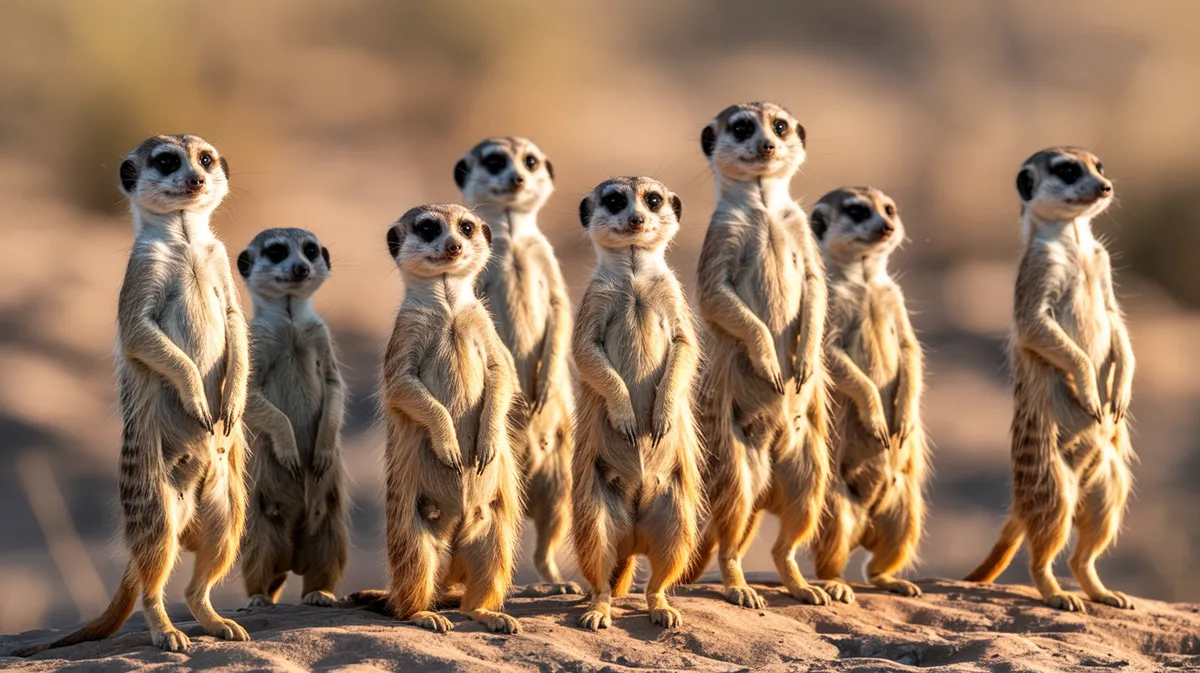
The mob emerges and does something wonderfully familiar: they stand upright and sunbathe. Meerkats have a patch of thin, dark-skinned fur on their bellies, which they turn toward the rising sun like little solar panels to warm up after the cold night.
Only once they're warm enough to move quickly — and safe from the night's stiffness — do they prepare to set off in search of breakfast.
These first minutes above ground are dangerous, so even while sunbathing at least one meerkat keeps half an eye fixed on the sky.
Midday
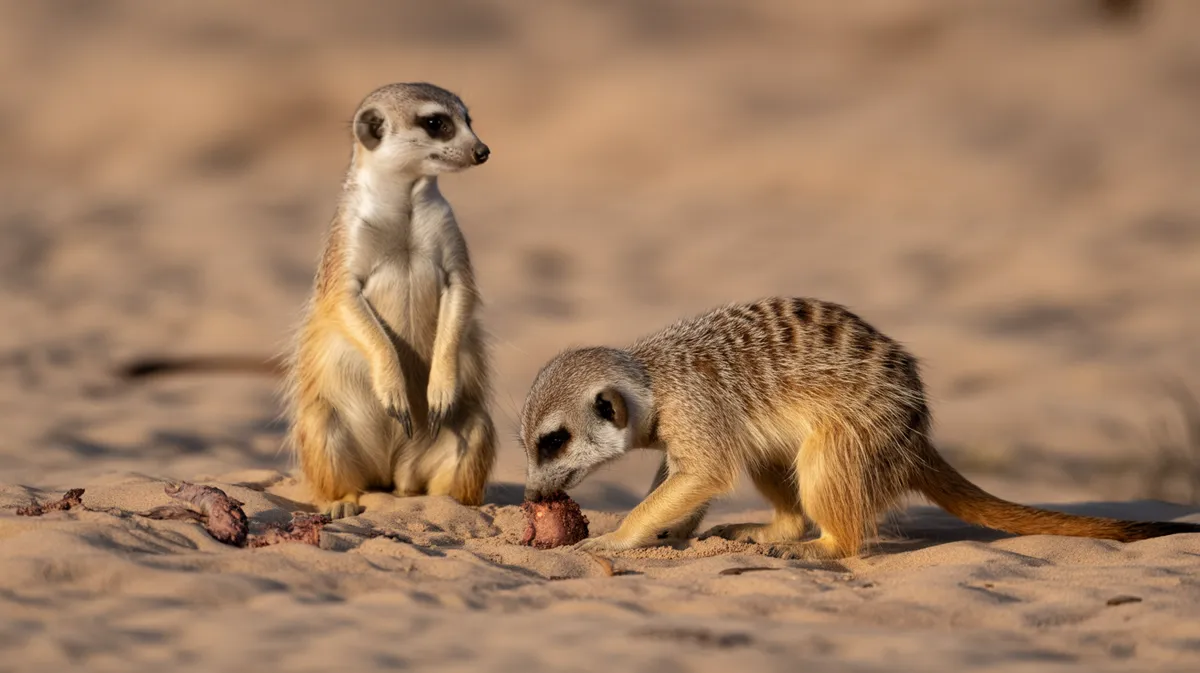
Now the real work begins: foraging. Heads down, the mob scratches and digs through the sand for beetles, larvae, and lizards, sniffing out prey buried centimetres deep. Among their favourite targets are scorpions, which they deftly disable by biting off the stinger before eating.
Crucially, while most of the mob digs, at least one meerkat acts as a sentinel — standing tall on a mound or bush, scanning the sky and horizon, and giving distinct alarm calls that mean different things for an eagle overhead or a snake on the ground.
A meerkat may eat hundreds of small prey items in a day, and because they rarely drink, they wring most of their water straight from their food.
Afternoon
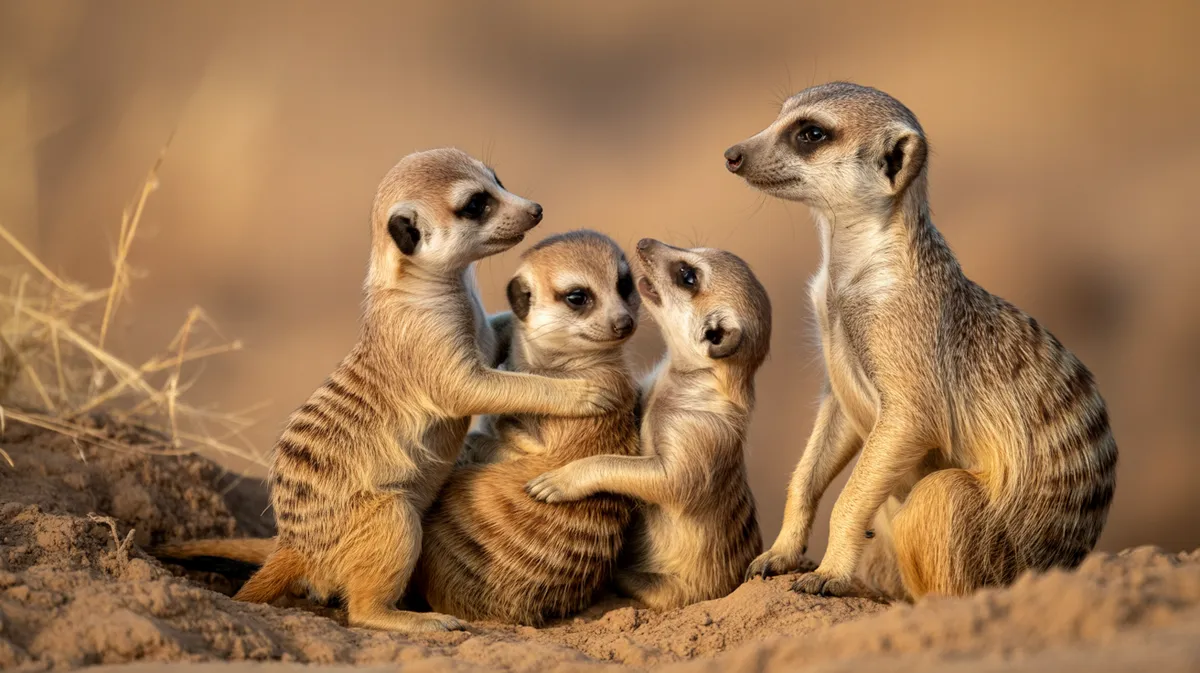
As the desert heat peaks, the mob often retreats to shade to rest, groom, and strengthen the social bonds that hold the group together. Pups tumble and play, practising the skills they'll need as adults.
Older meerkats double as teachers, bringing pups disabled prey — a scorpion with its sting removed — so the young can learn, step by step, how to handle dangerous food safely.
Pups beg loudly from the adults, and this hands-on teaching works so well that young meerkats graduate from disabled prey to live scorpions in a matter of weeks.
Dusk
With the worst heat past, the mob forages again, the sentinel duty quietly rotating from one adult to the next so everyone gets a chance to eat. As the light softens, they begin drifting back toward the safety of a burrow.
Before heading underground, they often gather for one last warm-up in the low golden sun, a final social moment before the night closes in.
Sentinel duty is surprisingly fair — studies show well-fed meerkats volunteer to stand guard, and the lookout is often the first to spot danger and the last to eat.
After dark
Safely below ground, the mob piles together in a warm, breathing heap. Sleeping in a heap shares body heat and keeps everyone protected through the cold, dangerous hours.
They rotate between several burrows across their territory rather than using just one, a habit that helps them stay a step ahead of predators and parasites alike.
A single mob may control a territory dotted with dozens of bolt-holes, each one a potential refuge if a predator surprises them far from home.
How the Mob Is Run
A meerkat mob is not a free-for-all. It is led by a dominant breeding pair, and it is usually their pups the whole group works to raise.
Subordinate adults take on the unglamorous jobs — standing sentry, babysitting pups at the burrow while others forage, and teaching the young to handle dangerous prey. This shared parenting is what lets a mob raise so many pups in such a hostile place.
It is not entirely harmonious. The dominant female enforces her position firmly, and subordinate females that breed may be driven out. Meerkat society is cooperative, but it is also strict, and status matters enormously.
What a day reveals
A meerkat's day is built entirely around trust: the digger relies on the sentinel, the pup relies on its teachers, and the whole mob relies on the warmth of the pile. It's one of the clearest examples in nature that, for some animals, cooperation isn't a nicety — it's the only way to survive.
Frequently asked questions
Why do meerkats stand up? To sunbathe and warm up in the morning, and to act as sentinels scanning for predators.
Do meerkats really stand guard? Yes — one meerkat watches while the others forage, giving different alarm calls for different threats.
Can meerkats eat scorpions? Yes — they bite off the stinger first and are fairly resistant to the venom.
How big is a meerkat mob? Typically around 20 to 30 animals, though some groups grow considerably larger.
Are meerkats immune to scorpion venom? They have some resistance, and they also bite off the sting before eating one.
Do meerkats drink water? Rarely. They get almost all the moisture they need from their food.
How long do meerkats live? Often around 6 to 10 years in the wild.
Continue with a day in the life of a hummingbird, or revisit a day in the life of a honeybee.