
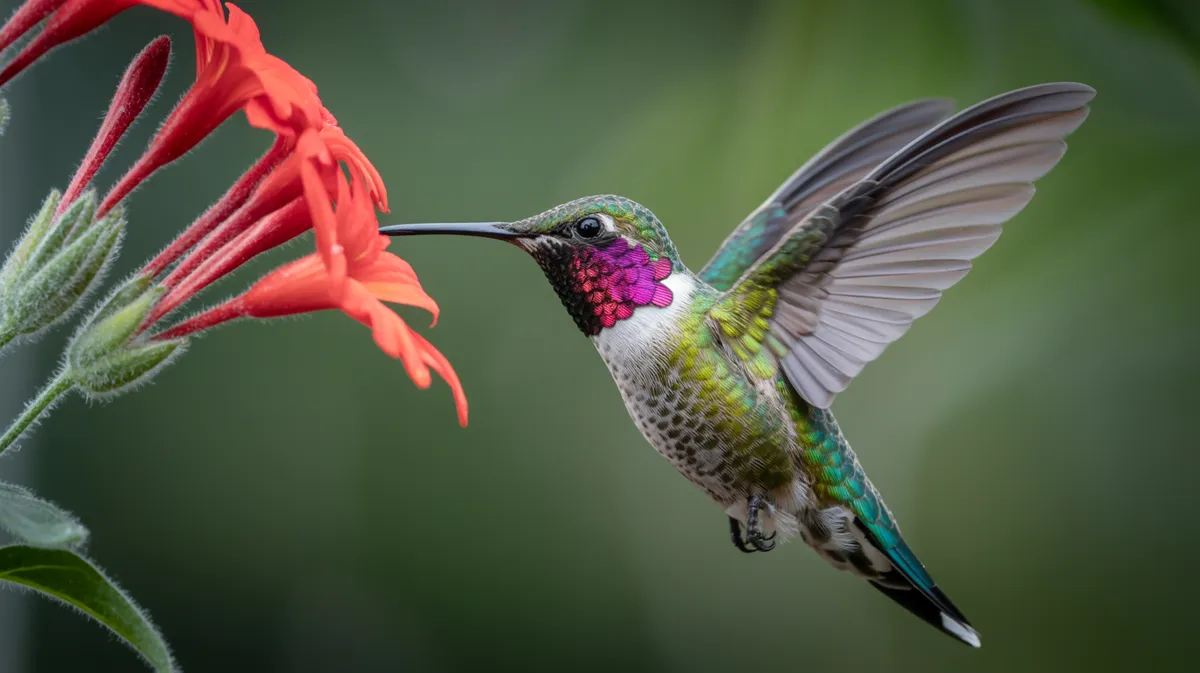
A hummingbird lives its entire life with the throttle pressed to the floor. Its heart can race past 1,200 beats a minute, its wings blur at dozens of beats per second, and it is never more than a few hours from starving to death. In this entry of our A Day in the Life series, we follow one of these tiny dynamos through a single, frantic day.
Every hour is a race to take in enough fuel to survive the next. See also the teamwork of a day in the life of a honeybee and a day in the life of a meerkat.
Before dawn
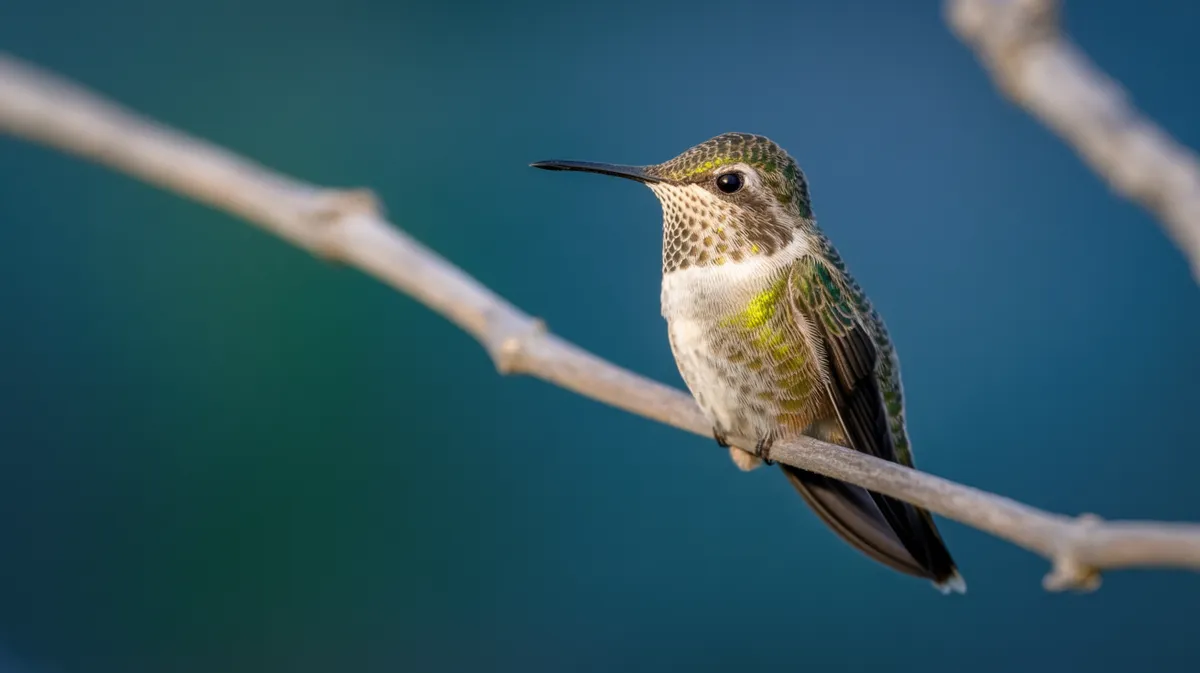
As the night ends, our hummingbird is barely alive. To survive the dark hours without feeding, it entered torpor — a death-like state in which its body temperature plummets and its heart slows from over a thousand beats a minute to just a few dozen.
With the first hint of light, it begins to rouse, shivering its muscles to haul its body temperature back up. Climbing out of torpor can take many minutes, and until it's warm, the bird can barely move.
Torpor is so deep that a hummingbird can look completely lifeless, and predators sometimes pass it by — but it also leaves the bird briefly helpless until it warms back up.
Sunrise
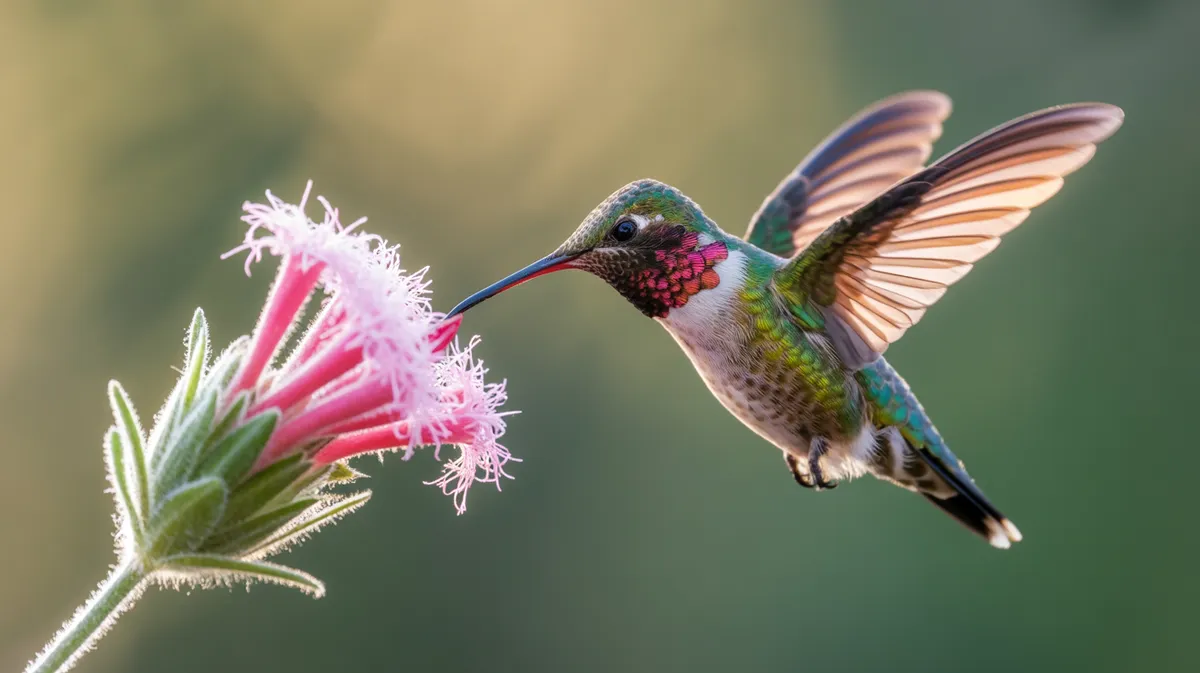
The instant it can fly, the hummingbird's first mission is urgent: refuel. After a whole night's fast, it darts straight to the nearest flowers, hovering in place as it laps nectar with a long, forked tongue that flicks in and out many times a second.
It will need to feed roughly every 10 to 15 minutes all day long, visiting hundreds or even a couple of thousand flowers before nightfall just to stay alive.
Its tongue isn't a simple straw: it splits at the tip and traps nectar with a tiny pumping action, refilling far faster than sucking ever could.
Midday
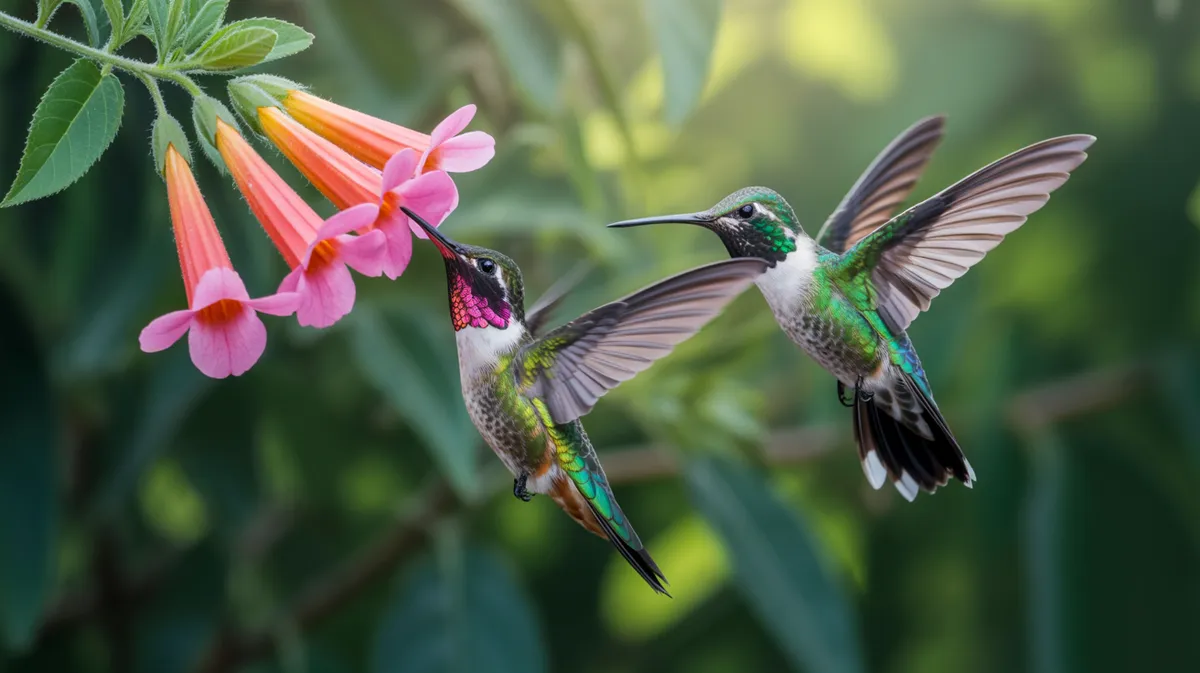
Fuelled up, the hummingbird turns fiercely territorial. It chases rivals away from its patch of flowers in dazzling aerial dogfights, flying not just forward but backward and even briefly upside down — feats no other bird can match.
Between sorties it also hunts tiny insects and spiders, because nectar is almost pure sugar and the bird needs protein to survive. It snatches them from the air or plucks them from leaves mid-hover.
For its size the hummingbird is astonishingly aggressive, happily dive-bombing birds many times larger to defend a single prized flowering bush.
Afternoon
The feeding never really stops. Through the afternoon the hummingbird keeps cycling between flowers, defending its territory, and grabbing the occasional bug, its metabolism burning so hot it must eat roughly its own body weight in nectar each day.
As evening approaches, the goal shifts: it begins deliberately overfeeding, packing on a little fat to serve as fuel for the long, foodless night ahead.
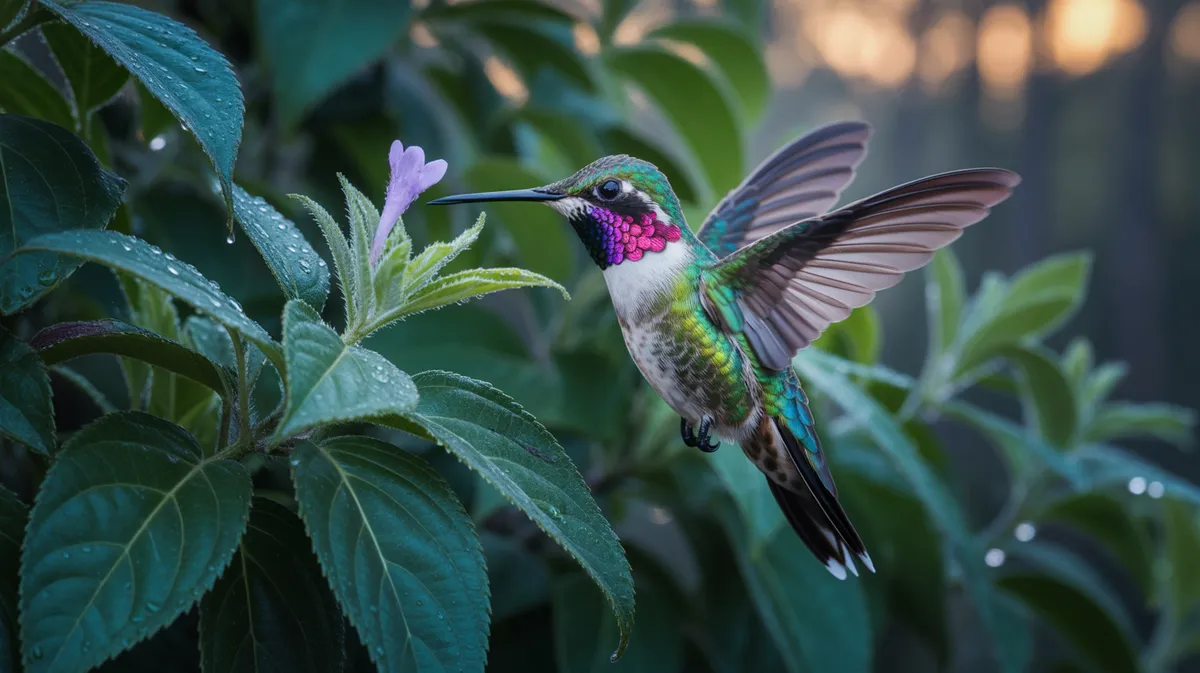
Its wings trace a figure-eight that generates lift on both the forward and backward stroke — the secret behind its helicopter-like hovering.
Dusk
With the light fading, the hummingbird takes its last, biggest meals of the day, topping up every reserve it can. Then it seeks out a sheltered perch, tucked among dense leaves, safe from wind and prowling predators.
Settling in, it fluffs its feathers and prepares for the nightly gamble of shutting its body almost completely down.
How much fat it stores by nightfall can be the difference between waking up in the morning and not; the margins really are that fine.
After dark
Once night falls, the hummingbird slips back into torpor. Its temperature drops, its heart and breathing slow to a crawl, and it hangs there in suspended animation, burning the tiny fat reserves it built up during the day.
This nightly near-death is the only way such a high-octane animal can survive until morning — when the desperate race to refuel will begin all over again.
Migrating species pull off an even greater feat, some crossing the Gulf of Mexico in a single non-stop flight of around 800 kilometres on just a few grams of fuel.
The Journey That Awaits
As if a daily tightrope walk over starvation were not enough, many hummingbirds are also long-distance migrants.
The ruby-throated hummingbird crosses the Gulf of Mexico in a single non-stop flight of some 800 kilometres, up to 20 hours over open water with nowhere to land and nothing to eat.
To do it, the bird nearly doubles its body weight in fat beforehand — an animal that normally starves within hours deliberately becomes, for a few days, a flying fuel tank. It is one of the most improbable feats in the bird world.
What a day reveals
The hummingbird's day is a tightrope walk over starvation, balanced by one of the most extreme metabolisms on Earth and the lifesaving trick of torpor. That such a fragile-looking creature can also migrate thousands of kilometres makes its daily survival all the more astonishing.
Frequently asked questions
How often do hummingbirds eat? Roughly every 10–15 minutes all day, visiting hundreds of flowers and eating about their own body weight in nectar.
What is torpor? A nightly death-like state where the bird's temperature and heart rate plunge to save energy while it can't feed.
Can hummingbirds really fly backward? Yes — they're the only birds that can sustain backward and hovering flight.
How fast does a hummingbird's heart beat? Over 1,200 beats a minute in flight, dropping to a few dozen in nightly torpor.
How many times a second do their wings beat? Roughly 50 or more in many species, producing the famous hum.
How long do hummingbirds live? Often 3 to 5 years, which is remarkable for such a high-octane animal.
Do hummingbirds only drink nectar? No — they also eat small insects and spiders for protein.
That's three very different days. Revisit a day in the life of a honeybee and a day in the life of a meerkat — and watch for more in the A Day in the Life series.