
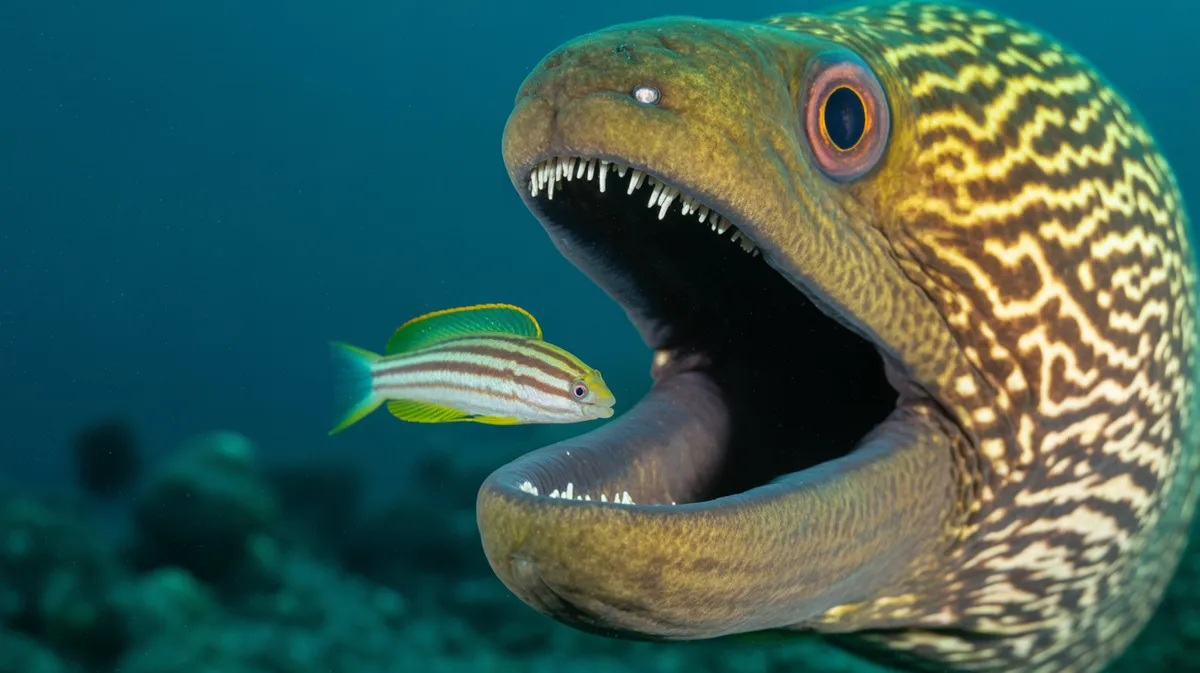
At certain spots on a coral reef, the rules of the food chain seem to be suspended. A fearsome moray eel hangs motionless, mouth gaping, while a fish small enough to swallow swims right inside it — not as prey, but as staff. These are cleaning stations, and the tiny cleaner wrasse that run them are at the centre of one of the ocean's most elegant partnerships. In this entry of our Nature's Odd Couples series, we visit the reef's day spa.
It's a deal so valuable that even predators keep the peace. See also the reef pairing of the clownfish and the sea anemone and the burrow-sharing duo in the goby and the pistol shrimp.
The reef's day spa
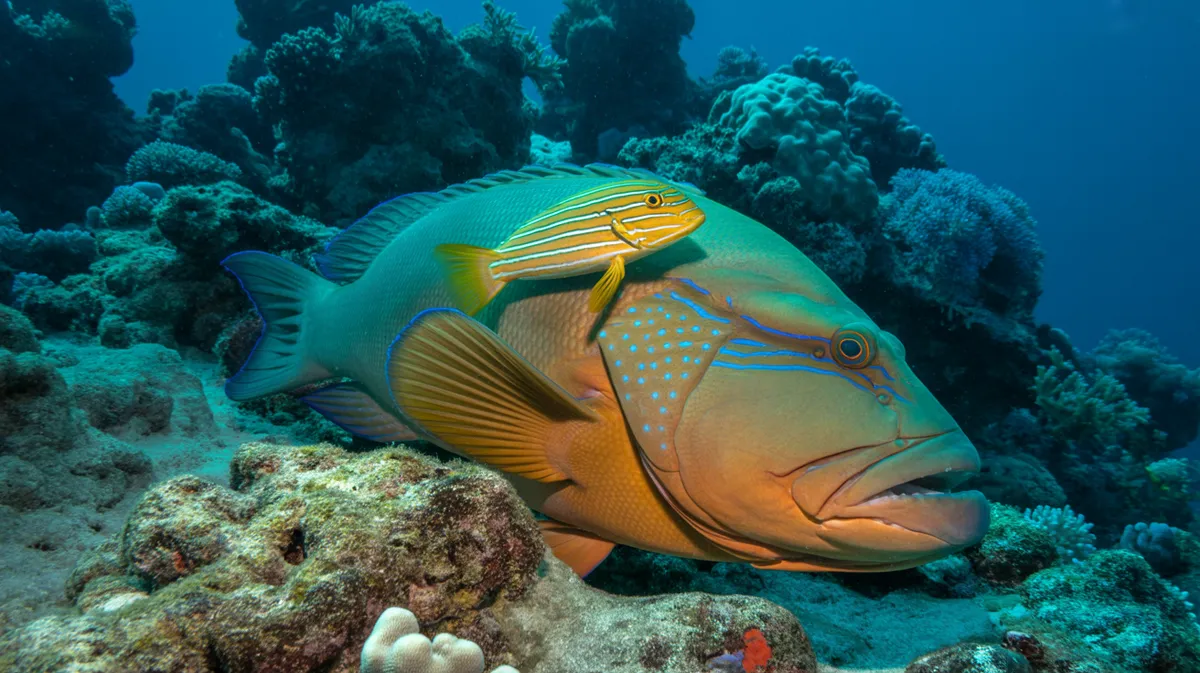
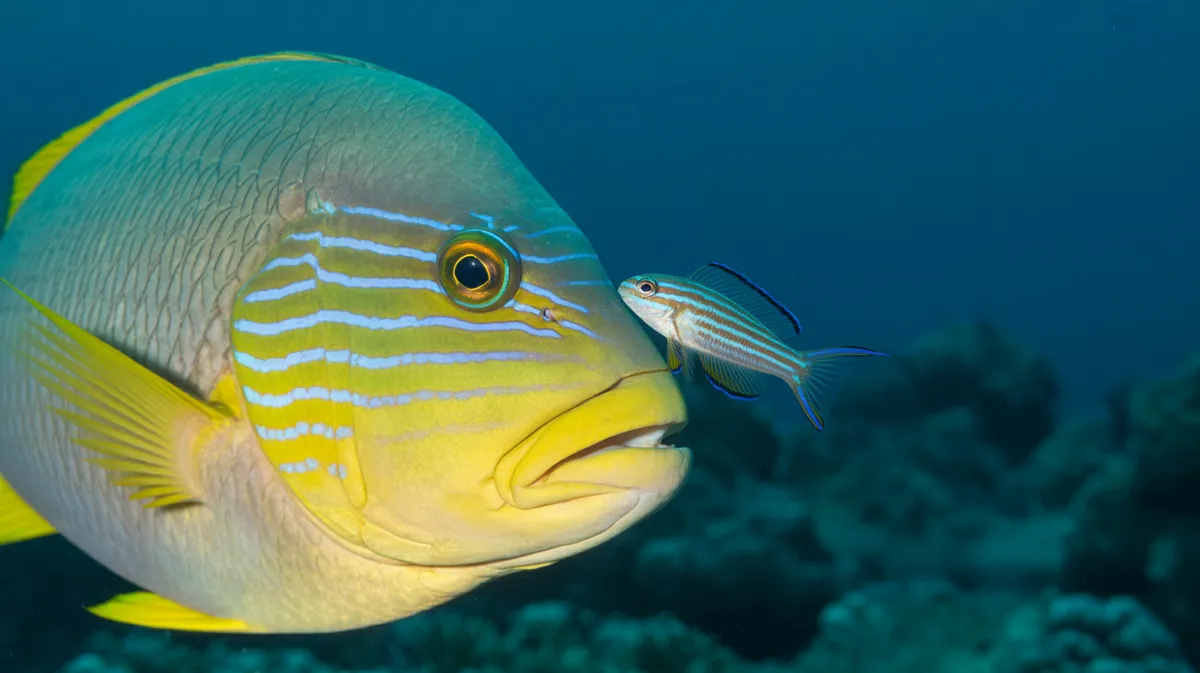
A cleaner wrasse sets up shop at a fixed spot on the reef, a cleaning station that "clients" visit again and again. There it gets to work, nibbling parasites, dead skin, and bacteria from the bodies of much larger fish.
Clients range from groupers and snappers to sea turtles, eels, and even sharks, and they'll often queue and adopt a special pose to signal they want a clean.
A busy cleaner can service hundreds of clients in a single day, working over fins, scales, and gills with practised care.
Clients sometimes travel a fair distance to visit a trusted station, and reefs may host several cleaners working side by side to handle the queue.
A truce with predators
The most astonishing part is the trust involved. A cleaner wrasse will swim calmly into the open mouth of a predator that could eat it in an instant, picking parasites from between the teeth and inside the gills.
The predator simply holds still and lets it work, because a reliable cleaner is worth far more alive than as a single small snack.
Cleaners advertise their identity and good intentions with a distinctive bobbing "dance," reassuring clients that they're here to help, not to be eaten.
Cleaner wrasse have even been shown to recognise individual clients and remember how each one behaved, tailoring their service to regulars.
What the client gets
For the clients, a visit is genuine health care. Removing parasites and dead tissue keeps wounds clean and fish healthy, and the gentle attention may even reduce their stress.
The effect scales up to the whole reef: studies that removed cleaner wrasse from patches of reef found that the number and variety of other fish dropped sharply.
A single thumb-sized fish, it turns out, helps hold an entire community together.
In some clever experiments, cleaner wrasse passed a version of the "mirror test," hinting at a surprising degree of self-awareness in such a small fish.
Cheaters and trust
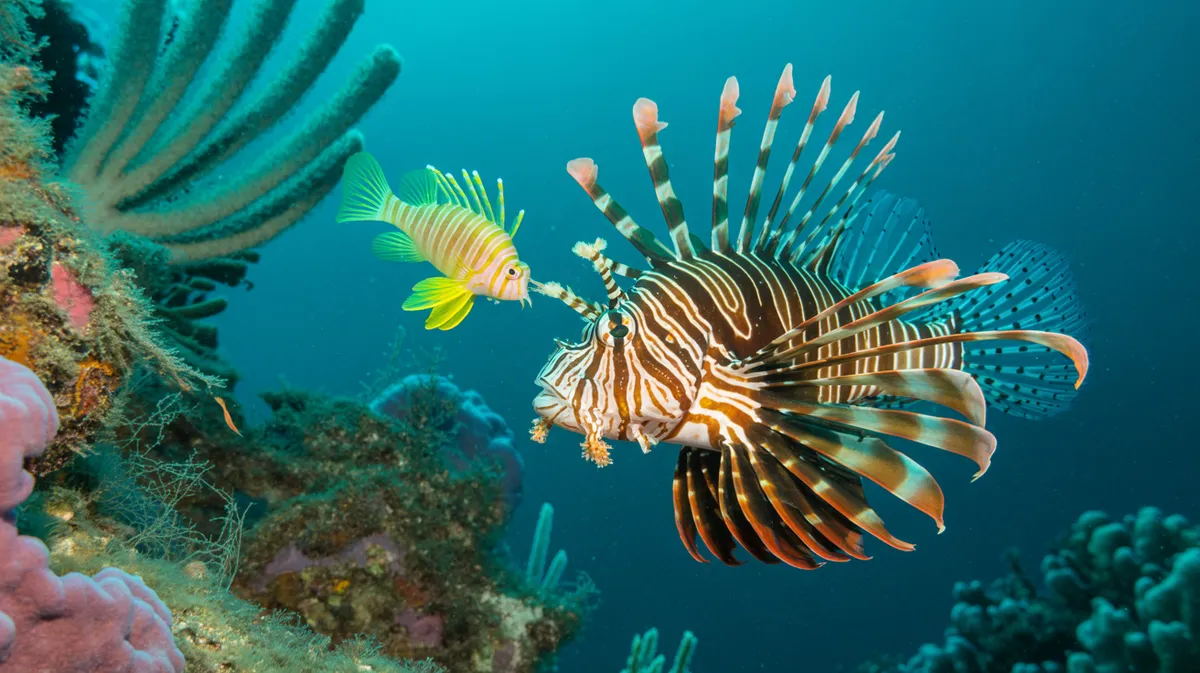
The partnership isn't perfectly honest. Cleaner wrasse actually prefer a client's protective mucus to its parasites, and a cleaner will sometimes "cheat" by taking a quick bite of healthy mucus instead.
Clients respond like dissatisfied customers — they flee, or chase the cleaner, and may not return. So cleaners that want repeat business have to behave.
Remarkably, cleaners give better, more honest service when other potential clients are watching, as if managing their reputation.
A cleaner will often calm a twitchy client first with a gentle "tactile massage" using its fins, smoothing over the relationship before getting down to work.
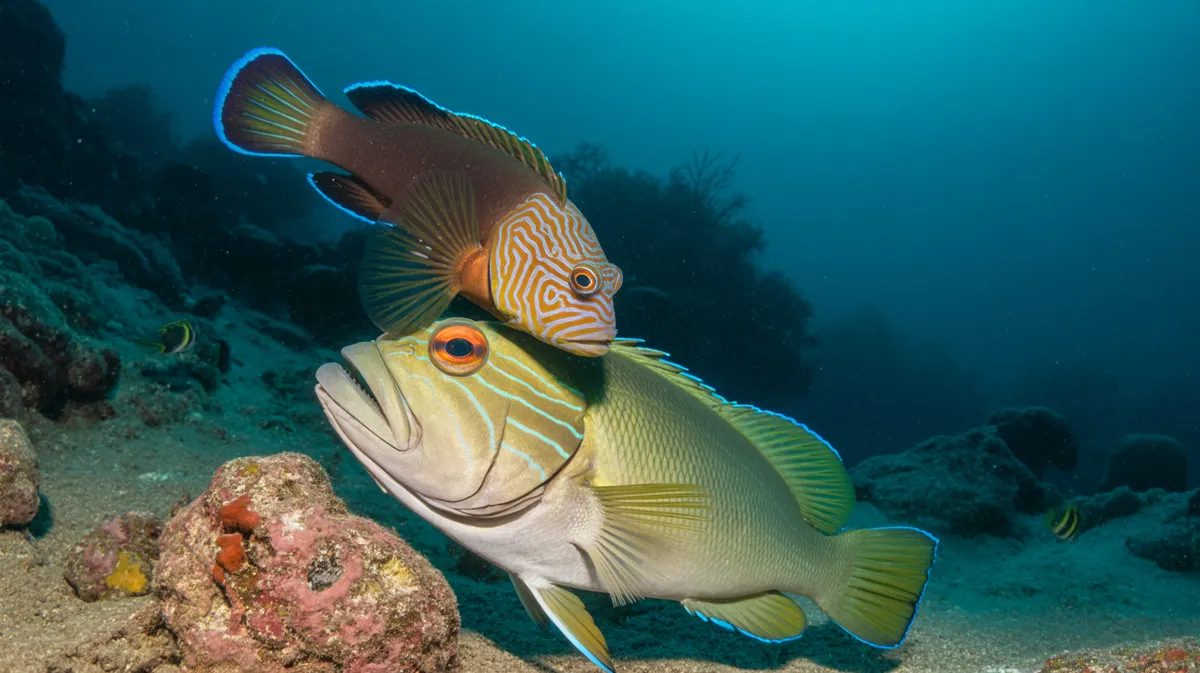
The impostor
Where there's trust, there's also a con artist. The sabre-toothed blenny is a fish that mimics the cleaner wrasse almost perfectly, copying its colours and even its inviting dance.
But when a client relaxes and presents itself for cleaning, the impostor darts in and bites off a chunk of fin or flesh before fleeing.
This mimic survives precisely by exploiting the goodwill the real cleaners have built — a parasite hiding inside a partnership.
The blenny's deception only works because real cleaners are common and trustworthy enough that clients let their guard down — a cheat that depends on everyone else being honest.
They Are Not the Only Cleaners
The cleaner wrasse is the most famous, but reef cleaning is a whole industry with many operators. Cleaner shrimp wave their long white antennae to advertise, and fish will hold still and open their mouths for them just as readily.
Small cleaner gobies work the same trade, often setting up on coral heads, and juvenile fish of several species clean part-time before graduating to other diets.
Look wider and the same bargain appears everywhere: oxpeckers on African buffalo, cleaner birds on crocodiles, even ants tending aphids. Wherever one animal carries parasites and another is willing to eat them, some version of the cleaning station tends to evolve.
Trust on the reef
The cleaner wrasse shows that cooperation in nature can be sophisticated enough to involve reputation, customer service, and even fraud. At its heart, though, it's a simple, beautiful bargain: a tiny fish trades cleaning for safety, and in doing so keeps the whole reef healthier.
Frequently asked questions
What do cleaner wrasse eat? Parasites, dead skin, and bacteria from their clients — though they actually prefer the clients' protective mucus.
Why don't predators eat cleaner wrasse? A reliable cleaner is far more valuable as a long-term service than as a single small meal.
Is there a fake cleaner fish? Yes — the sabre-toothed blenny mimics the cleaner wrasse, then bites a chunk from the unsuspecting client.
How many clients does a cleaner wrasse serve? A busy individual can service hundreds of fish in a single day.
Do clients queue up? They do — and they adopt a distinctive pose to signal that they want to be cleaned.
What happens if cleaners are removed from a reef? Studies found the number and variety of other fish on that reef drop sharply.
How big is a cleaner wrasse? Small — usually under 10 cm, with a distinctive dark stripe running the length of the body.
How does a client signal it wants cleaning? It holds still, opens its mouth and gill covers, and often adopts a distinctive, unmistakable pose.
Do cleaner wrasse clean sharks? Yes. Even large predators visit cleaning stations and wait their turn like everyone else.
Should cleaner wrasse be kept in aquariums? Best avoided — they fare poorly in tanks, and removing them harms the reef they came from.
Next, a flawless division of labour: the goby and the pistol shrimp, and a tree with its own army in ants and the acacia tree.