
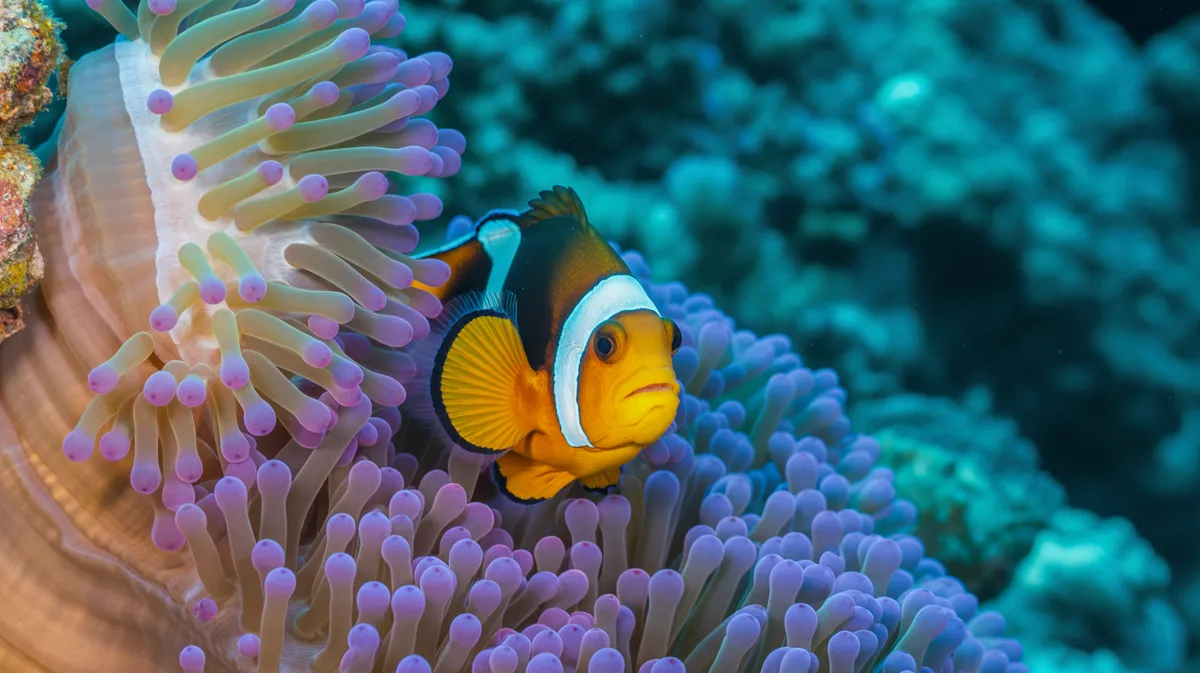
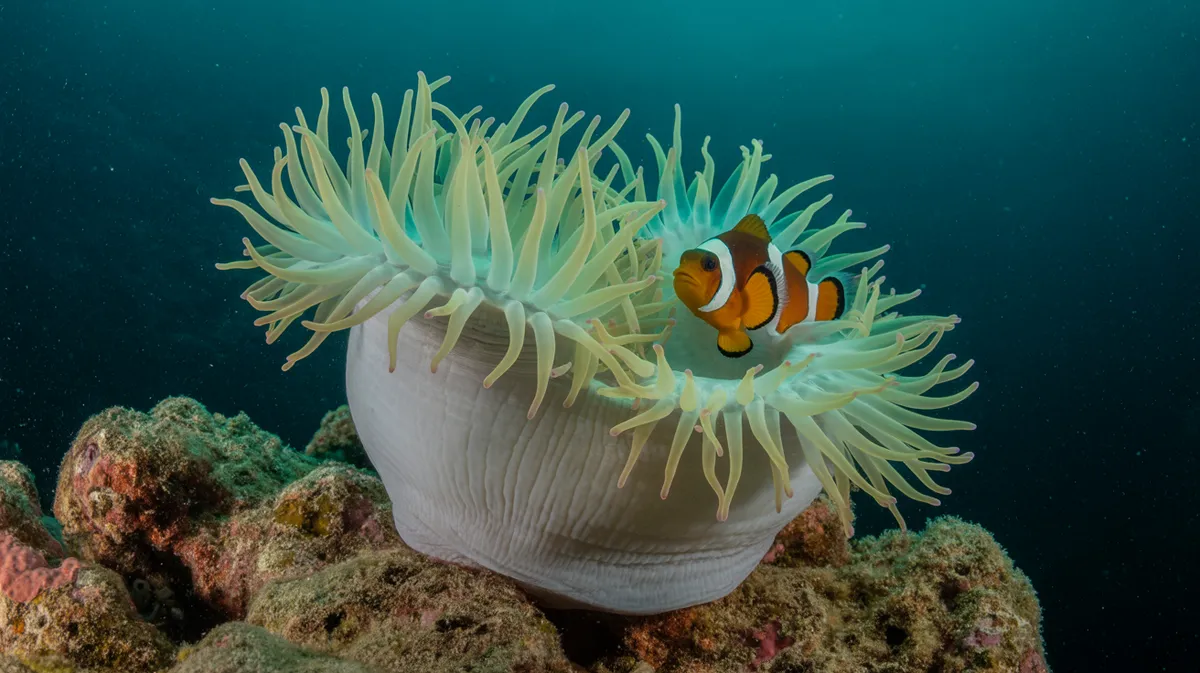
On a coral reef, one small orange fish does something that should be suicidal: it nestles deep into a thicket of venomous tentacles that paralyse and kill almost any other fish that touches them. The clownfish and the sea anemone are one of nature's most famous partnerships — two utterly different creatures that have learned to live as one. In this opening entry of our Nature's Odd Couples series, we explore how this unlikely alliance works.
It's a deal in which both partners come out ahead, and neither could thrive nearly as well alone. When you've met this pair, see two more remarkable partnerships in oxpeckers and buffalo and the honeyguide that leads humans to honey.
An apartment that stings
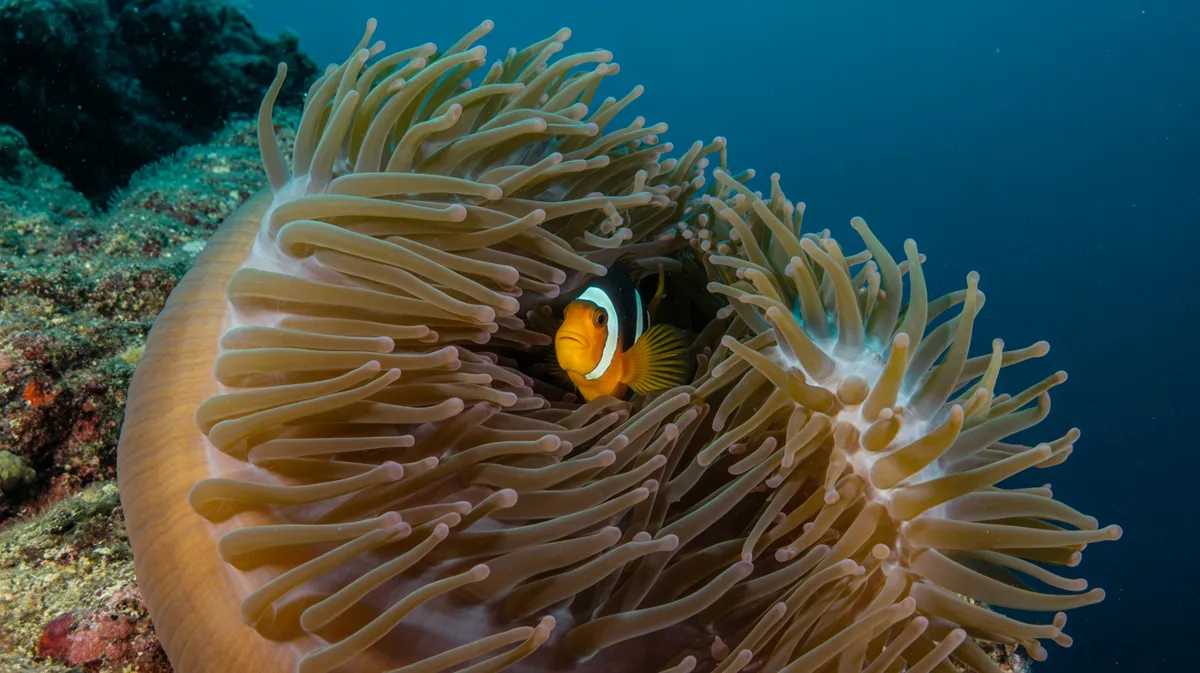
A sea anemone is an animal, related to corals and jellyfish, whose flower-like tentacles are armed with thousands of microscopic stinging cells. To a passing fish, brushing those tentacles usually means paralysis and death.
Yet the clownfish lives right inside them, brushing against the venom constantly and completely unharmed. It has, in effect, rented an apartment that murders any intruder at the door.
That deadly doorstep is exactly what makes the anemone such a perfect home — almost nothing can follow the clownfish in.
Different anemone species suit different clownfish, and a clownfish will fight hard to defend its particular host, treating that one anemone as home for years.
What the clownfish gains
For the clownfish, the benefits are obvious. Surrounded by stinging tentacles, it's shielded from the predators that would happily snap up such a small, slow, brightly coloured fish.
The anemone also gives it a safe place to lay its eggs, tended right at the base of its protector.
In return for cleaning and the odd scrap, the clownfish gets one of the most secure homes on the entire reef.
Without an anemone a clownfish is dangerously exposed, and individuals that lose their host often don't survive long out on the open reef.
What the anemone gains
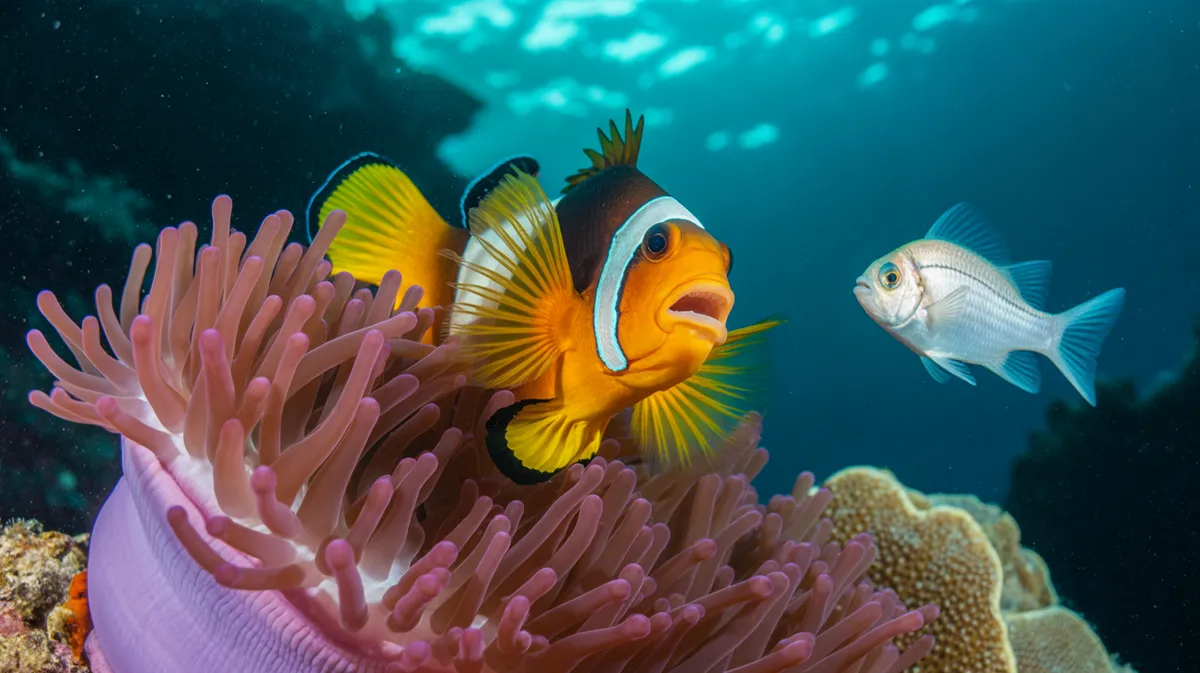
This isn't a one-way arrangement — the anemone profits handsomely too. The clownfish chases off butterflyfish and other species that love to nibble anemone tentacles, acting as a tireless little bodyguard.
As it darts about, the fish also fans fresh, oxygen-rich water through the tentacles, and its droppings provide valuable nutrients.
Some studies even suggest the clownfish's bright colours and movement help lure prey within reach of the anemone's sting, turning the fish into living bait.
Anemones with resident clownfish have been shown to grow faster and survive better than those without — measurable proof the fish earns its keep.
Becoming immune
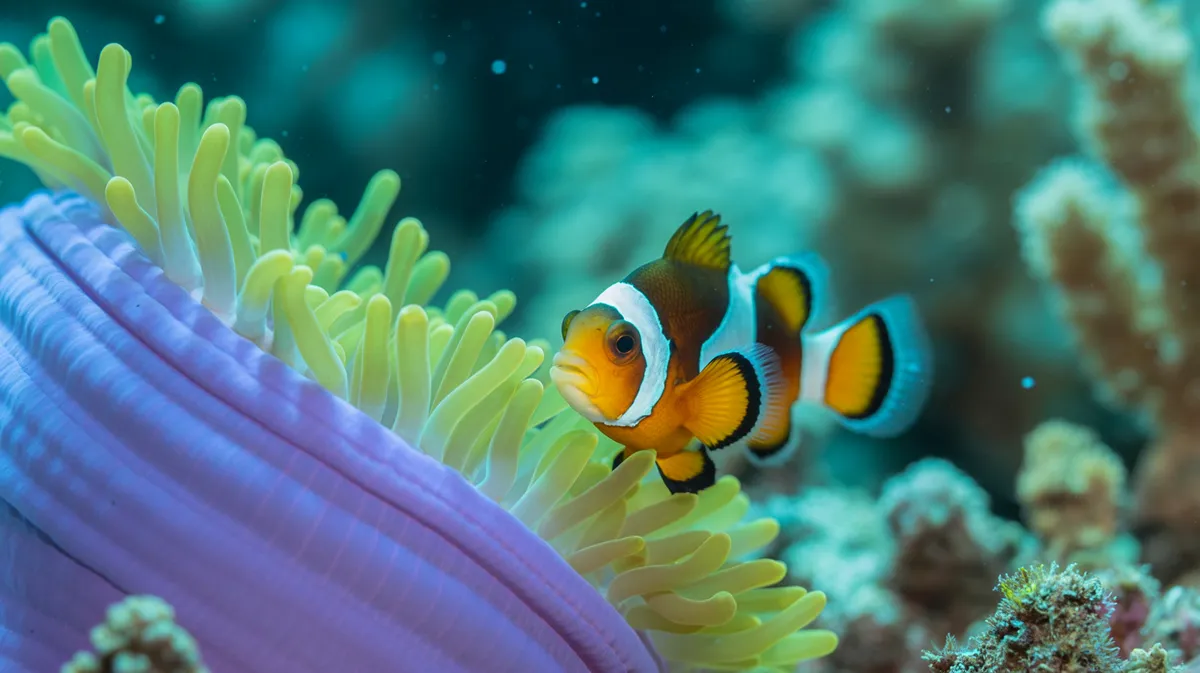
A clownfish isn't simply born bulletproof to anemone venom — it has to earn its immunity. A young fish approaches a new anemone cautiously, touching it briefly and building up a protective coat of mucus over time.
That special mucus seems to chemically disguise the fish, so the anemone's stinging cells no longer recognise it as prey and hold their fire.
It's a delicate acclimation, almost a courtship, after which the fish can plunge into the tentacles in total safety.
If a clownfish is kept away from its anemone for too long, it can actually lose this protection and has to build it up again from scratch.
A backwards family
The clownfish's home life is as strange as its choice of housemate. A group lives in each anemone in a strict pecking order, led by a single dominant female and one breeding male, with smaller males waiting in line.
Every clownfish is born male — and if the female dies, the dominant male changes sex to become the new female, and the next male in line steps up to breed.
It's a biological plot twist that the famous fish films quietly skip over.
Because moving home is so risky, this rigid hierarchy keeps the peace, with subordinate fish deliberately staying small so as not to challenge those above them.
A fragile partnership
For all its success, this partnership is under threat. Sea anemones, like corals, rely on tiny algae for food and colour, and when the water warms too much they "bleach" and can die.
Lose the anemones, and the clownfish lose their homes and their protection along with them.
The fate of one of the reef's most beloved residents is tied directly to the health of its stinging landlord.
Protecting reefs from warming seas, then, isn't only about the corals — it's about safeguarding the countless partnerships, like this one, that a reef holds together.
Beyond Nemo: The Wider Family
There is no single "clownfish". Around 30 species of anemonefish exist, and they vary widely in colour, size, and temperament.
What is remarkable is how choosy the partnership is. Of the many hundreds of anemone species in the sea, only about ten host anemonefish at all, and most anemonefish species will settle in only a few of those.
Some are generalists that will take whatever host they can find, while others are strict specialists, bonded to a single anemone species. That fussiness makes the relationship far more fragile than it looks: lose the right anemone and the fish has nowhere to go.
An alliance that defines the reef
The clownfish and the anemone show how two species can become so entwined that each makes the other's life possible. It's not friendship in any human sense, but a finely balanced exchange — protection for protection — that has made an orange fish in a bed of venom one of the most iconic sights in the sea.
Frequently asked questions
Why don't clownfish get stung by anemones? They build up a special protective mucus coat that disguises them, so the anemone's stinging cells don't fire.
What does the anemone get from the clownfish? Protection from tentacle-eating fish, cleaning, better water flow, nutrients, and possibly lured-in prey.
Are clownfish born male or female? All are born male; the dominant fish becomes the female, and changes back are not possible.
How long do clownfish live? Often 6 to 10 years in the wild, and considerably longer in a well-kept aquarium.
Can a clownfish survive without an anemone? It can, but it becomes highly vulnerable to predators and rarely lasts long on an open reef.
Do clownfish really change sex? Yes — all are born male, and the dominant fish becomes the group's female.
Next, a partnership with a darker edge: oxpeckers and buffalo, and an astonishing alliance with humans in the honeyguide that leads people to honey.