
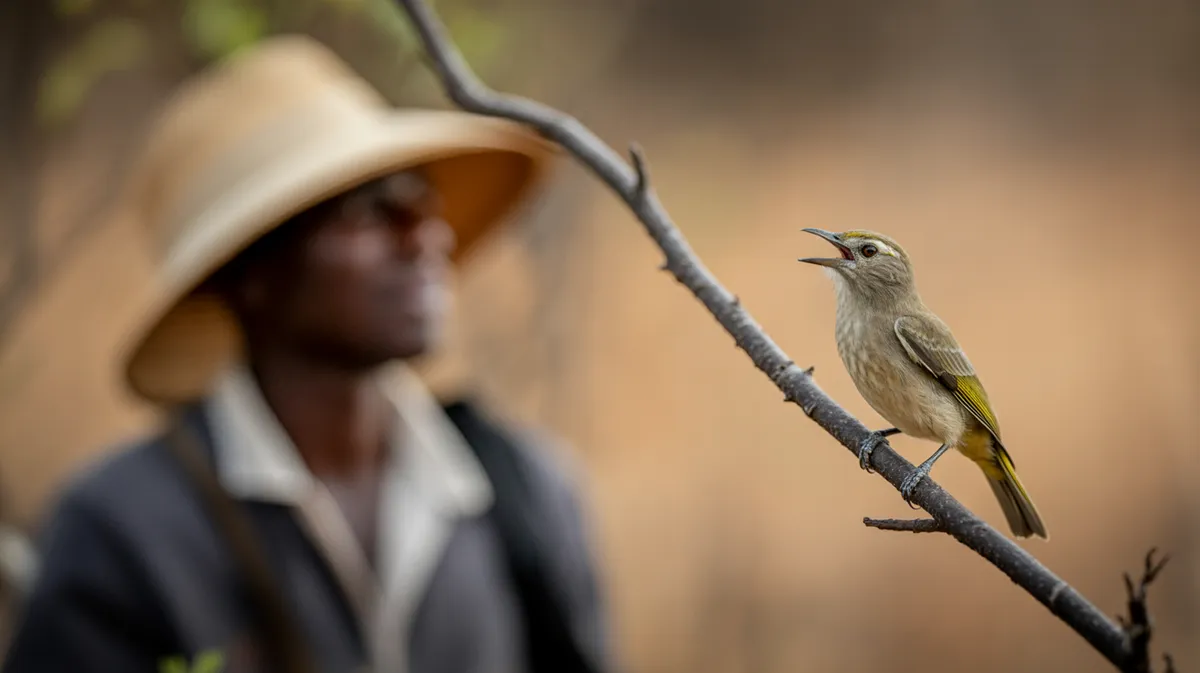
Deep in the African bush, a small, drab bird flits up to a honey-hunter, chatters insistently, and then flies off — pausing, calling, and waiting for the person to follow. The greater honeyguide is doing something almost unheard of in nature: it is deliberately leading a human being to a wild bees' nest. In this entry of our Nature's Odd Couples series, we explore one of the only known partnerships between people and a free-living wild animal.
It's a genuine, two-way conversation between species, refined over thousands of years. See also the reef pairing of the clownfish and the sea anemone and the savanna duo in oxpeckers and buffalo.
A call and response
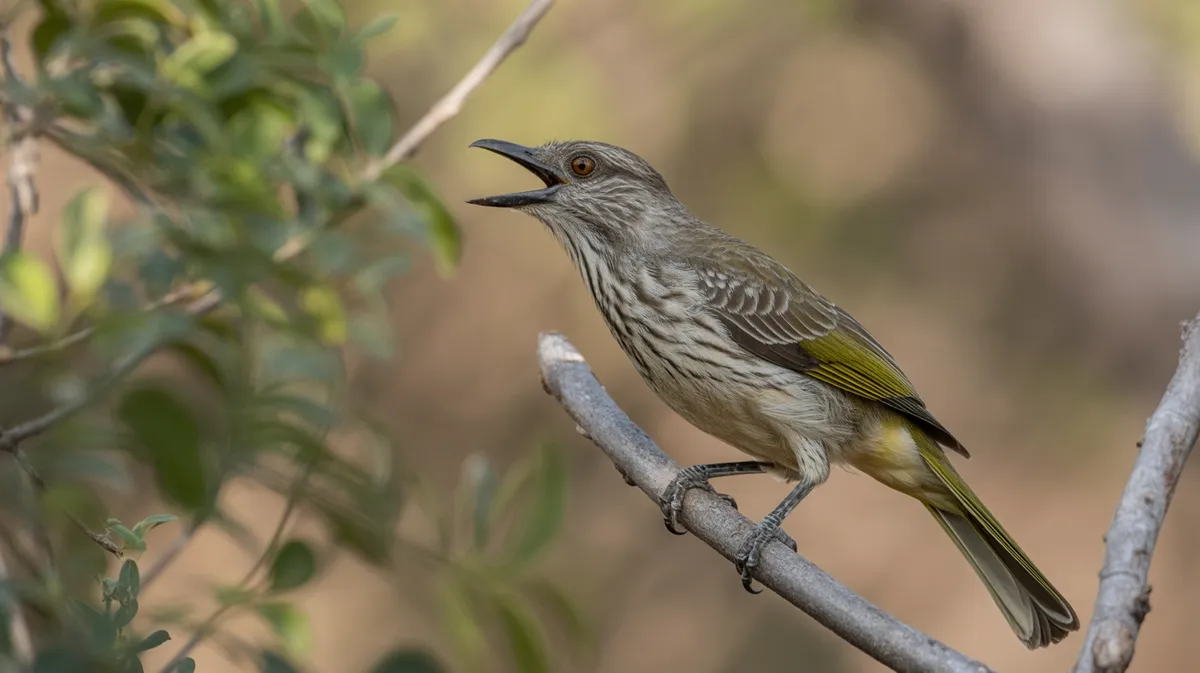
The partnership begins with communication. In some communities, honey-hunters announce that they're looking for nests using a special trilling call or whistle passed down through generations.
A honeyguide that hears it responds with a distinctive chattering call of its own and begins flitting from tree to tree, glancing back to make sure its human partner is following.
It is, remarkably, a true conversation — each species signalling its intentions to the other across the open bush.
In one community the signal is a loud trill followed by a grunt; in another it's a melodic whistle — and the local birds respond best to their own region's version.
A deal sealed in wax
The reason the bird helps is beautifully simple: it wants something it can't get on its own. Honeyguides love to eat beeswax but can't break into a well-defended bees' nest by themselves.
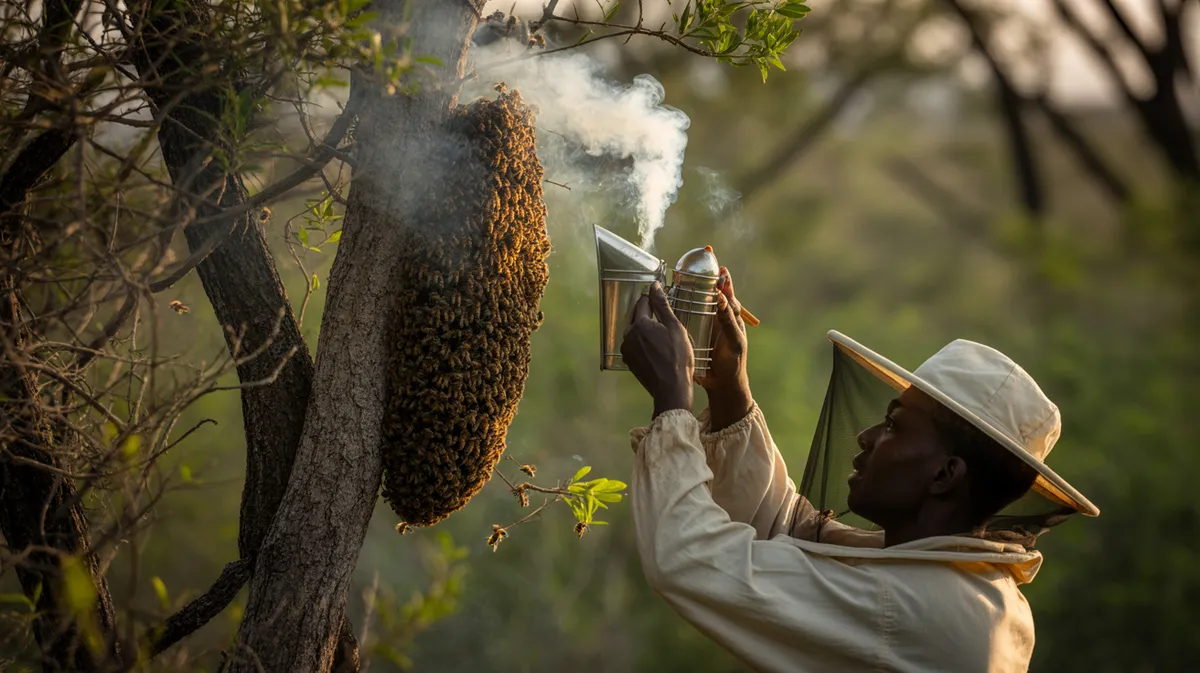
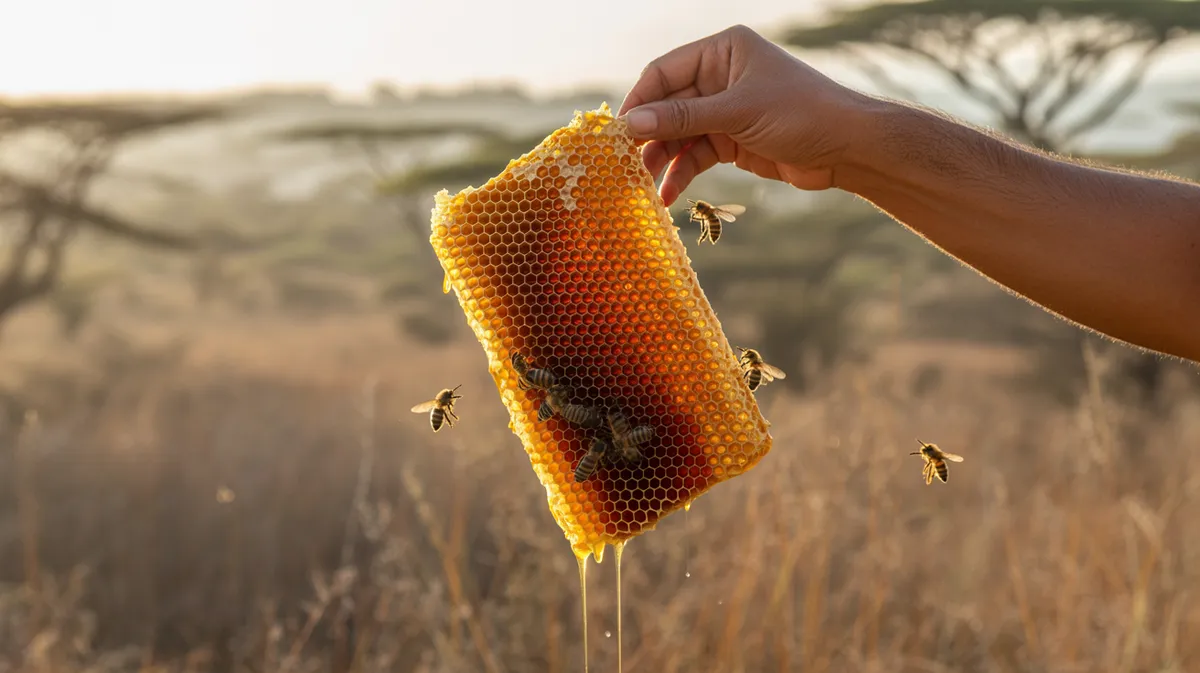
Humans can. Once led to the nest, the hunters use smoke to calm the bees and tools to open the hive, taking the honey and leaving the wax and grubs behind.
The bird gets a feast of wax it could never have reached alone; the people get honey they might never have found. Both partners leave richer.
Honeyguides have the unusual ability to digest wax, helped by special gut microbes, which turns an otherwise worthless substance into a genuine prize.
Following the guide
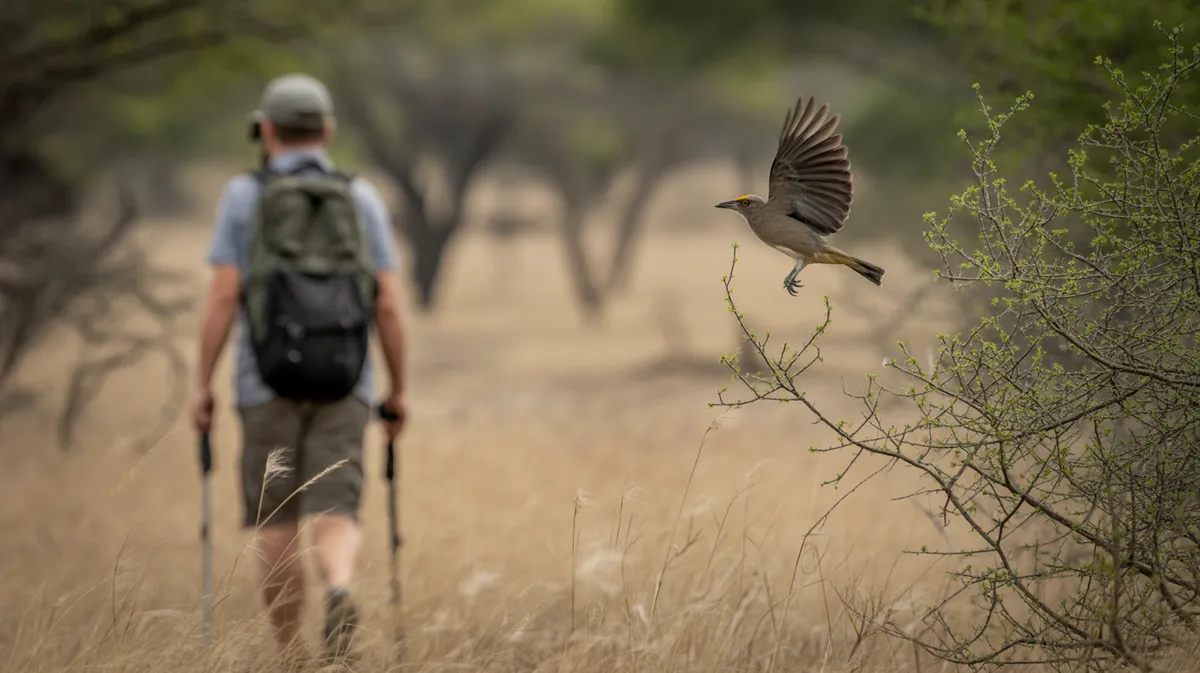
Following a honeyguide is a real journey. The bird flies ahead in short hops, perches conspicuously, calls, and waits — then moves on again the moment its follower catches up.
It can lead a hunter for hundreds of metres, sometimes much farther, steering them through the bush toward a nest they had no way of knowing was there.
As the group nears the hive, the bird's calls and behaviour change, signalling that the goal is close.
Hunters say they can read the bird's mood from its calls and flight, and experienced gatherers and honeyguides clearly come to know one another's habits.
A shared, learned language
What makes this partnership astonishing is that the signalling is learned and local, almost like a shared language. Different human cultures use different calls, and the honeyguides in each area learn to recognise the specific sounds their human neighbours make.
Careful research has shown the effect is real and powerful: hunters using the traditional call are far more likely to be guided to a nest than those who don't.
It's a rare case of two species co-evolving a way to talk to each other for mutual gain.
One landmark study found that using the traditional call roughly tripled the chance of being led to a nest compared with other human sounds.
Ancient and fading
This relationship may be tens of thousands of years old, stretching back deep into human prehistory when honey was a prized source of energy. Some scientists think honeyguides may once have led our ancestors, and possibly other animals, to nests as well.
Sadly, as traditional honey-hunting declines in much of Africa, the partnership is fading with it, and in some regions the birds no longer hear the old calls.
A bond older than agriculture is quietly slipping away in a single generation.
There are even old accounts of honeyguides leading honey badgers to nests, though that particular claim is debated and may be more legend than fact.
A Partnership Slipping Away
This may be the only mutualism between humans and a wild animal still practised today — and it is quietly dying out.
As sugar becomes cheap and available, traditional honey-hunting has faded across much of Africa. Where the hunters stop calling, the honeyguides stop responding, and within a generation the birds in that area no longer recognise the signal at all.
Researchers are now racing to record the surviving calls and document the practice before it disappears. It is a strange kind of extinction — not of a species, but of a conversation between two species that may be tens of thousands of years old.
A friendship across the species barrier
The honeyguide and the honey-hunter prove that cooperation can leap across the widest of gulfs — between a wild bird and a human being. It's a humbling reminder that, long before we domesticated anything, at least one wild animal chose to work alongside us, and we learned to answer back.
Frequently asked questions
Do honeyguides really lead humans to honey? Yes — the greater honeyguide deliberately guides honey-hunters to wild bees' nests, responding to special human calls.
What does the honeyguide get out of it? Access to beeswax and bee grubs it can't reach without a human opening the nest.
How do honeyguides and humans communicate? Through learned, local calls — hunters use a traditional sound and the birds respond and lead, a co-evolved signalling system.
Do honeyguides lead honey badgers to nests? It is a popular story, but the evidence is thin and most researchers now doubt it.
Can honeyguides digest wax? Yes — an unusual ability, helped by specialised gut microbes.
Does the call really make a difference? Yes. One study found the traditional call roughly tripled the chance of being guided to a nest.
What is a honeyguide? A small, drab African bird famous for deliberately leading people to wild bees' nests.
Do honeyguides eat honey? Mostly wax and bee grubs. They cannot break into a defended nest without help.
How do people call a honeyguide? With a traditional trill, grunt, or whistle — learned locally and passed down through generations.
Is the partnership at risk? Yes. As honey-hunting traditions fade, the birds stop hearing the calls and stop responding.
That's three of nature's odd couples. Revisit the clownfish and the sea anemone and oxpeckers and buffalo — and watch for more in the Nature's Odd Couples series.