
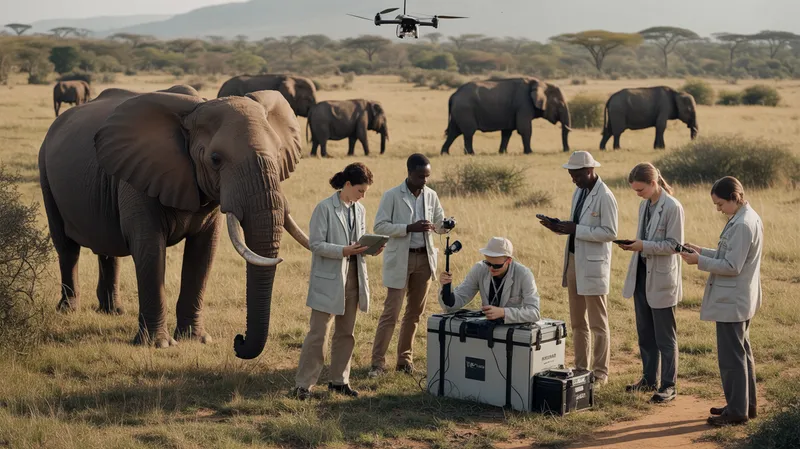
In the rapidly evolving world of animal health, a quiet revolution is underway. Researchers, conservationists, and businesses are coming together to bridge the traditional gap between laboratory discoveries and real-world impact. The result? Innovative solutions that not only protect wildlife but also secure the health of ecosystems and the people who depend on them.
The Urgency: Why Animal Health Matters More Than Ever
Animal health is a cornerstone of biodiversity and human wellbeing. Healthy wildlife populations regulate ecosystems, control pests, and, in many cases, protect people from zoonotic diseases. However, climate change, habitat loss, and emerging infections are putting unprecedented pressures on animals—from African Elephants threatened by poaching and disease, to bats facing deadly viruses that can spill over to humans. These challenges demand new approaches that connect science, fieldwork, and technology.
Cross-Disciplinary Partnerships: The New Standard
Recent years have seen a surge in partnerships that transcend traditional boundaries. Universities, tech companies, non-profits, and local communities are working together in ways never before possible. According to Innovation News Network, institutions like Université Laval are leading the charge, tackling issues from zoonotic disease surveillance to mental health in both humans and animals.
- Academic-Industry Collaboration: Purdue University’s consortium with pharmaceutical giants Lilly and Merck is revolutionizing vaccine and pharmaceutical manufacturing for both human and animal health (Purdue University, 2025).
- AI-Powered Wildlife Monitoring: Real-world businesses are leveraging artificial intelligence to monitor animal populations, detect disease outbreaks, and optimize conservation strategies, as seen in over 261 new case studies compiled by Microsoft (Microsoft Blog, 2025).
- Grassroots Partnerships: In Kenya, local herders, NGOs, and scientists are collaborating to combat Rift Valley fever, a disease that threatens both livestock and people (FHI 360, 2025).
Bridging the Gap: Translational Research in Action
Translational research—turning scientific discoveries into practical solutions—is now a central strategy for animal health. The McGill Centre for Translational Research in Cancer (MCTRC), while focused on human health, exemplifies how teams of scientists and clinicians can accelerate the journey from the lab bench to the field (Innovation News Network, 2025). Likewise, veterinary science research at the University of Sydney is driving global innovation through interdisciplinary collaboration and education, advancing not only animal but also environmental and public health (University of Sydney, 2025).
“We’re seeing a new era where discoveries don’t just stay in the lab—they’re rapidly deployed in the field, benefiting both animals and people worldwide.” — Dr. Sarah W., Veterinary Epidemiologist
Technological Innovations: From AI to Rapid Diagnostics
Technology is a game-changer. Artificial intelligence and advanced manufacturing are opening new possibilities for wildlife health management:
- AI for Disease Surveillance: Machine learning models can now predict outbreaks in species like African Buffalo by analyzing satellite data, weather patterns, and migration routes.
- Portable Diagnostics: Inspired by the race for rapid COVID-19 testing, startups are developing point-of-care blood tests for field veterinarians, echoing innovations seen in the human health sector (New York Times, 2025).
- Pharma Manufacturing Revolution: Purdue’s advanced aseptic processing technologies are making vaccines safer and more widely available for threatened wildlife populations.
These advances aren’t just theoretical; they’re already protecting endangered species and preventing the spread of deadly diseases.
Case Study: Combating Rift Valley Fever in Kenya
In Marsabit County, northern Kenya, nomadic farmers depend on healthy livestock for their livelihoods. But recurring outbreaks of Rift Valley fever—an often-fatal viral disease—threaten both animals and people. In a groundbreaking project, local communities, veterinarians, and international NGOs joined forces to:
- Deploy mobile diagnostic labs for rapid field testing
- Use satellite data and AI to identify outbreak hotspots
- Conduct vaccination campaigns for both livestock and at-risk wildlife
By blending traditional knowledge with cutting-edge science, these partnerships have reduced outbreak duration and saved hundreds of lives (FHI 360, 2025).
Why Collaboration Works: Lessons from Recent Discoveries
- Faster Innovation: Academic-industry consortia—backed by federal funding—are accelerating the translation of basic science into deployable solutions (Harvard Medicine Magazine, 2025).
- Global Impact: International collaboration ensures that breakthroughs benefit biodiversity hotspots and vulnerable communities, not just wealthy nations.
- Education and Capacity-Building: Partnerships foster training for the next generation of conservation leaders and veterinarians worldwide.
Real-World Impact: From Elephants to Bats
Breakthroughs in animal health ripple across entire ecosystems. For example:
- New vaccines protect African Elephants from deadly viruses, supporting their vital role as ecosystem engineers.
- Cutting-edge surveillance helps track bat populations, which are essential for pollination and insect control, while minimizing the risk of zoonotic disease spillover.
- AI-powered monitoring of African Buffalo informs anti-poaching efforts and disease management in savanna habitats.
Conservation Messages for the Future
Protecting animal health means preserving Earth's biodiversity and our own future. Here’s how individuals and organizations can contribute:
- Support science-driven conservation: Donate to or volunteer with organizations that build bridges between research and real-world impact.
- Stay informed: Follow updates from trusted sources about animal health, emerging diseases, and conservation breakthroughs.
- Advocate for collaboration: Encourage policies and funding that support cross-sector partnerships for wildlife health.
“Collaboration is our most powerful tool for protecting both animals and people from the next global health crisis.” — Dr. Amina G., Conservation Biologist
Frequently Asked Questions
What is One Health? The recognition that human, animal, and environmental health are a single connected system — and that a disease outbreak in wildlife is rarely just a wildlife problem.
Why do most new human diseases come from animals? The majority of emerging infectious diseases are zoonotic, crossing over where people, livestock, and wildlife come into close contact.
What does a rapid diagnostic actually change? It moves testing from a distant laboratory to the field, cutting the delay between an outbreak starting and anyone knowing about it.
Can AI predict outbreaks? It can flag risk — combining climate, movement, and surveillance data to highlight where spillover is most likely — but it still needs people on the ground to confirm and respond.
Looking Ahead: The Promise of Partnership
The convergence of technology, scientific research, and community engagement is transforming animal health from the ground up. With continued investment and collaboration, the success stories emerging from Africa, Australia, and beyond can serve as a blueprint for global action. The next decade will be defined by our ability to turn discovery into action—ensuring a healthier, more resilient future for all species.
Explore More on Creature Atlas
- Learn about the African Elephant and its role in ecosystem health
- Discover why bats are vital for pollination and pest control
- Read about the African Buffalo and savanna conservation
Together, we can ensure that the innovations of today become the conservation victories of tomorrow.