
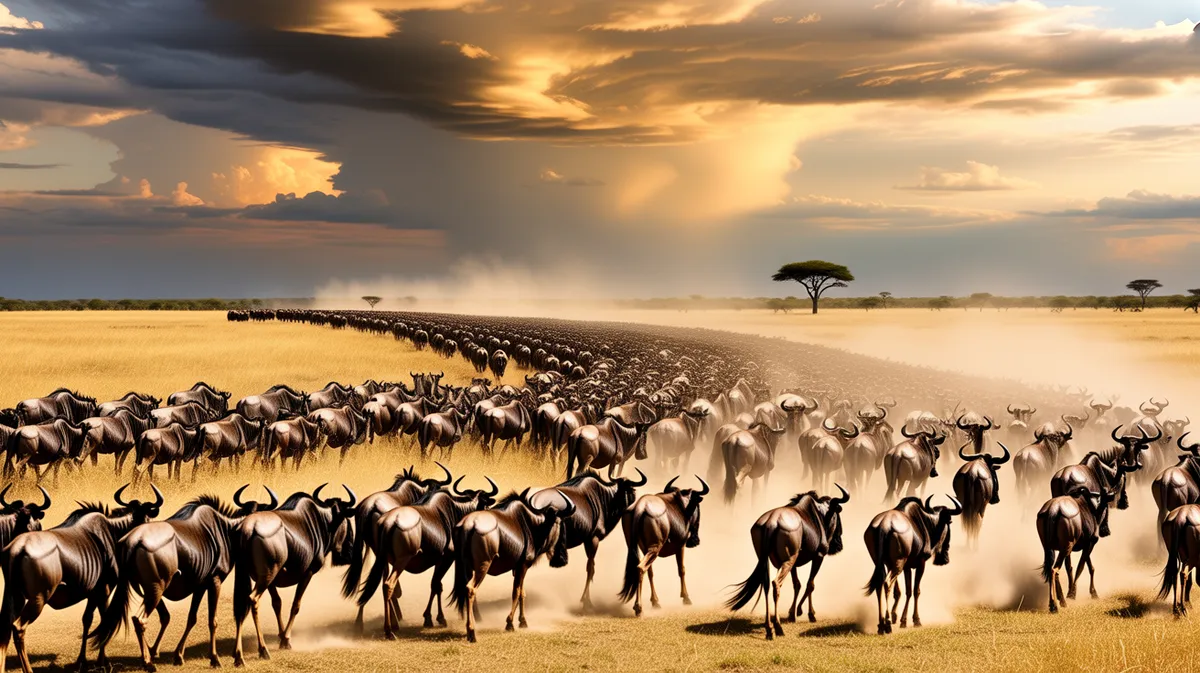
Across the vast plains of East Africa, more than a million animals move together in a single, endless, thundering circle, driven by rain, grass, and the need to survive. The Great Wildebeest Migration is the largest overland movement of animals on the planet — a slow, dramatic loop played out year after year across the Serengeti and the Masai Mara. In this entry of our The Great Migrations series, we join the herds on the move.
It is a spectacle of life, death, and relentless motion on a scale found nowhere else. See also the multi-generational monarch butterfly migration and the homeward salmon journey.
A million on the move
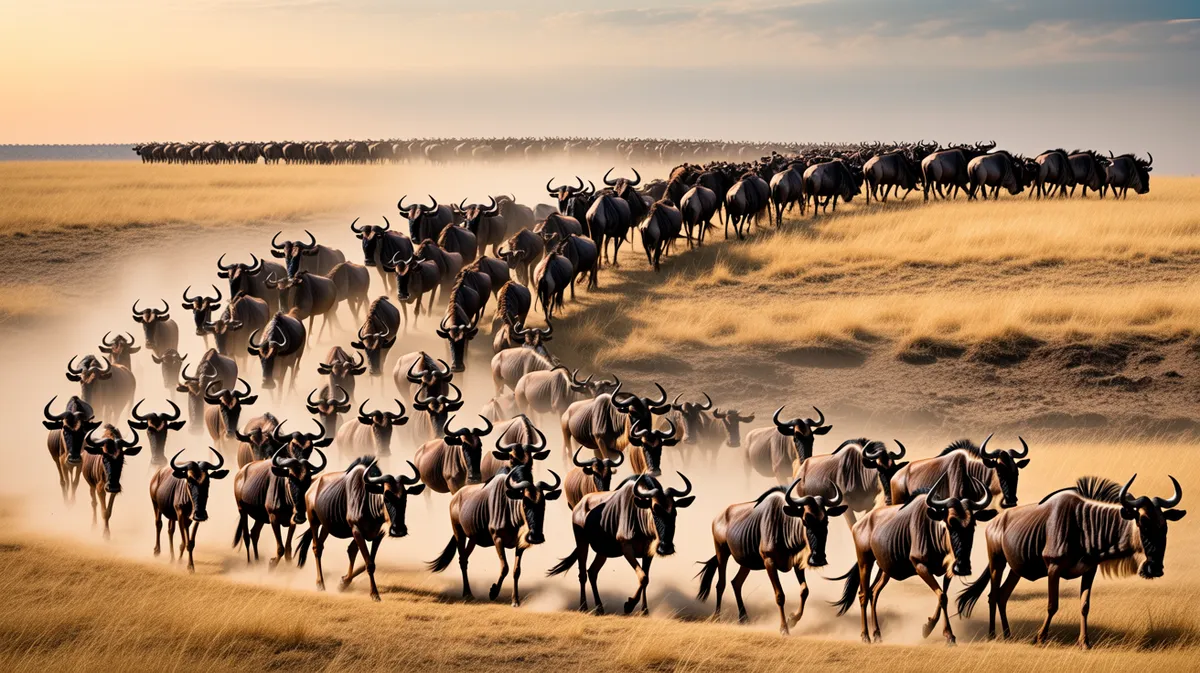
The migration is led by around 1.5 million wildebeest, joined by hundreds of thousands of zebra and gazelle, all travelling together in immense, mingling herds.
Together they form a column of animals so large it can be seen from the air stretching to the horizon, churning across the grasslands.
This isn't a single dash from A to B but a continuous, roughly circular journey of some 800 kilometres, repeated endlessly through the year.
From ground level the sound alone is overwhelming — a constant chorus of grunts and drumming hooves rolling across the plains day and night.
Following the rain
The herds are chasing one thing above all: fresh grass. Their entire route is dictated by the rains, which green different parts of the ecosystem at different times of year.
The animals move to wherever the rain has recently fallen, grazing the new growth before moving on as the land dries out again.
In this way the migration traces the seasons themselves, an enormous herd forever a step behind the storms.
The wildebeest seem able to sense distant rainfall, sometimes turning to move toward faraway storm clouds and the fresh grass they promise.
The river of death
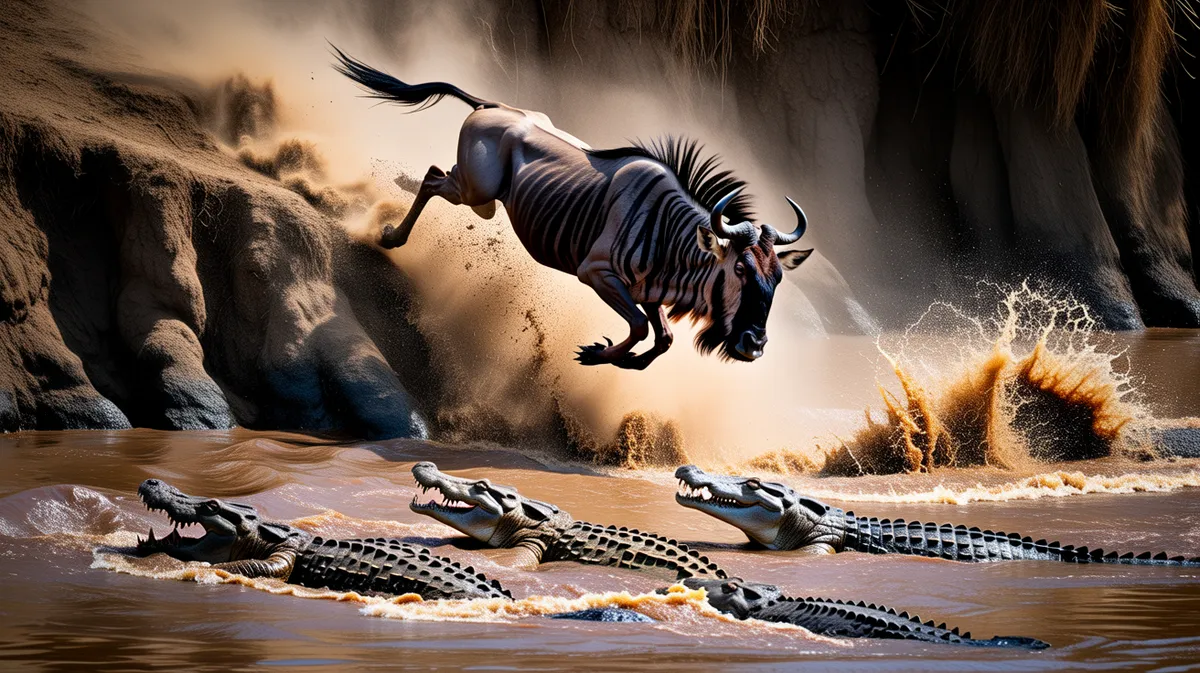
The most famous and dramatic moments come at the great river crossings, especially the Mara River. Here the herds must plunge down steep banks and swim across fast, crocodile-infested water.
Giant Nile crocodiles lie in wait, and the crossings become a frenzy of splashing, panic, and predation, with many animals drowned or taken.
Yet the herds cross anyway, driven by the fresh grazing waiting on the far side — the reward is worth the terrible risk.
The animals often mass on the banks for hours, hesitating, until a sudden surge sends the whole herd plunging in together in one unstoppable rush.
Born to run
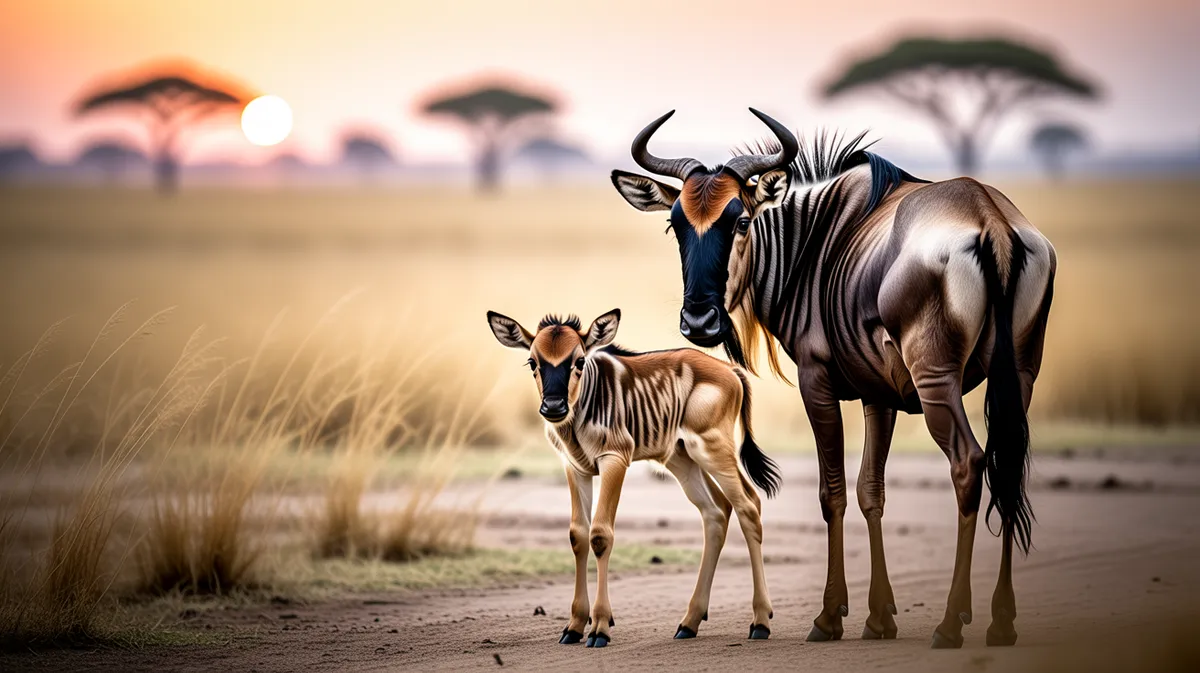
Each year the migration pauses for one of nature's great birth events. In a short window of a few weeks, around half a million wildebeest calves are born, almost all within the same brief period.
This synchronised calving is a survival strategy: by flooding the plains with newborns all at once, the herd overwhelms the predators, which simply cannot eat them all.
A wildebeest calf can stand and run within minutes of birth, ready to keep up with the ever-moving herd almost immediately.
This annual baby boom on the nutrient-rich southern grasslands is precisely timed to the short rains, when the grazing is at its very best for nursing mothers.
A moving feast
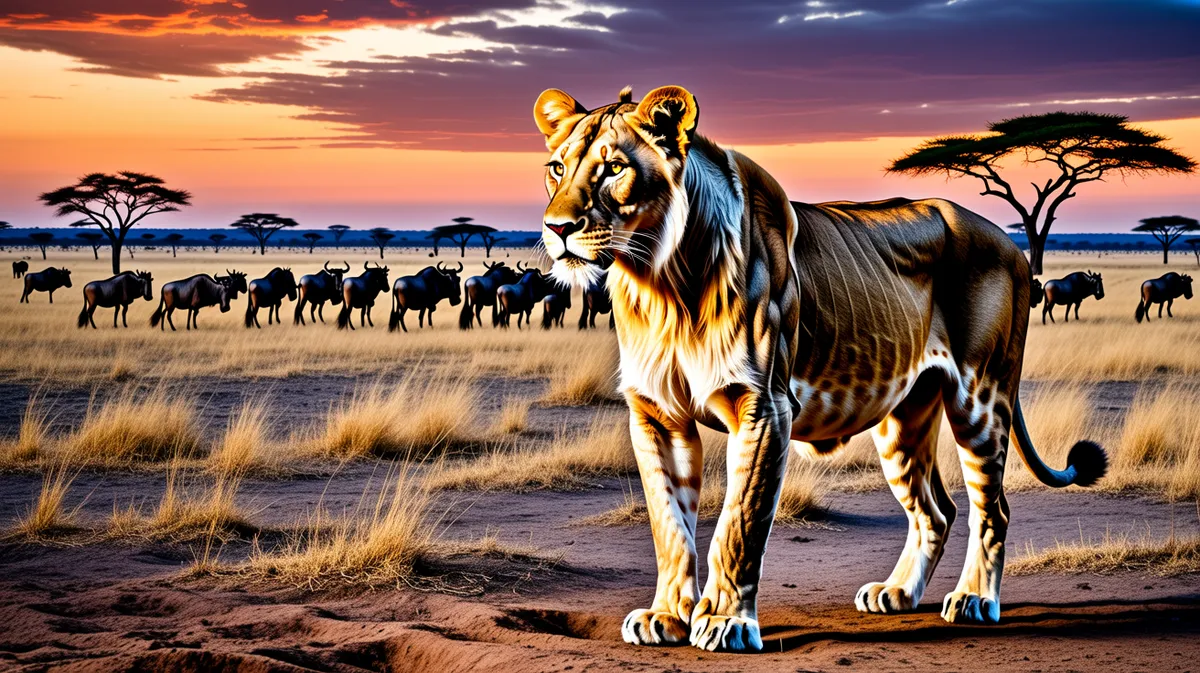
Such a vast concentration of prey draws an army of predators. Lions, hyenas, cheetahs, leopards, and wild dogs all follow the herds, timing their own lives around the migration's arrival.
The migration feeds the entire ecosystem, from the great cats to the scavengers and the crocodiles at the rivers.
As the herds pass through, they leave behind a landscape shaped by their grazing and enriched by their presence.
Studies suggest the migration is the engine of the entire Serengeti ecosystem, and that without it the whole web of predators and scavengers would collapse.
The endless circle
There is no beginning or end to this journey — it simply turns, year after year, following the eternal rhythm of the rains. From calving on the southern plains to the deadly northern river crossings and back again, the circle never stops.
Every generation of wildebeest is born into the migration and spends its whole life within it.
It is less a trip than a way of life, written into the land itself.
Individual animals may never survive a full loop, but the herd as a whole rolls on — an unbroken circle that has turned across these plains for millennia.
A Migration Under Pressure
The Great Migration survives because the herds can still move freely across a vast, unbroken landscape — and that is exactly what is now at risk.
Fences, farms, roads, and settlements are steadily closing in on the migration corridors. A migration route severed at one point can collapse the whole circuit, because the herds simply cannot reach the grazing they need.
Elsewhere in Africa, migrations of this kind have already been lost, wiped out within a generation once their routes were cut. Keeping the Serengeti–Mara corridor open is the single most important thing that can be done to protect the spectacle.
The greatest show on Earth
The Great Migration is often called the greatest wildlife spectacle on the planet, and for good reason. In its endless circling of the plains, driven by nothing more than rain and hunger, it captures the raw, unstoppable force of life on the move.
Frequently asked questions
How many animals are in the Great Migration? Around 1.5 million wildebeest, plus hundreds of thousands of zebra and gazelle.
Why do wildebeest migrate? To follow the rains and the fresh grass they bring, moving in a continuous loop across the Serengeti and Masai Mara.
What happens at the river crossings? Herds must swim crocodile-filled rivers like the Mara, where many drown or are taken, to reach fresh grazing.
When is the best time to see the river crossings? Typically between July and October, when the herds reach the Mara River, though the timing shifts with the rains.
Do the same animals complete the whole circuit? The herd does, continuously — but many individual animals do not survive a full loop.
Why do zebras travel with the wildebeest? They eat the tougher, taller grass, effectively mowing it and exposing the shorter grass the wildebeest prefer.
Continue with the salmon journey home, or revisit the monarch butterfly migration.