
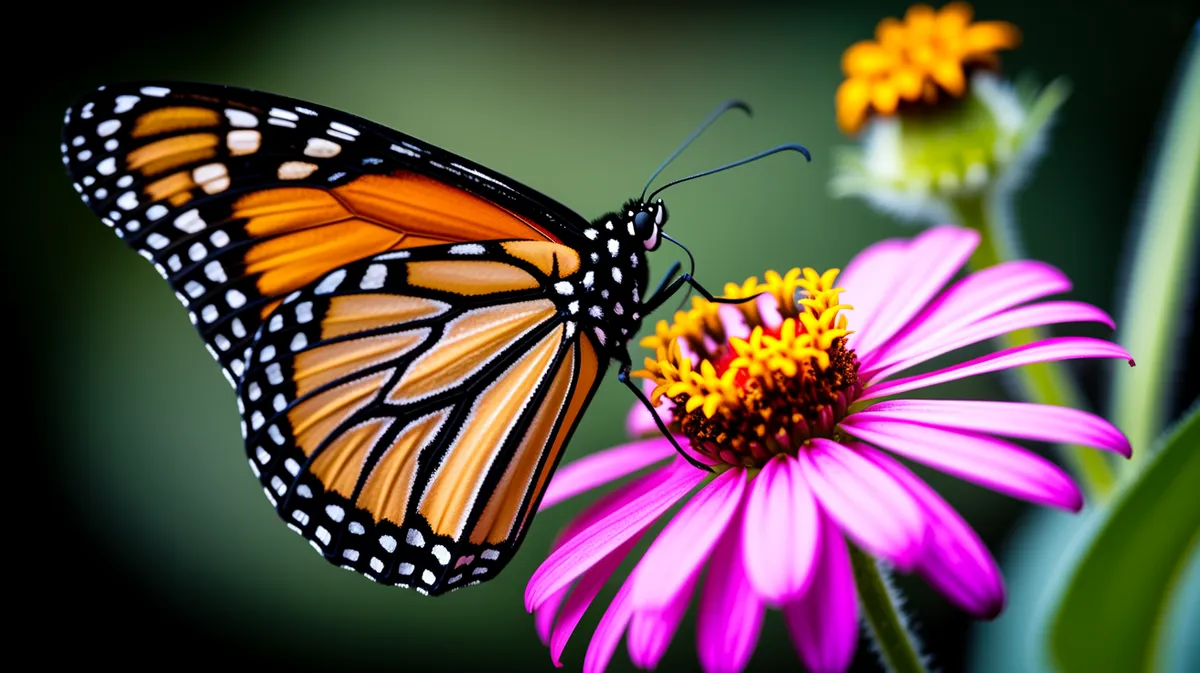
Every autumn, a butterfly weighing less than a paperclip sets off on a journey of thousands of kilometres to a forest it has never seen — a forest where its great-great-grandparents once spent the winter. The migration of the monarch butterfly is one of nature's greatest wonders, and its strangest twist is that no single butterfly ever completes the round trip. In this entry of our The Great Migrations series, we follow the monarch across the generations.
It is a relay race run not by individuals but by an entire lineage. See also the record-setting Arctic tern and the epic salmon journey home.
A journey no butterfly finishes
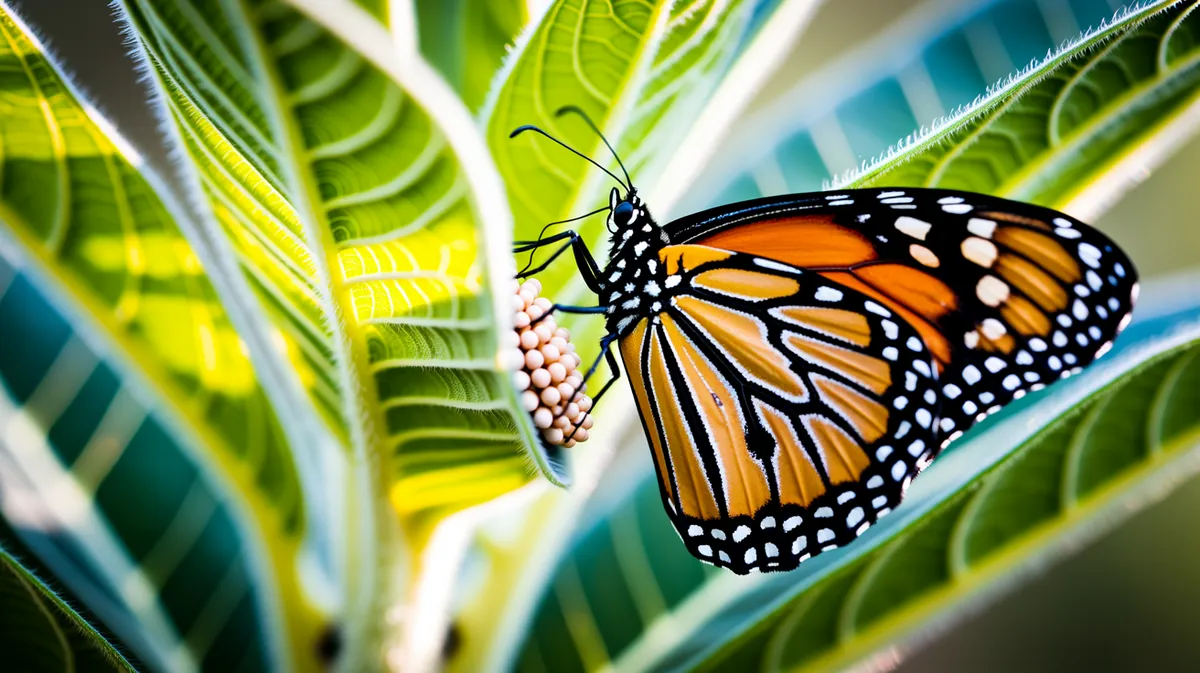
Each spring, monarchs leave their wintering grounds in central Mexico and head north to breed. But the butterflies that arrive back in the northern United States and Canada are not the same ones that left.
The northward journey takes three or four short-lived generations, each flying part of the way, breeding, and dying, while their offspring carry on.
So the butterfly that finally reaches the north is the great-grandchild of the one that departed Mexico — a migration completed as a family, across generations.
Each of these summer butterflies lives only two to six weeks — just long enough to fly a little farther north, lay eggs on milkweed, and pass the baton onward.
The super generation
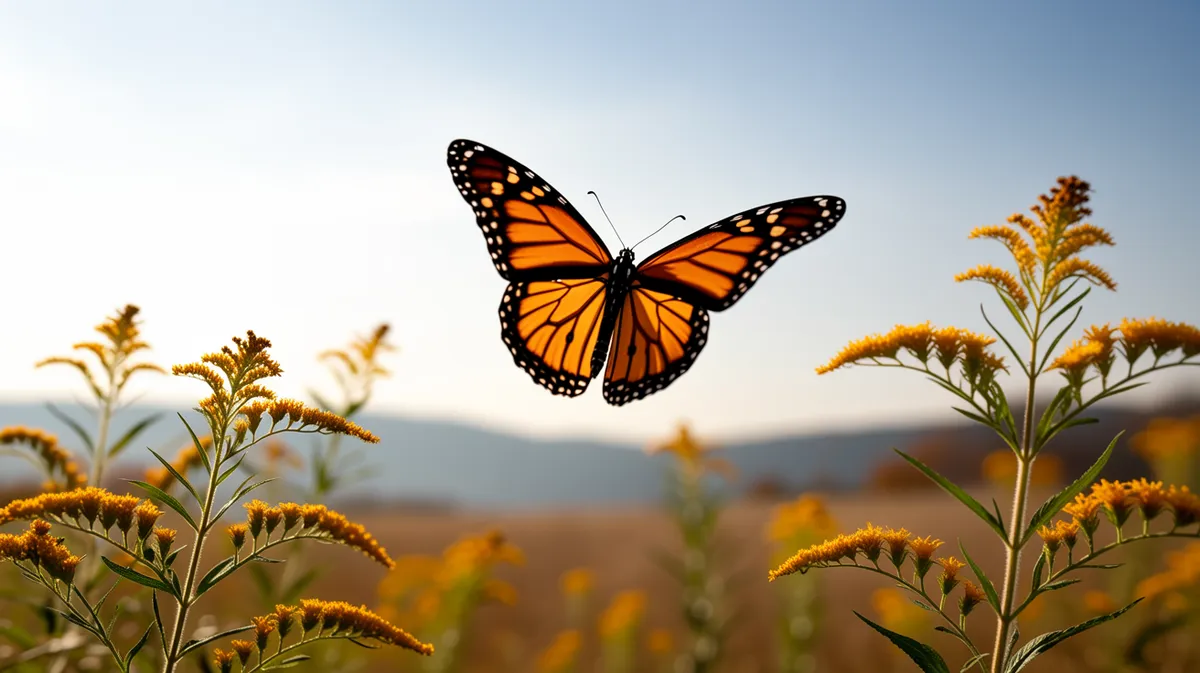
Then comes the most remarkable part. As autumn approaches, a special generation of monarchs is born — sometimes called the "super generation" or Methuselah generation.
Instead of living just a few weeks like their parents, these butterflies live up to eight months, and instead of breeding right away, they hold off and fly the entire distance south, up to around 4,000 kilometres, back to Mexico.
A single one of these butterflies makes the whole southward journey its ancestors took generations to reverse.
Something in the shortening days and cooling temperatures of late summer triggers this longer-lived, travel-ready form to develop instead of the usual short-lived breeders.
Rivers of orange
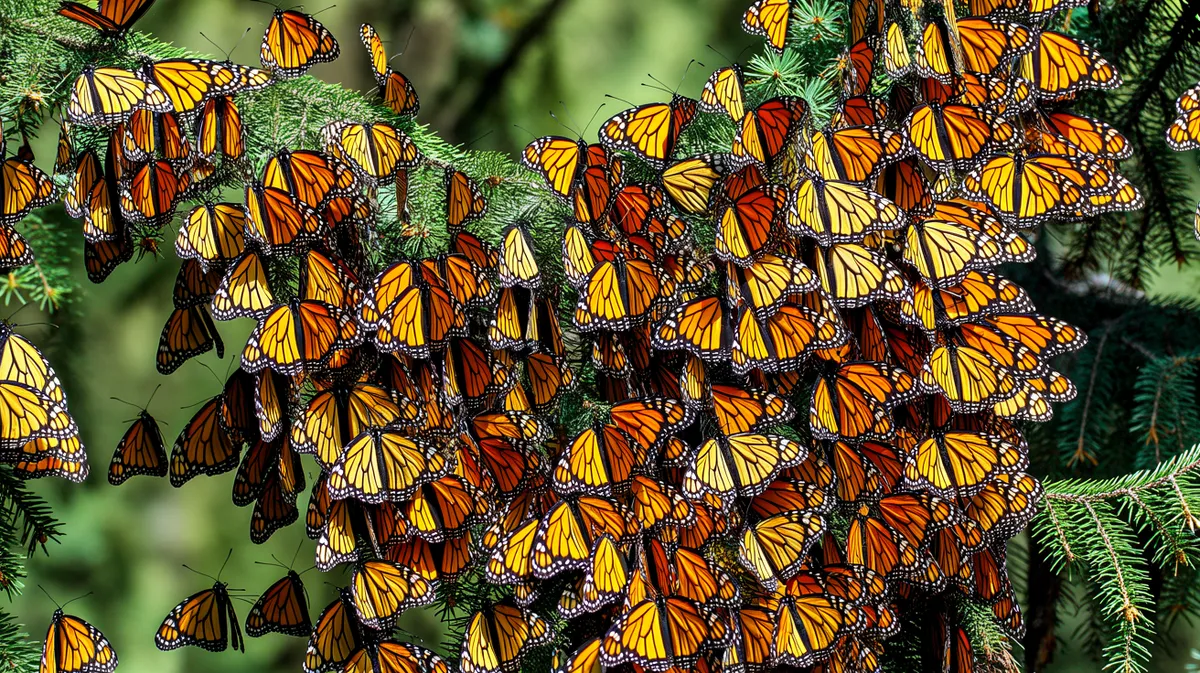
Their destination is a cluster of high-altitude oyamel fir forests in the mountains of central Mexico. There, monarchs gather in almost unimaginable numbers, blanketing the trees so thickly that branches bend under their weight.
Hundreds of millions of butterflies cluster together for warmth, turning whole hillsides orange and black.
They spend the winter in a kind of energy-saving stupor before the cycle begins all over again in spring.
The chosen forests sit at just the right cool-but-not-freezing altitude, a delicate microclimate the monarchs depend on to survive winter without burning through their fat.
An inherited map
The deepest mystery is how they know the way. The super generation has never made the trip before and has no parents to follow, yet it navigates unerringly to a tiny patch of forest thousands of kilometres away.
The route and the destination must be encoded in their genes, an inherited map passed down without a single lesson.
How this information is stored and read remains one of the great unsolved puzzles of animal behaviour.
It means the knowledge of an entire continental journey is compressed into the genes of an insect, ready to unfold in a butterfly that has never migrated before.
Finding the way
Scientists have worked out at least some of the tools the monarch uses to steer. It relies on a "sun compass," reading the position of the sun and correcting for the time of day using an internal clock in its antennae.
On cloudy days, it appears to fall back on the Earth's magnetic field to keep its bearing.
Combining these senses, a brain smaller than a pinhead performs a feat of continental navigation.
Interfere with the tiny clock in a monarch's antennae and it loses its bearings entirely, revealing just how central those antennae are to the whole feat.
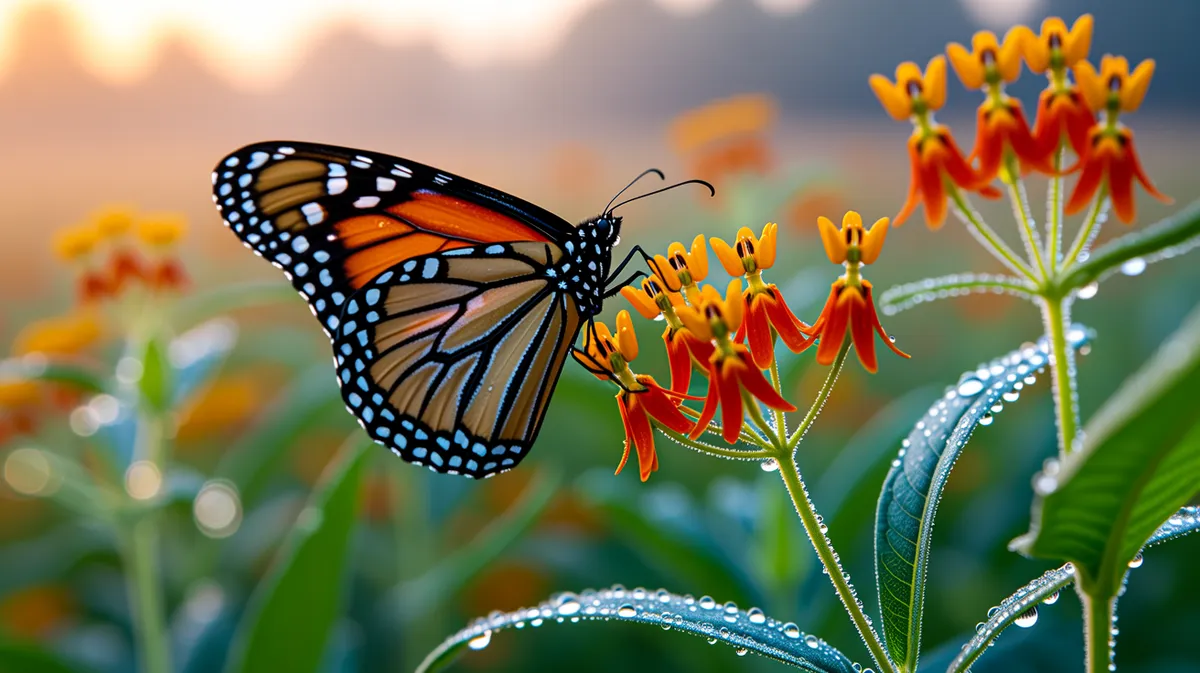
A fragile miracle
This wonder is now under serious threat. Logging of the Mexican wintering forests, the loss of the milkweed plants monarch caterpillars depend on, and a changing climate have all driven monarch numbers down sharply.
A migration that has unfolded for countless thousands of years could falter within our lifetimes.
Protecting milkweed and the forests at both ends of the journey is now vital to keeping the miracle alive.
In recent decades the area of forest occupied by wintering monarchs has shrunk dramatically, a stark measure of how quickly the migration is being eroded.
How You Can Actually Help
The monarch is one of the few great migrations an ordinary person can directly support, because the butterfly's biggest problem is a missing plant.
Monarch caterpillars can eat only milkweed. As farmland and roadsides have been cleared and sprayed, milkweed has vanished across huge swathes of North America, leaving migrating butterflies with nowhere to lay eggs.
Planting native milkweed — the species native to your region, not a tropical import — creates a genuine stepping stone. Avoiding pesticides and joining a tagging or waystation programme helps scientists track the population too.
A relay across the sky
The monarch migration is a story of a journey larger than any single life — a route remembered by a species even as each traveller is replaced. That such fragile creatures can accomplish it together makes it one of the most humbling spectacles in all of nature.
Frequently asked questions
Does one monarch complete the whole migration? No — the northward trip takes 3–4 generations, and a special long-lived "super generation" makes the long flight south.
How far do monarchs migrate? Up to about 4,000 km, from as far as Canada to the fir forests of central Mexico.
How do monarchs navigate? With a sun compass tuned by an internal clock, backed up by a magnetic sense on cloudy days.
How long do monarchs live? Summer butterflies live only two to six weeks; the migrating "super generation" lives up to eight months.
Where do monarchs overwinter? In a small cluster of oyamel fir forests in the mountains of central Mexico.
Are monarchs endangered? Numbers have fallen dramatically, and the migratory population is considered under serious threat.
Continue with the great wildebeest migration, or revisit the Arctic tern migration.