
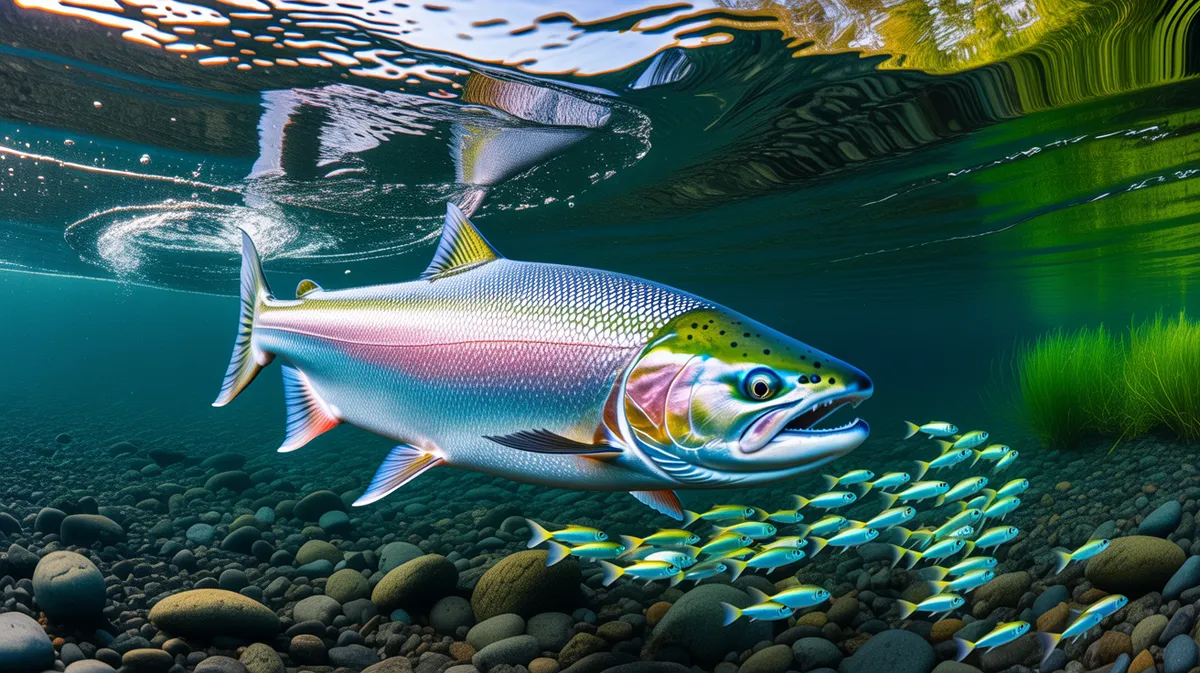
Few journeys in nature are as heroic — or as final — as that of the salmon. Born in a quiet freshwater stream, it travels to the vast open ocean, grows strong over years, and then fights its way back to the exact stretch of river where its life began, to breed and, for many, to die. In this entry of our The Great Migrations series, we follow the salmon home.
It is a round trip powered by memory, instinct, and astonishing endurance. See also the thundering wildebeest migration and the ocean-spanning sea turtle journey.
From stream to sea
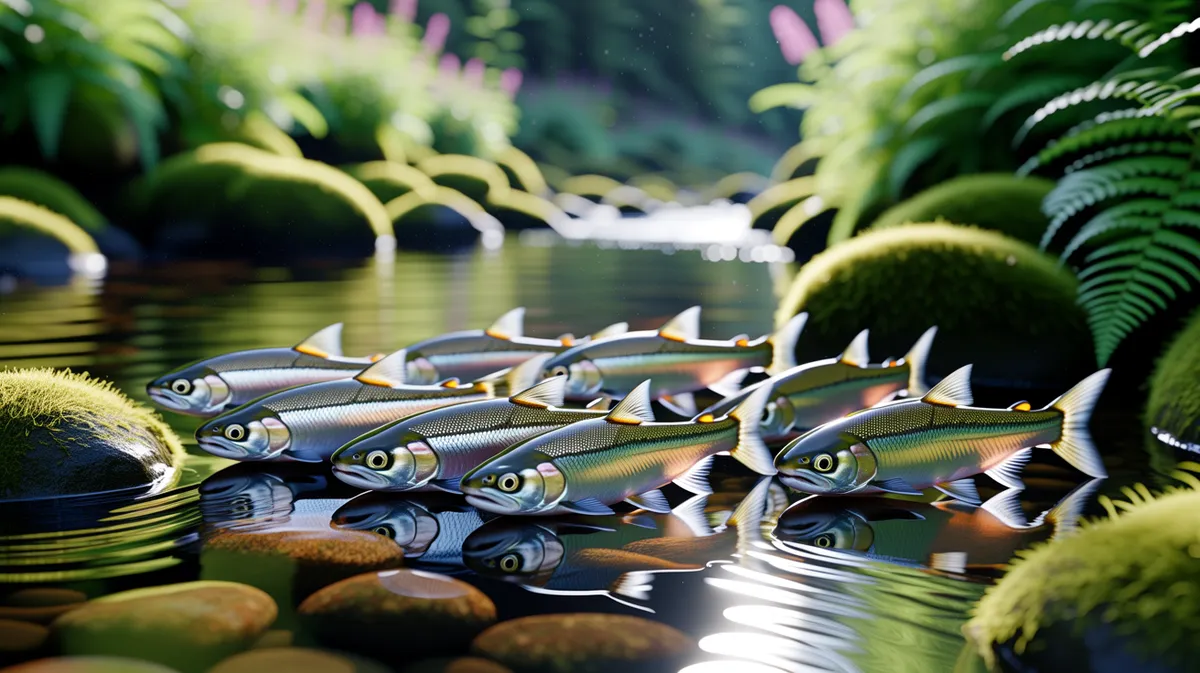
A salmon's life begins as a tiny egg buried in the gravel of a cool, clear river. After hatching and growing for a time in freshwater, the young salmon undergoes a remarkable transformation that prepares its body to survive in salt water.
It then rides the current downstream and out into the ocean, leaving its birthplace behind.
There, in the rich open sea, it will spend anywhere from one to several years, feeding and growing into a powerful adult.
This change, called smoltification, rewires the fish's body chemistry so that a creature born for freshwater can suddenly survive in the salty sea.
The call home
Then, one day, the pull to return takes hold. Driven by an urge to spawn, the adult salmon abandons the open ocean and sets a course back toward the coast and the river of its birth.
Astonishingly, it doesn't just return to the right river — it navigates back to the very same stretch of stream where it hatched, sometimes after travelling thousands of kilometres.
This "natal homing" is one of the most precise navigational feats in the animal world.
Exactly what triggers the timing of this return is still debated, but once it begins, the drive to reach the spawning grounds overrides everything else.
Reading the river by smell
To find its way, the salmon uses two remarkable senses. Out at sea, it appears to navigate using the Earth's magnetic field, steering back toward the right coastline.
Closer to home, it switches to an extraordinary sense of smell. As a youngster, it memorised the unique chemical signature of its home stream, and now it follows that remembered scent upriver, choosing the correct branch at every fork.
The salmon is, in effect, retracing a smell-map laid down years earlier and a whole ocean away.
So sensitive is this chemical memory that a salmon can pick out its home tributary from dozens of near-identical streams branching off the same river.
The impossible climb
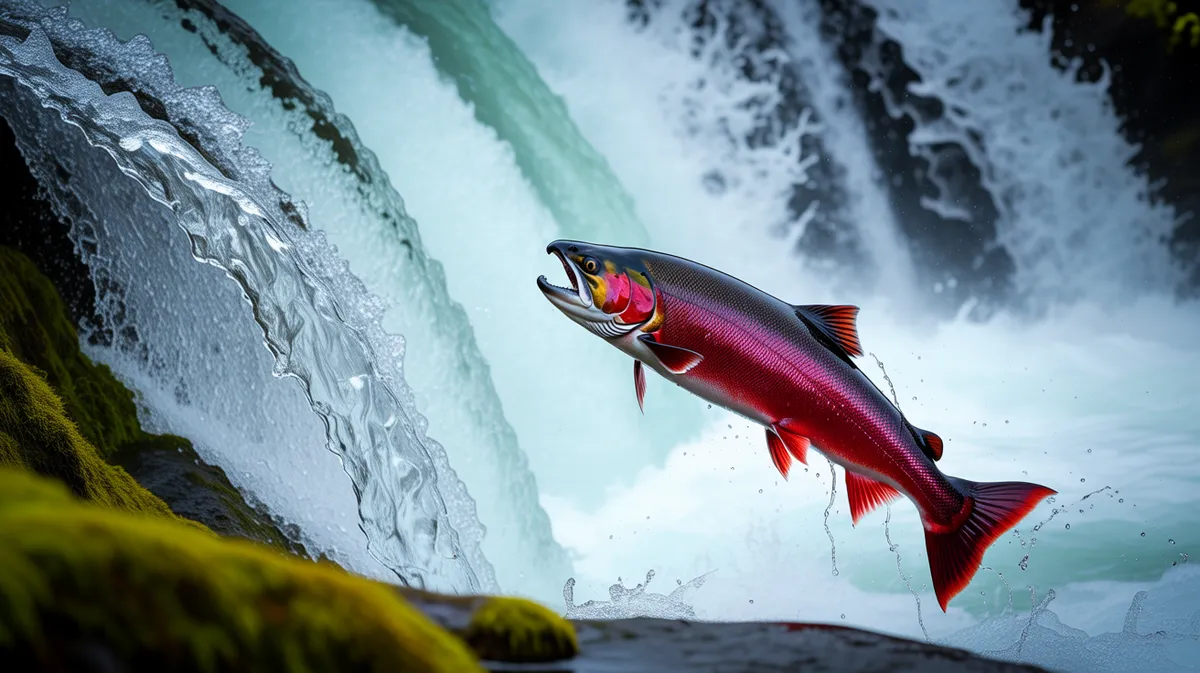
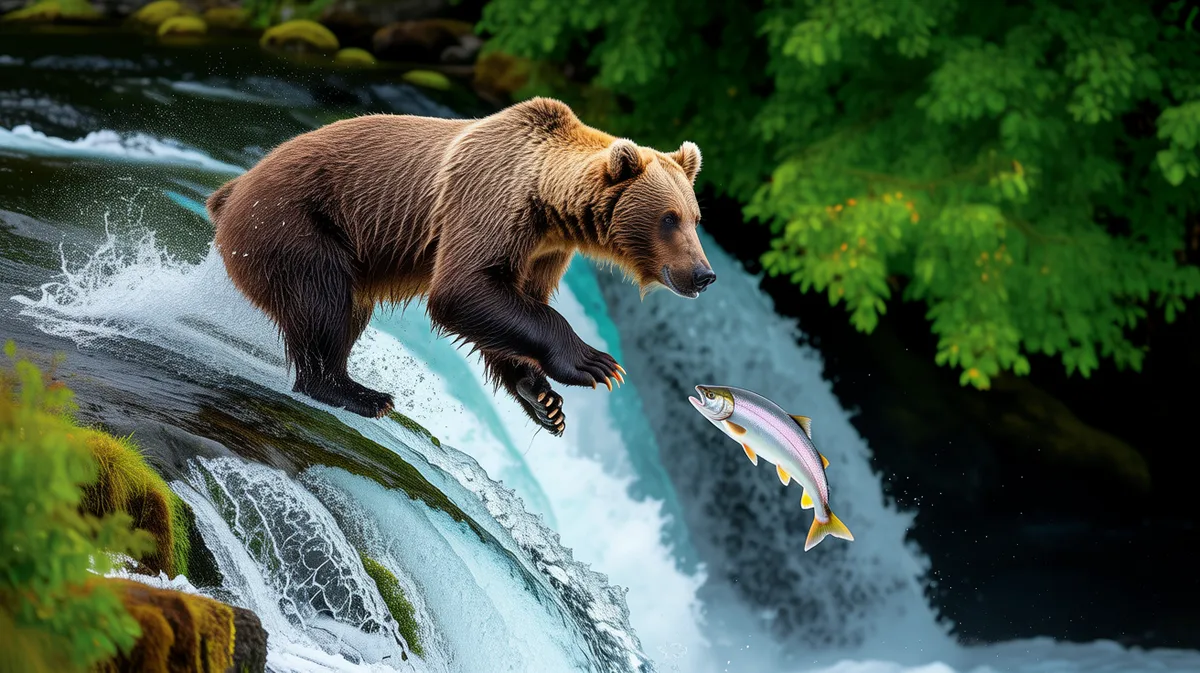
The journey upriver is brutal. The salmon must swim against powerful currents, force its way through rapids, and hurl itself up waterfalls, leaping again and again until it clears them.
It stops eating once it enters freshwater, running the entire gauntlet on stored energy alone as its body is battered and worn.
All the while it must dodge a gauntlet of predators, above all the bears that gather at the falls to feast on the struggling fish.
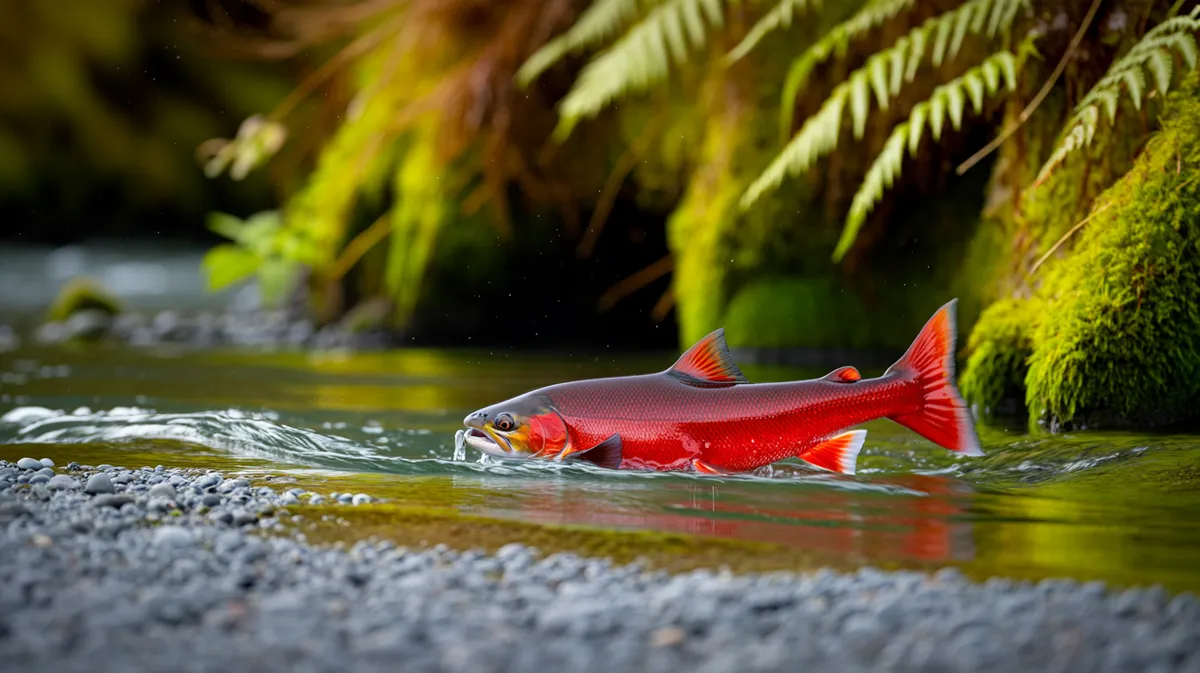
As it fights upstream the salmon's body transforms dramatically — males may grow hooked jaws and vivid colours — remaking itself for the final battle to breed.
A final gift
For most Pacific salmon, reaching the spawning grounds is the end of the road. After the females lay their eggs and the males fertilise them, the exhausted, battered adults die within days.
Their single, all-consuming journey has one purpose: to complete the cycle and give the next generation its start in the same gravel beds where they themselves began.
Having spent everything to get home, the salmon gives its life to the river.
Not every salmon dies afterward; some Atlantic salmon survive to spawn again, but for the great Pacific runs this single journey is the whole of adult life.
Feeding a forest
The story doesn't end with the salmon's death. Their bodies, and the leftovers dragged into the woods by bears and eagles, release a flood of nutrients gathered over years in the ocean.
These marine nutrients fertilise the streamside forests, and scientists can even detect ocean-derived nitrogen in the towering trees along salmon rivers.
In dying at home, the salmon literally feeds the forest that shelters its offspring — a final act of extraordinary generosity.
Bears alone can drag hundreds of salmon carcasses into the woods in a single season, scattering ocean-grown nutrients far from the water's edge.
Dams and the Long Way Home
The salmon's greatest modern obstacle is not the bear or the waterfall but the wall of concrete across its river. Dams can cut a run off from its spawning grounds entirely.
Engineers have tried to help with fish ladders — stepped channels that let salmon climb past a dam — but they are far from perfect, and every barrier drains energy the fish cannot spare.
The most dramatic fix is simply removal. When two large dams came down on the Elwha River in Washington State, salmon returned to reaches of river they had not reached in a century, and the ecosystem began to rebuild itself with astonishing speed.
The journey of a lifetime
The salmon's migration is a complete life story told in a single round trip: birth, departure, transformation, and a heroic return that ends in sacrifice. Few journeys in nature bind an animal so tightly to a single place, or give so much back to it.
Frequently asked questions
How do salmon find their home river? They navigate by the Earth's magnetic field at sea, then follow the remembered smell of their home stream upriver.
Do salmon really die after spawning? Most Pacific salmon do — they stop eating, spawn once, and die within days, their bodies feeding the ecosystem.
How far do salmon migrate? Often thousands of kilometres out to sea and back, returning to the exact stream where they hatched.
How far can salmon travel? Some journeys run thousands of kilometres out to sea and back to a single stream.
Do all salmon die after spawning? Most Pacific salmon do. Atlantic salmon can survive and return to spawn again.
Why do salmon turn red? As they enter freshwater their bodies transform for breeding, with many species developing vivid colours and hooked jaws.
Continue with the sea turtle migration, or revisit the great wildebeest migration.