
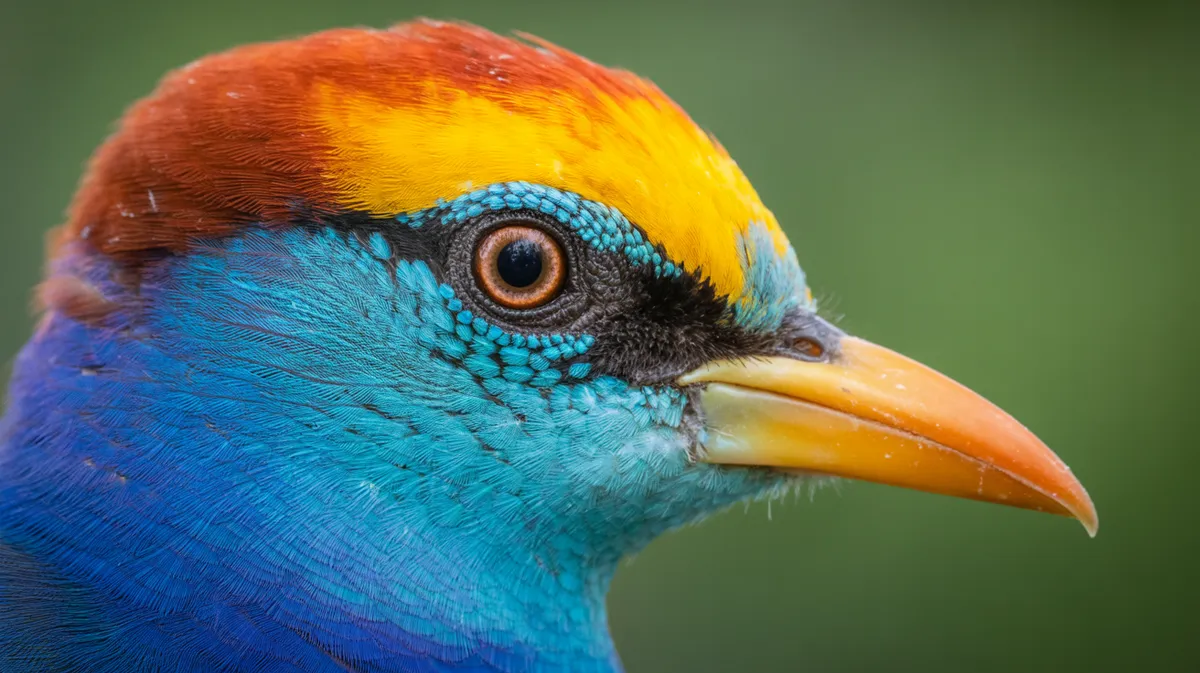
Step into a garden and you'll see a familiar palette of greens, reds, and blues. A bird perched in the same garden sees something richer — colours that have no name in any human language, because our eyes can't detect them at all. In this entry of our Through Animal Eyes series, we explore the ultraviolet world that birds inhabit and we can only imagine.
For birds, the everyday world is lit up with secret signals invisible to us. See also the twilight vision of how cats see the world and the heat-sense of how snakes sense heat.
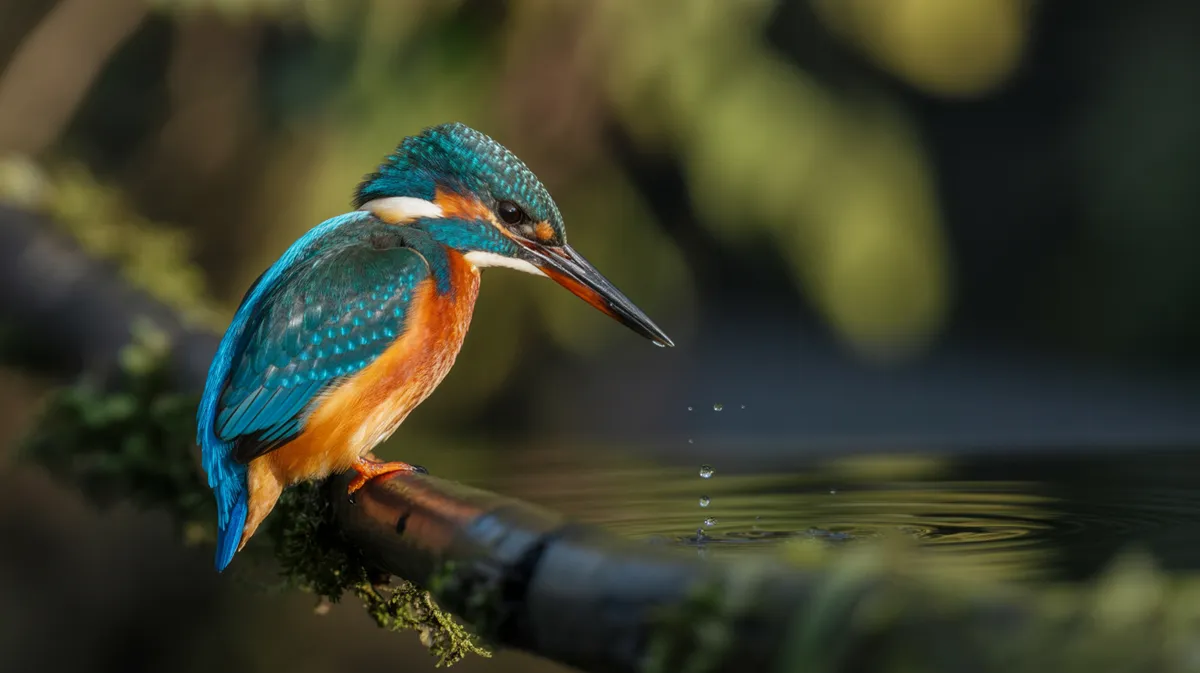
A fourth kind of colour
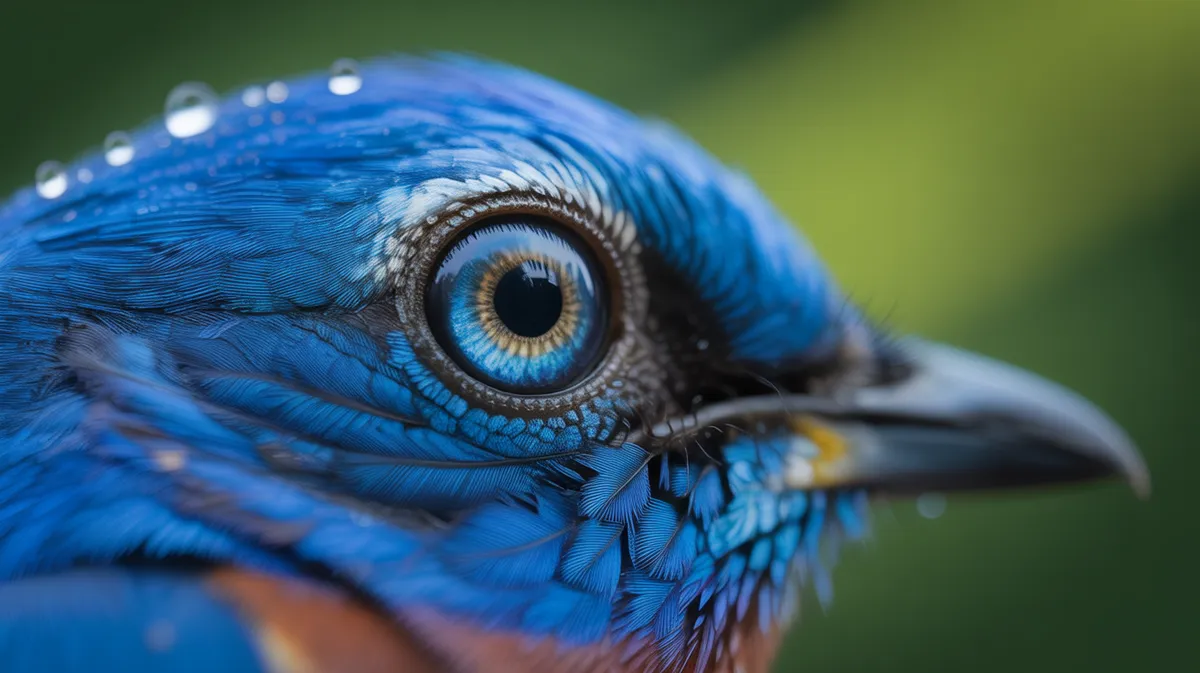
Human eyes contain three types of colour-detecting cone, sensitive to red, green, and blue. Most birds have a fourth cone, tuned to ultraviolet light, making them tetrachromats.
That extra channel doesn't just add "one more colour" — it multiplies the number of hues a bird can tell apart, opening up shades and combinations we literally cannot picture.
Where we see a single solid colour, a bird may see a whole spectrum of distinctions layered invisibly on top.
We can only approximate what this looks like using special cameras and false colours, but for a bird it's simply part of ordinary, everyday seeing.
Secret messages in the feathers
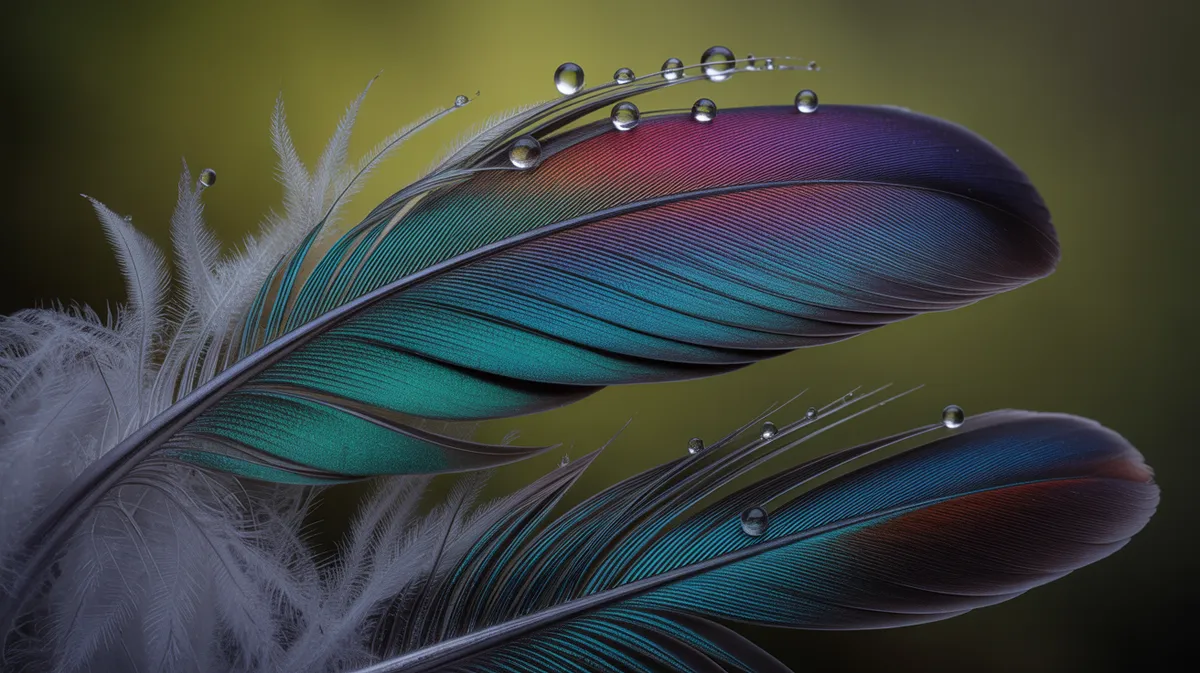
Many birds that look plain or identical to us are anything but to one another. Feathers that appear a uniform brown or black to human eyes can blaze with ultraviolet patterns a bird sees instantly.
In quite a few species the males and females look the same to us but are obviously different in UV, which is exactly how the birds tell each other apart and choose their mates.
A male's hidden ultraviolet brilliance can advertise his health and quality, turning a "drab" bird into a glowing billboard for the eyes meant to read it.
It means a whole channel of birds' visual communication was hidden from us until scientists began photographing them in ultraviolet.
An ultraviolet landscape
The UV world isn't just on the birds — it's all around them. Many flowers display ultraviolet "bullseyes" that guide pollinators to their centre, and ripe berries can stand out against leaves in ways we never notice.
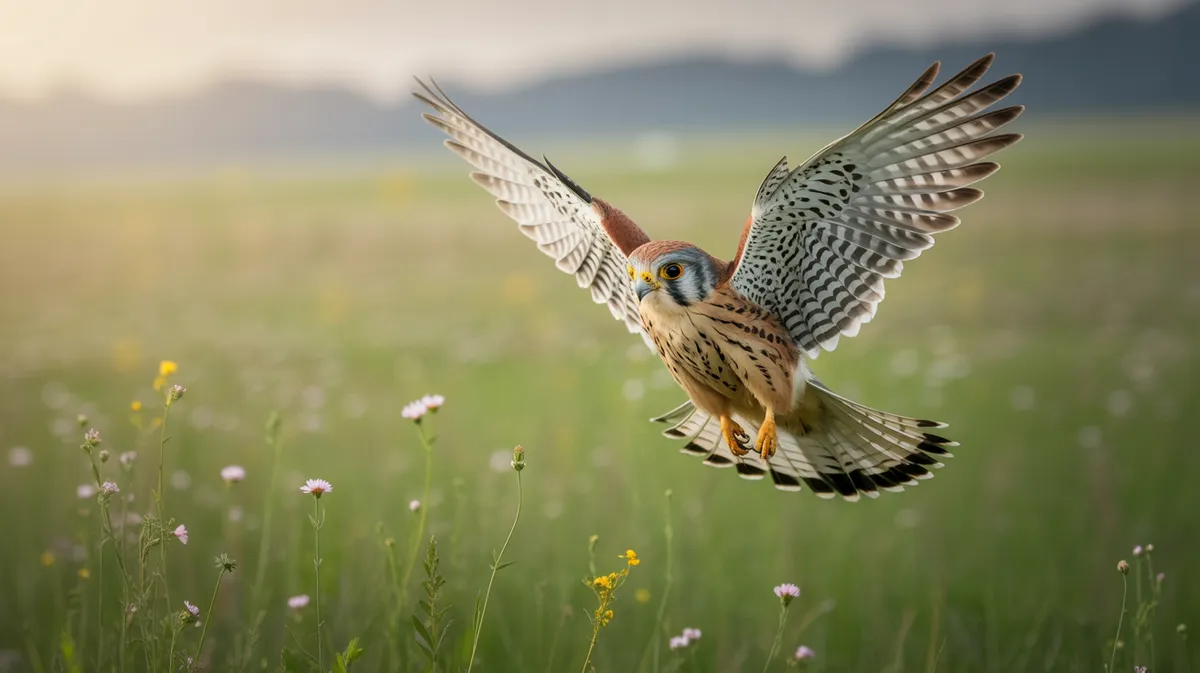
Most remarkably, some birds of prey use UV to hunt. Voles mark their trails with urine that reflects ultraviolet light, and a hovering kestrel can apparently follow these glowing scent-roads from the air to find where its prey is busiest.
For a bird, then, ultraviolet isn't a curiosity — it's practical information painted across flowers, fruit, and even the ground itself.
Even the sky carries faint ultraviolet patterns, and some researchers suspect birds use this extra information as one more cue for orientation and navigation.
Oil droplets that sharpen colour
Birds have another visual trick we lack: tiny drops of coloured oil sitting inside their cone cells. Each droplet acts like a filter, narrowing the range of light a cone responds to and sharpening the bird's ability to tell similar colours apart.
The effect is a finer, more finely sliced colour sense than our own, on top of the extra ultraviolet channel.
It's one reason birds are considered to have some of the most sophisticated colour vision of any animals on the planet.
Different bird groups carry different mixes of these coloured droplets, fine-tuning their vision to the particular demands of their habitat and diet.
A brighter, faster world
Vision dominates a bird's life more than almost any other sense, and their eyes are huge relative to their heads — in some birds the eyes weigh more than the brain. They also see the world refresh faster than we do, vital for an animal flying at speed or snatching insects from the air.
Some birds can even detect the polarisation of light and may use subtle visual cues tied to the Earth's magnetic field to help them navigate on migration.
Layer the ultraviolet channel onto all of this, and a bird's view of the world is both brighter and more detailed than ours in ways we can never fully share.
For a hawk stooping on prey or a swallow weaving after insects, this blend of speed, sharpness, and extra colour is the difference between a catch and a miss.
How We Discovered It
For centuries we assumed birds saw what we saw, only sharper. The truth only emerged once we started photographing them with ultraviolet-sensitive cameras.
The results were startling. Birds that look identical to us — males and females of the same species, apparently indistinguishable — turned out to be blazing with different UV patterns, obvious to each other and invisible to us.
It forced a rethink of decades of research. Studies that had puzzled over how birds told each other apart, or chose mates from seemingly identical partners, suddenly had an answer: they had been reading a channel we simply could not see.
What it's like to be a bird
To see through a bird's eyes is to find the familiar world overflowing with extra colour — flowers signalling, feathers glowing, and trails of light strung across the landscape. It's a vivid reminder that the colours we see are not "the" colours of the world, just the narrow band our own eyes happen to catch.
Frequently asked questions
Can birds see ultraviolet light? Yes — most birds have a fourth, UV-sensitive cone, so they see colours humans can't detect at all.
Why does UV vision matter to birds? It reveals hidden feather patterns for choosing mates, UV signals on flowers and fruit, and even prey trails for some hunters.
Do birds see better than humans? In colour, generally yes — they have an extra cone, colour-sharpening oil droplets, and faster vision.
Can all birds see ultraviolet? Most can, though the degree varies between groups.
Do humans see any ultraviolet? Essentially no — the lens of the eye filters it out.
Why do birds have such good colour vision? A fourth cone plus coloured oil droplets that sharpen colour discrimination.
Do birds see faster than us? Yes — they perceive changes more quickly, vital for fast flight.
That's three very different ways of seeing. Revisit how cats see the world and how snakes sense heat — and watch for more in the Through Animal Eyes series.