
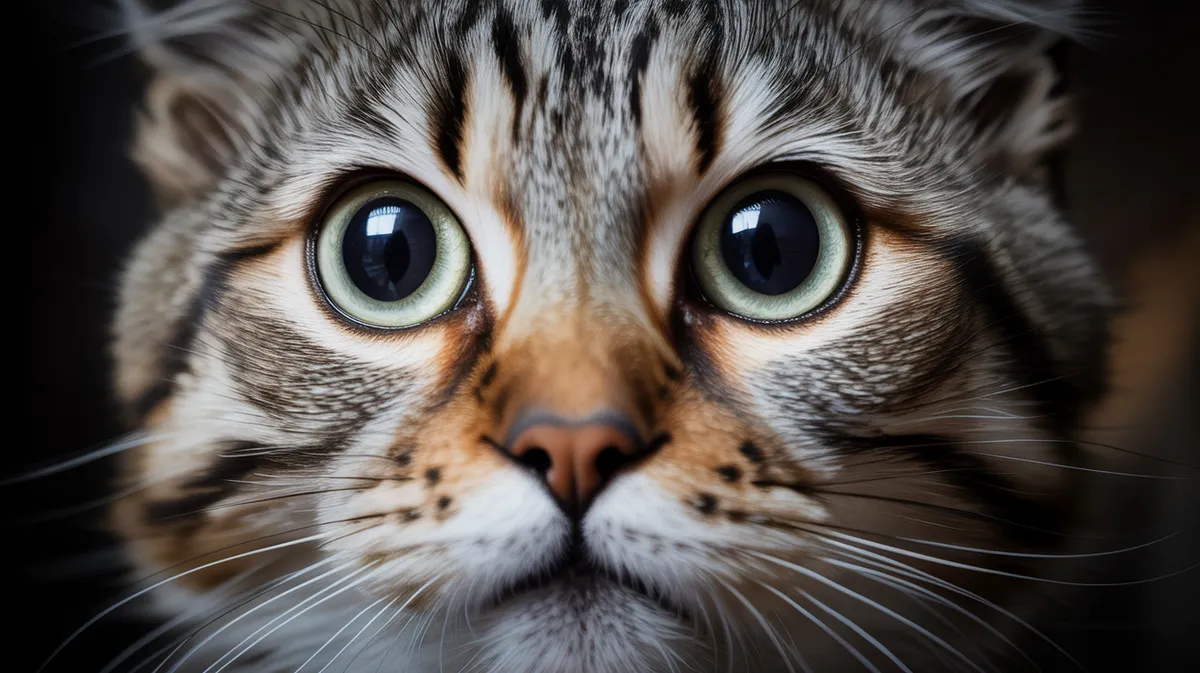
Your cat is looking at the same room you are, but it isn't seeing the same world at all. Evolution tuned the feline eye for a single purpose — hunting in the half-light of dawn and dusk — and that single goal reshaped everything about how a cat perceives reality. In this entry of our Through Animal Eyes series, we step inside the senses of the cat to see the world the way it does.
It's a world sharper in the dark, blurrier by day, painted in fewer colours, and alive with the faintest movement. When you've seen it, explore two more radically different views in how snakes sense heat and how birds see ultraviolet.
Masters of the dark
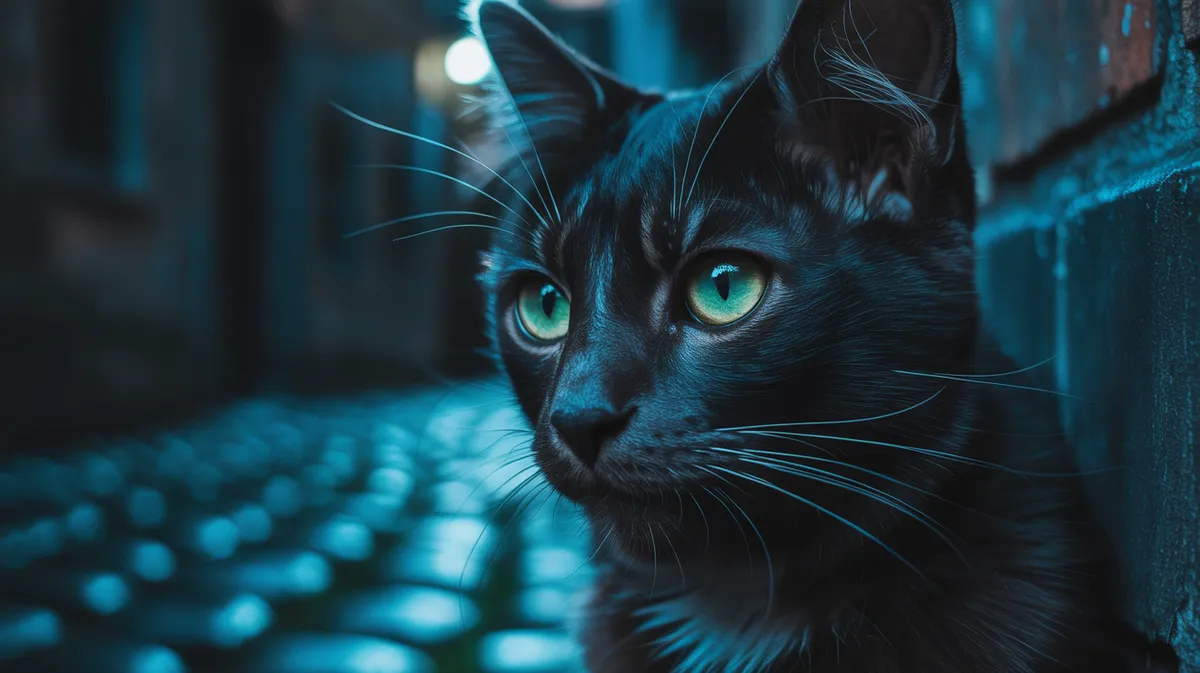
A cat can see in light levels six to eight times dimmer than we need, turning near-darkness into a usable scene. Its eyes are packed with rod cells, the light-sensitive receptors that work in low light, and its pupils can open enormously to drink in every available photon.
Behind the retina sits a mirror-like layer called the tapetum lucidum, which bounces light back through the eye for a second chance to be detected — the same layer that makes a cat's eyes flash green in a torch beam.
This night vision isn't perfect — a cat still needs a little light, and in total darkness it's as blind as we are — but in the gloom where it likes to hunt, it sees what we simply cannot.
Kittens are born with this low-light machinery already developing, and even an elderly cat keeps far sharper night vision than a young human ever had.
A world of muted colours
The trade-off for all those rods is fewer cone cells, the receptors that detect colour. A cat sees the world in washed-out tones, mostly blues and yellows, with reds and greens fading into dull greys.
In human terms, a cat's colour vision is a bit like that of a person with red-green colour blindness. The vivid red toy you bought probably looks like a drab greyish lump to your cat.
Colour, though, simply doesn't matter much to an ambush hunter of the twilight — far more important is catching the flicker of a moving mouse.
Researchers think cats may glimpse a little into the violet range, but the overall picture is a softer, less saturated version of the scenes that look so vivid to us.
Built to catch movement
Where a cat's vision truly excels is motion. Its eyes refresh the scene faster than ours, so a quick, darting movement that blurs for us stays crisp and trackable for a cat.
The cost is fine detail: cats are slightly short-sighted and can't resolve sharp, static images the way we can. A motionless object a few metres away may be a soft blur until it twitches.
This is why a toy dragged along the floor drives a cat wild while the same toy sitting still is ignored — stillness, to a cat, can be almost invisible.
It's why a cat can seem to stare straight through a treat held perfectly still, then lock on the instant your hand so much as twitches.
Eyes built for ambush
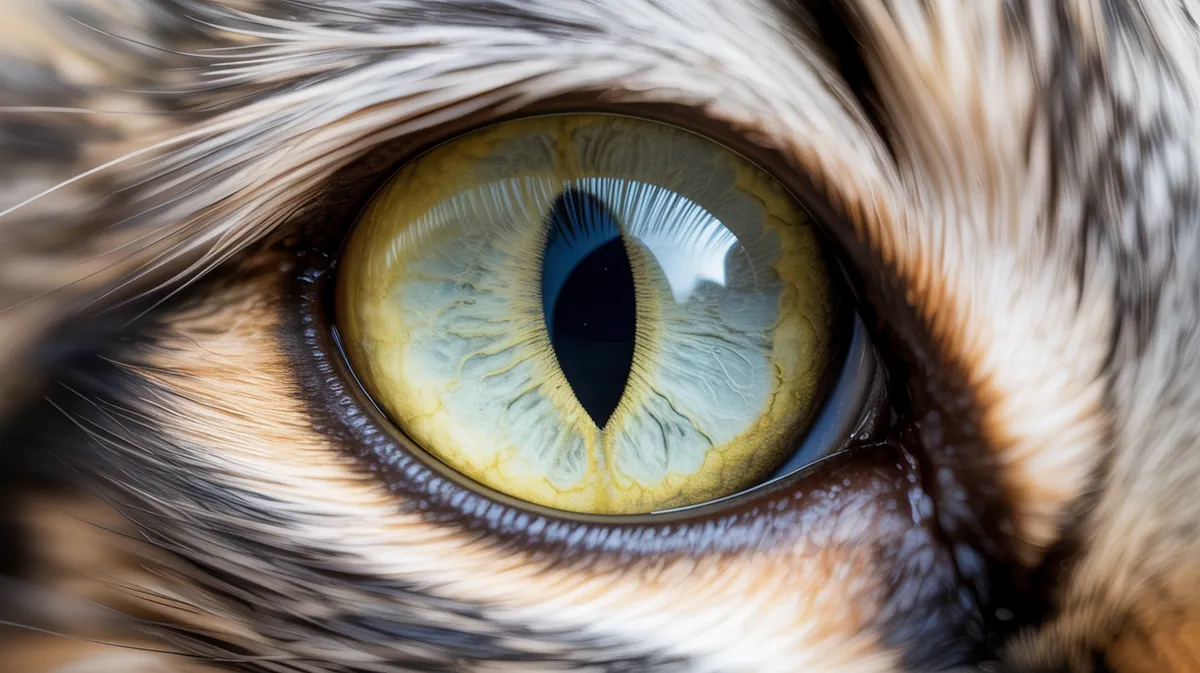
A cat's vertical, slit-shaped pupils are a hunter's specialty. They can expand into huge black circles in the dark and narrow to thin slits in bright light, giving the cat an enormous range of light control.
That vertical slit also sharpens the cat's sense of depth and distance, helping it judge the precise pounce onto prey — a feature common among ambush predators that strike low to the ground.
Wide-set and forward-facing, a cat's eyes give it a broad field of view with enough overlap for the binocular depth perception every successful leap depends on.
Set those vertical slits beside the horizontal pupils of grazing prey animals and you can almost read a creature's entire lifestyle in the shape of its eye.
Beyond the eyes
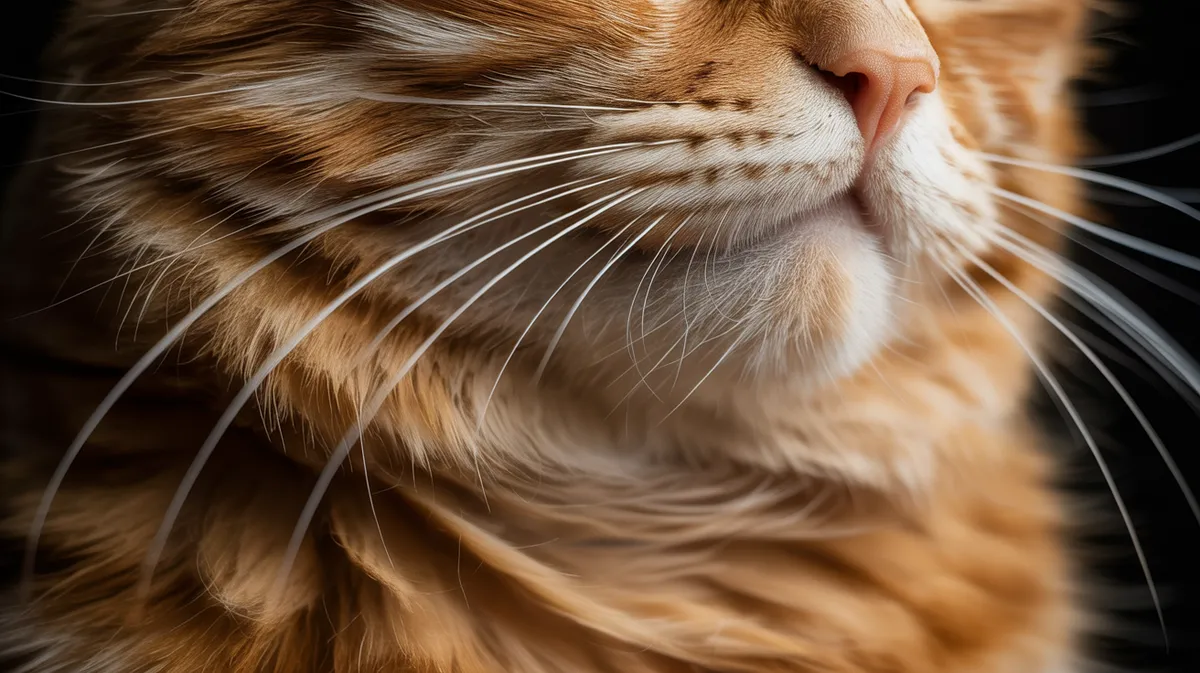
A cat doesn't experience the world through vision alone. Its whiskers are exquisitely sensitive touch organs that read air currents and map tight spaces in the dark, effectively letting a cat "feel" the shape of a room it can barely see.
Its hearing reaches far higher than ours, into the ultrasonic squeaks of mice, and swivelling ears pinpoint a sound's source with startling accuracy. A specialised scent organ on the roof of the mouth even lets it "taste" smells from the air.
Put it all together and a cat navigates by a rich blend of senses, with low-light, motion-tuned eyes at the centre of it all.
A cat's sense of smell, while well short of a dog's, still dwarfs ours, and scent-marking with cheek and paw glands lets it layer its world with information no human nose could read.
How a Kitten's Vision Develops
A cat is not born with its remarkable eyes ready to use. Kittens arrive blind, with their eyes sealed shut, and only open them at around a week to ten days old.
Even then, what they see is poor: blurry, dim, and unfocused. Their vision sharpens gradually over the following weeks, and the full hunting toolkit — depth perception, motion tracking, night vision — takes months to mature.
This is why very young kittens are so clumsy. They are learning to see at the same time as learning to move, and the wobbling, mistimed pounces of a kitten are the sight of a hunter's eyes still being calibrated.
What it's like to be a cat
To see through a cat's eyes is to live in a softer, dimmer, less colourful world that springs into sharp focus the instant anything moves. It's the perfect way to perceive reality if your survival depends on catching small, fast prey in the dark — a hunter's-eye view of the world.
Frequently asked questions
Can cats see in complete darkness? No — but they see in light far too dim for us. In total darkness they rely on whiskers, hearing, and smell.
What colours can cats see? Mostly blues and yellows; reds and greens look greyish, similar to human red-green colour blindness.
Why do cats love moving toys? Their eyes are tuned to detect motion, so a moving toy is far more visible and exciting than a still one.
Can cats see red? Not really. Reds and greens appear greyish; cats see mainly blues and yellows.
Why do cats' eyes glow? A reflective layer called the tapetum lucidum bounces light back through the eye.
Can cats see close up? Poorly. They are slightly long-sighted and rely on whiskers for anything right under the nose.
Do cats see better than dogs? In low light and for motion, generally yes.
Next, a sense we don't have at all: how snakes sense heat, and a colour beyond our vision in how birds see ultraviolet.