
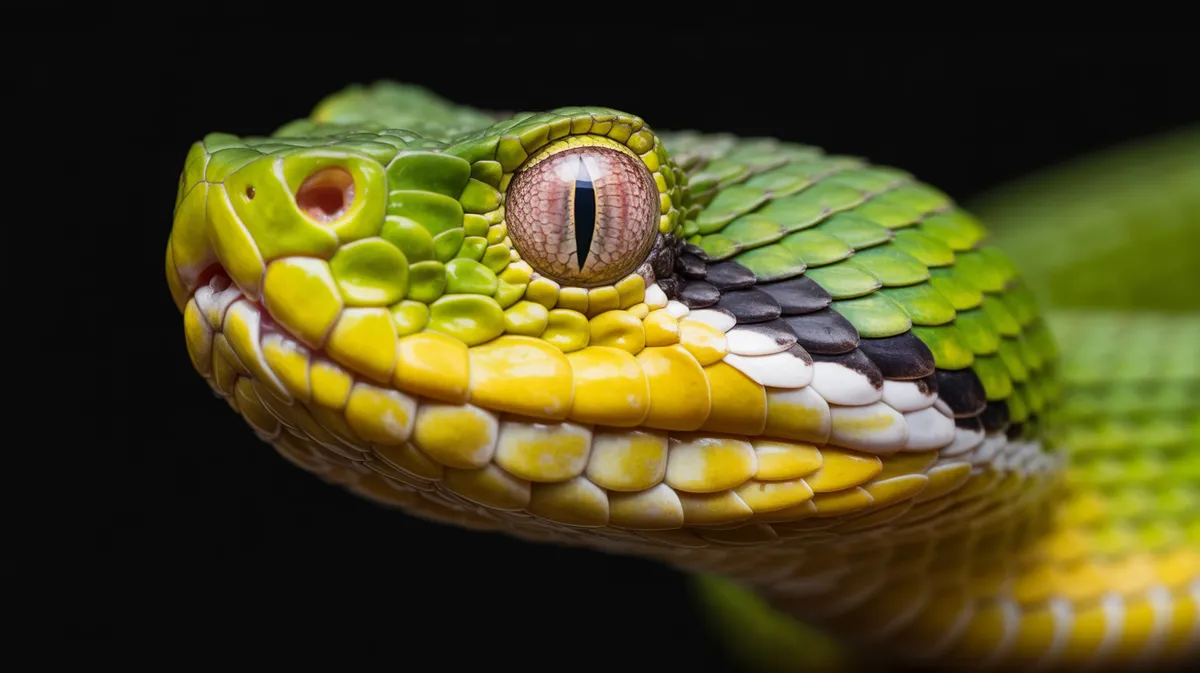
Imagine being able to see warmth — to watch a mouse glow in total darkness simply because its body is warmer than the rock beside it. For some snakes, that isn't imagination; it's an everyday sense we humans can barely conceive of. In this entry of our Through Animal Eyes series, we explore how certain snakes "see" the invisible world of heat.
This sixth sense turns the pitch-black night into a glowing map of living things. See also the twilight world of how cats see the world and the hidden colours in how birds see ultraviolet.
The heat-sensing pits
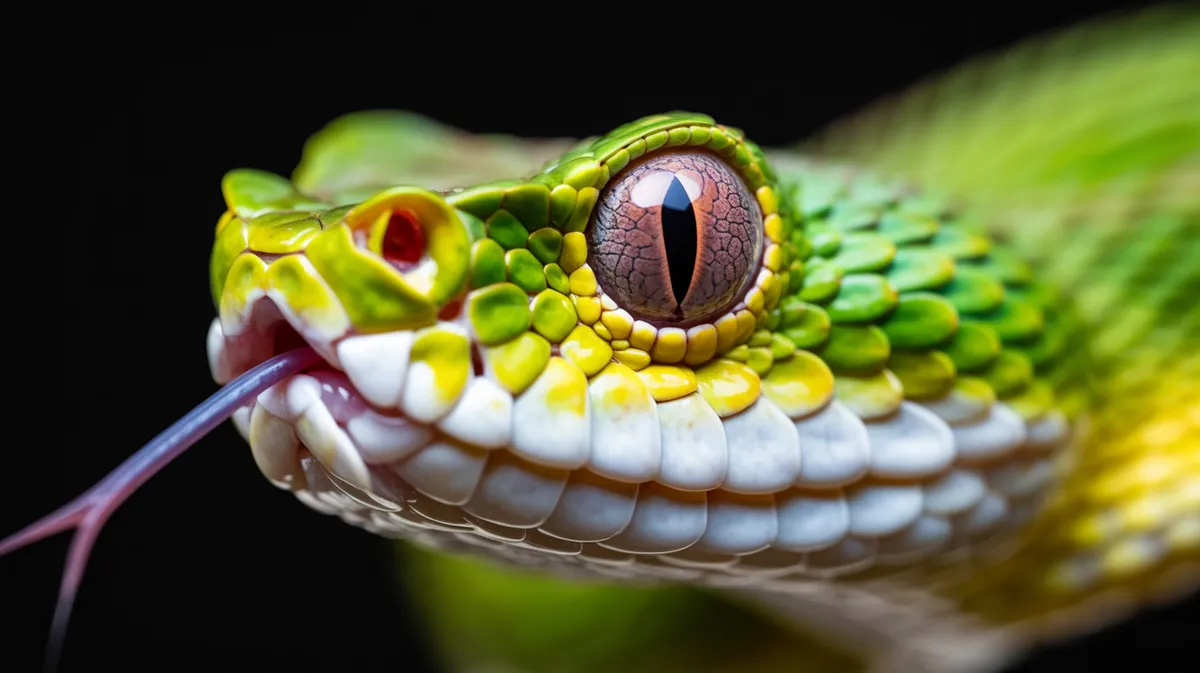
Pit vipers — rattlesnakes, copperheads, and their kin — have a pair of small openings on the face, one between each eye and nostril, called loreal pits. Many pythons and boas have rows of similar pits along their lips.
Inside each pit is a thin, suspended membrane packed with heat-sensitive nerve endings, so densely wired that it can register a change of just a few thousandths of a degree.
In effect, each snake carries a pair of biological infrared detectors aimed at the world in front of it.
Some pit vipers can pick up a warm object from as much as a metre away — a surprising range for an organ only millimetres across.
A thermal map of the world
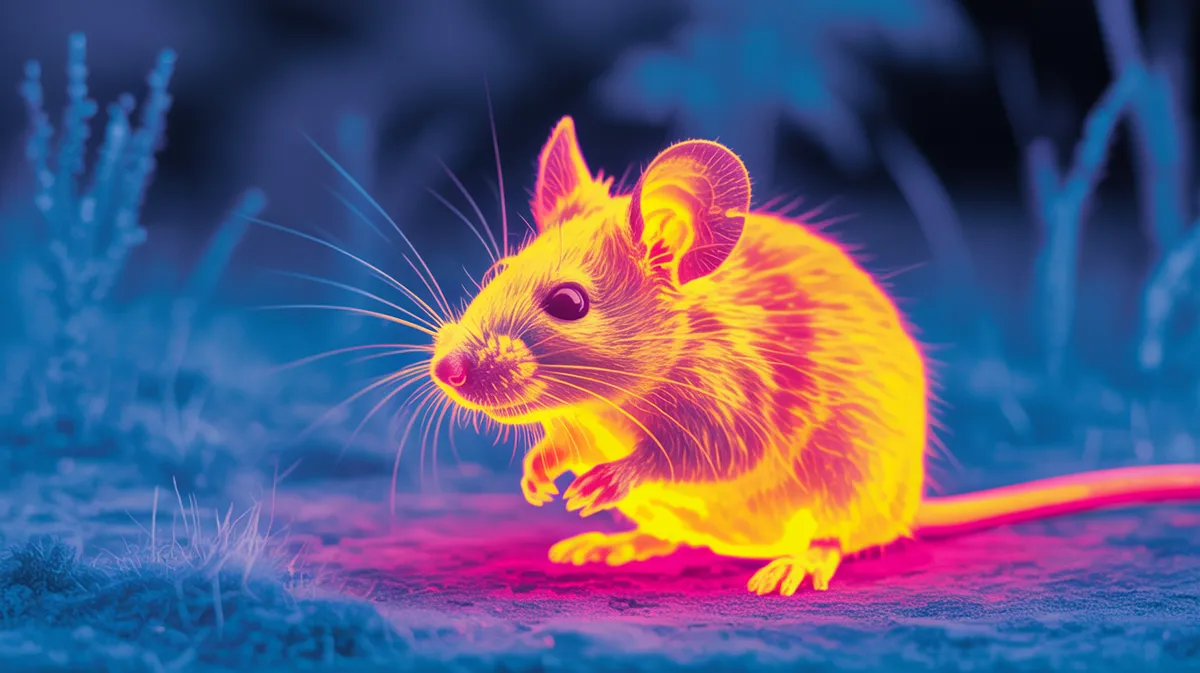
The signals from these pits travel to the same part of the brain that handles vision, where they're merged with what the snake's eyes see. The result is something like a thermal camera overlaid on ordinary sight.
To the snake, a warm-blooded animal stands out as a bright, glowing shape against the cooler background of soil, leaves, and rock. The image is fuzzy compared with our vision, but for detecting living prey it's extraordinarily effective.
This heat-sight even works in complete darkness, where ordinary eyes are useless — the snake doesn't need a single photon of light to find a warm meal.
Because the heat image and the visual image are processed together, scientists believe the snake experiences them as a single blended picture rather than two separate feeds.
Hunting in total darkness
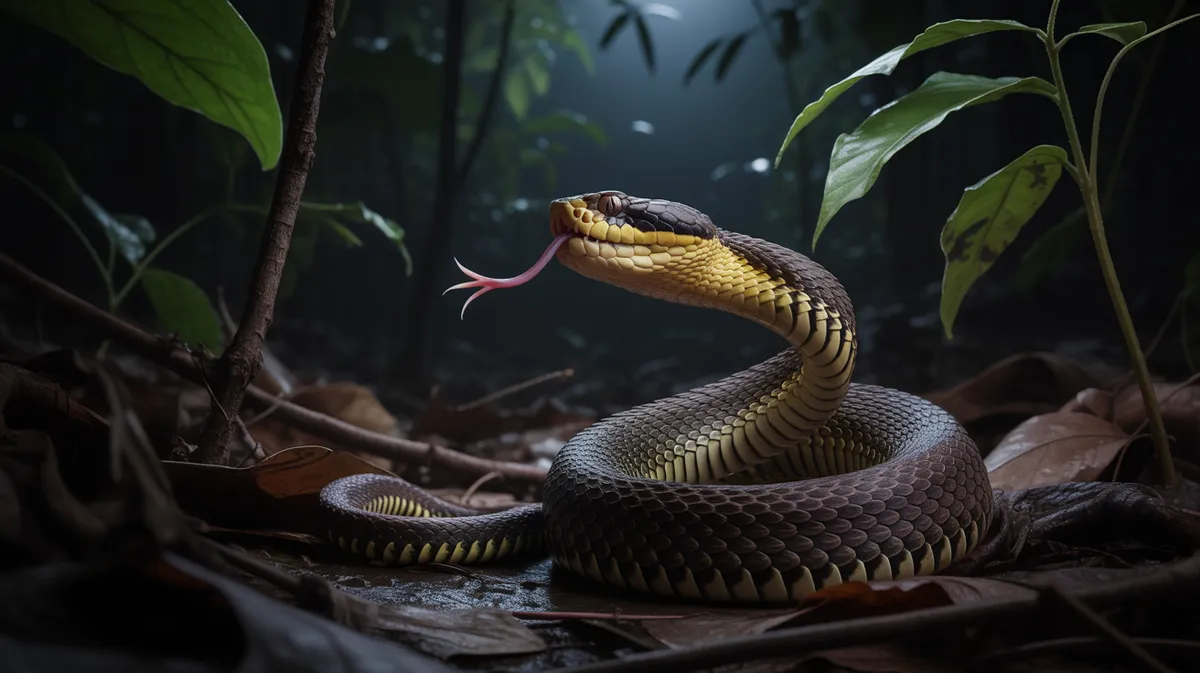
For a night-hunting snake, this is a devastating advantage. A mouse creeping through a black burrow might as well be carrying a lantern; its body heat betrays its exact position.
Using its pits, a pit viper can aim a strike with remarkable accuracy at the warmest part of its prey, even with its eyes covered. The sense is precise enough to guide a lethal, split-second lunge in the dark.
It also helps the snake judge whether an approaching animal is prey, a threat, or simply too big to bother with — all from its heat signature alone.
Experiments have shown that snakes with their eyes completely covered can still strike accurately at a warm target, proving just how much the pits alone reveal.
Not every snake has it
This heat sense isn't universal among snakes — it's largely confined to the pit vipers and to some boas and pythons. Strikingly, these groups evolved their heat-detecting pits separately, a classic case of nature inventing the same brilliant solution more than once.
Most other snakes get by without it, relying on smell and vibration to hunt. The heat pits are a specialist's tool, perfected by ambush hunters of warm-blooded prey.
Where they exist, though, they transform the snake into a creature that hunts by a sense we will never directly experience.
It's a powerful reminder that evolution often reaches the same answer by different routes when the problem — finding warm prey in the dark — is the same.
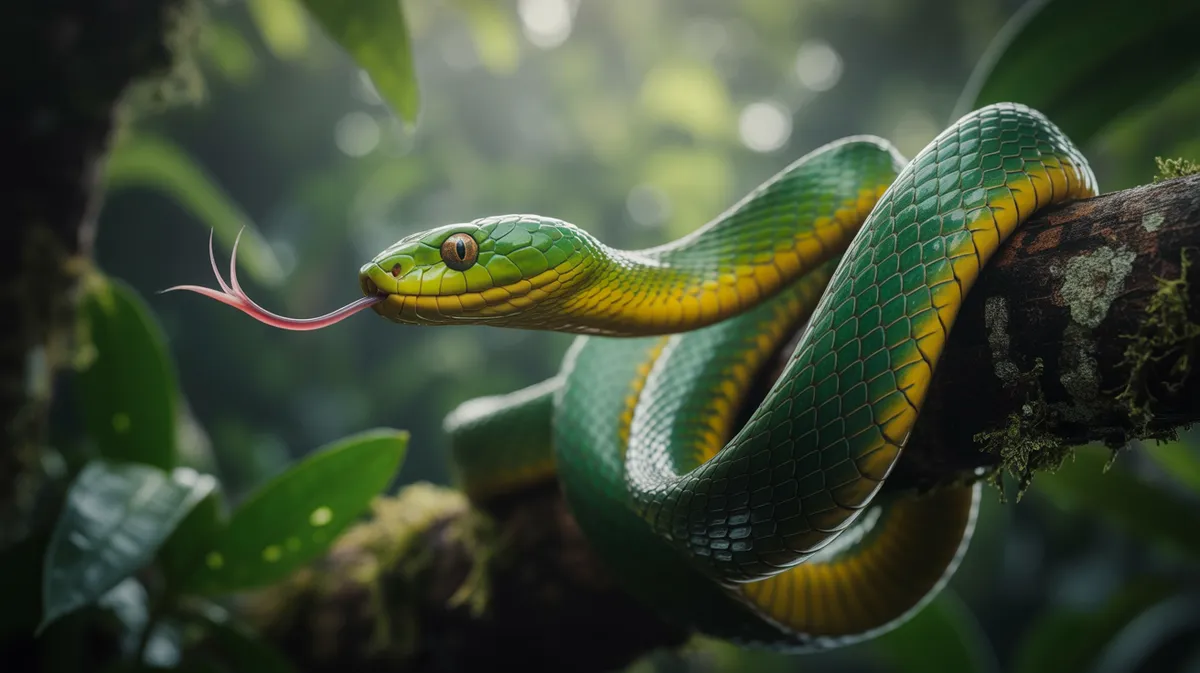
The rest of a snake's senses
Heat is only part of how a snake reads the world. Its famous forked tongue flicks out to collect scent particles, then slots them into a paired organ on the roof of the mouth — and because the fork samples two points at once, the snake can smell in stereo, sensing which direction a scent is coming from.
With no external ears, a snake instead "hears" through vibrations carried up its jawbone from the ground, feeling the footsteps of approaching animals. Its eyesight, meanwhile, is generally tuned to movement rather than fine detail.
Layered together — heat, scent-in-stereo, and ground-borne vibration — these senses give the snake a model of its surroundings utterly unlike our own.
Snakes also rely on a keen sense of touch and a fine awareness of temperature, constantly reading their surroundings to decide when to bask, hide, or strike.
How the Sense Was Proven
It is one thing to find heat-sensitive pits on a snake's face; it is another to show they truly form an image of the world.
Researchers tested it directly by covering the eyes of pit vipers and offering them warm targets. The blindfolded snakes struck with startling accuracy, aiming squarely at the warmest part of the target — something impossible without a usable heat picture.
Nerve recordings later confirmed that signals from the pits feed into the same brain region that processes vision, and are merged with what the eyes see. The snake is not "detecting warmth" in some vague way; it is genuinely seeing it.
What it's like to be a snake
To perceive the world as a pit viper does is to see the living and the lifeless as different kinds of light — warm bodies glowing against a cold, still backdrop. It's a sense so alien to us that the closest we can come is the false-colour glow of a thermal camera, a faint echo of what a snake feels every night.
Frequently asked questions
Can snakes really see heat? Pit vipers and some pythons and boas detect infrared (heat) through special facial pits, effectively "seeing" warm bodies in the dark.
Do all snakes have heat vision? No — only pit vipers and certain pythons and boas, which evolved the ability separately.
How do snakes hear without ears? They sense vibrations through their jawbones, feeling the movements of nearby animals through the ground.
Which snakes can sense heat? Pit vipers — rattlesnakes, copperheads and relatives — plus some pythons and boas.
How sensitive are the pits? Sensitive enough to register changes of a few thousandths of a degree.
Can snakes hear? They have no external ears but detect vibration, and can pick up airborne sound too.
Do snakes smell with their tongues? Effectively yes — the forked tongue collects scent and delivers it to an organ in the mouth.
Continue with how birds see ultraviolet, or revisit how cats see the world.