
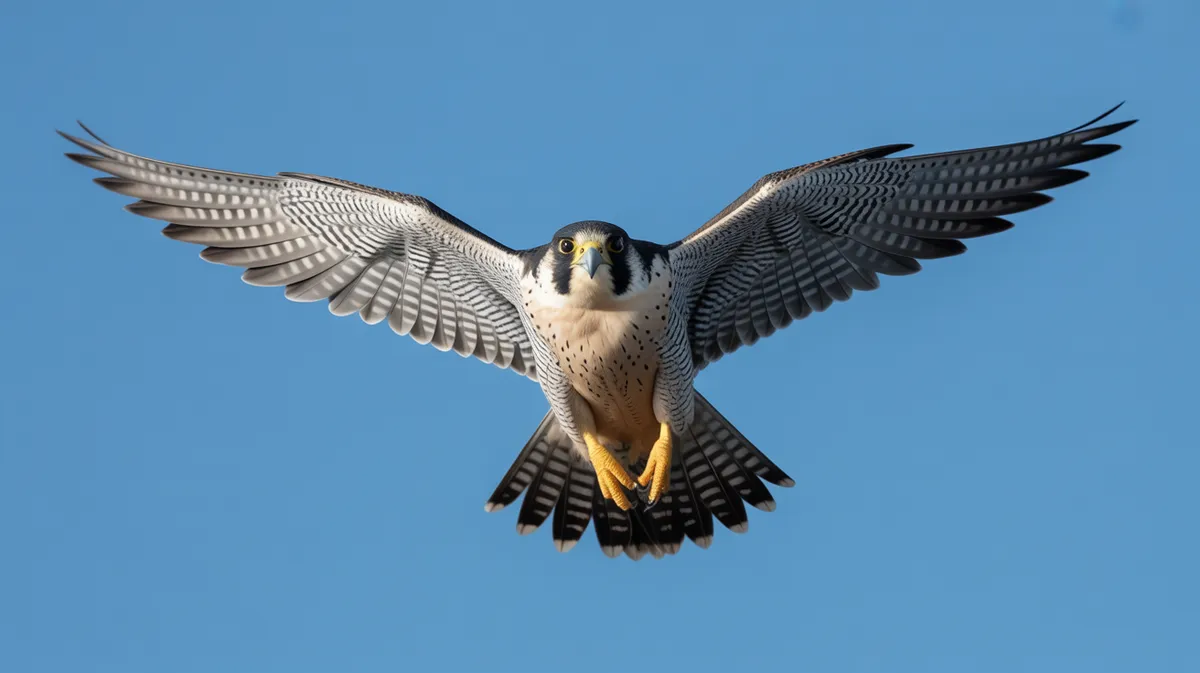
Speed in the animal kingdom is never a single number. A peregrine falcon folded into a hunting dive is a very different machine from a cheetah unspooling across the savanna, and both are different again from a sailfish lighting up the open ocean. To rank the fastest animals on Earth honestly, you have to be clear about how the speed is produced — a vertical dive, level flapping flight, a flat-out sprint, or an endurance gallop.
This is the opening entry in our Nature's Record-Breakers series, where we line up the planet's most extreme animals side by side. When you're done here, see who refuses to die in the 10 longest-living animals on Earth, and who punches hardest in the 11 strongest animals, pound for pound.
A quick word on method. Animal speeds are surprisingly hard to measure: many famous figures come from a single observation, a stopwatch, or a chase filmed decades ago. Where a headline speed comes from a dive, we say so, because gravity does much of the work. We've ranked by top recorded speed but flagged the context that changes the meaning of the number.
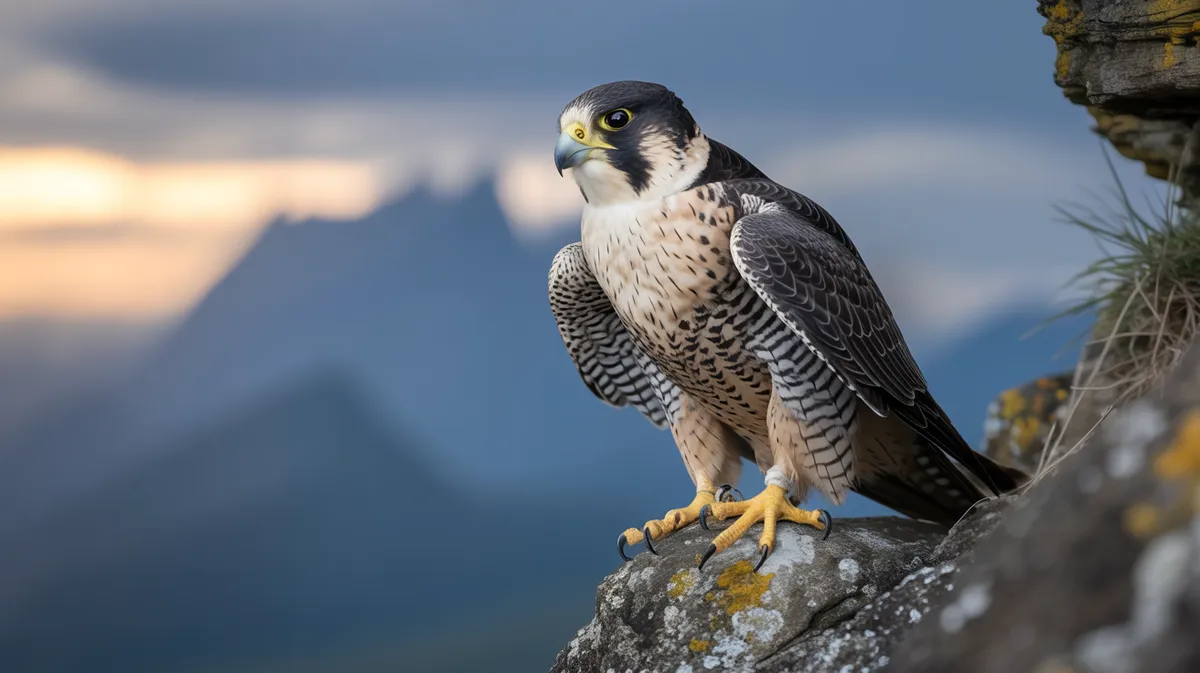
1. Peregrine Falcon — up to 389 km/h (242 mph)
Nothing else comes close. In a hunting stoop the peregrine tucks its wings, drops from height, and turns itself into a feathered missile aimed at a pigeon in mid-air. The fastest measured dive clocked roughly 389 km/h. Its body is purpose-built: bony baffles, or tubercles, in the nostrils slow the incoming air so the bird can still breathe at terminal velocity, and a translucent third eyelid wipes the eyes clean mid-dive.
Strip away the dive and a peregrine in level flight is far more ordinary — which is exactly why "fastest animal on Earth" deserves an asterisk. The falcon is the fastest animal the way a skydiver is the fastest human: gravity is a willing partner. It's still a staggering predator, capable of killing on impact with a closed foot before the prey ever sees it.
Physiologists have long puzzled over how it survives the pull-up at the bottom of a stoop, where the g-forces would grey out a fighter pilot. The answer is a dense, muscular build and feathers locked into a stable teardrop shape that hold it steady at speeds where an ordinary bird would tumble out of control.
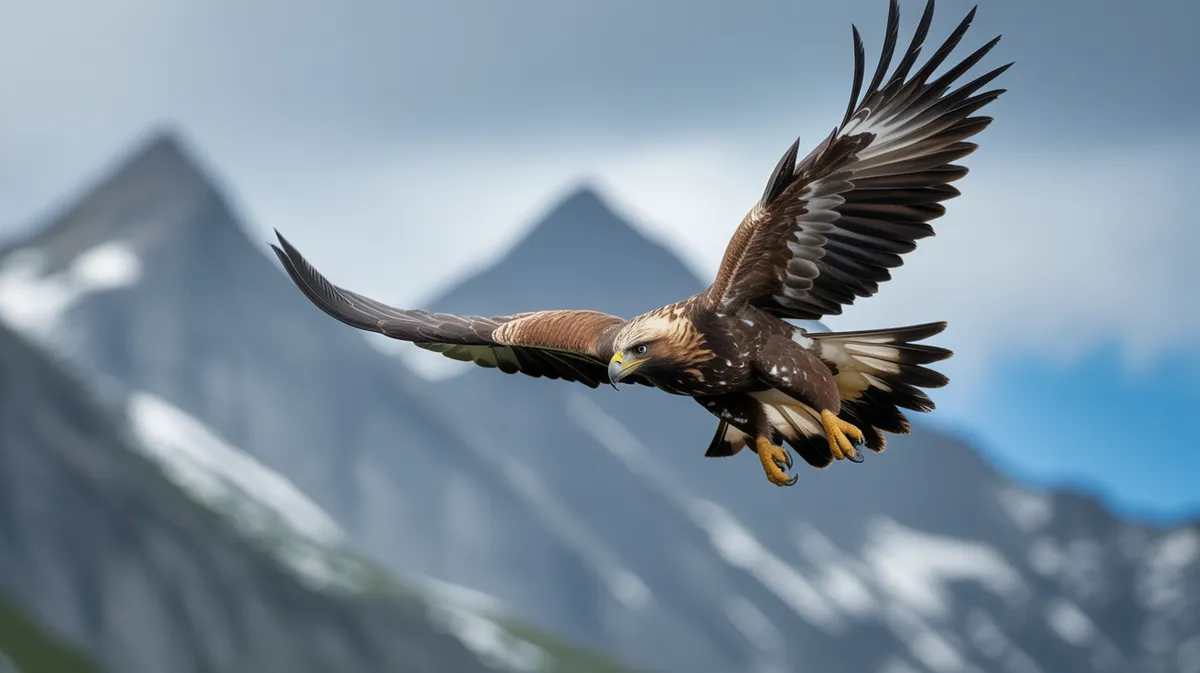
2. Golden Eagle — up to 320 km/h (200 mph)
The golden eagle is the peregrine's heavier cousin in the dive department. With a two-metre wingspan and serious mass behind it, a stooping golden eagle has been estimated at up to 320 km/h. The extra weight helps it accelerate, and the strength behind those talons lets it strike prey as large as foxes and young deer — occasionally knocking goats off mountainsides.
Unlike the peregrine, which specialises almost entirely in the dive, the golden eagle is a true generalist — soaring for hours on thermals, quartering low over hillsides, and saving its top speed for the final approach. That versatility makes it one of the most effective aerial predators in the Northern Hemisphere.
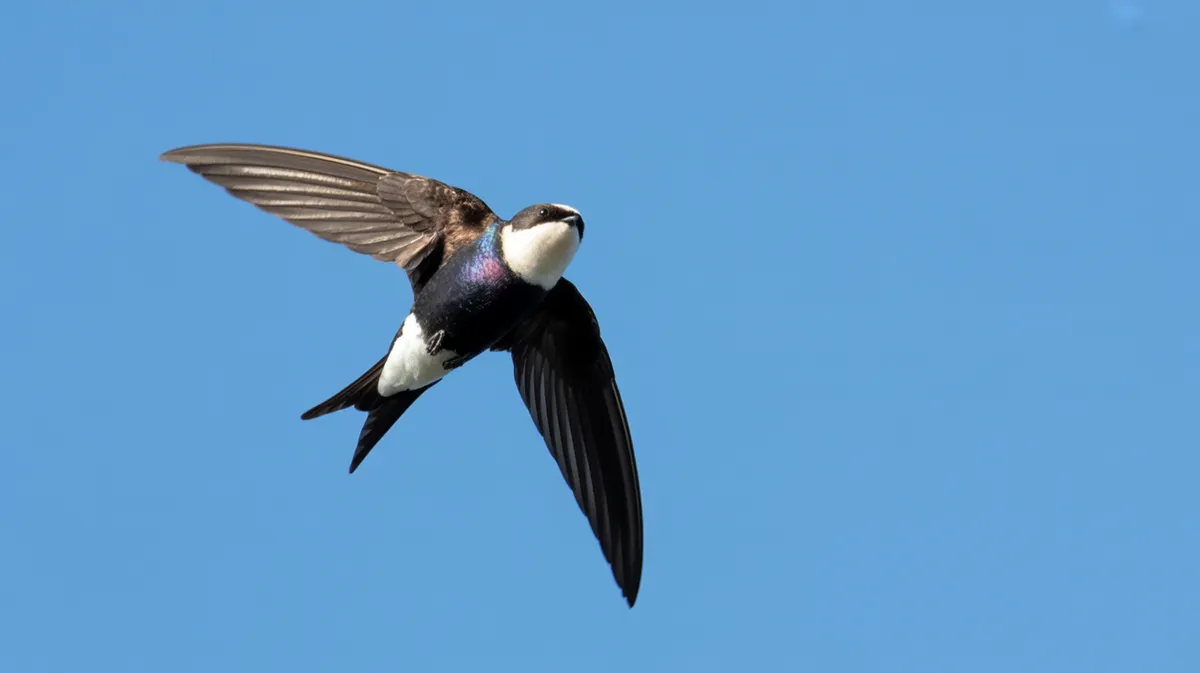
3. White-throated Needletail — ~169 km/h (105 mph)
Now the real champion of powered flight. The white-throated needletail, a stocky swift, is widely cited as the fastest animal in flapping, level flight — no diving, no gravity assist, just raw wingbeats. It is so committed to the air that it eats, drinks, mates, and even sleeps on the wing, landing only to nest.
Because it spends almost its whole life airborne, the needletail's anatomy is ruthlessly optimised: tiny legs barely able to perch, long scythe-shaped wings, and a bullet-smooth body. It is the clearest proof that the fastest powered flier is also the one most fully committed to the sky.
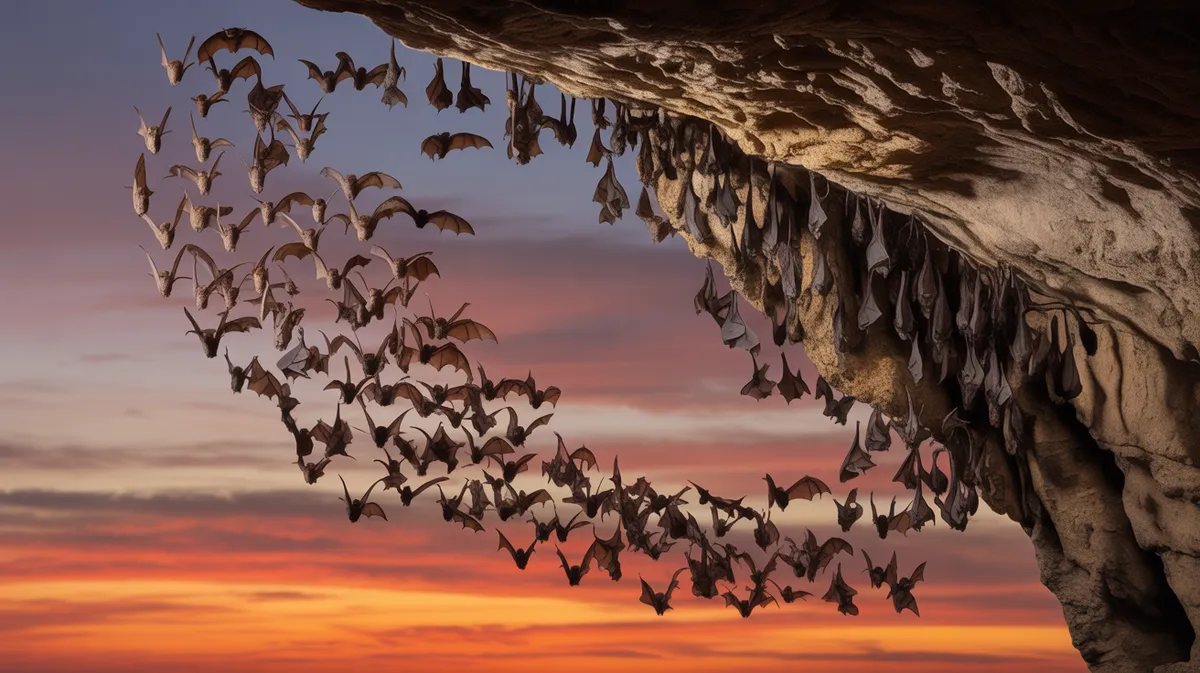
4. Mexican Free-tailed Bat — ~160 km/h (100 mph)
The fastest mammal on the planet isn't on the ground — it's in the night air. Tracking studies of Mexican free-tailed bats recorded ground speeds around 160 km/h on commuting flights from their cave roosts. Long, narrow, swept-back wings give them an aeronautical edge most bats simply don't have, and tailwinds may flatter the figure — but even discounted, they outrun the cheetah.
These speeds are only reached at altitude, where the bats climb thousands of feet to catch favourable tailwinds between roost and feeding grounds. Some colonies number in the millions, pouring out at dusk in columns dense enough to show up on weather radar.
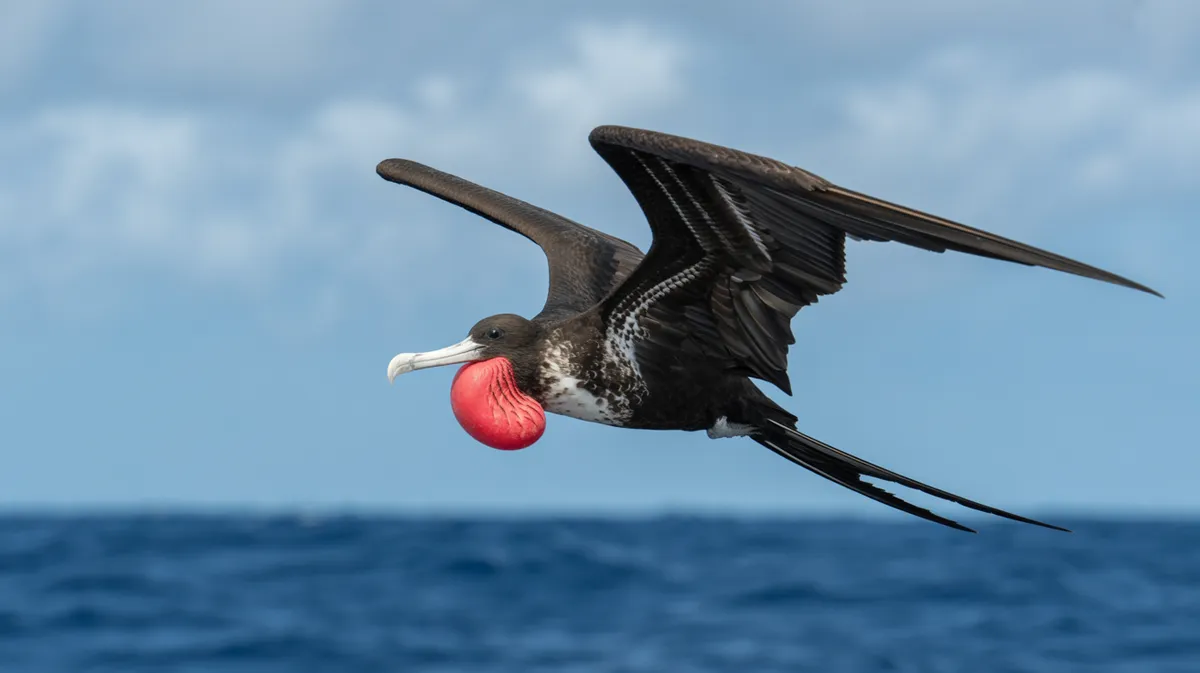
5. Frigatebird — ~153 km/h (95 mph)
Frigatebirds have the largest wing-area-to-body-weight ratio of any bird, letting them ride storm fronts and trade winds for weeks without landing. In a powered burst they reach about 153 km/h, often while harassing other seabirds into dropping a meal they then snatch in mid-air — a piracy that earned them the nickname "man-o'-war birds."
That endurance comes at a price: frigatebirds can't take off from water, so a bird that ditches into the sea is usually doomed. Evolution traded waterproofing and easy take-off for the ability to stay aloft for weeks at a time.
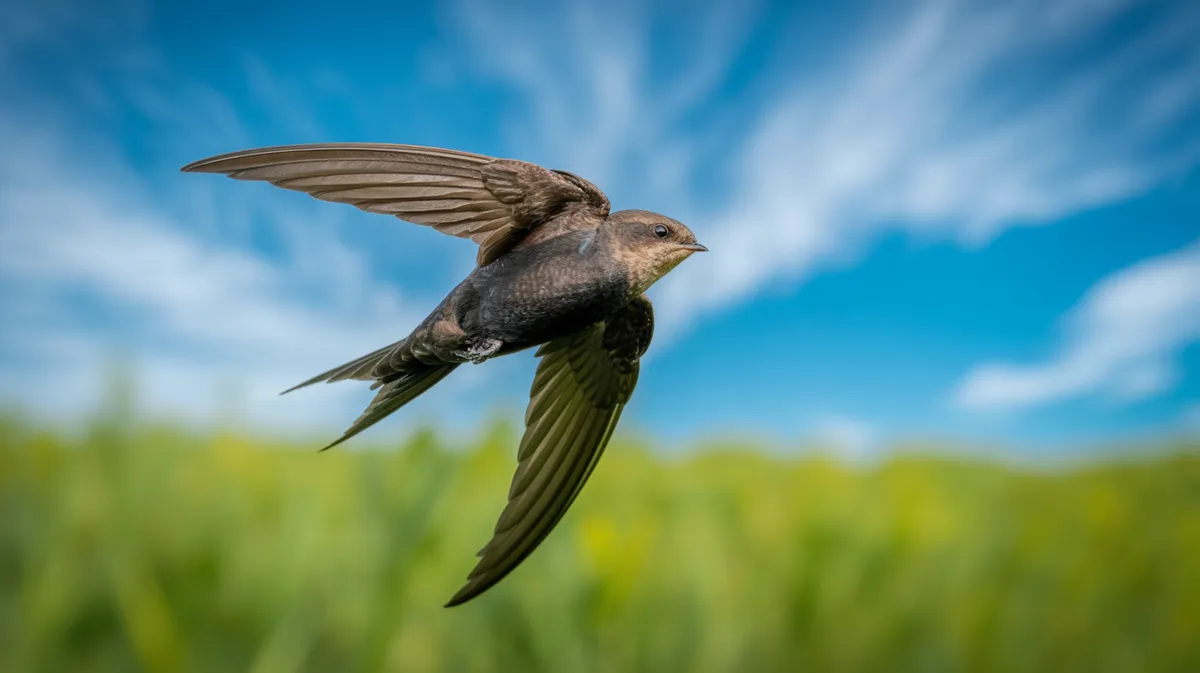
6. Common Swift — ~111 km/h (69 mph)
The common swift holds the confirmed record for the fastest horizontal flight of any bird in level, powered flight: about 111 km/h, verified by researchers tracking displaying birds. A young swift may stay airborne almost continuously for its first two or three years of life, covering millions of kilometres before it ever perches.
Swifts sleep on the wing too, shutting down one half of the brain at a time as they circle thousands of feet up. A swift ringed as a chick and found years later may have flown a distance equivalent to several round trips to the Moon without ever landing in between.
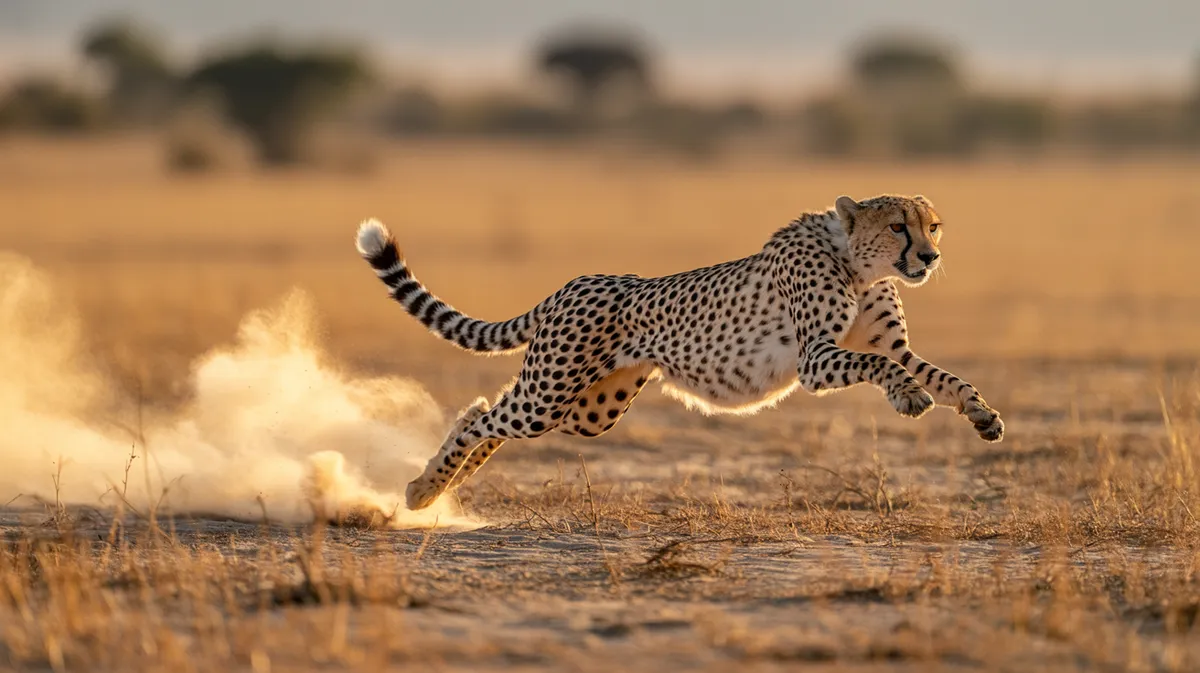
7. Cheetah — ~110 km/h (68 mph)
Finally, the land. The cheetah is the fastest land animal on Earth, going from a standstill to nearly 100 km/h in around three seconds — acceleration that shames most sports cars. A flexible spine acts like a loaded spring, semi-retractable claws grip like running spikes, and an oversized heart, liver, and nasal passages feed the engine with oxygen.
The catch is brutal: a cheetah can only hold top speed for 20–30 seconds before its body temperature spikes dangerously and it must stop. Most hunts are lost, and even successful ones often end with the exhausted cat too spent to defend its kill from lions or hyenas. Pure speed, it turns out, is an expensive specialism.
Almost everything about the cheetah is a trade-off in favour of acceleration: semi-retractable claws for grip, a lightened skull, and muscles packed with fast-twitch fibres. The same specialisation that makes it lethal over a short sprint leaves it too lightly built to defend its kills from lions and hyenas.
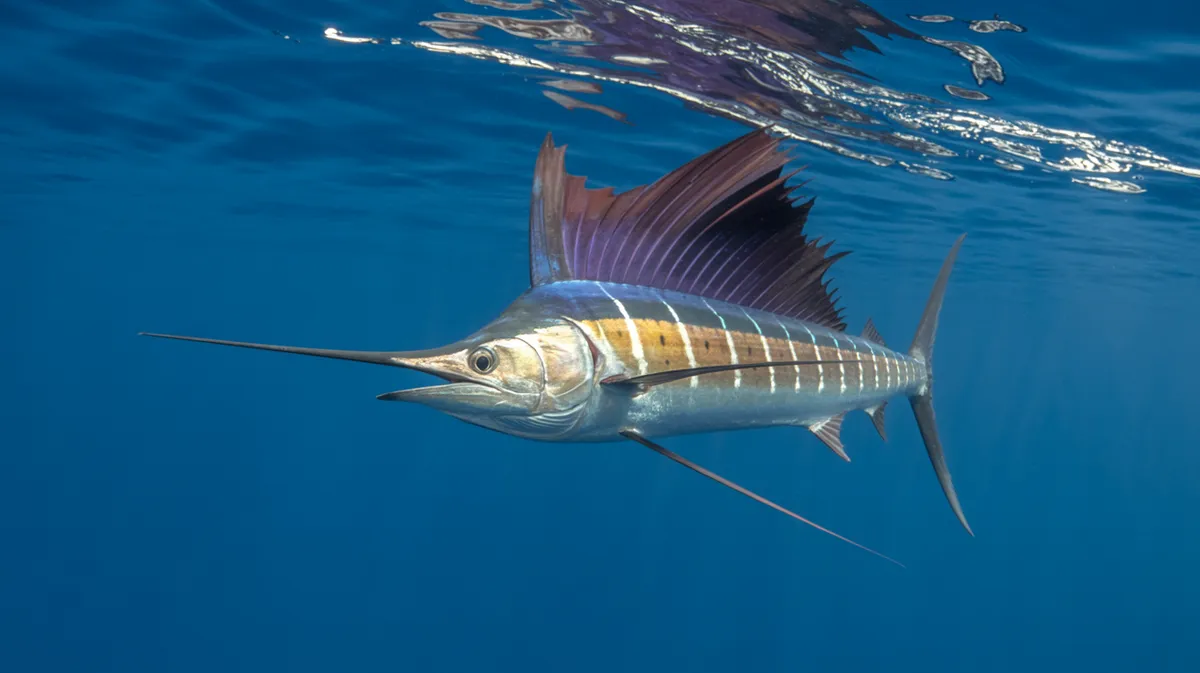
8. Sailfish — ~110 km/h (68 mph)
The ocean's sprinter. The sailfish is frequently named the fastest fish in the sea, with burst speeds often quoted around 110 km/h — though marine speeds are notoriously hard to measure, and recent studies suggest the true maximum may be considerably lower. Either way, a hunting sailfish folds its namesake dorsal "sail" flat into a groove to cut drag and flushes electric blue as it herds baitfish into a tight ball.
Recent high-speed footage hints the sailfish may not truly hit the legendary 110 km/h in sustained swimming — but it doesn't need to. It hunts in coordinated groups, slashing its bill through bait balls to stun individual fish faster than they can react.
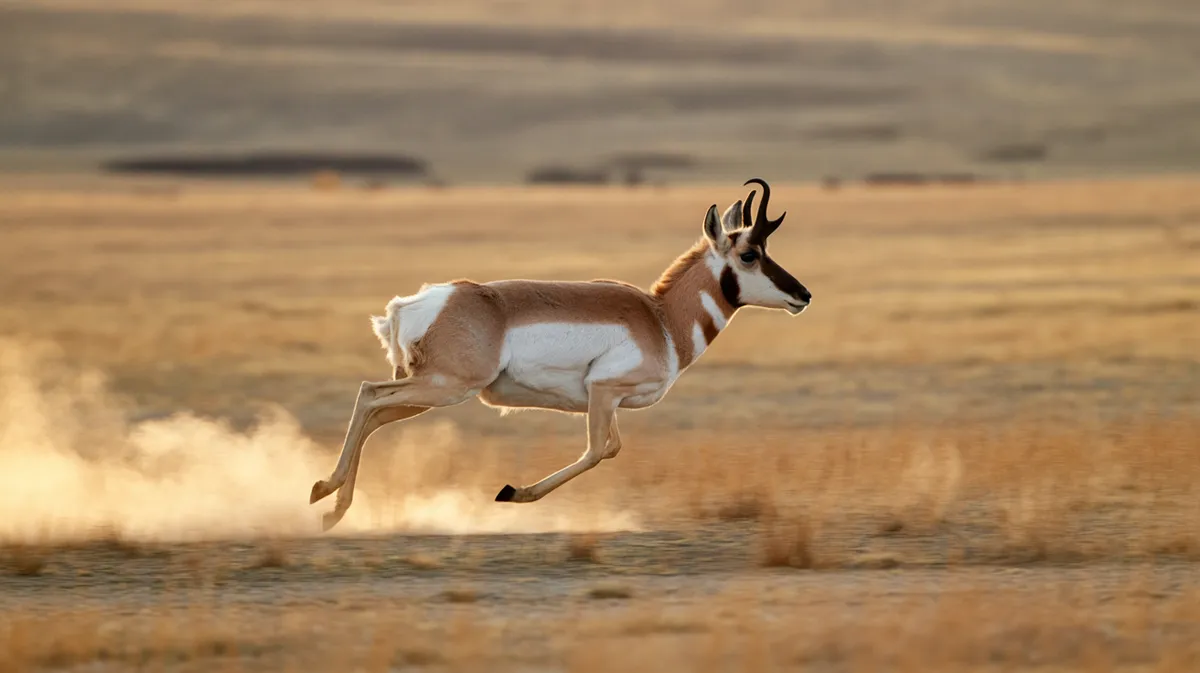
9. Pronghorn — ~98 km/h (61 mph)
If the cheetah is the sprinter, the pronghorn is the marathoner that could also win the 400 metres. North America's pronghorn hits around 98 km/h and — crucially — sustains high speed for kilometres, not seconds, thanks to oversized lungs, heart, and windpipe. Many biologists think it evolved this absurd endurance to outrun the American cheetah, a predator that went extinct around 12,000 years ago. The pronghorn is still running from a ghost.
What is remarkable is how much of its body is devoted to the task: oversized lungs, an enormous heart, and an extra-wide windpipe feed oxygen at a rate that would overwhelm most mammals. The pronghorn is essentially a four-legged endurance engine still outrunning an Ice Age predator that no longer exists.
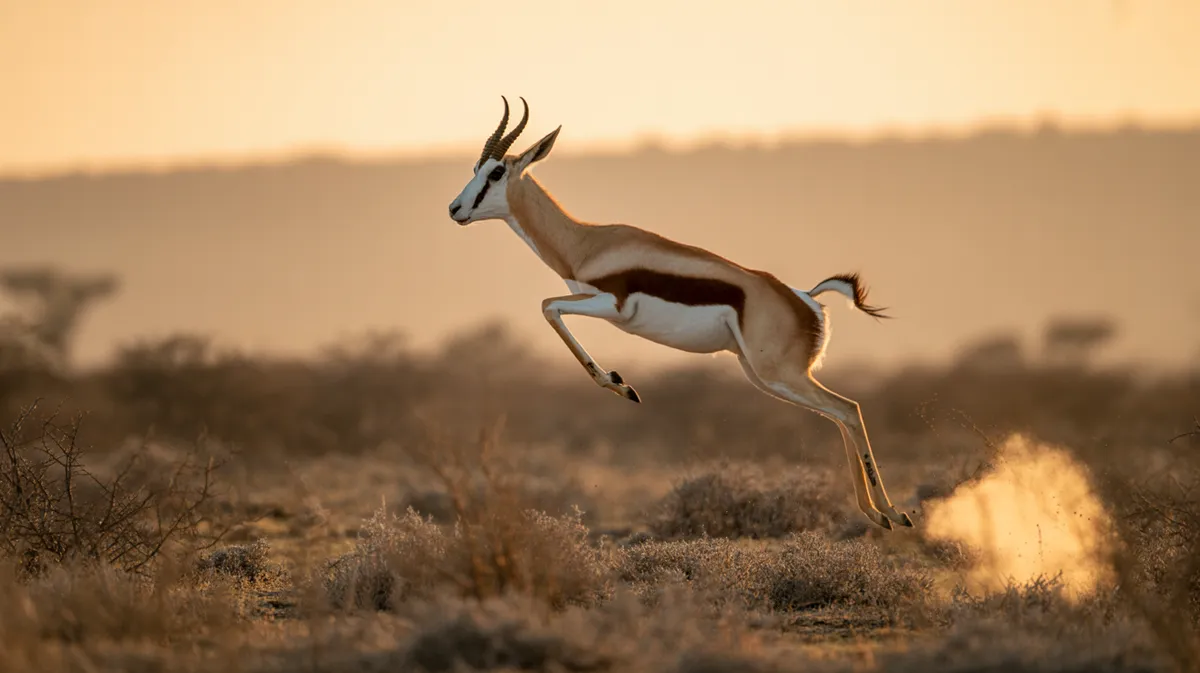
10. Springbok — ~88 km/h (55 mph)
This southern African gazelle pairs roughly 88 km/h with "pronking" — stiff-legged vertical leaps up to two metres high that may advertise its fitness to predators ("don't bother chasing me"). Speed plus acrobatics plus a clear signal is a hard combination for a cheetah or wild dog to break down.
Pronking may also be a way to see over tall grass, or simply an outlet for nervous energy. Whatever its purpose, a herd of springbok exploding into the air in every direction is one of the most arresting sights on the African plains.
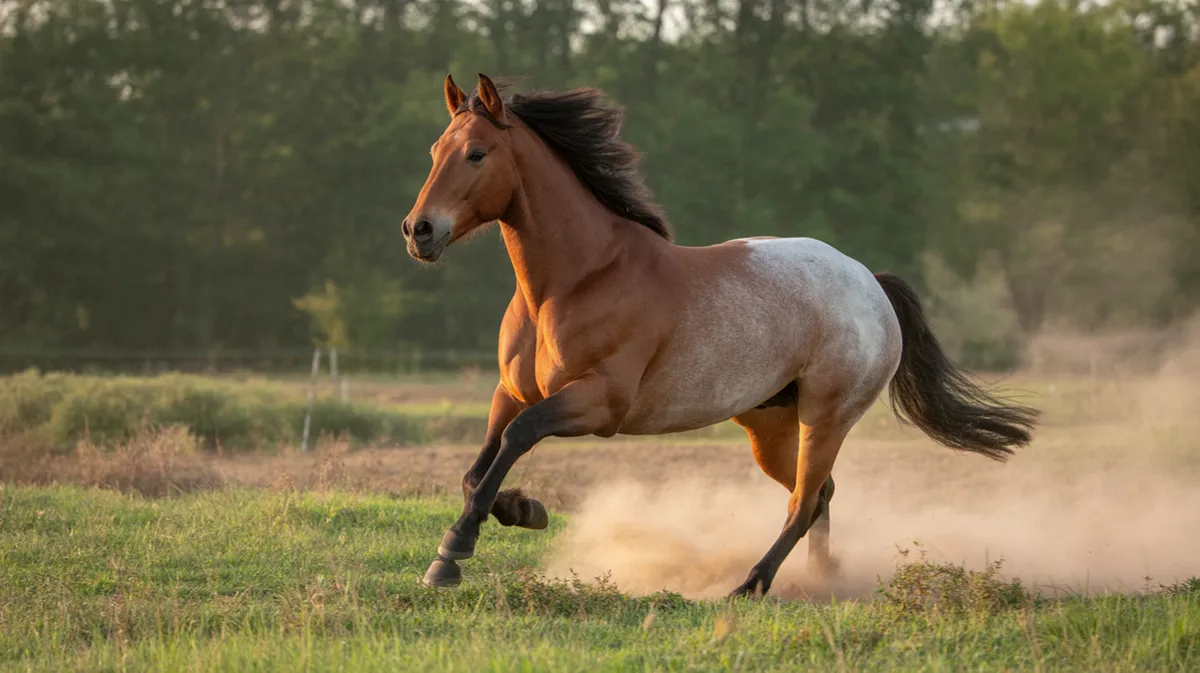
11. Quarter Horse — ~88 km/h (55 mph)
The fastest domestic animal on the list. Bred specifically for explosive quarter-mile sprints — hence the name — the American Quarter Horse reaches about 88 km/h over short distances, edging out the Thoroughbred at the very start. It's a reminder that selective breeding can manufacture speed nearly as effectively as natural selection.
Over longer distances the Thoroughbred overtakes it, but in a flat-out dash from a standing start nothing on four domesticated legs is quicker. The breed’s explosive hindquarters are the product of centuries of selection for exactly this kind of sprint.
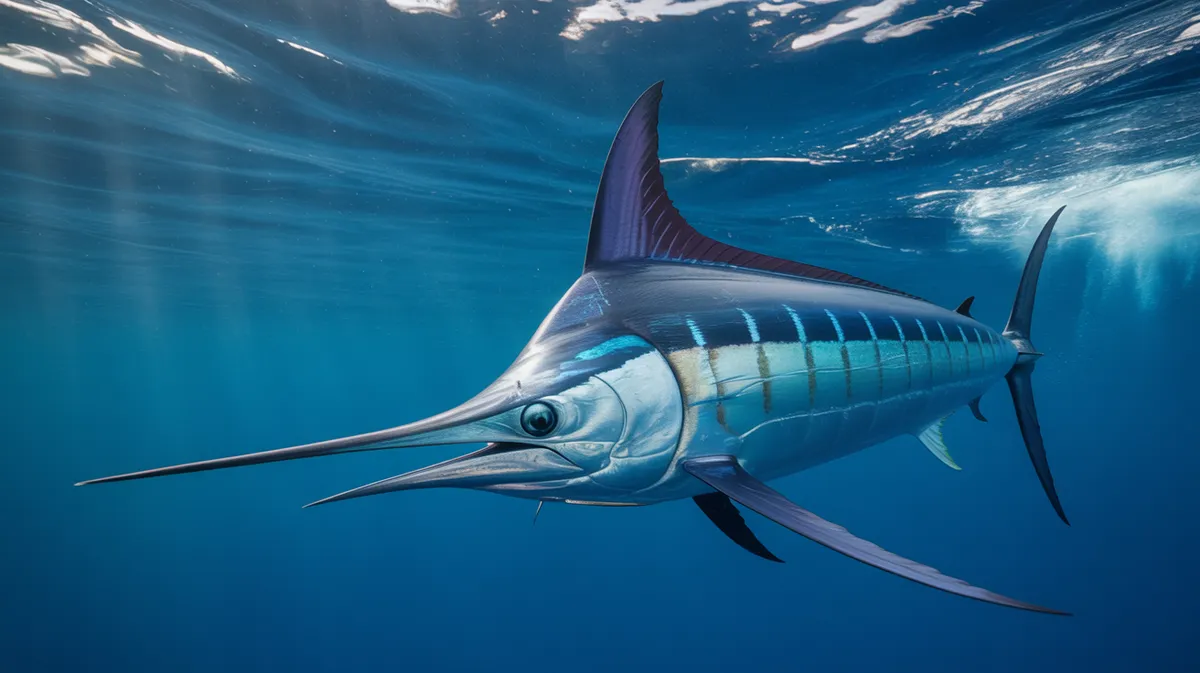
12. Black Marlin — ~80+ km/h (50+ mph)
We close in deep water. The black marlin's top speed is debated, with older claims of 130 km/h now treated sceptically, but it's unquestionably one of the fastest swimmers alive. A rigid, hydrodynamic body and a sword-like bill that slices the water ahead of it let it tear through bait schools. It rounds out a list that spans sky, land, and sea.
Like other billfish, the marlin can warm its eyes and brain above the surrounding water, sharpening its vision and reaction time as it hunts in the cool depths. Paired with its rigid, torpedo-shaped body, that lets it run down almost anything in the open ocean.
So who is really the fastest?
If you allow diving, the peregrine falcon wins outright. If you demand powered, level flight, it's the white-throated needletail. On land, the cheetah is king of the sprint and the pronghorn king of the distance. In the water, sailfish and marlin trade blows. "Fastest" depends entirely on the rules of the contest — which is what makes the question endlessly fun to argue.
Frequently asked questions
What is the fastest animal on Earth? The peregrine falcon, at up to 389 km/h — but only in a dive. For self-powered horizontal flight, the white-throated needletail is fastest.
What is the fastest land animal? The cheetah, at about 110 km/h over short bursts. Over long distances, the pronghorn is faster because it can sustain its pace.
Is the cheetah faster than a falcon? No. Even in level flight several birds and bats beat the cheetah; in a dive the peregrine is more than three times quicker.
What is the fastest animal in the sea? Usually said to be the sailfish (~110 km/h), though the measurement is contested and the black marlin is a close rival.
Next in the series: some animals don't chase records in speed but in time. Meet the 10 longest-living animals on Earth, including a shark older than the United States — then see who's strongest in pound-for-pound terms.