
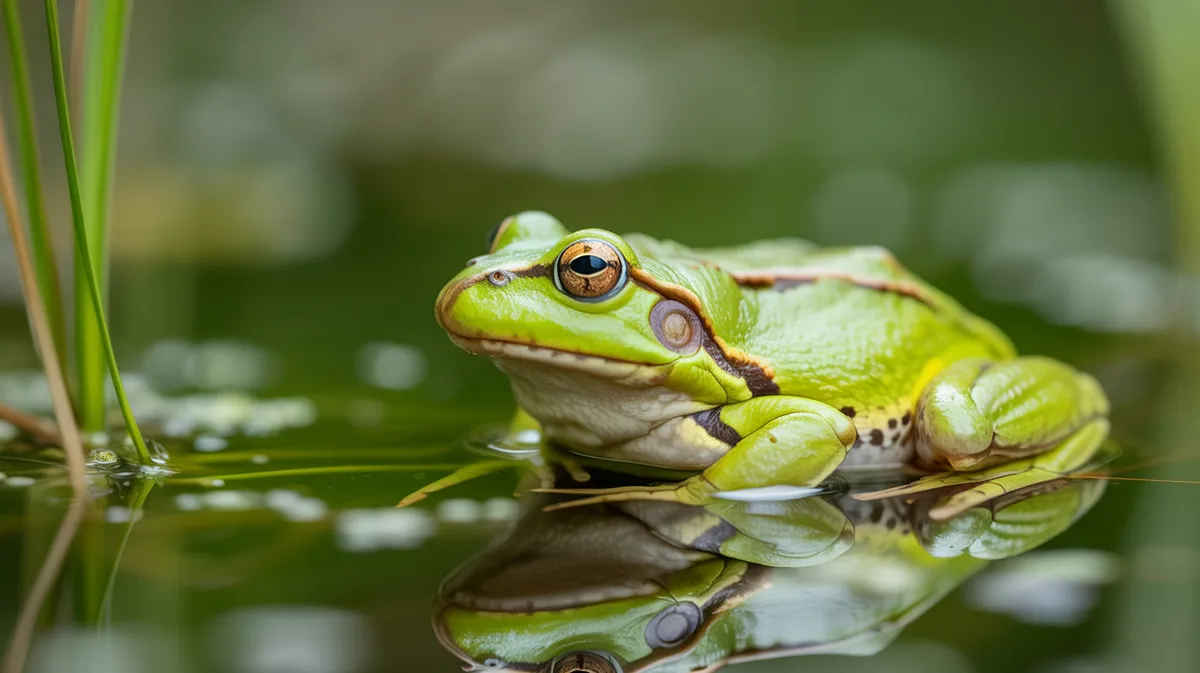
About the American Green Tree Frog
The American Green Tree Frog is a small, slender amphibian known for its vibrant green color and distinctive white or yellow stripe running from its jaw along each side. This species is nocturnal and highly arboreal, preferring to spend most of its time perched on vegetation near water sources. They are commonly found in the southeastern United States, especially in wetlands, marshes, and swamps. Their loud, bell-like calls are a familiar sound during warm and humid nights.
Fascinating facts
Color Changing Skin
American Green Tree Frogs can alter their skin color to blend in with their surroundings, ranging from bright green to brown hues.
Loud Choruses
Males are known for their loud, repetitive croaking, especially during the breeding season, which attracts mates and establishes territory.
Expert Climbers
Their toe pads secrete a sticky substance, allowing them to climb vertical surfaces and even glass with ease.
Detailed description
The American Green Tree Frog (Dryophytes cinereus, formerly Hyla cinerea) is a slender, medium-sized hylid amphibian, typically measuring 3.2–6.4 cm (1.25–2.5 inches) in length. Its smooth, moist skin is most often a vibrant lime to emerald green, but individuals can shift to shades of yellow-green or even light brown depending on temperature, humidity, and stress. A distinctive white or yellow dorsolateral stripe runs from the upper jaw to the groin, though this stripe may be faint or absent in some populations. The ventral surface is pale and unmarked. The species has large, forward-facing golden eyes with horizontal pupils, aiding in nocturnal vision. Toe pads are well-developed and adhesive, allowing for agile climbing on vegetation. American Green Tree Frogs are primarily arboreal, spending most of their lives perched on reeds, grasses, or shrubs near water. They are highly vocal, especially during the breeding season, producing a resonant, repetitive 'quonk-quonk' call. Their skin secretes mild toxins that deter some predators, and they exhibit rapid color change as camouflage. The species is long-lived for a small frog, with wild individuals living up to 6 years.
Did you know?
Despite their name, American Green Tree Frogs may be found in a variety of colors, including shades of yellow and olive, depending on their environment and stress levels.
Research & sources
Wikipedia summary
The American green tree frog is a common arboreal species of New World tree frog belonging to the family Hylidae. This nocturnal insectivore is moderately sized and has a bright green to reddish-brown coloration. Sometimes, light yellowish spots are present on the dorsum. Commonly found in the central and southeastern United States, the frog lives in open canopy forests with permanent water sources and abundant vegetation. The American green tree frog is strictly aquatic during the hibernating and mating seasons. When defending its territory, the frog either emits aggressive call signals or resolves to grapple with intruders, seldom leading to injury or death. To avoid predation, the frog will leap into the water or jump into the treetops.
Behaviour & social structure
American Green Tree Frogs are nocturnal and most active during warm, humid nights. During the day, they rest motionless on vertical vegetation, often with limbs tucked in to minimize water loss and avoid detection. At night, they emerge to hunt, using a sit-and-wait strategy to ambush flying or crawling insects such as flies, moths, crickets, and beetles. They use their sticky tongues to capture prey with remarkable speed and accuracy. Socially, males are territorial during the breeding season, defending calling sites by emitting aggressive vocalizations or, less commonly, engaging in physical grappling. Outside of breeding, they are generally solitary. Frogs communicate through a variety of calls: advertisement calls attract females, while encounter calls deter rival males. In response to predators, they may leap into water or ascend rapidly into dense foliage.
Reproduction & life cycle
Breeding occurs from March to September, peaking in late spring and early summer, and is triggered by warm temperatures and rainfall. Males congregate at the edges of ponds, swamps, or slow-moving streams, calling loudly to attract females. Amplexus (the mating embrace) is axillary, with the male grasping the female behind her forelimbs. Females lay clutches of 400–1,000 eggs, which are deposited in small, floating clusters attached to aquatic vegetation. Embryonic development is rapid, with eggs hatching within 4–6 days depending on water temperature. Tadpoles are herbivorous, feeding on algae and detritus, and undergo metamorphosis into froglets in 4–8 weeks. There is no parental care after oviposition. Sexual maturity is typically reached within one year.
Adaptations & survival
This species exhibits several adaptations for arboreal and aquatic life. Enlarged toe pads with specialized epithelial cells provide strong adhesion to smooth and vertical surfaces. Their skin is permeable, facilitating cutaneous respiration and water absorption, but also secretes mild toxins as a defense against predators. Rapid color change, mediated by chromatophores, allows camouflage in varying environments. Their large eyes and horizontal pupils enhance night vision for detecting prey and predators. During drought or cold, they can enter a state of torpor, reducing metabolic rate to conserve water and energy. During hibernation, they often seek refuge in mud or dense vegetation near water.
Cultural significance
The American Green Tree Frog is the state amphibian of both Louisiana and Georgia, symbolizing the importance of wetlands in these regions. Its distinctive call is a familiar sound in southern summer nights and is often featured in nature documentaries and educational materials. In some Native American folklore, frogs are associated with rain, fertility, and transformation. The species is popular in the pet trade due to its attractive coloration and ease of care, but wild collection is generally discouraged to protect native populations.
Recent research
Recent research has focused on the species' response to environmental contaminants, with studies showing sublethal effects of pesticides on development and immune function. Bioacoustic studies have analyzed the structure and function of their calls, revealing complex social communication and mate choice dynamics. Genetic studies have clarified the taxonomy of the Dryophytes genus, confirming the distinctiveness of D. cinereus from related species. Ongoing monitoring programs use the American Green Tree Frog as a bioindicator of wetland health due to its sensitivity to environmental changes.
Videos
Habitat
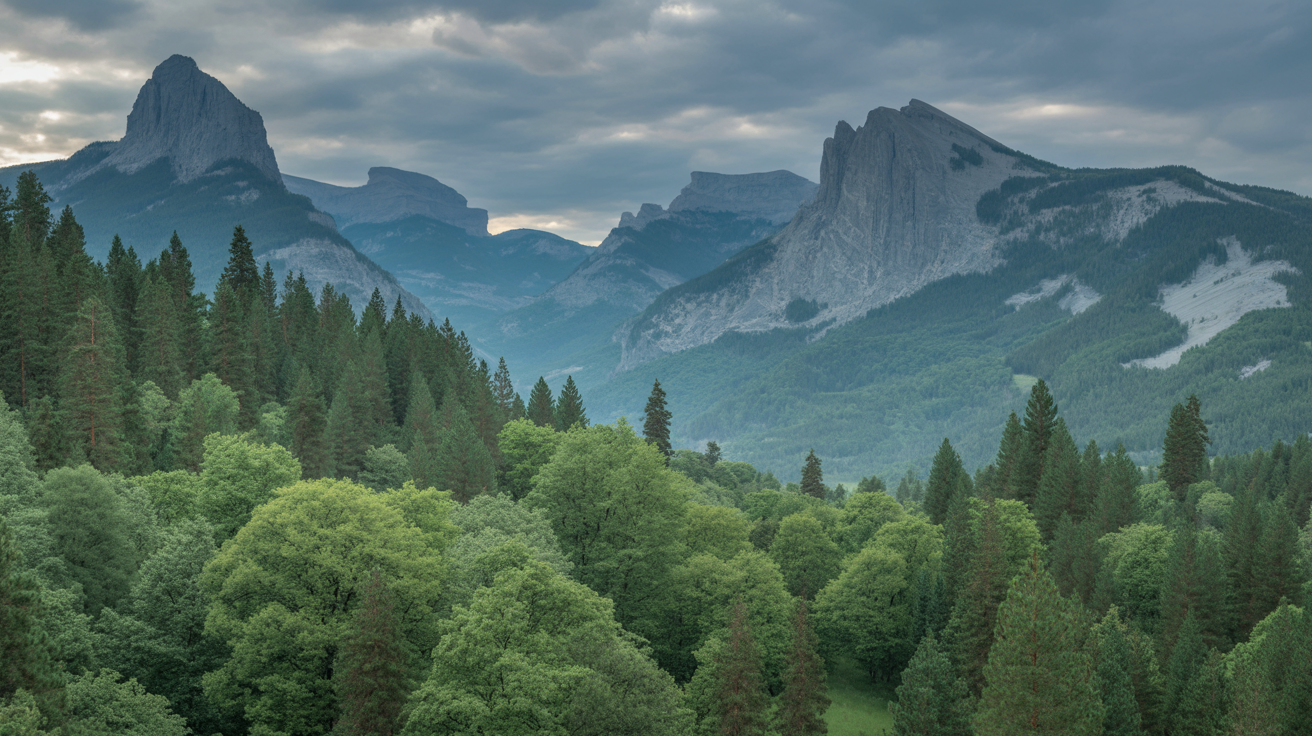
Wetlands and marshes near freshwater sources

Conservation
The American Green Tree Frog is currently classified as Least Concern on the IUCN Red List.
Threats & challenges
Although classified as Least Concern by the IUCN, American Green Tree Frogs face localized threats. Habitat loss from wetland drainage, urbanization, and agricultural expansion reduces breeding and foraging sites. Pesticide runoff and water pollution can cause developmental abnormalities and reduce survival rates. Emerging infectious diseases, such as chytridiomycosis, pose potential risks, though this species appears less susceptible than some other amphibians. Climate change may alter breeding phenology and habitat availability. Despite these challenges, the species remains widespread and abundant, with stable populations in most of its range.
Taxonomy
Scientific name
Hyla cinerea
- Kingdom
- Animalia
- Phylum
- Chordata
- Class
- Amphibia
- Order
- Anura
- Family
- Hylidae
- Genus
- Hyla
- Species
- cinerea
Where to see an american green tree frog
1 zoo and aquarium in 1 country are recorded as keeping this species.

Community notes
Share your observations about the American Green Tree Frog.
No community notes yet. Be the first!
Discover more wildlife
More fascinating animals from the encyclopedia.