
About the Arapaima
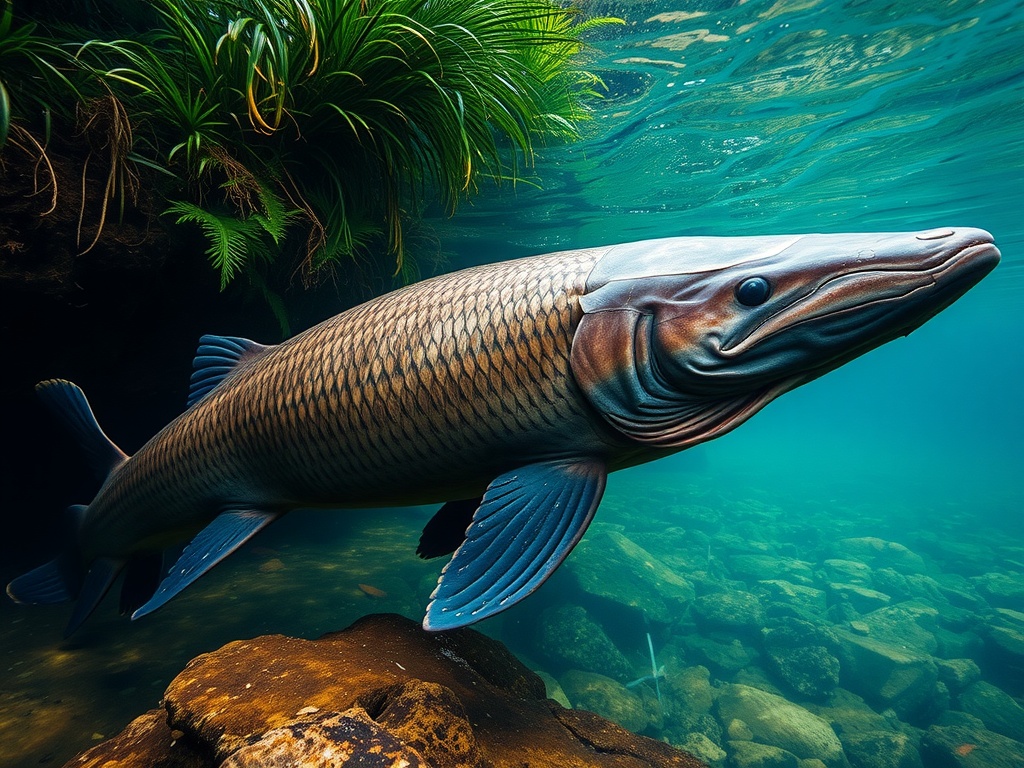
The arapaima is an air-breather that will drown if it cannot reach the surface: its swim bladder is lined with lung-like tissue and it must gulp air roughly every five to twenty minutes, an adaptation to the oxygen-starved, seasonally stagnant floodwaters of the Amazon. That single fact reshaped both its ecology and its fate — because it must surface, fishermen can count it, and because it must surface, it can be harpooned. Its scales are a materials-science celebrity: a hard, mineralised outer layer sits over a tough, corrugated inner layer of collagen fibres arranged in a twisting Bouligand structure, so a crack that starts in the brittle shell is deflected and dissipated rather than propagating. Piranha teeth cannot get through them, and engineers have copied the design for flexible body armour. Adults reach 3 m and 200 kg. Males guard the young in a shoal beneath them, and a gland on the head releases a pheromone-rich secretion that the fry actively feed on and follow.
Fascinating facts
Giant Freshwater Fish
Arapaimas are among the largest freshwater fish in the world, with some individuals reaching over 3 meters in length.
Air Breather
Unlike most fish, arapaimas must breathe air at the surface because they possess a modified swim bladder that functions like a lung.
Bony Tongue
Their scientific family name, Osteoglossidae, means 'bony tongue', referring to their unique tongue structure lined with teeth.
Detailed description
The arapaima (Arapaima gigas) is a colossal freshwater fish endemic to the Amazon and Essequibo basins, recognized as one of the largest bony fish in the world. Adults commonly reach lengths of 2–2.5 meters, with rare specimens documented at up to 3 meters and weights exceeding 200 kg. The body is elongated, streamlined, and covered in large, cycloid scales that are highly mineralized and armor-like, providing protection against predators and parasites. The scales are typically dark green to black dorsally, transitioning to a lighter, silvery hue ventrally, with a distinctive reddish or orange pigmentation along the caudal region. The head is broad and flattened, with an upturned mouth adapted for surface feeding. Arapaimas possess a unique respiratory system: in addition to gills, they have a modified swim bladder functioning as a lung, enabling obligate air-breathing. This adaptation allows them to survive in hypoxic (low-oxygen) waters typical of floodplain lakes and slow-moving rivers. Their lateral line system is highly developed, aiding in prey detection. Arapaimas are generally solitary or found in small family groups, exhibiting territorial behavior, especially during the breeding season. They are apex predators within their habitat, playing a crucial ecological role in regulating fish populations. Their ancient lineage, dating back to the Cretaceous period, is reflected in their primitive osteoglossiform features.
Did you know?
Despite living in water, arapaimas can actually drown if they are unable to surface regularly to breathe air.
Research & sources
Wikipedia summary
The arapaima, pirarucu, or paiche is any large species of bonytongue in the genus Arapaima native to the Amazon and Essequibo basins of South America. Arapaima is the type genus of the subfamily Arapaiminae within the family Osteoglossidae. They are among the world's largest freshwater fish, reaching as much as 3 m (9.8 ft) in length. They are an important food fish. They have declined in the native range due to overfishing and habitat loss. In contrast, arapaima have been introduced to several tropical regions outside the native range, where they are sometimes considered invasive species. In Kerala, India, arapaima escaped from aquaculture ponds after floods in 2018. Its Portuguese name, pirarucu, derives from the Tupi language words pira and urucum, meaning "red fish".
Behaviour & social structure
Arapaimas are primarily crepuscular, being most active during dawn and dusk. They are ambush predators, relying on stealth and rapid strikes to capture prey. Their diet consists mainly of fish, but they opportunistically consume crustaceans, insects, and occasionally small mammals or birds that fall into the water. Arapaimas use a rapid suction feeding mechanism, creating a vacuum to draw prey into their mouths. They are known for their surface-oriented behavior, surfacing every 10–20 minutes to gulp air, producing a characteristic 'gulping' sound. Socially, adults are generally solitary outside of the breeding season, but juveniles may form loose aggregations. During the dry season, arapaimas may become more territorial as water bodies shrink, with males defending nesting sites. They exhibit site fidelity, often returning to the same feeding and breeding areas annually.
Reproduction & life cycle
Arapaimas exhibit a seasonal reproductive cycle closely tied to the flood pulse of the Amazon. Spawning typically occurs at the onset of the rainy season (December to May), when rising water levels provide access to floodplain habitats. Males and females engage in courtship rituals involving circling and body contact. Females lay between 10,000 and 50,000 eggs in shallow, nest-like depressions constructed by both parents in sandy or muddy substrates. The eggs are fertilized externally. Males provide extensive parental care, guarding the nest and later the free-swimming fry, which remain close to the father's head for protection. The male's head may darken during this period, possibly serving as camouflage. Juveniles are highly vulnerable to predation, and parental care increases their survival rates. Sexual maturity is reached at 4–5 years of age.
Adaptations & survival
Arapaimas possess several remarkable adaptations for survival in the dynamic Amazonian environment. Their obligate air-breathing ability, via a highly vascularized swim bladder, allows them to inhabit oxygen-poor waters where most other large fish cannot survive. The robust, mineralized scales provide defense against piranhas and other predators. Their lateral line system and acute hearing facilitate prey detection in turbid waters. During the dry season, arapaimas can aestivate in mud or shallow pools, reducing metabolic activity to survive periods of low water. Their reproductive timing is synchronized with the annual flood cycle, ensuring that offspring have access to abundant food and shelter. The species' rapid growth rate is another adaptation to the predation pressures of the Amazon.
Cultural significance
The arapaima holds immense cultural and economic value for indigenous and local communities throughout the Amazon. Known as 'pirarucu' in Brazil and 'paiche' in Peru, it is a staple protein source and a prized delicacy, often referred to as the 'cod of the Amazon' due to its firm, boneless flesh. Traditional fishing methods, such as harpooning, are deeply embedded in Amazonian culture. The fish features in regional folklore and mythology, symbolizing abundance and resilience. Its scales have been used for artisanal crafts and jewelry, while its tongue was historically employed as a grater. In recent years, arapaima has gained attention in international aquaculture and sport fishing, further increasing its economic importance.
Recent research
Recent genetic studies have clarified the taxonomy of the genus Arapaima, suggesting the existence of multiple cryptic species rather than a single widespread species. Advances in telemetry and acoustic monitoring have provided new insights into their movement patterns, habitat use, and population structure. Research into their unique air-breathing physiology has implications for understanding vertebrate respiratory evolution. Conservation biology studies are focusing on sustainable management practices, including community-based quotas and closed seasons. There is ongoing investigation into the impacts of introduced populations outside South America, particularly in Asia, where arapaimas may pose ecological risks. The species is also being studied for its potential in aquaculture due to its rapid growth and high market value.
Videos
Habitat
Freshwater rivers and lakes
 Tropical Regions
Rainforest
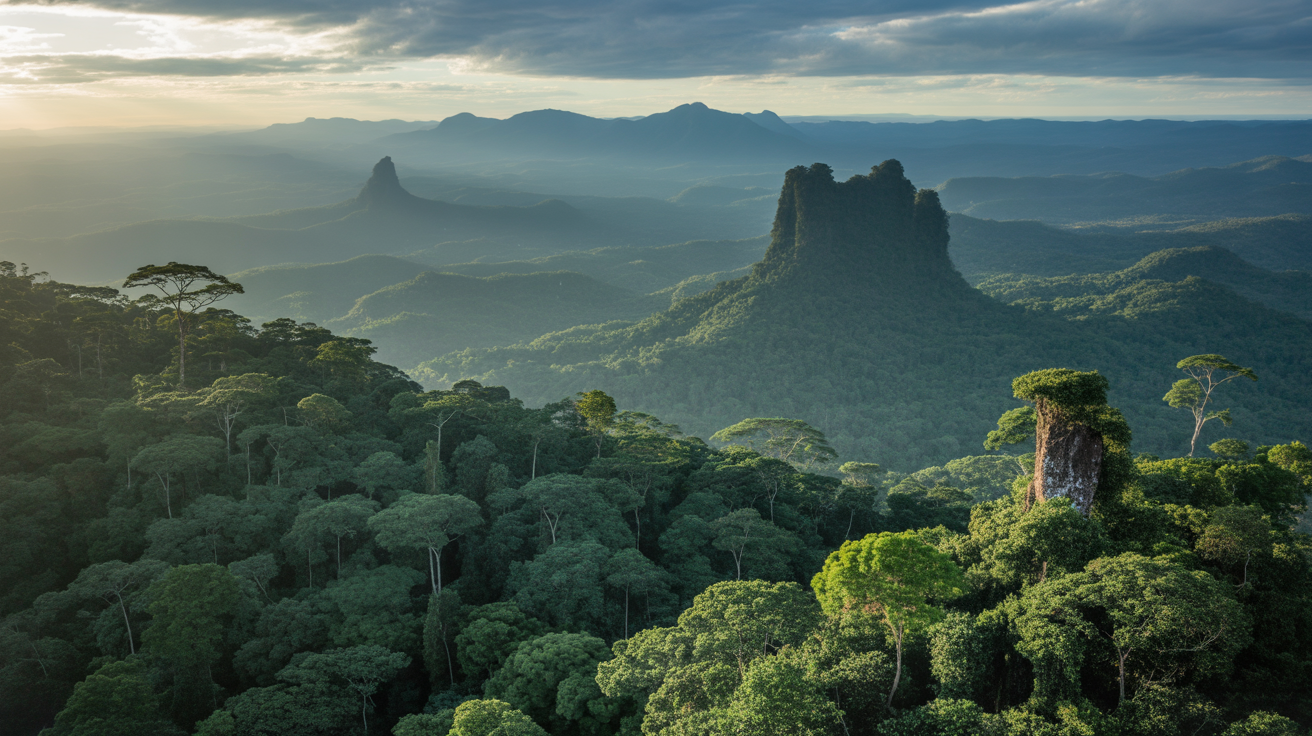
Dense, wet forests with the highest biodiversity on Earth, containing more than half of the world's plant and animal species.
 Global
Forest
Wooded areas with significant tree cover and diverse plant and animal communities.
 Global
Freshwater
Lakes, rivers, and wetlands with diverse aquatic ecosystems.
Conservation
The Arapaima is currently classified as Data Deficient on the IUCN Red List.
Threats & challenges
Arapaimas face significant threats from overfishing, habitat degradation, and illegal poaching. Their large size and tendency to surface for air make them easy targets for harpoon and net fisheries. Overexploitation has led to dramatic population declines in many parts of their native range, with local extirpations reported. Habitat loss due to deforestation, dam construction, and pollution further exacerbates their vulnerability. Invasive populations have established in regions such as Southeast Asia and India, where they may disrupt native ecosystems. Conservation efforts are hampered by limited population data, leading to a 'Data Deficient' status on the IUCN Red List. Community-based management and regulated fishing have shown promise in some areas, but enforcement remains inconsistent.
Taxonomy
Scientific name
Arapaima gigas
- Kingdom
- Animalia
- Phylum
- Chordata
- Class
- Actinopterygii
- Order
- Osteoglossiformes
- Family
- Arapaimidae
- Genus
- Arapaima
- Species
- gigas
Where to see an arapaima
3 zoos and aquariums in 2 countries are recorded as keeping this species.
 National Zoological Park🇺🇸 Washington, United States
 Toledo Zoo🇺🇸 Toledo, United States
 Tierpark und Fossilium Bochum🇩🇪 Bochum, Germany
Community notes
Share your observations about the Arapaima.
No community notes yet. Be the first!
Discover more wildlife
More fascinating animals from the encyclopedia.