
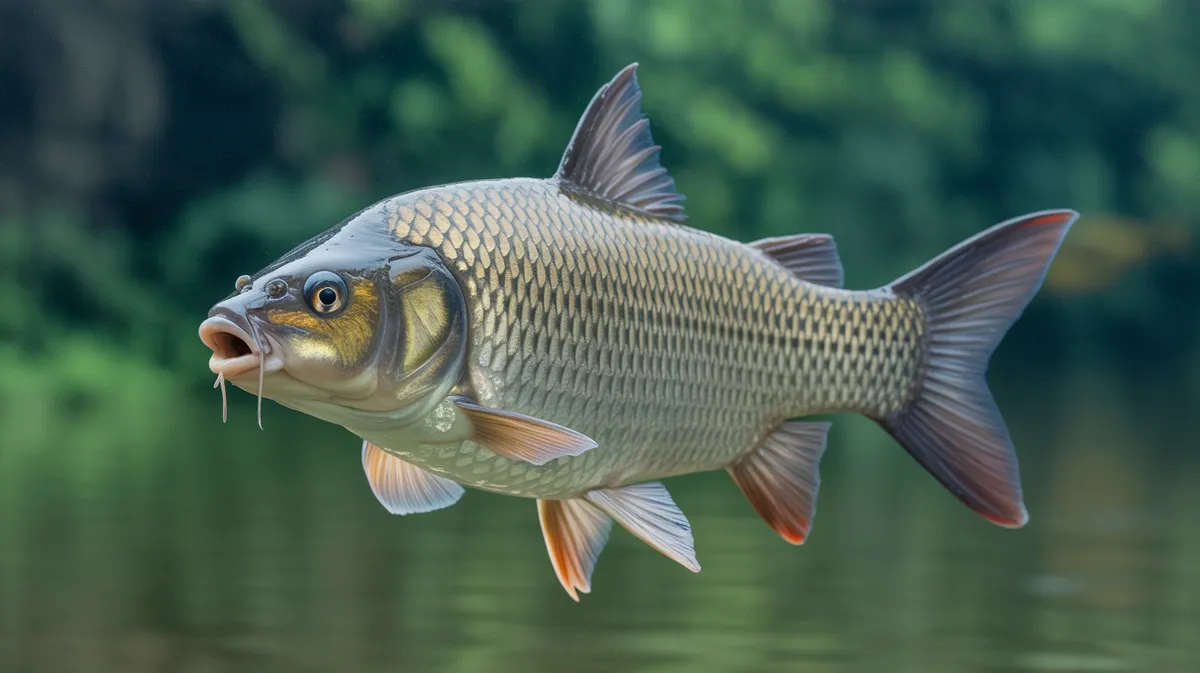
Asian Carp
Hypophthalmichthys molitrix, Hypophthalmichthys nobilis, Ctenopharyngodon idella, Mylopharyngodon piceus
About the Asian Carp
Asian carp refers collectively to several species of freshwater fish native to East Asia, including the silver carp, bighead carp, grass carp, and black carp. These fish are known for their rapid growth rates and high reproductive capacity, making them highly invasive when introduced to non-native environments. Asian carp have become a significant concern in North America, where they disrupt local ecosystems by outcompeting native fish for food and habitat. They are filter feeders, consuming vast amounts of plankton, which can lead to reduced biodiversity in affected waterways. Asian carp are also notable for their tendency to leap out of the water when startled, posing risks to boaters.
Fascinating facts
High Jumpers
Silver carp are notorious for leaping high out of the water, sometimes causing harm to people in boats.
Voracious Eaters
Asian carp consume large amounts of plankton and aquatic plants, which can disrupt food webs and native fish populations.
Invasive Species
Introduced to North America in the 1970s, Asian carp have since spread throughout the Mississippi River Basin, threatening native aquatic life.
Detailed description
Asian carp is a collective term for four major cyprinid species native to East Asia: silver carp (Hypophthalmichthys molitrix), bighead carp (Hypophthalmichthys nobilis), grass carp (Ctenopharyngodon idella), and black carp (Mylopharyngodon piceus). These species are robust, deep-bodied fish, with adults typically ranging from 60 to 120 cm in length and weighing up to 40 kg, though exceptional individuals may exceed these sizes. Anatomically, they are characterized by a laterally compressed body, a terminal to subterminal mouth, and a lack of true stomachs, which supports their continuous filter-feeding lifestyle. Silver and bighead carp possess specialized gill rakers that allow them to efficiently filter phytoplankton and zooplankton from the water column, while grass carp have pharyngeal teeth adapted for shredding aquatic vegetation, and black carp are molluscivorous with strong pharyngeal jaws for crushing shells. Asian carp are highly mobile, capable of long-distance migrations in response to environmental cues such as flooding or temperature changes. They are generally schooling fish, particularly in juvenile stages, and exhibit complex social behaviors. Their rapid growth rates and high fecundity—females can produce up to 1.5 million eggs per spawning event—contribute to their invasive potential. In non-native habitats, these traits enable them to outcompete indigenous species for resources. Unique among freshwater fish, silver carp are notorious for their leaping behavior when startled, sometimes clearing the water by over 2 meters, which poses hazards to recreational boaters. Their ecological impact is profound, as they can alter nutrient cycling, reduce water quality, and disrupt food webs by depleting planktonic resources critical to native fish and invertebrates.
Did you know?
The silver carp is known for its jumping behavior, which can result in injuries to boaters when startled by the sound of boat motors.
Research & sources
Wikipedia summary
Asian carp is an informal grouping of several species of cyprinid freshwater fishes native to Eurasia, commonly referring to the four East Asian species silver carp, bighead carp, grass carp and black carp, which were introduced to North America during the 1970s and now regarded as invasive in the United States. These four species, now also known commercially as Copi in the United States, are staple food fish in their native China, where they are collectively known as qing cao lian yong (青草鲢鳙) or si da jia yu and are farmed extensively.
Behaviour & social structure
Asian carp display a range of behaviors adapted to their feeding strategies and habitats. Silver and bighead carp are primarily filter feeders, swimming with mouths agape to strain plankton from the water, often forming large, loosely organized schools. Grass carp are more solitary or form small groups, grazing on submerged and emergent vegetation, and can consume up to 40% of their body weight in plant matter daily. Black carp are benthic foragers, using tactile and chemical cues to locate mollusks, which they crush with robust pharyngeal teeth. All four species exhibit diel activity patterns, with increased feeding at dawn and dusk. During spawning migrations, adults undertake upstream movements, often triggered by rising water temperatures (18–28°C) and increased river flow. Juveniles tend to aggregate in shallow, vegetated areas, which provide shelter from predators. Social interactions are most pronounced during spawning, when large aggregations form in suitable habitats. Outside the breeding season, Asian carp are generally non-territorial and display minimal aggression, except when competing for limited food resources.
Reproduction & life cycle
Asian carp are highly fecund, with reproductive strategies that maximize offspring survival in dynamic riverine systems. Spawning typically occurs in late spring to early summer, when water temperatures reach 18–28°C and river levels rise due to seasonal flooding. Females release eggs into the water column, which are externally fertilized by males. The eggs are semi-buoyant and drift downstream, requiring flowing water to remain suspended and oxygenated; stagnant conditions can cause high mortality. Incubation is rapid, with hatching occurring within 24–48 hours depending on temperature. Larvae are planktonic and begin feeding on microscopic organisms soon after hatching. Parental care is absent; survival is ensured by sheer numbers and rapid early growth. Sexual maturity is typically reached at 3–5 years, though this varies with environmental conditions and species. In aquaculture, controlled breeding is achieved via hormonal induction and artificial fertilization, facilitating large-scale production.
Adaptations & survival
Asian carp exhibit several adaptations that contribute to their ecological success. Their filter-feeding apparatus—especially the fine, comb-like gill rakers of silver and bighead carp—enables efficient exploitation of plankton-rich waters. Grass carp have specialized pharyngeal teeth for processing tough plant material, while black carp possess molariform teeth for crushing mollusk shells. All species have a streamlined body shape for efficient swimming in fast-flowing rivers. Physiologically, they tolerate a wide range of temperatures (0–38°C) and low dissolved oxygen levels, allowing survival in diverse habitats. Their reproductive strategy, involving high fecundity and pelagic eggs, is well-suited to unpredictable floodplain environments. The leaping behavior of silver carp is thought to be an anti-predator adaptation, though it also exposes them to injury and predation. Rapid growth rates and flexible diet further enhance their invasive potential.
Cultural significance
Asian carp have been integral to East Asian aquaculture and cuisine for over a millennium, especially in China, where they are known as the 'Four Great Domestic Fish' (si da jia yu). They are featured in traditional dishes, festivals, and are symbols of prosperity and perseverance in Chinese culture. Carp motifs are common in art and folklore, often representing good fortune and success. In recent years, the rebranding of Asian carp as 'Copi' in the United States aims to promote their consumption as a sustainable food source and reduce invasive populations. Their role in biocontrol of aquatic vegetation (grass carp) and mollusks (black carp) has been both beneficial and controversial in various regions.
Recent research
Recent research has focused on genetic differentiation among invasive populations, the ecological impacts of carp on North American waterways, and the development of novel control methods. Environmental DNA (eDNA) monitoring has become a key tool for early detection and management. Studies on hybridization between silver and bighead carp reveal complex patterns of introgression, raising concerns about increased invasiveness. Ongoing work investigates the use of pheromones, targeted toxins, and physical barriers to prevent further spread, particularly into the Great Lakes. Nutritional studies highlight the high protein and omega-3 content of carp, supporting their value as a food resource. Research into their physiological tolerance to pollutants and hypoxia informs risk assessments for new habitats.
Sources
Biology and Management of Invasive Silver Carp and Bighead Carp: North American and Global Perspectives
Chapman, D.C. & Hoff, M.H. (eds.), U.S. Geological Survey (2011)
scientificVideos
Habitat
Freshwater rivers, lakes, and reservoirs

Conservation
The Asian Carp is currently classified as Least Concern on the IUCN Red List.
Threats & challenges
In their native range, Asian carp populations are generally stable, though overfishing, habitat modification, and pollution pose localized threats. In North America, they are considered one of the most ecologically damaging invasive species, outcompeting native fish for food and habitat, altering ecosystem structure, and threatening commercial and recreational fisheries. Control efforts are complicated by their high reproductive output and ability to exploit a variety of habitats. Physical barriers, targeted fishing, and the development of biological controls (e.g., sterilization, pheromone traps) are ongoing management strategies. Hybridization between silver and bighead carp has been documented, potentially increasing their adaptability. Climate change may further expand their potential range. Despite their abundance, some populations in Asia face pressure from habitat loss and water pollution, but global conservation status remains 'Least Concern.'
Taxonomy
Scientific name
Hypophthalmichthys molitrix, Hypophthalmichthys nobilis, Ctenopharyngodon idella, Mylopharyngodon piceus
- Kingdom
- Animalia
- Phylum
- Chordata
- Class
- Actinopterygii
- Order
- Cypriniformes
- Family
- Cyprinidae
- Genus
- Hypophthalmichthys, Ctenopharyngodon, Mylopharyngodon
- Species
- molitrix, nobilis, idella, piceus
Community notes
Share your observations about the Asian Carp.
No community notes yet. Be the first!
Discover more wildlife
More fascinating animals from the encyclopedia.