
About the Blue Poison Dart Frog
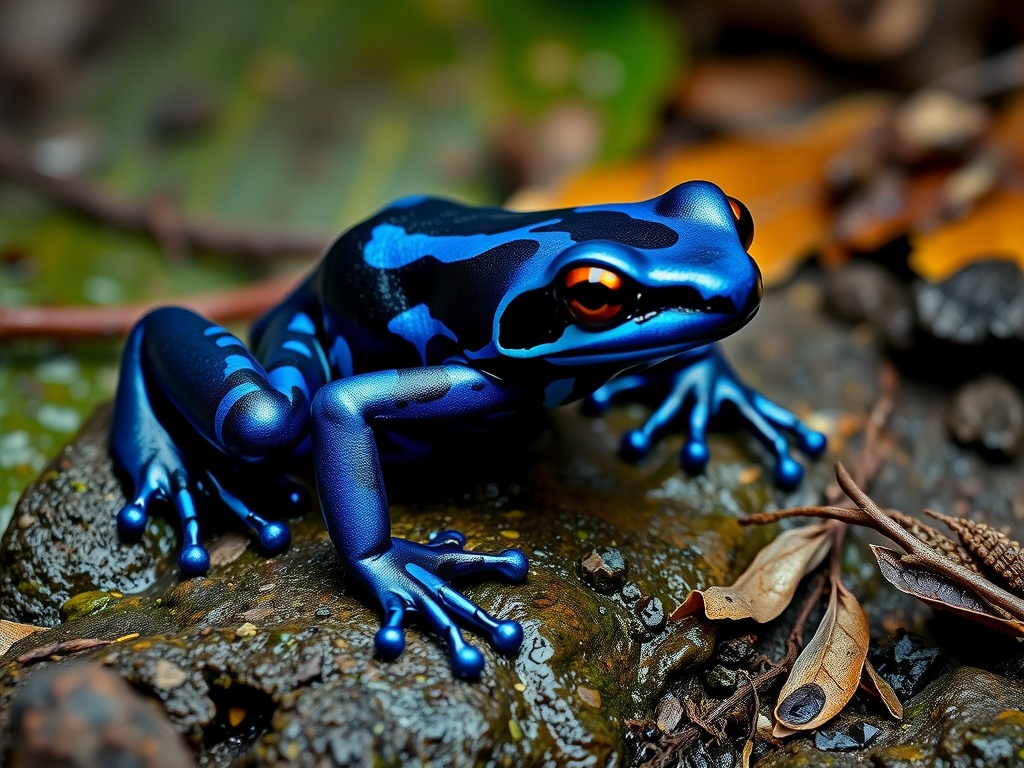
Almost everything the name implies is wrong. Of the roughly 200 poison frog species, only three — all in the genus Phyllobates — were ever used to poison blowdarts, and this brilliant blue frog is not one of them. Its toxicity is also not its own: the lipophilic alkaloids in its skin are sequestered from the mites, ants and other leaf-litter arthropods it eats, so a captive-bred individual raised on fruit flies is completely non-toxic and always will be. Its blue is a warning to predators that can already taste the difference. It is now regarded not as a full species but as a striking colour morph of Dendrobates tinctorius, and it occurs in an odd geography: isolated patches of rainforest scattered like islands across the Sipaliwini savanna of southern Suriname, populations cut off from one another for thousands of years, which is exactly the sort of isolation that produces a locally distinct colour. Each individual carries a unique pattern of black spots.
Fascinating facts
Brilliant Blue Hue
The Blue Poison Dart Frog's skin is an intense blue color, which varies in shade and pattern for each individual, acting as a unique fingerprint.
Toxic Defense
Its skin secretes potent toxins that can deter or even kill predators, though these toxins are only present in wild frogs due to their specific diet.
Rainforest Specialist
This species is endemic to a very restricted range in Suriname, making it vulnerable to habitat loss despite its current stable population.
Detailed description
The Blue Poison Dart Frog (Dendrobates tinctorius 'azureus') is a small, diurnal amphibian measuring approximately 3.0–4.5 cm (1.2–1.8 in) in length and weighing around 3–4 grams. Its skin is a vivid azure blue, often marked with irregular black spots and reticulations, particularly on the dorsal and limb surfaces; the intensity and patterning of these markings are unique to each individual, aiding in identification. The skin is smooth and moist, facilitating cutaneous respiration, a vital adaptation for life in humid tropical environments. The frog's robust, muscular limbs are equipped with adhesive toe pads that enable efficient climbing and movement across leaf litter and low vegetation. Its large, forward-facing eyes provide acute vision for detecting small arthropod prey. Blue Poison Dart Frogs are primarily terrestrial but may climb low shrubs or logs. They possess specialized skin glands that secrete potent alkaloid toxins, derived from their wild diet of ants, mites, and other small invertebrates. Socially, these frogs are often found in loosely structured groups, with males exhibiting territoriality during the breeding season. Their vocalizations, consisting of short trills and buzzes, play a crucial role in mate attraction and territory defense. Reproduction involves elaborate courtship rituals, and both sexes participate in parental care, with males transporting tadpoles to water-filled microhabitats.
Did you know?
The bright blue color of the Blue Poison Dart Frog is unique among poison dart frogs and is used both as camouflage among the rainforest's blue shadows and as a warning signal to predators.
Research & sources
Wikipedia summary
The blue poison dart frog or blue poison arrow frog is a poison dart frog found in the "forest islands" surrounded by the Sipaliwini Savanna in southern Suriname. Its indigenous Tiriyo name is okopipi. The name "azureus" comes from its azure blue color. While first described as a valid species and usually recognized as such in the past, recent authorities generally treat it as a morph of D. tinctorius, although a few treat it as a subspecies of D. tinctorius or continue to treat it as its own species. To what extent it differs from the blue D. tinctorius in southern Guyana, adjacent Pará (Brazil) and possibly far southwestern Suriname, is also a matter of dispute, and many herpetologists, as well as many people keeping poison dart frogs in captivity, have not distinguished these, with all commonly being identified as "azureus".
Behaviour & social structure
Blue Poison Dart Frogs are active during daylight hours, spending much of their time foraging among leaf litter and low vegetation. They are opportunistic hunters, using their keen eyesight to spot and capture small invertebrates, including ants, termites, beetles, and mites. Prey is captured using a rapid flick of the sticky tongue. Males are highly territorial, especially during the breeding season, and will engage in vocal and physical displays to ward off rivals. Social interactions are complex, involving both visual and acoustic signals. While generally solitary outside of breeding, individuals may be seen in proximity where resources are abundant. Daily routines include periods of basking in filtered sunlight, hydration through skin absorption, and regular movement between microhabitats to regulate temperature and moisture.
Reproduction & life cycle
Breeding typically coincides with the onset of the rainy season, when increased humidity triggers reproductive activity. Males establish territories and call to attract females, producing a series of soft trills. Courtship involves tactile stimulation, with the male leading the female to a suitable oviposition site, often a moist crevice or leaf axil. Females lay clutches of 5–10 eggs, which are fertilized externally. The male guards the eggs, keeping them moist by transporting water on his body. After 10–14 days, the eggs hatch into tadpoles, which the male carries individually on his back to small pools of water, such as tree holes or water-filled leaf axils. Tadpoles are omnivorous and undergo metamorphosis over 8–12 weeks, after which juvenile frogs emerge and disperse.
Adaptations & survival
The Blue Poison Dart Frog exhibits several adaptations for survival in its specialized habitat. Its bright blue coloration is an example of aposematism, warning predators of its toxicity. The skin contains batrachotoxins and related alkaloids, which disrupt nerve and muscle function in potential predators. The frog's adhesive toe pads allow for agile movement on slippery or vertical surfaces. Cutaneous respiration enables efficient gas exchange in the humid, oxygen-rich understory. Behavioral adaptations include complex courtship and parental care strategies, ensuring high offspring survival in a challenging environment. The species' acute vision and rapid tongue projection are specialized for capturing small, fast-moving prey.
Cultural significance
The Blue Poison Dart Frog holds cultural significance for indigenous peoples, such as the Tiriyó, who refer to it as 'okopipi.' While not traditionally used for arrow poison (unlike some other dendrobatids), its striking appearance has made it a symbol of the region's biodiversity. In Western culture, it is a popular species in zoos and private collections, often used to promote rainforest conservation and environmental education. Its image is frequently featured in media and art as an emblem of the Amazonian rainforest's unique fauna.
Recent research
Recent research has focused on the genetic and taxonomic status of D. tinctorius 'azureus,' with molecular studies suggesting it is best regarded as a morph or subspecies of D. tinctorius rather than a distinct species. Ongoing studies are examining the ecological requirements and microhabitat preferences of wild populations, as well as the biosynthesis and ecological function of skin alkaloids. Captive breeding programs have provided insights into reproductive biology and parental care. Conservation genetics research is underway to assess genetic diversity and inform management of both wild and captive populations.
Sources
Phylogenetic relationships, species delimitation and population structure in the Dendrobates tinctorius complex
Noonan, B.P. & Gaucher, P. (2006)
scientificDendrobates tinctorius: The IUCN Red List of Threatened Species 2020
IUCN SSC Amphibian Specialist Group
conservationVideos
Habitat
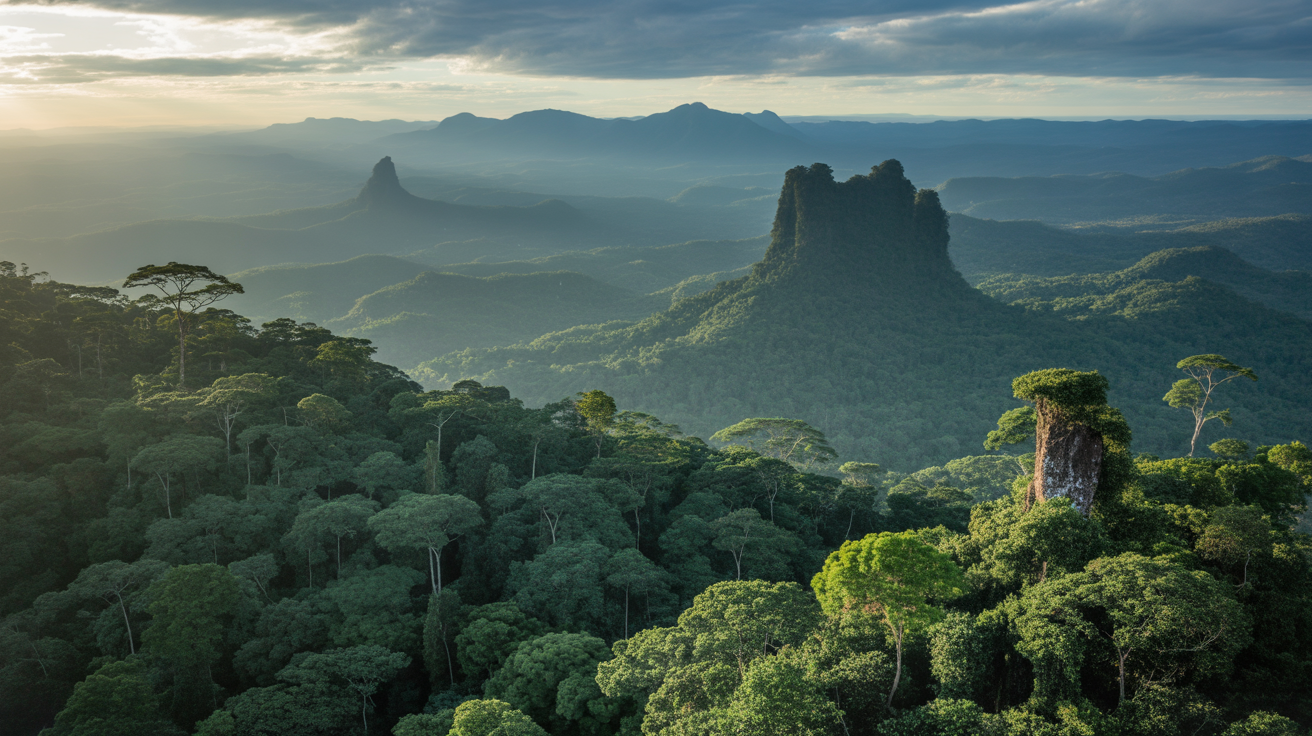
Tropical rainforest
 Tropical Regions
Rainforest
Dense, wet forests with the highest biodiversity on Earth, containing more than half of the world's plant and animal species.
 Global
Forest
Wooded areas with significant tree cover and diverse plant and animal communities.
 Global
Freshwater
Lakes, rivers, and wetlands with diverse aquatic ecosystems.
Conservation
The Blue Poison Dart Frog is currently classified as Least Concern on the IUCN Red List.
Threats & challenges
While currently listed as Least Concern by the IUCN, the Blue Poison Dart Frog faces several threats. Habitat loss due to deforestation, mining, and agricultural expansion in the Sipaliwini Savanna region poses a significant risk. Illegal collection for the pet trade has historically impacted some populations, although captive breeding programs have alleviated pressure on wild stocks. Climate change, with its potential to alter rainfall patterns and humidity, may affect breeding success and habitat suitability. The species' restricted range makes it vulnerable to localized disturbances, and ongoing monitoring is essential to detect population trends.
Taxonomy
Scientific name
Dendrobates tinctorius 'azureus'
- Kingdom
- Animalia
- Phylum
- Chordata
- Class
- Amphibia
- Order
- Anura
- Family
- Dendrobatidae
- Genus
- Dendrobates
- Species
- tinctorius 'azureus'
Where to see a blue poison dart frog
13 zoos and aquariums in 2 countries are recorded as keeping this species.
 Houston Zoo🇺🇸 Houston, United States
 National Aquarium🇺🇸 Baltimore, United States
 National Zoological Park🇺🇸 Washington, United States
 North Carolina Zoo🇺🇸 Asheboro, United States
 Denver Zoo🇺🇸 Denver, United States
Community notes
Share your observations about the Blue Poison Dart Frog.
No community notes yet. Be the first!
Discover more wildlife
More fascinating animals from the encyclopedia.