
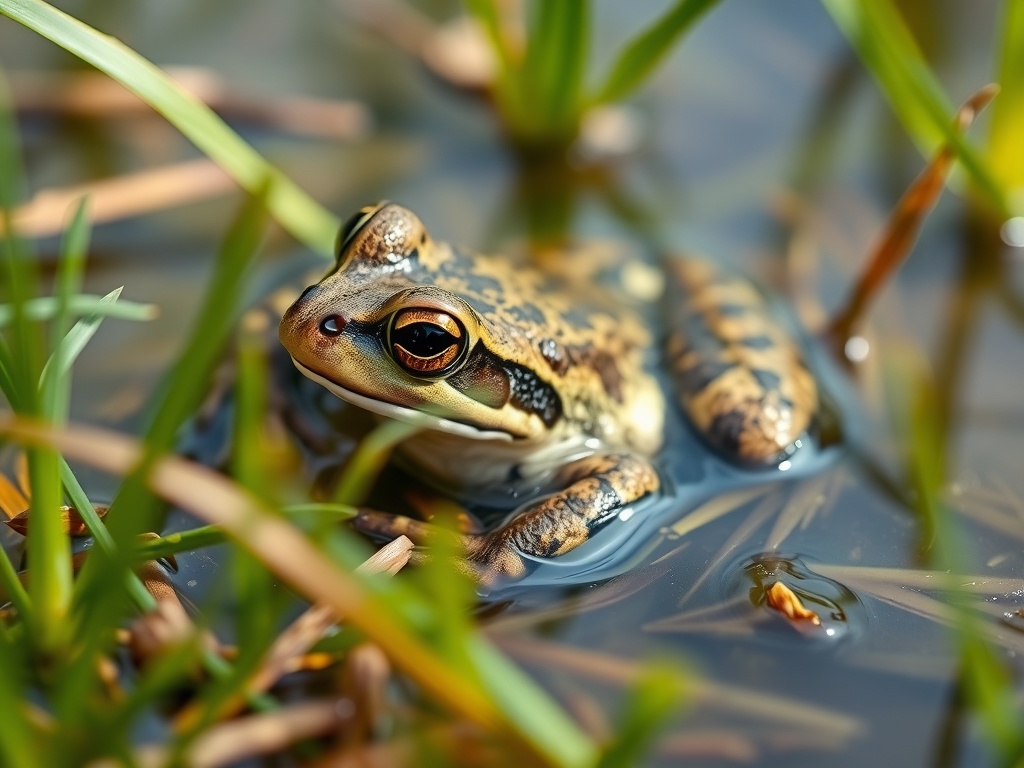
About the Boreal Chorus Frog
The Boreal Chorus Frog is a small, slender amphibian known for its distinctive, vibrant calls during the spring breeding season. It typically exhibits a greenish, brown, or grayish coloration with three dark stripes running down its back and a light belly. This species thrives in a wide range of habitats, from wetlands and marshes to grassy meadows and forests, often near standing or slow-moving water. Adapted to cold climates, the Boreal Chorus Frog ranges across much of Canada and the northern United States. Despite its tiny size, it plays a vital role in local ecosystems as both predator and prey.
Fascinating facts
Distinctive Chorus
Male Boreal Chorus Frogs produce loud, musical trills during the breeding season to attract females, often forming large calling groups.
Cold Climate Adaptation
These frogs can survive subzero temperatures by entering a state of dormancy and producing glycerol, which prevents ice crystals from forming in their vital organs.
Tiny but Widespread
Despite their small size, Boreal Chorus Frogs have a remarkably wide distribution, ranging from central Canada to the northern United States.
Detailed description
The Boreal Chorus Frog (Pseudacris maculata) is a small, slender amphibian, typically measuring between 19 and 38 mm in length, with females generally larger than males. Its dorsal coloration ranges from greenish to brown or gray, often featuring three distinct, sometimes broken, dark stripes running longitudinally along the back, and a pale, often creamy or yellowish, ventral surface. The skin is smooth and moist, aiding in cutaneous respiration. A dark stripe extends from the snout, through the eye, and along the side of the body. The species has relatively long legs and slightly webbed toes, facilitating both jumping and climbing in low vegetation. Boreal Chorus Frogs are renowned for their loud, trilling breeding calls, which resemble the sound of running a finger along a plastic comb and can be heard from considerable distances during the spring. Their eyes are large and prominent, providing excellent vision for spotting prey and predators. As ectotherms, they are highly sensitive to environmental temperatures and exhibit seasonal activity patterns, including overwintering in terrestrial refuges. This species is an important ecological indicator due to its sensitivity to environmental changes and pollutants.
Did you know?
Despite living in freezing climates, Boreal Chorus Frogs can survive being partially frozen during winter by producing natural antifreeze in their bodies.
Research & sources
Wikipedia summary
The boreal chorus frog is a species of chorus frog native to Canada from central Quebec to eastern British Columbia and north to the Northwest Territories and the southern portion of the Yukon. It occurs in the USA throughout Montana, Minnesota, northwestern Wisconsin, northeastern Arizona, northern New Mexico, and southwestern Utah.
Behaviour & social structure
Boreal Chorus Frogs are primarily crepuscular and nocturnal, becoming most active during the evening and night, especially during the breeding season. Outside of breeding, they are secretive and spend much of their time hidden under leaf litter, logs, or in dense vegetation to avoid desiccation and predation. Their diet consists mainly of small invertebrates such as insects, spiders, and other arthropods, which they capture using a rapid flick of their sticky tongue. Foraging is typically solitary, and individuals rely on visual and chemical cues to locate prey. Social interactions are most pronounced during the breeding season, when males congregate in temporary or permanent water bodies and establish calling territories. Vocalizations serve both to attract females and to deter rival males. Outside of the breeding season, Boreal Chorus Frogs are largely solitary and exhibit minimal social structure.
Reproduction & life cycle
Breeding occurs shortly after ice melt in early spring (March to June, depending on latitude and elevation), often before most other amphibians become active. Males arrive at breeding sites first and produce distinctive advertisement calls to attract females. Amplexus is axillary, with the male grasping the female behind her forelimbs. Females lay between 500 and 1,500 eggs in small, loose clusters attached to submerged vegetation or debris in shallow water. Embryonic development is rapid, with eggs hatching in 3–14 days depending on water temperature. Tadpoles metamorphose into juvenile frogs within 40–90 days, with timing influenced by environmental conditions. There is no parental care after egg deposition. Sexual maturity is typically reached within 1–2 years.
Adaptations & survival
Pseudacris maculata exhibits several adaptations to its cold, variable environment. It is capable of surviving freezing temperatures by producing cryoprotectants such as glucose and urea, which limit ice formation in tissues during overwintering. The species often hibernates in terrestrial microhabitats such as under leaf litter, logs, or in loose soil, where it can withstand subzero temperatures for extended periods. Its cryptic coloration and small size aid in avoiding predators. The rapid and early breeding cycle allows larvae to develop before temporary breeding pools dry up. The species' loud, distinctive calls are adapted for efficient sound transmission in open wetlands and grasslands.
Cultural significance
The Boreal Chorus Frog is an iconic harbinger of spring in many northern communities, with its calls often cited in local folklore and naturalist literature as a signal of winter's end. Its presence is celebrated in educational programs and citizen science projects focused on wetland conservation and amphibian monitoring. While not a major figure in indigenous mythology, it is sometimes referenced in traditional ecological knowledge as an indicator of environmental health and seasonal change.
Recent research
Recent research has focused on the species' remarkable freeze tolerance mechanisms, with studies revealing the molecular pathways involved in cryoprotectant synthesis and cellular protection. Ongoing genetic studies are clarifying the taxonomic relationships within the Pseudacris genus, as historical confusion with the Western Chorus Frog (Pseudacris triseriata) has led to range and identification revisions. Ecological monitoring projects are tracking population responses to climate change, particularly shifts in breeding phenology and range expansion or contraction. Studies on the impact of agricultural contaminants have highlighted the species' sensitivity to endocrine-disrupting chemicals. Acoustic monitoring is being used to assess population trends and habitat use across its range.
Sources
Systematics and Distribution of the Chorus Frogs, Pseudacris triseriata Complex (Anura: Hylidae): An Evaluation of the Boreal Chorus Frog, Pseudacris maculata
Lannoo, M.J. et al. (2012)
scientificPseudacris maculata: The IUCN Red List of Threatened Species 2015
IUCN SSC Amphibian Specialist Group
conservationFreeze tolerance in the boreal chorus frog, Pseudacris maculata
Costanzo, J.P. et al. (2013)
scientificVideos
Habitat
Wetlands, marshes, ponds, and surrounding grasslands or forests
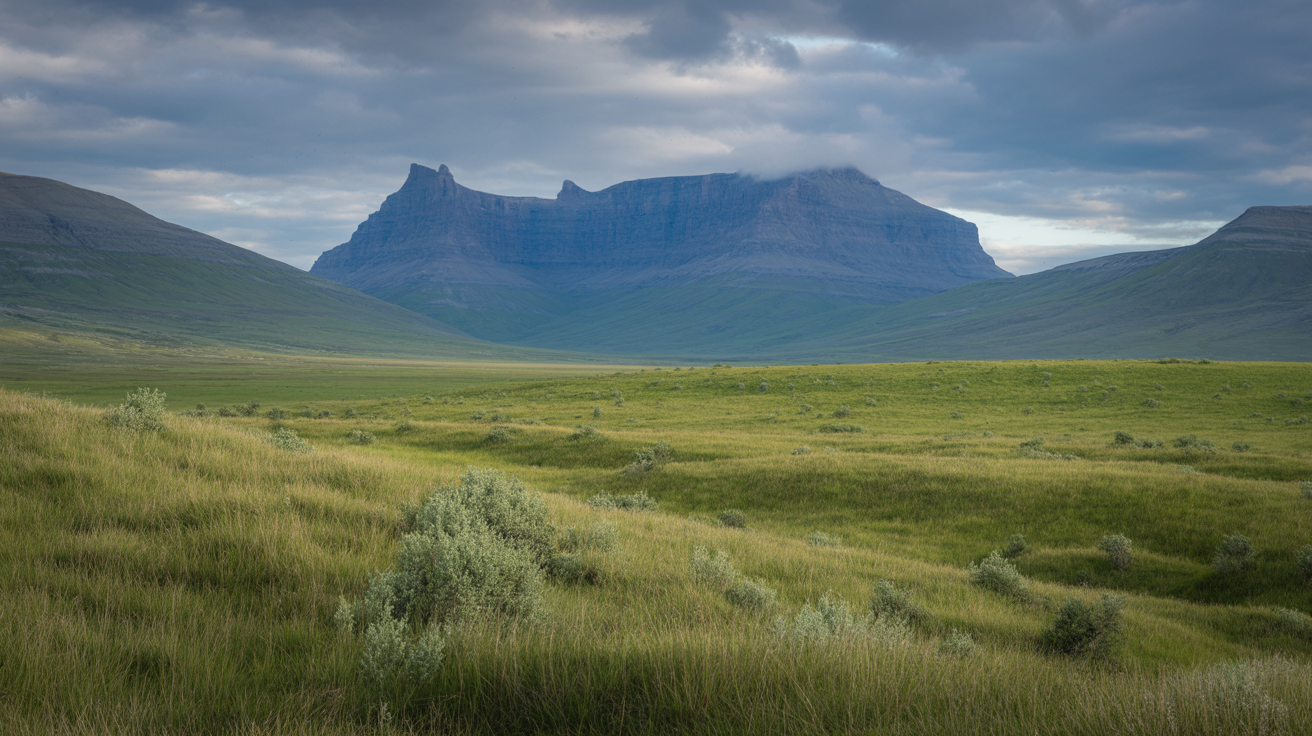 Various Continental Regions
Grassland
Open areas dominated by grasses rather than trees, supporting numerous herbivores and their predators.
 Global
Forest
Wooded areas with significant tree cover and diverse plant and animal communities.
 Global
Freshwater
Lakes, rivers, and wetlands with diverse aquatic ecosystems.
Conservation
The Boreal Chorus Frog is currently classified as Least Concern on the IUCN Red List.
Threats & challenges
While the Boreal Chorus Frog is currently classified as Least Concern by the IUCN, it faces several localized threats. Habitat loss and fragmentation due to agriculture, urbanization, and wetland drainage are significant concerns. Pesticide and pollutant exposure, particularly in agricultural landscapes, can negatively impact larval development and adult survival. Climate change poses a long-term threat by altering hydrological regimes and breeding phenology. Disease, especially chytridiomycosis caused by the fungus Batrachochytrium dendrobatidis, has been detected in some populations, though widespread declines have not been documented. Road mortality during seasonal migrations and competition with invasive species are additional challenges. Despite these threats, the species remains widespread and locally abundant.
Taxonomy
Scientific name
Pseudacris maculata
- Kingdom
- Animalia
- Phylum
- Chordata
- Class
- Amphibia
- Order
- Anura
- Family
- Hylidae
- Genus
- Pseudacris
- Species
- maculata
Community notes
Share your observations about the Boreal Chorus Frog.
No community notes yet. Be the first!
Discover more wildlife
More fascinating animals from the encyclopedia.