
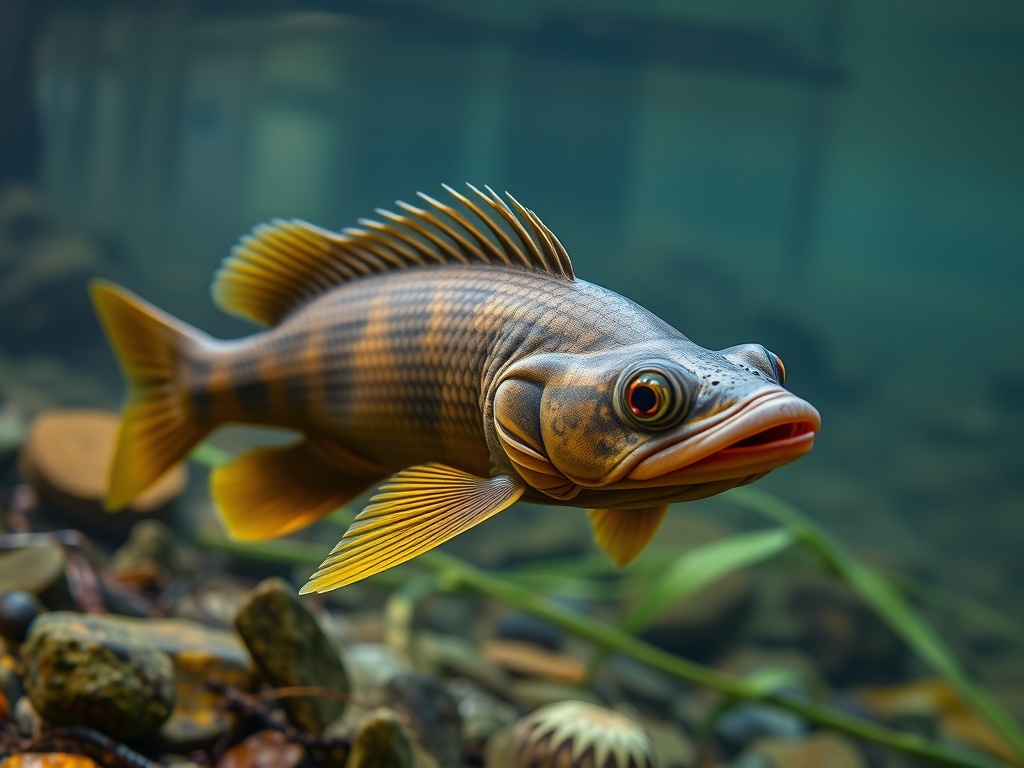
About the Bristlenose Pleco
The Bristlenose Pleco is a small, armored catfish known for its distinctive bristle-like appendages on the snout, particularly prominent in males. Native to freshwater rivers and streams of South America, this species is a popular aquarium inhabitant due to its algae-eating habits and peaceful temperament. Bristlenose Plecos have a flattened body shape with a broad head and are well-adapted for life on the bottom substrate. Their ability to breathe atmospheric air allows them to survive in oxygen-poor waters. Their coloration and patterning help them blend into their environment, offering effective camouflage from predators.
Fascinating facts
Algae Eaters
Bristlenose Plecos are voracious eaters of algae and are often introduced to aquariums to help control algae growth.
Bristly Snouts
The bristle-like growths on their snouts, especially in males, help distinguish them from other pleco species.
Parental Care
Male Bristlenose Plecos guard and fan the eggs after spawning, ensuring they are well-oxygenated and protected from fungus.
Detailed description
The Bristlenose Pleco (Ancistrus sp.) is a small to medium-sized loricariid catfish, typically reaching adult lengths of 10–15 cm (4–6 inches), with some species and individuals growing slightly larger in optimal conditions. Its most distinctive anatomical feature is the presence of fleshy, tentacle-like appendages on the snout, which are especially prominent in mature males and are thought to play a role in sexual selection. The body is dorsoventrally flattened, armored with bony plates (scutes) for protection against predators and abrasive substrates. The mouth is located ventrally and modified into a strong, sucker-like oral disk, allowing the fish to adhere to rocks and wood while grazing on algae and detritus. Bristlenose Plecos exhibit cryptic coloration, usually mottled brown, gray, or olive, with lighter and darker spots or marbling that provides camouflage among submerged debris. They possess a well-developed set of pectoral and pelvic fins, aiding in maneuverability and stability in fast-flowing waters. These catfish are primarily nocturnal, spending daylight hours concealed in crevices or under driftwood. Their ability to supplement oxygen intake via a modified, vascularized stomach enables survival in hypoxic environments. Bristlenose Plecos are highly adaptable, thriving in a range of water conditions and temperatures (typically 23–27°C/73–81°F), which has contributed to their success both in the wild and in captivity.
Did you know?
Unlike many fish, Bristlenose Plecos can breathe air thanks to a modified stomach that functions similarly to a lung.
Research & sources
Behaviour & social structure
Bristlenose Plecos are predominantly solitary and territorial, especially males during the breeding season, when they defend chosen nesting sites. They are benthic feeders, using their specialized mouthparts to rasp algae, biofilm, and detritus from submerged surfaces. Their diet is supplemented with plant matter, wood fibers (xylophagy), and occasionally small invertebrates. Activity peaks at dusk and during the night, with individuals emerging from shelters to forage. Social interactions are generally limited outside of breeding, though juveniles may aggregate in areas with abundant food. In aquaria, they are known for their peaceful demeanor towards other species but may display aggression towards conspecifics if space is limited. Bristlenose Plecos exhibit a strong homing instinct, often returning to preferred hiding spots after foraging.
Reproduction & life cycle
Breeding in Ancistrus is oviparous and typically occurs during the rainy season in their native range, when increased water flow and food availability stimulate spawning. Males select and prepare a suitable cavity or crevice, often under rocks or driftwood, and clean it meticulously. Females are attracted to these sites and deposit clutches of 20–200 adhesive eggs, which the male then fertilizes. The male assumes sole responsibility for parental care, fanning the eggs with his fins to provide oxygenation and guarding them from predators and fungal growth. Incubation lasts 4–10 days depending on temperature, after which the fry remain in the nest for several days, absorbing their yolk sacs before venturing out. Sexual maturity is typically reached at 6–12 months of age.
Adaptations & survival
Key adaptations of Bristlenose Plecos include their armored plating, which provides defense against predation and abrasive substrates, and their ventral suckermouth, which allows efficient grazing on submerged surfaces and anchoring in strong currents. The development of fleshy bristles in males is believed to mimic the appearance of a clutch of eggs, potentially deterring rival males and attracting females. Their modified stomach enables facultative air breathing, an adaptation to fluctuating oxygen levels in their natural habitats. Cryptic coloration and nocturnal habits reduce predation risk. Their digestive tract is adapted for processing fibrous plant material and wood, a rare trait among freshwater fishes.
Cultural significance
Bristlenose Plecos are highly valued in the aquarium hobby for their algae-eating abilities and hardiness, contributing to their widespread distribution in captivity. They are not known to have significant roles in indigenous folklore or traditional medicine, but their popularity has led to selective breeding for various color morphs (e.g., albino, longfin). In some regions, their introduction as an ornamental species has resulted in ecological concerns due to their potential to outcompete native benthic fauna.
Recent research
Recent research has focused on the taxonomy and phylogenetics of Ancistrus, revealing significant cryptic diversity and ongoing speciation within the genus. Studies have investigated their unique digestive physiology, particularly their ability to digest cellulose and xylophagous tendencies. Behavioral research has explored male parental investment and the role of bristle development in sexual selection. Conservation genetics is an emerging field, aiming to clarify population structure and inform management of both wild and introduced populations. There is ongoing interest in their potential as bioindicators for freshwater ecosystem health due to their sensitivity to water quality changes.
Videos
Habitat
Freshwater rivers and streams


Conservation
The Bristlenose Pleco is currently classified as Least Concern on the IUCN Red List.
Threats & challenges
While Ancistrus species are currently classified as Least Concern, localized threats include habitat degradation from deforestation, pollution, and dam construction, which alter water flow and reduce available breeding sites. Overcollection for the aquarium trade has not significantly impacted wild populations due to their high reproductive rate and adaptability, but some isolated populations may be vulnerable. Invasive populations have established in non-native regions, sometimes impacting local ecosystems. Climate change poses a long-term threat through alterations in hydrological cycles and water quality.
Taxonomy
Scientific name
Ancistrus sp.
- Kingdom
- Animalia
- Phylum
- Chordata
- Class
- Actinopterygii
- Order
- Siluriformes
- Family
- Loricariidae
- Genus
- Ancistrus
- Species
- sp.
Community notes
Share your observations about the Bristlenose Pleco.
No community notes yet. Be the first!
Discover more wildlife
More fascinating animals from the encyclopedia.