
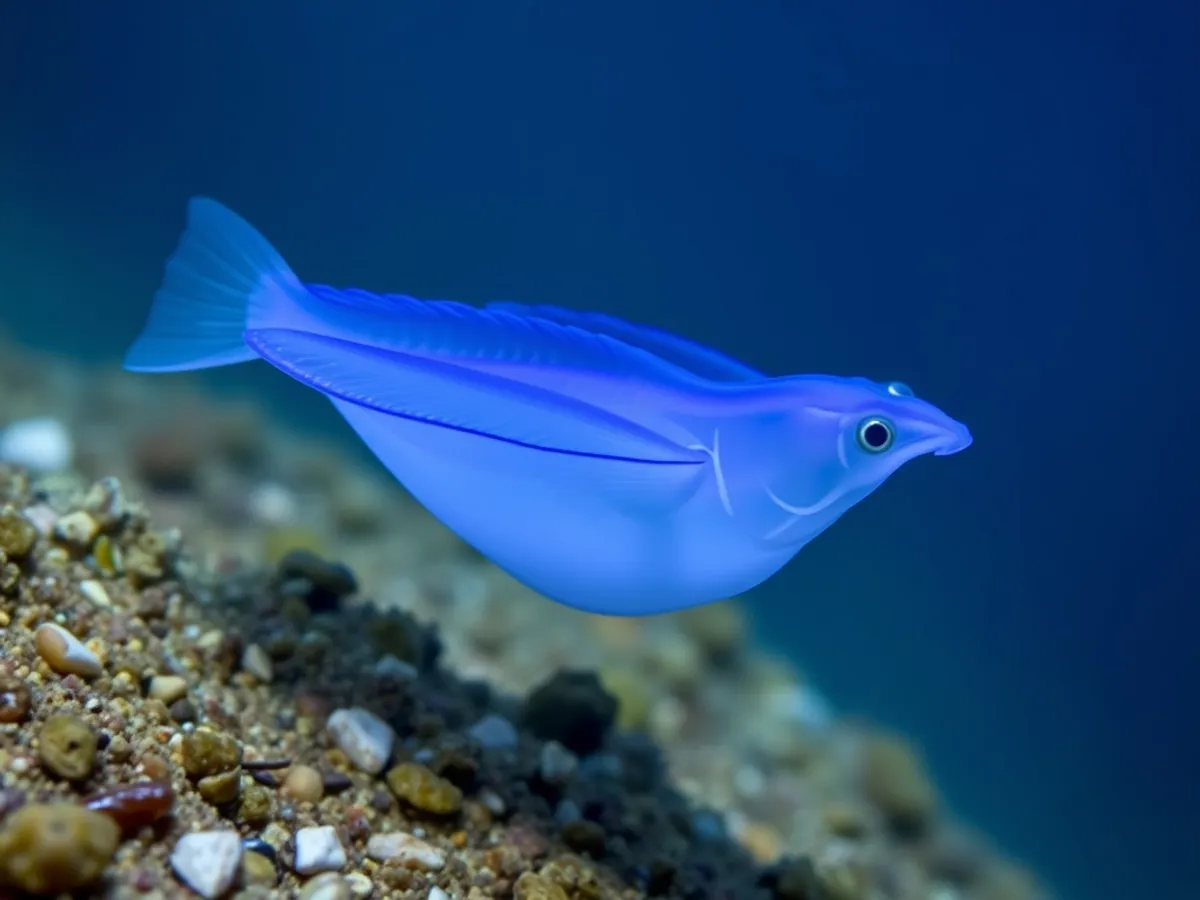
About the By-the-wind Sailor
Velella is not a jellyfish and not even really an animal in the singular sense: it is a floating colony of specialised polyps, some for feeding, some for reproduction, some for stinging, all hanging beneath a single flat, oval float. Rising from that float is a rigid, transparent, chitinous sail, and the sail is set at an angle to the long axis of the body — which produces one of the strangest phenomena in the ocean. The sail is angled either to the right or to the left, and Velella populations contain both mirror-image forms. A right-sailed animal is pushed roughly 45 degrees to one side of the wind, a left-sailed one to the other, so a single population automatically splits and sails in two diverging directions. It is a bet-hedge written into the anatomy: whichever way the wind blows, only half the population is driven onto a beach, and the other half is carried out to sea. Mass strandings of millions of them, blue and drying, are a regular event on Pacific coasts.
Fascinating facts
Wind-Powered Movement
By-the-wind Sailors use their angled sail to catch the wind, allowing them to travel vast distances across the ocean's surface.
Blue Pigmentation
Their vivid blue color helps protect them from harmful ultraviolet rays and may also deter predators.
Colonial Creature
Each By-the-wind Sailor is made up of many tiny polyps, each specialized for feeding, reproduction, or defense.
Detailed description
Velella velella, commonly known as the By-the-wind Sailor, is a colonial hydrozoan belonging to the family Porpitidae. Each individual is a colony composed of numerous specialized polyps (zooids) that perform distinct functions such as feeding, reproduction, and defense. The organism is characterized by a distinctive, oval-shaped, deep blue float (pneumatophore), typically measuring 2–10 cm in length, with a thin, chitinous, transparent sail set diagonally across the float. This sail is oriented either to the right or left, a trait that determines the direction in which the wind propels the colony, helping to disperse populations and reduce mass strandings. Beneath the float hang numerous tentacles equipped with nematocysts (stinging cells) used to capture planktonic prey. Velella is incapable of active swimming and relies entirely on wind and surface currents for movement. Colonies are often found in large aggregations, sometimes numbering in the millions, especially during seasonal blooms. When conditions are right, vast numbers can be washed ashore, creating striking blue lines along beaches. Unlike true jellyfish, Velella lacks a medusa stage in its visible life cycle, and its reproductive structures are contained within the colony. The coloration, primarily blue and purple, is due to pigments that may provide some protection against ultraviolet radiation.
Did you know?
Mass strandings of By-the-wind Sailors can turn entire stretches of beach bright blue, sometimes covering miles of coastline after strong winds.
Research & sources
Wikipedia summary
Velella is a monospecific genus of hydrozoa in the family Porpitidae. Its only known species is Velella velella, a cosmopolitan free-floating hydrozoan that lives on the surface of the open ocean. It is commonly known by the names sea raft, by-the-wind sailor, purple sail, little sail, or simply Velella.
Behaviour & social structure
Velella velella exhibits passive locomotion, drifting at the ocean surface where it forms extensive rafts with other individuals. The orientation of the sail determines the direction of travel, and populations often segregate by sail orientation to minimize simultaneous stranding events. Feeding occurs via specialized polyps (gastrozooids) that extend tentacles into the water to ensnare zooplankton, fish larvae, and other small organisms. Prey is immobilized by nematocysts and then digested extracellularly. Velella does not display complex social behavior but benefits from the safety-in-numbers effect when aggregating. Colonies are most active in feeding during daylight hours when plankton is abundant near the surface. There is no evidence of coordinated group behavior beyond passive aggregation, and interactions with other species are largely predatory or competitive.
Reproduction & life cycle
Reproduction in Velella velella is complex and involves both sexual and asexual stages. The visible floating colony is the polyp stage, which produces minute medusae asexually within specialized reproductive polyps (gonozooids). These medusae are released into the water column, where they live briefly and produce gametes. Fertilization occurs in the plankton, resulting in planula larvae that settle and develop into new colonies. There is no parental care, and the entire process is planktonic and dispersed. Breeding is not strictly seasonal but is influenced by oceanic conditions, such as temperature and nutrient availability, which trigger mass releases of medusae and subsequent blooms.
Adaptations & survival
Velella velella exhibits several unique adaptations for life at the ocean surface. The gas-filled float provides buoyancy, while the angled sail harnesses wind energy for dispersal. The pigmentation in the float and tissues offers protection from harmful UV radiation. The colony structure allows for division of labor among polyps, increasing efficiency in feeding, defense, and reproduction. Nematocysts in the tentacles provide effective predation and defense against small predators. The alternation of generations (polyp and medusa stages) enhances genetic diversity and population resilience. The orientation of the sail (left- or right-handed) is a remarkable adaptation that reduces the risk of entire populations stranding simultaneously.
Cultural significance
Velella velella has fascinated coastal communities for centuries, often inspiring local folklore and curiosity due to its striking appearance and mass strandings. In some cultures, they are considered omens of changing weather or sea conditions. The organism is sometimes collected for educational purposes or as a natural curiosity, but it has no significant economic or traditional use. Its unique form and life history make it a popular subject in marine biology education and public outreach.
Recent research
Recent research has focused on the genetic diversity of Velella populations, revealing low genetic differentiation across global populations, likely due to their cosmopolitan dispersal. Studies using molecular markers have clarified its taxonomic position within Hydrozoa and its relationship to other pleustonic organisms. Ongoing research is investigating the ecological impacts of Velella blooms on coastal ecosystems, including their role as prey for specialized predators such as certain nudibranchs and sea birds. The effects of climate-driven changes in ocean circulation on Velella distribution and bloom dynamics are also active areas of study. Additionally, the structure and function of the sail and float are being examined for biomimetic applications in engineering.
Sources
The biology and ecology of Velella velella (Cnidaria: Hydrozoa): a review
J. Purcell, S. Clark (2018)
scientificMolecular phylogeny of the pleustonic hydrozoans Velella and Porpita
P. Schuchert, T. Collins (2020)
scientificVideos
Habitat
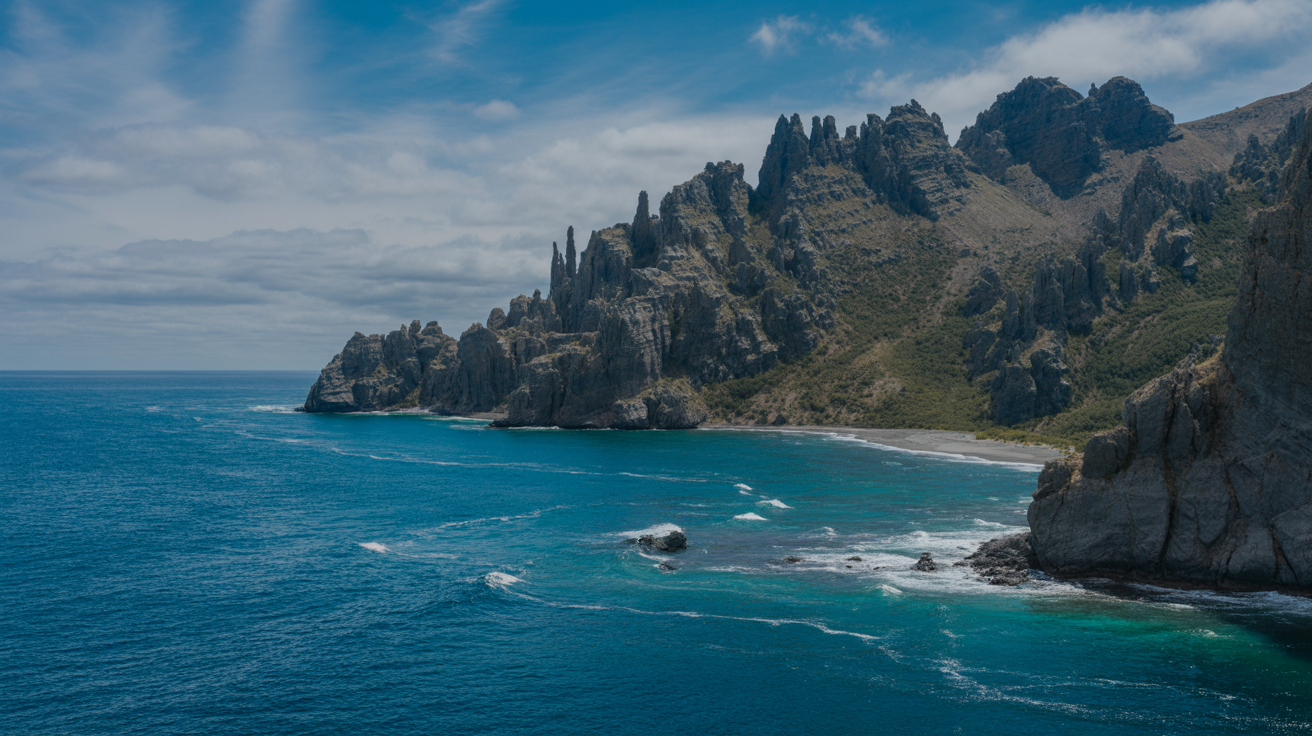
Open ocean surface (pelagic zone)
Conservation
The By-the-wind Sailor is currently classified as Least Concern on the IUCN Red List.
Threats & challenges
Currently, Velella velella faces few direct threats due to its vast distribution and high reproductive output. Natural population fluctuations are common, often driven by oceanic currents, temperature changes, and food availability. Mass strandings, while dramatic, are not typically detrimental to the global population. However, climate change may alter ocean currents and surface temperatures, potentially affecting distribution and bloom frequency. Pollution, particularly oil spills and plastic debris, can impact surface-dwelling organisms like Velella. There is no evidence of targeted human exploitation, and the species is not considered at risk.
Taxonomy
Scientific name
Velella velella
- Kingdom
- Animalia
- Phylum
- Cnidaria
- Class
- Hydrozoa
- Order
- Anthoathecata
- Family
- Porpitidae
- Genus
- Velella
- Species
- velella
Community notes
Share your observations about the By-the-wind Sailor.
No community notes yet. Be the first!
Discover more wildlife
More fascinating animals from the encyclopedia.