
About the Common Five-lined Skink
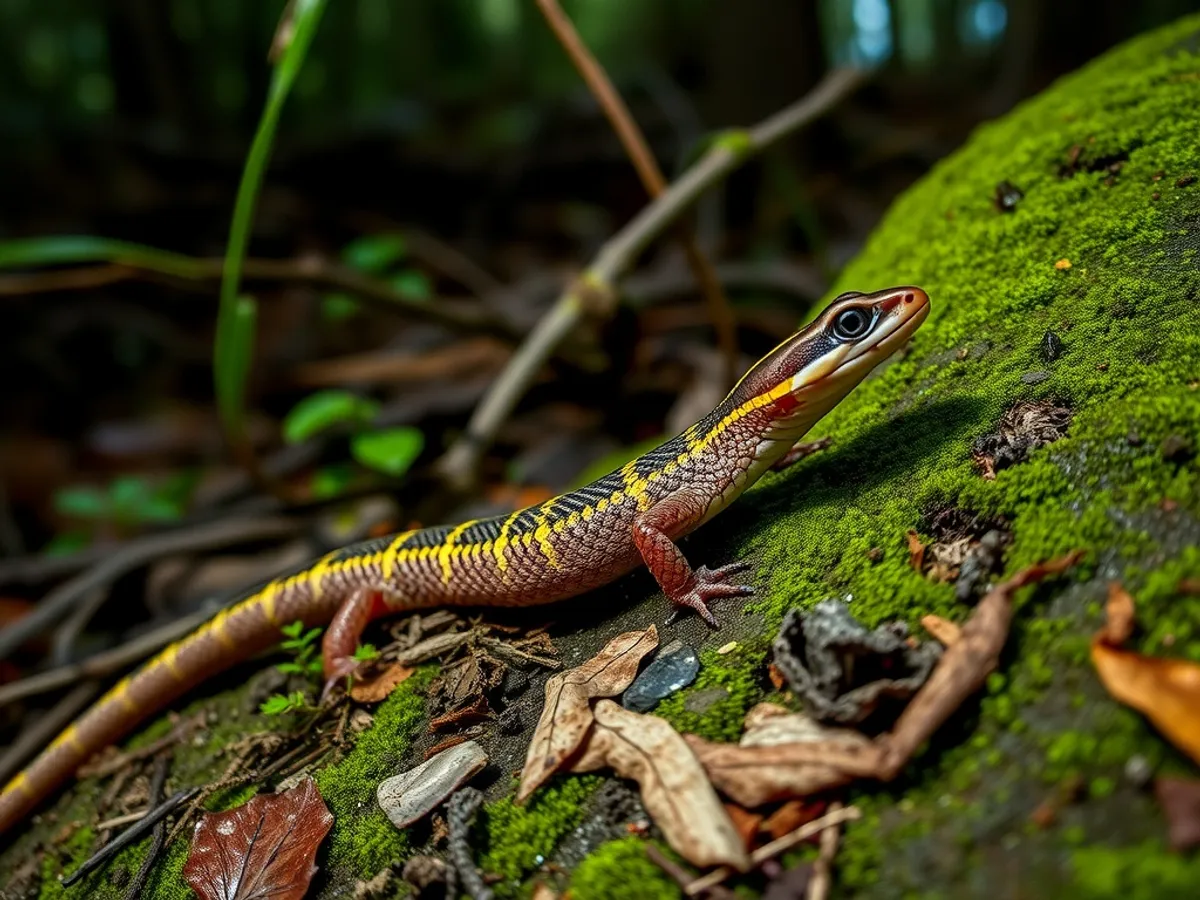
The Common Five-lined Skink is a small to medium-sized lizard native to eastern North America, easily recognized by the five light stripes running down its dark body. Juveniles exhibit a striking blue tail, which fades with age, while adults often have a more subdued coloration. These skinks are agile and secretive, preferring to hide under logs, rocks, or leaf litter in forests and woodland edges. They play an important ecological role by controlling insect populations and serve as prey for a variety of predators.
Fascinating facts
Colorful Tails
Juvenile Common Five-lined Skinks have vibrant blue tails, which serve to distract predators and can detach if grabbed.
Egg Guardian
Females remain with their eggs, protecting them from predators and fungi, and even rotate the eggs to ensure proper development.
Forest Dwellers
These skinks are most commonly found in moist, wooded environments with plenty of ground cover like logs, rocks, and leaf litter.
Detailed description
The Common Five-lined Skink (Plestiodon fasciatus) is a robust, smooth-scaled lizard typically measuring 12–21 cm (4.7–8.3 in) in total length, with adult females generally larger than males. Its most distinctive feature is the presence of five pale longitudinal stripes—usually cream, yellow, or white—running from the snout to the tail against a dark brown or blackish background. Juveniles possess a vivid, cobalt-blue tail, which serves as a predator distraction mechanism; this coloration fades to gray or brown as the skink matures. Adult males often develop reddish-orange coloration on the jaws and chin, especially during the breeding season. The body is cylindrical, with short but strong limbs and a long, tapering tail that can be autotomized (shed) to escape predation. The head is wedge-shaped, with large, lidless eyes adapted for detecting movement. Plestiodon fasciatus is diurnal and secretive, spending much of its time under logs, rocks, or leaf litter. Its skin is periodically shed in patches. The species is highly adaptable, occupying a range of habitats from moist hardwood forests to suburban gardens, provided there is ample cover and basking sites. It plays a vital role in forest floor ecology, both as a predator of invertebrates and as prey for snakes, birds, and mammals.
Did you know?
Despite being reptiles, female Common Five-lined Skinks exhibit parental care by guarding their eggs until they hatch.
Research & sources
Wikipedia summary
The name five-lined skink can refer to different species of skinks:Plestiodon fasciatus, the five-lined skink or eastern red-headed skink of North America Trachylepis quinquetaeniata, the five-lined mabuya of Africa
Behaviour & social structure
Five-lined skinks are primarily solitary outside of the breeding season, exhibiting territorial behaviors, especially among males. They are active during the day (diurnal), with peak activity in the morning and late afternoon when temperatures are moderate. Skinks are agile and quick, using their speed to escape predators and to hunt. Their diet consists mainly of insects (beetles, crickets, grasshoppers), spiders, and other small arthropods, but they may also consume snails, small vertebrates, and occasionally fruit. Foraging is typically done on the ground, but they are adept climbers and may ascend logs or low vegetation. When threatened, they may perform tail autotomy, sacrificing the tail which continues to wriggle and distract predators. Skinks communicate through body language, such as head-bobbing and tail-waving, especially during territorial disputes or courtship. They exhibit site fidelity, often returning to favored hiding or basking spots.
Reproduction & life cycle
Breeding occurs in spring to early summer, with males becoming more territorial and displaying bright orange coloration on their heads. Courtship involves males pursuing and biting females. After mating, females lay a clutch of 4–15 eggs in moist, concealed nests under logs, rocks, or leaf litter, often in decaying wood. Females exhibit notable parental care, remaining with the eggs throughout the 30–60 day incubation period (temperature-dependent), guarding them from predators and occasionally turning or moistening them to prevent desiccation. Hatchlings emerge in midsummer, measuring about 5–6 cm (2–2.4 in) in length, and are independent from birth, though the mother may remain nearby for a short period. Sexual maturity is typically reached at 2–3 years of age.
Adaptations & survival
Plestiodon fasciatus has evolved several adaptations for survival. Its bright blue tail in juveniles acts as a decoy, drawing predator attacks away from vital organs; the tail can be autotomized and later regenerated. Smooth, glossy scales reduce water loss and facilitate rapid movement through leaf litter. The skink's cryptic coloration and secretive habits help it avoid detection by predators. Behavioral thermoregulation is achieved by basking in sunlit patches and retreating to cool, moist refuges during extreme temperatures. Keen vision and sensitivity to vibrations aid in detecting both prey and predators. Parental care of eggs is relatively uncommon among reptiles and increases offspring survival.
Cultural significance
While not a major figure in folklore or mythology, the five-lined skink is sometimes referenced in regional North American stories as a symbol of agility and resilience. Its striking blue tail has led to local nicknames such as 'blue-tailed lizard.' In some indigenous traditions, skinks and other lizards are considered omens or symbols of regeneration due to their ability to regrow lost tails. The species is occasionally kept as an educational animal in nature centers to illustrate reptile biology and forest ecology.
Recent research
Recent research has focused on the genetic differentiation between Plestiodon fasciatus and closely related skink species, clarifying hybridization zones and speciation processes in eastern North America. Studies on tail autotomy have examined the physiological costs and regeneration mechanisms, revealing trade-offs between escape success and future mobility or reproductive output. Ongoing ecological research investigates the skink's role in controlling pest insect populations and its responses to habitat fragmentation. Climate modeling studies are assessing potential range shifts under future warming scenarios. Citizen science projects, such as HerpMapper, have contributed valuable distribution data for conservation monitoring.
Sources
Videos
Habitat
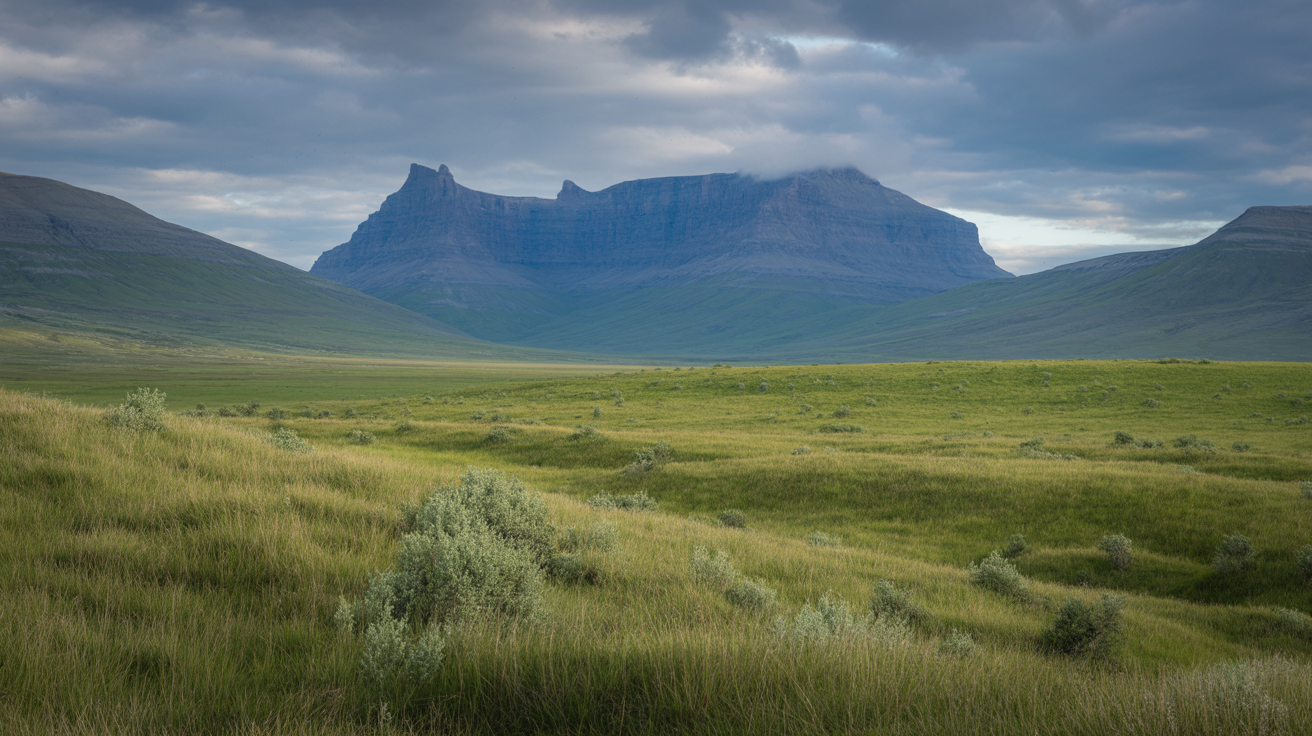
Temperate forests and woodland edges
 Various Continental Regions
Grassland
Open areas dominated by grasses rather than trees, supporting numerous herbivores and their predators.
 Global
Forest
Wooded areas with significant tree cover and diverse plant and animal communities.
 Global
Freshwater
Lakes, rivers, and wetlands with diverse aquatic ecosystems.
Conservation
The Common Five-lined Skink is currently classified as Least Concern on the IUCN Red List.
Threats & challenges
Currently classified as Least Concern by the IUCN, the Common Five-lined Skink faces localized threats including habitat loss due to urbanization, deforestation, and the removal of ground cover such as logs and leaf litter. Pesticide use may reduce prey availability and cause direct toxicity. Domestic cats and invasive species pose predation risks in suburban areas. Climate change may alter habitat suitability, especially at the northern and southern range limits. Despite these challenges, populations remain stable in many regions due to the species' adaptability and broad habitat tolerance.
Taxonomy
Scientific name
Plestiodon fasciatus
- Kingdom
- Animalia
- Phylum
- Chordata
- Class
- Reptilia
- Order
- Squamata
- Family
- Scincidae
- Genus
- Plestiodon
- Species
- fasciatus
Community notes
Share your observations about the Common Five-lined Skink.
No community notes yet. Be the first!
Discover more wildlife
More fascinating animals from the encyclopedia.