
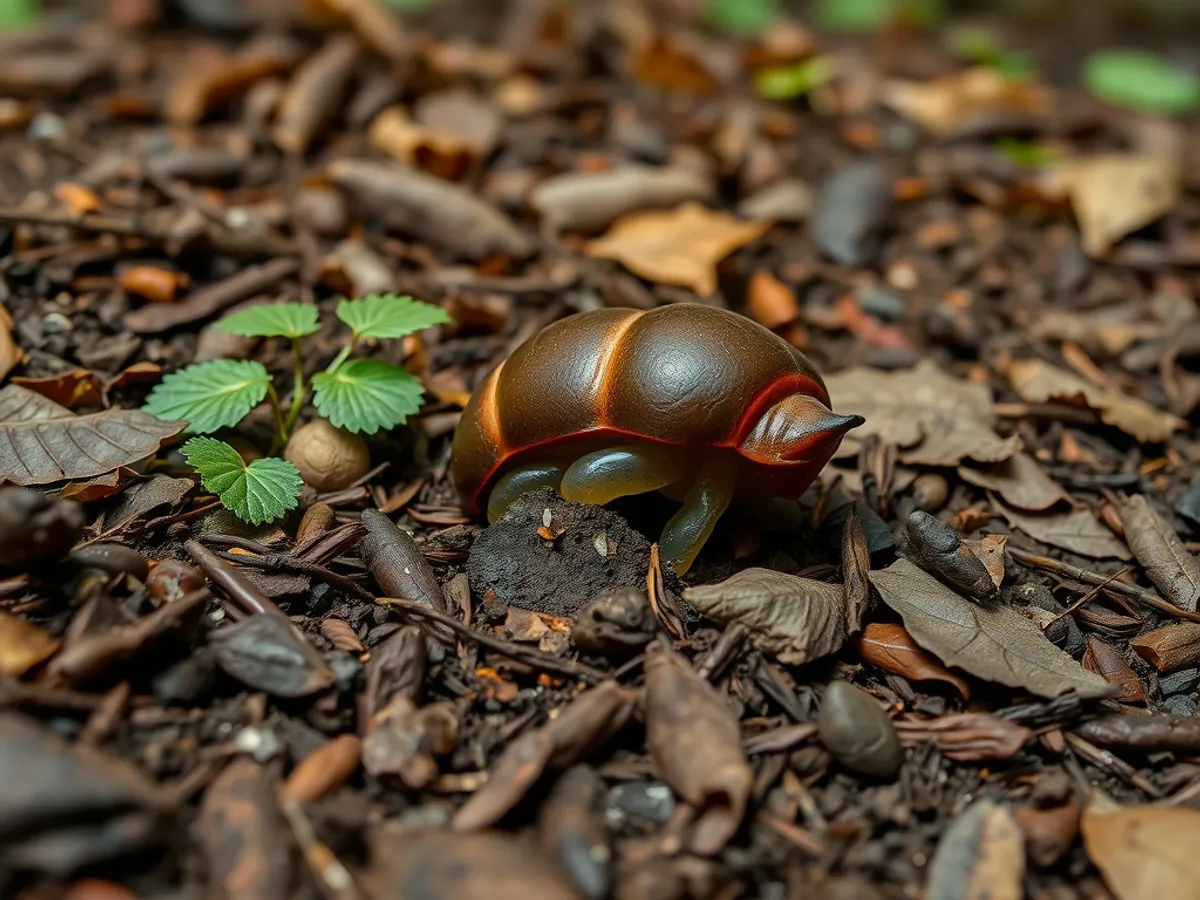
About the Common Pauropod
Pauropods are tiny, soft-bodied myriapods that resemble miniature centipedes, typically measuring less than 2 millimeters in length. They have 9 to 11 pairs of legs and a distinct segmented body, often with a pearly or translucent appearance. Pauropods are rarely seen due to their cryptic lifestyle, living in soil, leaf litter, and decaying wood where they feed on decomposing organic matter and fungal hyphae. These invertebrates are found worldwide, particularly in moist forest soils, and play a vital role in nutrient cycling and soil health. Despite their abundance, their minute size and hidden habits make them one of the least studied groups of myriapods.
Fascinating facts
Tiny Soil Dwellers
Pauropods are almost microscopic, with most species measuring less than 2 mm, making them difficult to observe without specialized equipment.
Fungi Fans
Their diet consists primarily of decaying plant material and fungal hyphae, helping recycle nutrients in the soil ecosystem.
Leggy Regenerators
If a pauropod loses a leg, it can regrow the limb during subsequent molts, a survival adaptation in the tough soil environment.
Detailed description
The Common Pauropod (Pauropus huxleyi) is a minute, soft-bodied myriapod, typically measuring between 0.5 and 1.5 millimeters in length, making it nearly invisible to the naked eye. Its body is composed of 11 to 12 distinct segments, though only 9 to 11 pairs of legs are usually present in adults, with the first segment lacking appendages. The exoskeleton is thin, flexible, and often displays a pearly sheen or translucent quality, which aids in camouflage among moist soil particles and decaying organic matter. Pauropods possess a unique branched antenna structure, which is highly sensitive and serves as their primary sensory organ, compensating for their lack of eyes. Internally, they have a simple digestive tract adapted for processing detritus and fungal hyphae, and their circulatory and respiratory systems are rudimentary, relying on diffusion across the body surface. Pauropods are known for their slow, undulating movement, facilitated by their short, stubby legs. They are solitary and cryptic, rarely interacting with conspecifics outside of mating. Their ecological role is significant, as they contribute to the decomposition process and nutrient cycling in forest soils, breaking down organic material and facilitating microbial activity. Despite their abundance and global distribution, pauropods remain poorly studied due to their small size and subterranean lifestyle.
Did you know?
Pauropods can regenerate lost legs, a rare ability among myriapods.
Research & sources
Behaviour & social structure
Pauropus huxleyi is primarily nocturnal, remaining deep within the soil or leaf litter during the day to avoid desiccation and predation. Its feeding behavior is characterized by slow, deliberate movement through detritus, using its branched antennae to locate decaying plant material and fungal hyphae. Pauropods are strict detritivores, rarely interacting with living plants or animals. Social interactions are minimal; individuals are generally solitary except during brief mating encounters. When disturbed, pauropods may curl into a tight spiral, a defensive posture that protects their vulnerable ventral surface. They exhibit thigmotaxis, preferring to remain in close contact with solid surfaces, which helps them navigate through complex soil matrices. Their daily routine involves alternating periods of feeding and rest, with activity levels closely tied to soil moisture and temperature.
Reproduction & life cycle
Reproduction in Pauropus huxleyi is oviparous, with females laying small clutches of eggs directly into moist soil or decaying organic matter. Mating involves a brief courtship, during which the male deposits a spermatophore that the female subsequently picks up with her genital opening. There is no parental care after egg-laying; the eggs develop independently, hatching into juvenile pauropods that resemble miniature adults but with fewer legs (anamorphic development). Additional leg pairs are added with successive molts. The breeding season is typically aligned with periods of high soil moisture, often in spring and autumn in temperate regions, which ensures optimal conditions for egg and juvenile survival. Development from egg to adult can take several months, depending on environmental conditions.
Adaptations & survival
Pauropus huxleyi exhibits several adaptations for a subterranean, detritivorous lifestyle. Its small size and flexible, translucent exoskeleton allow it to move easily through narrow soil crevices and avoid detection by predators. The absence of eyes is compensated by highly developed, branched antennae that detect chemical and tactile cues in the environment. Pauropods have a high tolerance for low oxygen environments, relying on cutaneous respiration. Their slow metabolism and ability to enter a state of torpor during unfavorable conditions (e.g., drought) enhance survival in fluctuating microhabitats. The spiral defensive posture protects vital organs from predation and desiccation. Their reproductive strategy, involving direct development and egg-laying in moist substrates, minimizes the need for parental care and increases reproductive efficiency.
Cultural significance
Due to their small size and hidden lifestyle, pauropods, including Pauropus huxleyi, have little direct cultural significance and are largely unknown outside scientific circles. They do not appear in folklore, mythology, or traditional medicine. However, their ecological importance as decomposers is increasingly recognized by soil biologists and ecologists, highlighting their role in maintaining healthy forest ecosystems. In recent years, pauropods have gained attention as bioindicators of soil health and biodiversity in environmental monitoring programs.
Recent research
Recent research on Pauropus huxleyi and related pauropods has focused on their taxonomy, phylogeny, and ecological roles. Advances in molecular techniques have clarified relationships within Pauropodidae and between pauropods and other myriapod groups, revealing deep evolutionary divergences. Studies using soil DNA metabarcoding have demonstrated that pauropods are more diverse and widespread than previously thought. Ongoing research is investigating their microhabitat preferences, tolerance to environmental stressors, and contributions to soil nutrient cycling. Despite these advances, many aspects of their biology, including detailed life history and population dynamics, remain poorly understood due to the challenges of sampling and observing such small, cryptic organisms.
Sources
The Pauropoda (Myriapoda) of the World: Taxonomy and Distribution
J.-J. Geoffroy & A. V. Scheller (2017)
scientificIUCN Red List of Threatened Species – Pauropoda
International Union for Conservation of Nature (IUCN)
conservationPauropoda (Myriapoda): Morphology, Systematics, and Ecology
J.G.E. Lewis, in 'The Myriapoda, Volume 1', Brill (2011)
scientificVideos
Habitat
Soil and leaf litter in forests
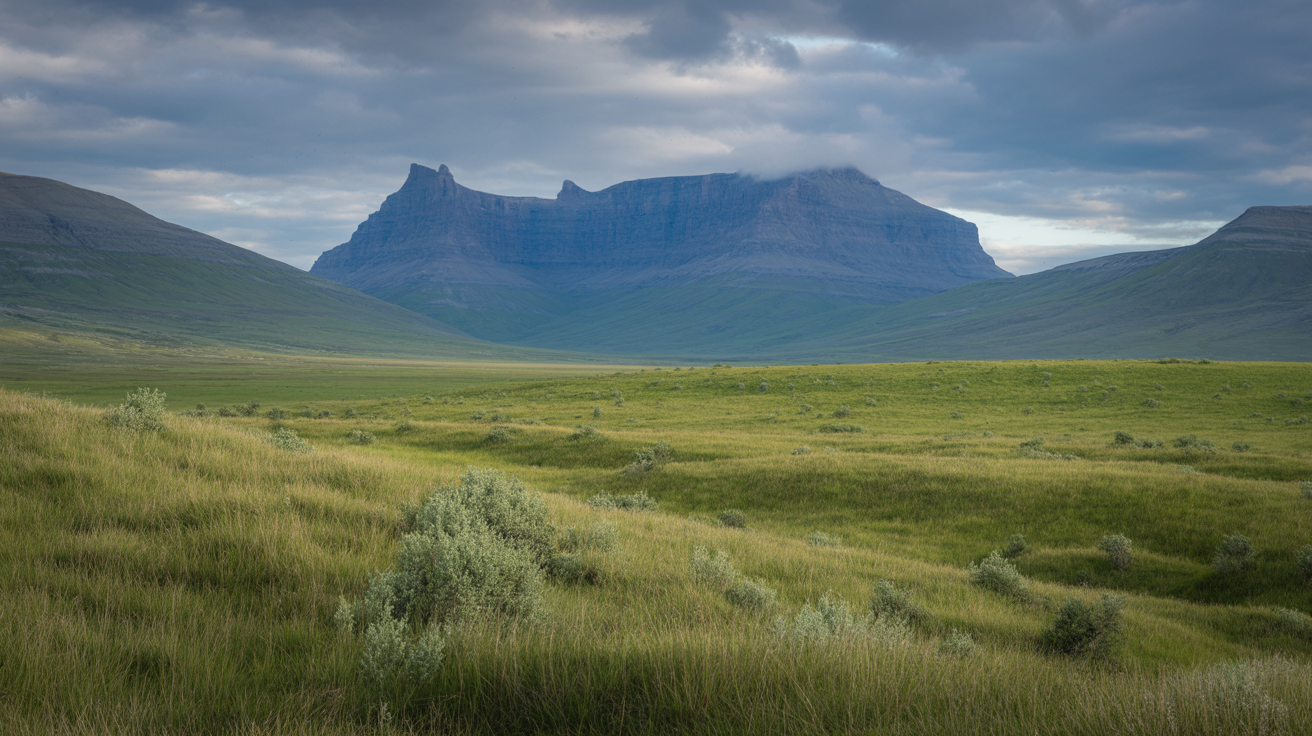 Various Continental Regions
Grassland
Open areas dominated by grasses rather than trees, supporting numerous herbivores and their predators.
 Elevated Terrain
Mountain
High-altitude environments with varying climates and specialized wildlife adapted to rugged terrain and thin air.
 Global
Forest
Wooded areas with significant tree cover and diverse plant and animal communities.
Conservation
The Common Pauropod is currently classified as Least Concern on the IUCN Red List.
Threats & challenges
Currently, Pauropus huxleyi faces few direct threats due to its cryptic lifestyle and wide distribution. However, habitat loss from deforestation, soil compaction, pollution, and changes in land use can negatively impact local populations by reducing the availability of moist, organic-rich soil. Intensive agriculture and the use of pesticides may also pose risks, though specific impacts are poorly documented. Climate change, particularly alterations in soil moisture and temperature regimes, could affect pauropod abundance and distribution. Despite these potential threats, the species is currently classified as Least Concern, with stable populations in most regions. The main conservation challenge is the lack of detailed population data, owing to the group's minute size and subterranean habits.
Taxonomy
Scientific name
Pauropus huxleyi
- Kingdom
- Animalia
- Phylum
- Arthropoda
- Class
- Pauropoda
- Order
- Pauropodina
- Family
- Pauropodidae
- Genus
- Pauropus
- Species
- huxleyi
Community notes
Share your observations about the Common Pauropod.
No community notes yet. Be the first!
Discover more wildlife
More fascinating animals from the encyclopedia.