

Mountain
High-altitude environments with varying climates and specialized wildlife adapted to rugged terrain and thin air.
Animals of the Mountain
Species recorded in this habitat.
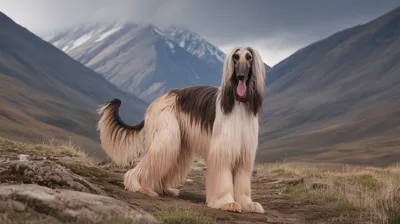
Afghan Hound
Canis lupus familiaris
The Afghan Hound is an ancient breed of sighthound renowned for its elegant appearance, long silky coat, and distinctive ring curl at the end of its tail. Originally bred in the mountainous regions of Afghanistan, this dog was valued for its speed, agility, and ability to hunt game over rugged terrain. Afghan Hounds are known for their independent and sometimes aloof temperament, yet they are affectionate with their families. Their unique appearance and dignified demeanor have made them popular in dog shows and as companion animals worldwide.
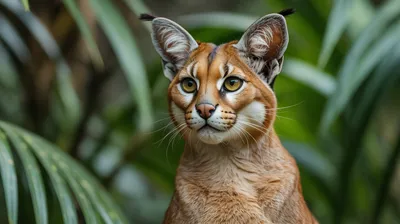
African Golden Cat
Caracal aurata
The African Golden Cat is a medium-sized, elusive wild cat native to the rainforests of Central and West Africa. It has a robust build, with a short tail and rounded ears, and its fur color ranges from golden or reddish-brown to silvery-grey, often marked with faint spots or stripes. This solitary and primarily nocturnal feline is seldom seen in the wild due to its secretive nature and dense forest habitat. African Golden Cats are skilled hunters, preying on a variety of small to medium-sized mammals, birds, and reptiles.
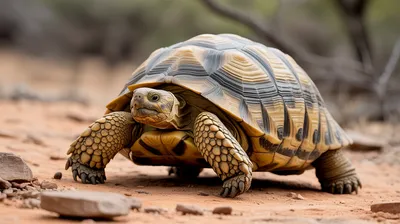
African Pancake Tortoise
Malacochersus tornieri
The pancake tortoise abandoned the one thing tortoises are famous for: armour. Its shell is flat, thin and riddled with large fenestrations — genuine holes in the underlying bone — so the whole carapace flexes like a stiff leather pad. Squeezed into a crack in a granite kopje, the tortoise inflates its lungs and braces outward with its legs, wedging itself so firmly that a predator cannot extract it; the flexible shell lets it exploit crevices far too narrow for a domed tortoise. It does not withdraw and sit tight, because it cannot — instead it is the fastest tortoise known, and will simply run for the nearest rock and disappear. The low mass that comes with a hollow shell also means that, unlike a heavy domed species, a flipped pancake tortoise can right itself with a flick of the neck and leg. It lives on rocky outcrops in Kenya and Tanzania, lays a single egg at a time several times a year, and was moved to CITES Appendix I in 2019 after collectors stripped whole kopjes for the pet trade.
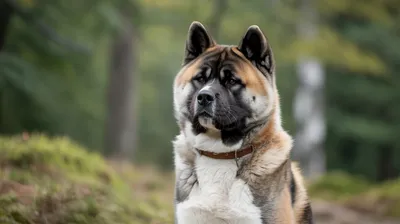
Akita Dog
Canis lupus familiaris
The Akita is a large and powerful dog breed originally from the mountainous regions of northern Japan. Renowned for their strength, courage, and unwavering loyalty, Akitas were historically used for guarding nobility and hunting large game such as bears and boars. They have a thick double coat, erect ears, and a curled tail, giving them a striking wolf-like appearance. Akitas are known for being reserved and dignified with strangers but affectionate and protective with their families. Their independent and intelligent nature requires consistent training and socialization.

Akita Inu
Canis lupus familiaris
The Akita Inu is a large, powerful dog breed originating from the mountainous regions of northern Japan. Renowned for its loyal and dignified temperament, the Akita Inu was historically bred for hunting large game such as bears, boar, and deer. With a thick double coat, erect ears, and curled tail, the breed is well-adapted to cold climates and harsh conditions. Akitas are intelligent and independent, requiring early socialization and consistent training, and are known for their reserved but deeply loyal nature towards their families.
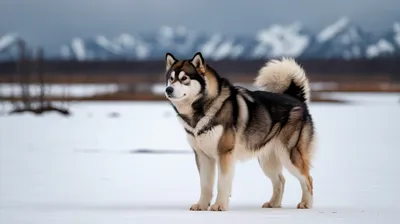
Alaskan Malamute
Canis lupus familiaris
The Alaskan Malamute is a large, powerful breed of domestic dog originally bred for its strength and endurance to haul heavy freight as a sled dog in the Arctic. With a thick double coat, erect ears, and distinctive facial markings, Malamutes are well-adapted to cold, harsh environments. They are known for their friendly disposition, intelligence, and loyalty, making them beloved companions as well as working dogs. While they resemble wolves in appearance, they are a distinct, domesticated breed with a gentle temperament. Their high energy and need for exercise make them best suited to active families and experienced owners.
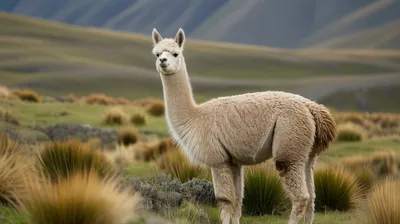
Alpaca
Vicugna pacos
The alpaca is a domesticated species of South American camelid renowned for its soft and luxurious fleece, which is prized in the textile industry. Smaller than its close relative, the llama, alpacas are gentle, social animals that thrive in herds and are primarily kept for their wool. Originating from the high Andes mountains, they are well-adapted to cold, harsh environments at high altitudes. Alpacas have a calm temperament and communicate through body language and a variety of vocalizations. Their unique appearance, marked by long necks and large, expressive eyes, makes them a favorite among animal enthusiasts.
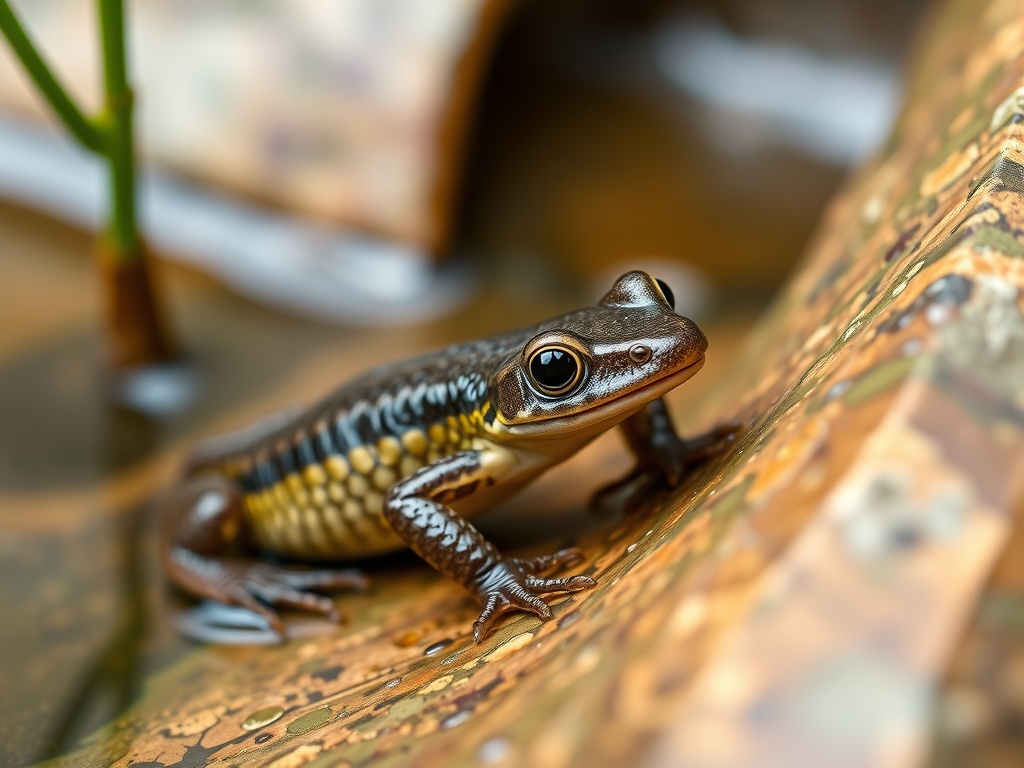
Alpine Newt
Ichthyosaura alpestris
The Alpine Newt is a striking amphibian native to central and southern Europe, particularly thriving in mountainous regions. It is recognized for its slender body, smooth skin, and vibrant breeding colors, with males displaying a bright orange belly and blue flanks during the mating season. Alpine Newts are semi-aquatic, spending part of their lives in freshwater ponds and part on land in moist, shaded habitats. They are known for their adaptability, often inhabiting high-altitude lakes, forest pools, and garden ponds. Despite facing localized threats, their populations remain stable across much of their range.
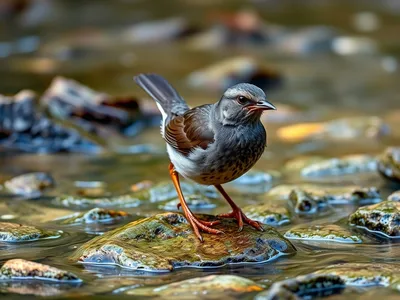
American Dipper
Cinclus mexicanus
The dipper is North America's only aquatic songbird, and it does something no other passerine does: it walks straight into a cold mountain torrent and forages on the bottom, gripping the rocks with strong claws and using its wings to hold itself down or to swim. Its kit is entirely rebuilt for this. It has a preen gland roughly ten times the size of a comparable songbird's, feeding an unusually dense, water-repellent plumage; movable flaps close the nostrils underwater; a white nictitating membrane sweeps across the eye, giving it the characteristic flashing blink; and its blood carries extra oxygen, letting it stay under for up to about half a minute. It sings loudly right through winter, a long ringing warble pitched high enough to cut through the broadband roar of the stream — an acoustic adaptation to a permanently noisy home. Nests are dome-shaped moss shelters, often built on ledges behind or beside waterfalls, where spray keeps the moss alive and green.
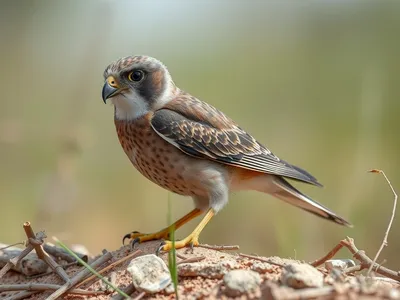
American Kestrel
Falco sparverius
The American kestrel is North America's smallest falcon, roughly the mass of a mourning dove, and it is also one of the very few raptors where you can sex a bird instantly by colour: males have slate-blue wings and a rufous back, females are rufous all over and barred. Most birds of prey give no such visual cue, and kestrels show the difference from the nestling stage. On the back of its head are two black false eyespots, widely interpreted as a deterrent to attacks from behind by larger raptors — a small predator's bluff. It hunts by hovering into the wind with the head locked absolutely still, then dropping onto grasshoppers, voles and lizards, and it caches surplus prey in fence posts, grass clumps and cavities to eat later. It cannot excavate a nest hole itself and depends on woodpecker cavities and natural hollows, which is why it takes readily to nest boxes. Despite all this adaptability, the species has lost something like half its North American population since 1970, and the cause is still not settled.
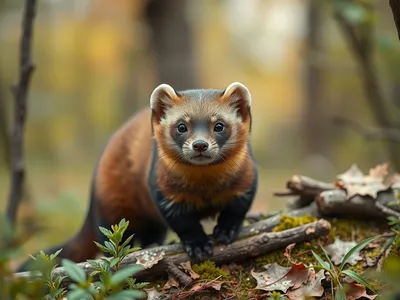
American Marten
Martes americana
The American Marten is a small, agile mammal native to the forests of North America. Characterized by its slender body, bushy tail, and silky brown fur, this elusive predator is well adapted for life among thick trees and snowy landscapes. Martens are solitary and primarily nocturnal, skillfully navigating the forest canopy in search of prey. They play an important role in their ecosystem by helping to control rodent populations and dispersing seeds from the fruits they eat.
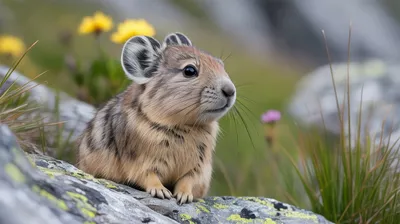
American Pika
Ochotona princeps
The pika is not a rodent — it is a lagomorph, a close relative of rabbits and hares, and it is one of the very few mammals that stays awake and active all winter in alpine talus without hibernating. It gets through by farming. Through summer it makes repeated dashes into the meadow, cutting vegetation and stacking it on rocks to cure in the sun, building a haypile that may contain dozens of plant species and can fill a wheelbarrow. The selection is not random: pikas deliberately include plants loaded with toxic phenolics, which act as preservatives and slow decay, and they eat those portions later in the winter once the toxins have degraded. Its constraint is heat, not cold. A pika's dense fur and high metabolism mean it can die after only a few hours' exposure at around 25.5 C, so it retreats into the cool interstices of the rock slope on hot days and cannot cross warm valleys — which is why populations in the Great Basin have been winking out at lower elevations as summers warm.
Other habitats
 Various Continental Regions
Grassland
Open areas dominated by grasses rather than trees, supporting numerous herbivores and their predators.
 Global
Forest
Wooded areas with significant tree cover and diverse plant and animal communities.
 Global Waters
Ocean
Saltwater environments covering more than 70% of the Earth's surface, home to a vast variety of marine life.
 Polar and Subpolar Regions
Tundra
Cold, treeless regions with permafrost supporting specialized cold-adapted wildlife.
 Global
Freshwater
Lakes, rivers, and wetlands with diverse aquatic ecosystems.
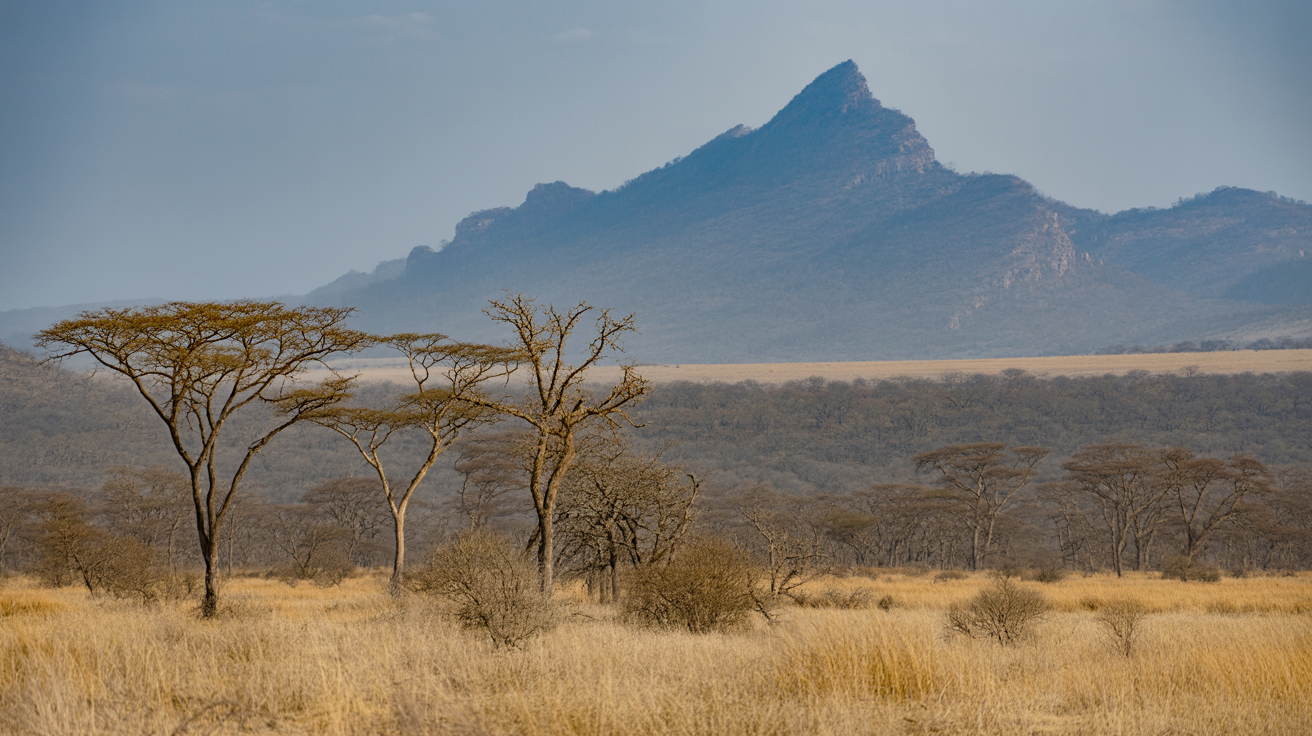 Africa
Savanna
Grasslands with scattered trees, characterized by seasonal rainfall and home to diverse grazing animals and predators.