
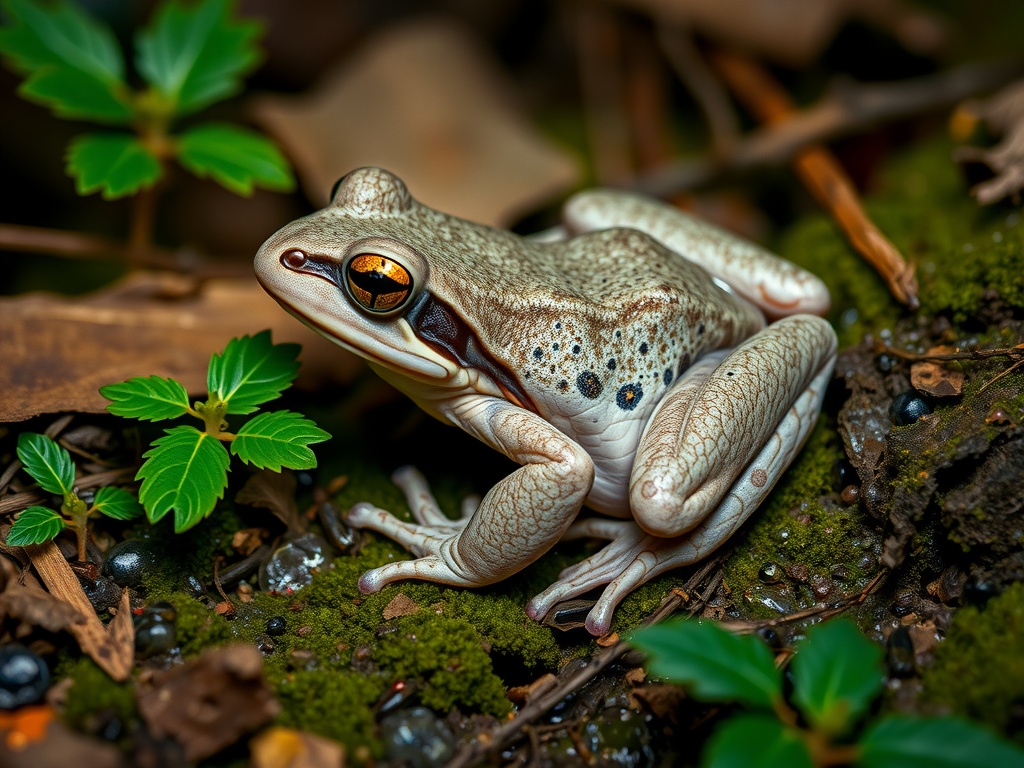
About the Cope's Gray Tree Frog
Cope's Gray Tree Frog is a small, nocturnal amphibian known for its excellent camouflage and distinctive, trilling call. This species possesses remarkable color-changing abilities, shifting from gray to green to blend seamlessly with tree bark and leaves. Found primarily in the eastern United States, it is highly arboreal, spending much of its life in trees and shrubs, especially near water. During the breeding season, these frogs descend to ponds and wetlands to lay eggs, demonstrating adaptability to both wooded and aquatic environments.
Fascinating facts
Master of Camouflage
This tree frog can rapidly change its skin color from gray to green to match its surroundings and avoid predators.
Distinctive Trill
The male Cope's Gray Tree Frog produces a fast, musical trill, especially during the breeding season to attract females.
Survives Freezing
It can survive being partially frozen in winter by producing glycerol, which acts as a natural antifreeze in its tissues.
Detailed description
Cope's Gray Tree Frog (Dryophytes chrysoscelis) is a small, robust arboreal amphibian, typically measuring 32–52 mm (1.25–2 inches) in snout-vent length, with females generally larger than males. Its skin is granular and highly variable in coloration, ranging from mottled gray to green, often with irregular dark blotches that mimic the texture and color of lichen-covered bark. The ventral surface is white, while the inner thighs display a distinctive bright yellow or orange flash coloration, thought to deter predators. The species possesses large, adhesive toe pads that facilitate climbing and adherence to smooth surfaces. The eyes are prominent with horizontal pupils, adapted for nocturnal vision. Cope's Gray Tree Frog is primarily nocturnal, emerging at dusk to forage and call. It is a solitary species outside the breeding season, but males congregate in large choruses at aquatic sites during reproduction. Its vocalization is a rapid, high-pitched trill, distinguishable from the slower call of its cryptic sibling, Dryophytes versicolor. This species is freeze-tolerant, capable of surviving partial freezing of body fluids during winter hibernation. It occupies a wide range of habitats, from mature deciduous forests to suburban gardens, provided suitable breeding ponds are available.
Did you know?
Cope's Gray Tree Frog has a chromosome count exactly half that of its close relative, the Gray Tree Frog, even though they are visually almost identical.
Research & sources
Wikipedia summary
Cope's gray treefrog is a species of treefrog found in the United States and Canada. It is almost indistinguishable from the gray treefrog, and shares much of its geographic range. Both species are variable in color, mottled gray to gray-green, resembling the bark of trees. These are treefrogs of woodland habitats, though they will sometimes travel into more open areas to reach a breeding pond. The only readily noticeable difference between the two species is the mating call — Cope's has a faster-paced and slightly higher-pitched call than D. versicolor. In addition, D. chrysoscelis is reported to be slightly smaller, more arboreal, and more tolerant of dry conditions than D. versicolor.
Behaviour & social structure
Cope's Gray Tree Frog is most active at night, spending daylight hours concealed in tree crevices, under bark, or among leaf litter to avoid desiccation and predation. It is an opportunistic insectivore, preying on a variety of arthropods including moths, beetles, spiders, and ants, which it captures using a rapid flick of its sticky tongue. Foraging occurs primarily in the canopy and shrub layer, but individuals may descend to the ground to hunt or migrate between breeding sites. Social interactions are limited outside the breeding season, with individuals maintaining solitary territories. During the breeding period, males become highly vocal, establishing calling sites at the water’s edge or on emergent vegetation. Aggressive encounters between males are rare but may involve physical displays or call interference. The species exhibits site fidelity, often returning to the same breeding pond annually.
Reproduction & life cycle
Breeding occurs from late April to July, varying with latitude and local climate. Males arrive first at breeding ponds—typically ephemeral pools, flooded ditches, or slow-moving streams—and produce advertisement calls to attract females. Females select mates based on call characteristics, favoring males with faster, higher-pitched trills. Amplexus is axillary, and females lay clusters of 10–40 eggs, attaching them to submerged vegetation; a single female may lay up to 2,000 eggs in a season. Embryonic development is rapid, with eggs hatching in 3–7 days depending on temperature. Tadpoles are filter feeders, consuming algae and detritus, and metamorphosis occurs within 45–65 days. There is no parental care after egg deposition. Juveniles disperse into terrestrial habitats soon after metamorphosis.
Adaptations & survival
Cope's Gray Tree Frog exhibits several notable adaptations. Its cryptic coloration and ability to change skin color enhance camouflage against predators. Specialized toe pads allow for efficient climbing and adherence to vertical surfaces. The species is highly tolerant of dehydration, enabling survival in drier conditions than many other hylids. Remarkably, it can withstand freezing temperatures by producing cryoprotectants (mainly glycerol and glucose) that prevent ice damage to tissues—a rare adaptation among amphibians. Its rapid, high-frequency call is adapted for communication in dense vegetation and over the background noise of breeding ponds. The yellow-orange thigh coloration is a startle adaptation, potentially distracting predators during escape.
Cultural significance
While not a prominent figure in folklore, Cope's Gray Tree Frog is valued as an indicator species for healthy woodland and wetland ecosystems. Its distinctive call is a familiar sound in eastern North American summer nights, often featured in natural sound recordings and educational materials. The species is sometimes kept in captivity for educational purposes, highlighting amphibian adaptations and the importance of wetland conservation.
Recent research
Recent genetic studies have clarified the cryptic relationship between D. chrysoscelis and D. versicolor, revealing that D. chrysoscelis is diploid while D. versicolor is tetraploid, despite their near-identical appearance. Research into their freeze tolerance mechanisms has contributed to the broader understanding of vertebrate cryobiology. Ongoing studies are examining the effects of environmental contaminants on larval development and adult health. Acoustic research continues to investigate the evolution of mating calls and their role in species recognition and reproductive isolation.
Videos
Habitat
Deciduous forest and woodland edges near freshwater sources
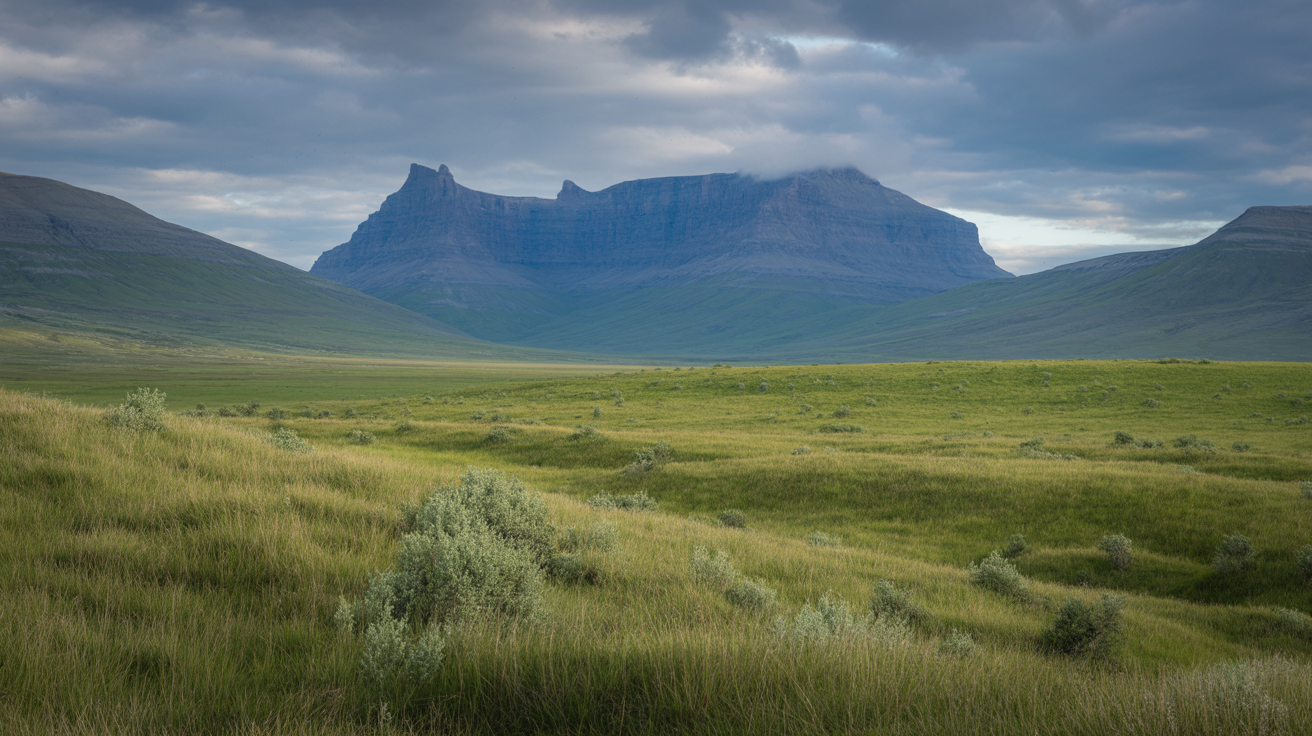 Various Continental Regions
Grassland
Open areas dominated by grasses rather than trees, supporting numerous herbivores and their predators.
 Global
Forest
Wooded areas with significant tree cover and diverse plant and animal communities.
 Global
Freshwater
Lakes, rivers, and wetlands with diverse aquatic ecosystems.
Conservation
The Cope's Gray Tree Frog is currently classified as Least Concern on the IUCN Red List.
Threats & challenges
Currently classified as Least Concern by the IUCN, Cope's Gray Tree Frog maintains stable populations across much of its range. However, local declines have been noted due to habitat loss from deforestation, wetland drainage, and urbanization. Road mortality during breeding migrations and exposure to pesticides and pollutants are additional threats. Climate change poses a potential risk by altering breeding phenology and reducing suitable hibernation sites. The species is susceptible to chytridiomycosis, a fungal disease affecting amphibians globally, though it appears less impacted than some other species. Conservation efforts focus on preserving breeding habitats and maintaining landscape connectivity.
Taxonomy
Scientific name
Hyla chrysoscelis
- Kingdom
- Animalia
- Phylum
- Chordata
- Class
- Amphibia
- Order
- Anura
- Family
- Hylidae
- Genus
- Hyla
- Species
- chrysoscelis
Community notes
Share your observations about the Cope's Gray Tree Frog.
No community notes yet. Be the first!
Discover more wildlife
More fascinating animals from the encyclopedia.