
About the Crimson anemone
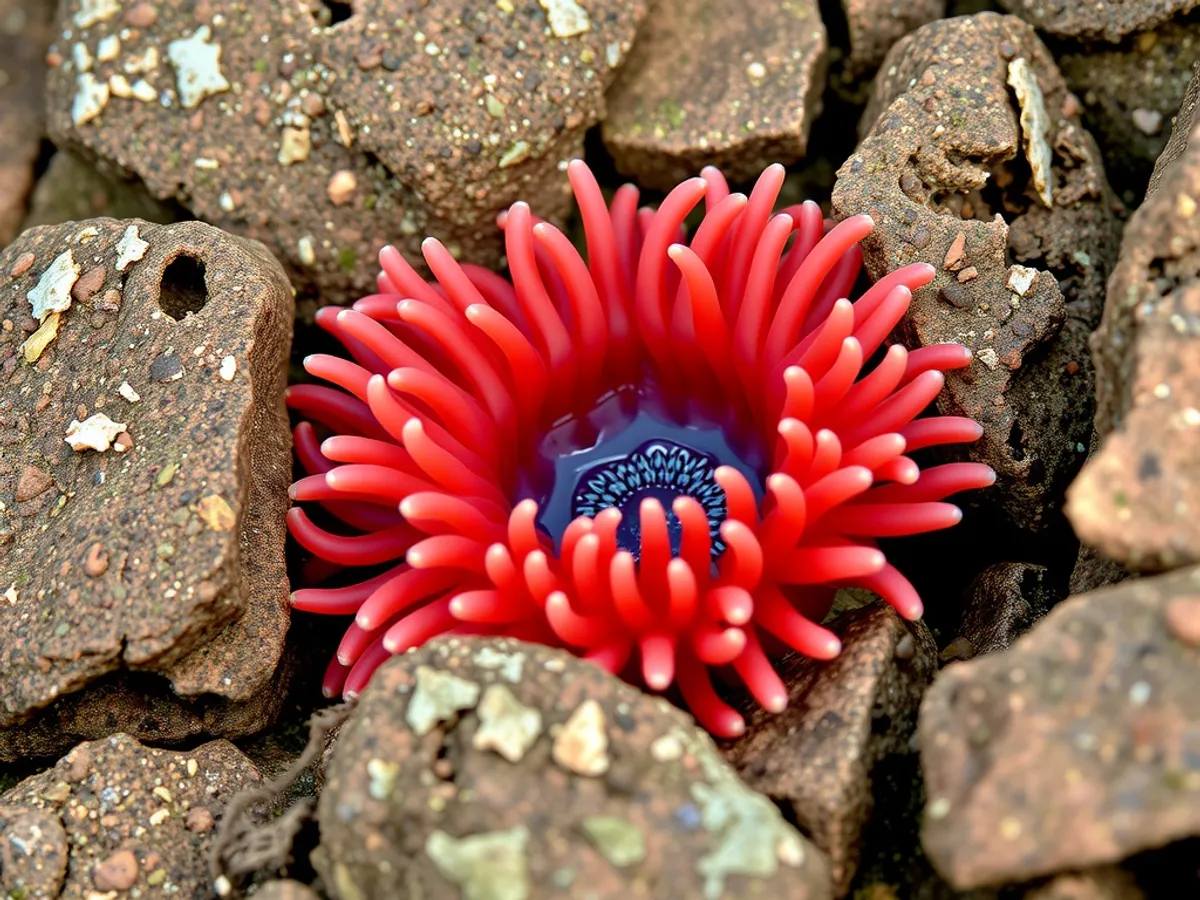
The crimson anemone is a striking marine invertebrate known for its vivid red or crimson tentacles, which can reach up to 20 centimeters in length. Found along the Pacific coast of North America, particularly from Alaska to California, it attaches itself to rocky substrates in relatively deep, cold waters. Its tentacles are used both for capturing prey and for defense, delivering a mild sting to small fish and invertebrates. The crimson anemone is often seen hosting small crustaceans and sometimes even juvenile fish, offering them protection among its tentacles.
Fascinating facts
Bright Colors
The crimson anemone is easily recognized by its brilliant red tentacles, which serve as both camouflage and warning coloration in its rocky habitat.
Commensal Partners
Small crustaceans, like shrimp and crabs, often live among the anemone's tentacles, gaining shelter and protection from predators.
Long Lifespan
Crimson anemones are remarkably long-lived, with some individuals surviving for up to 80 years in the wild.
Detailed description
Cribrinopsis fernaldi, commonly known as the crimson anemone, is a large and visually striking sea anemone characterized by its vivid crimson to deep red tentacles, which can reach lengths of up to 20 centimeters and are often arranged in chevron-like patterns. The oral disc is broad and can measure up to 15 centimeters in diameter, with a smooth, columnar body that is typically pale pink to reddish in color, sometimes mottled with white or orange. The tentacles are numerous (often exceeding 100), slender, and flexible, equipped with specialized stinging cells called nematocysts for prey capture and defense. The base (pedal disc) is robust, allowing the anemone to firmly anchor itself to rocky substrates in subtidal zones, often at depths ranging from 10 to over 100 meters. Internally, the species possesses a gastrovascular cavity used for both digestion and circulation of nutrients. Cribrinopsis fernaldi is solitary in habit but may occur in loose aggregations where suitable habitat is abundant. It is known for its symbiotic relationships with certain crustaceans, such as shrimp and small crabs, which seek refuge among its tentacles. The species exhibits a remarkable ability to retract its tentacles rapidly in response to disturbance, minimizing predation risk. Its coloration is thought to serve both as camouflage among encrusting red algae and as a warning to potential predators.
Did you know?
The crimson anemone can host commensal shrimp and crabs that are immune to its stinging tentacles, creating a tiny underwater ecosystem.
Research & sources
Wikipedia summary
Cribrinopsis fernaldi, also known as the crimson anemone, snakelock anemone, chevron-tentacle anemone and Fernald brooding anemone, is a sea anemone native to the Pacific Ocean off northwestern North America.
Behaviour & social structure
Cribrinopsis fernaldi is primarily a sessile ambush predator, remaining attached to hard substrates and extending its tentacles to capture passing prey. Its diet consists mainly of small fish, zooplankton, and benthic invertebrates, which are immobilized by the nematocysts and transported to the central mouth for ingestion. Feeding activity is most pronounced during periods of strong tidal currents, which bring abundant prey within reach. The anemone is largely solitary, exhibiting minimal social interaction except for occasional proximity to conspecifics in optimal habitats. It demonstrates a degree of site fidelity, rarely relocating unless disturbed or displaced by strong currents. Symbiotic relationships are observed with commensal crustaceans, which gain protection among the tentacles while potentially aiding in cleaning debris from the anemone's oral disc. Daily routines include periodic expansion and contraction of the tentacles, likely in response to changes in light, water flow, and prey availability.
Reproduction & life cycle
Cribrinopsis fernaldi exhibits both sexual and asexual reproductive strategies. Sexual reproduction involves the release of gametes into the water column, typically synchronized with seasonal cues such as temperature and photoperiod, with spawning events most commonly recorded in late spring to early summer. Fertilization is external, and the resulting planula larvae are planktonic, drifting with currents before settling and metamorphosing into juvenile anemones. Asexual reproduction occurs through pedal laceration, where fragments of the pedal disc develop into genetically identical clones, contributing to local population density. Parental care is minimal; however, some evidence suggests brooding of larvae within the gastrovascular cavity in closely related species, though this behavior is not well documented in C. fernaldi. Juveniles grow slowly, reaching reproductive maturity after several years.
Adaptations & survival
Cribrinopsis fernaldi possesses several adaptations for survival in cold, rocky marine environments. Its robust pedal disc and muscular column allow it to withstand strong currents and wave action. The dense array of nematocyst-laden tentacles provides effective defense against predators and efficient prey capture. The vivid red pigmentation is produced by carotenoid compounds, which may offer photoprotection or serve as aposematic coloration. The ability to rapidly retract tentacles and contract the body minimizes exposure to threats. Physiologically, the species is adapted to low temperatures and variable salinity, with cellular mechanisms that prevent freezing and desiccation. Its symbiotic relationships with crustaceans enhance survival by deterring predators and reducing fouling.
Cultural significance
Cribrinopsis fernaldi does not have a prominent role in indigenous mythology or traditional uses, likely due to its subtidal habitat and limited accessibility. However, its striking appearance makes it a subject of interest for underwater photographers and marine naturalists. In public aquaria, it is occasionally displayed as a representative of Pacific Northwest marine biodiversity, contributing to educational outreach about cold-water ecosystems.
Recent research
Recent research on Cribrinopsis fernaldi has focused on its ecological role as a habitat-forming species, providing shelter for commensal invertebrates and juvenile fish. Molecular studies have clarified its phylogenetic relationships within the Actiniidae family, distinguishing it from similar species such as Epiactis fernaldi. Investigations into its nematocyst composition and venom have potential biomedical applications, particularly in neurobiology and toxinology. Ongoing studies are examining the effects of ocean acidification on its calcification processes and reproductive success. Long-term ecological monitoring projects along the Pacific coast are tracking population dynamics in response to environmental change.
Videos
Habitat
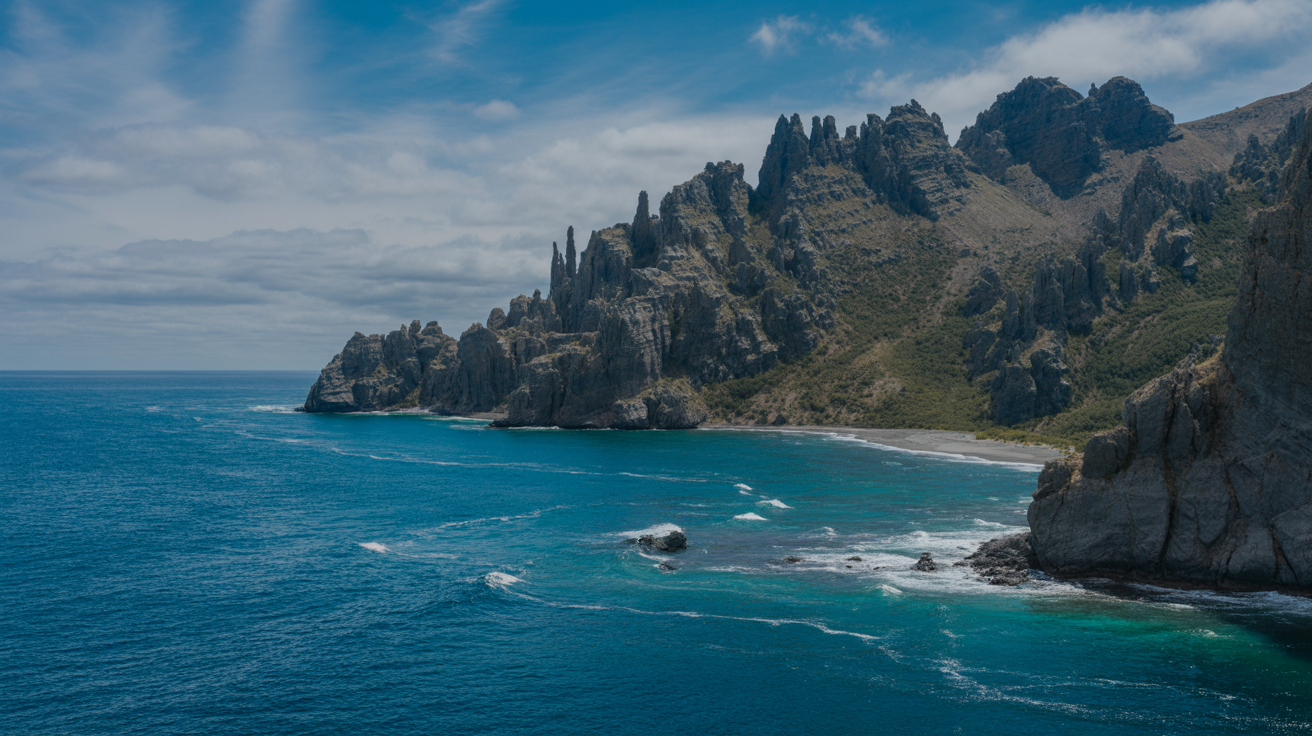
Cold rocky marine environments
Conservation
The Crimson anemone is currently classified as Least Concern on the IUCN Red List.
Threats & challenges
Currently, Cribrinopsis fernaldi is not considered threatened and is classified as Least Concern. However, localized threats include habitat degradation from coastal development, pollution (particularly from oil spills and heavy metals), and the impacts of bottom trawling, which can dislodge or destroy individuals. Climate change poses a long-term risk through ocean warming, acidification, and changes in prey availability. While the species is not targeted by fisheries, bycatch and incidental collection for the aquarium trade may occur. Population trends are generally stable, but long-term monitoring is needed to detect subtle declines or shifts in distribution.
Taxonomy
Scientific name
Cribrinopsis fernaldi
- Kingdom
- Animalia
- Phylum
- Cnidaria
- Class
- Anthozoa
- Order
- Actiniaria
- Family
- Actiniidae
- Genus
- Cribrinopsis
- Species
- fernaldi
Community notes
Share your observations about the Crimson anemone.
No community notes yet. Be the first!
Discover more wildlife
More fascinating animals from the encyclopedia.