
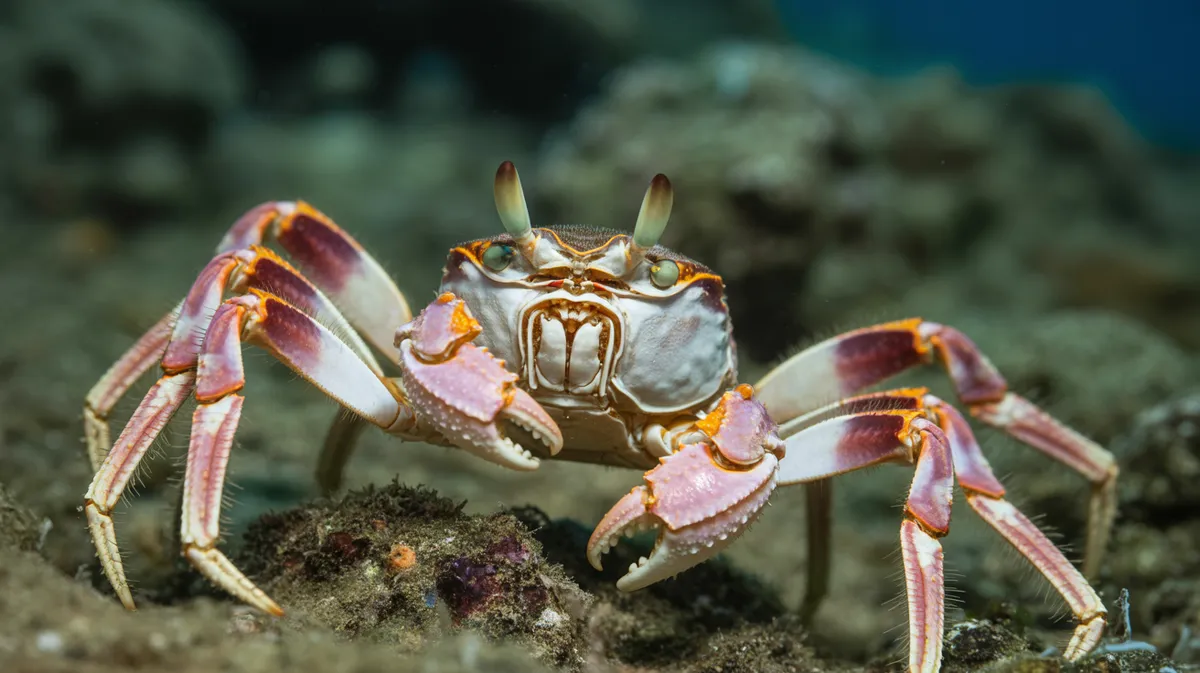
About the Decorator Crab
Decorator crabs are fascinating marine invertebrates known for their unique behavior of attaching materials such as algae, sponges, and debris to their exoskeletons for camouflage. This adaptation helps them blend seamlessly into their surroundings, making them nearly invisible to predators and prey alike. They are typically found in shallow coastal waters, often on coral reefs or rocky substrates. The decorator crab's behavior is a prime example of animal tool use, as they actively select and attach materials to enhance their disguise.
Fascinating facts
Expert Camouflage
Decorator crabs attach materials like algae, sponges, and shells to their bodies, making them exceptionally well-camouflaged on the ocean floor.
Specialized Tools
They possess hooked hairs on their exoskeleton, called setae, which function like Velcro to anchor their decorations securely.
Seasonal Stylists
Some decorator crabs change their choice of camouflage materials seasonally or as they molt and grow, adapting their appearance for maximum protection.
Detailed description
Camposcia retusa, commonly known as the velcro or graceful decorator crab, is a medium-sized crab species within the family Inachidae, typically reaching a carapace width of 6–8 cm. Its body is elongated and covered with numerous hooked setae (bristle-like structures) that facilitate the attachment of environmental materials such as algae, sponges, hydroids, and detritus. The carapace is often triangular and tapers towards the rear, with long, slender legs adapted for navigating complex reef structures. The coloration of C. retusa is highly variable, depending on the materials it attaches, but the underlying exoskeleton is generally pale or mottled. This crab is primarily nocturnal, spending daylight hours motionless and camouflaged among corals and rocks. Camposcia retusa is a solitary species, rarely interacting with conspecifics outside of breeding periods. Its omnivorous diet includes small invertebrates, organic detritus, and algae. Reproduction involves internal fertilization, with females carrying fertilized eggs on their pleopods until hatching. The species exhibits a remarkable behavioral adaptation in its decorating behavior, which is both instinctive and learned, allowing individuals to modify their camouflage based on local environmental conditions. This adaptation not only provides protection from predators but may also play a role in intraspecific interactions.
Did you know?
Some decorator crabs deliberately attach toxic or stinging organisms to deter predators, effectively weaponizing their camouflage.
Research & sources
Wikipedia summary
Decorator crabs are crabs of several different species, belonging to the superfamily Majoidea, that use materials from their environment to hide from, or ward off, predators. They decorate themselves by sticking mostly sedentary animals and plants to their bodies as camouflage, or if the attached organisms are noxious, to ward off predators through aposematism.
Behaviour & social structure
Camposcia retusa exhibits complex decorating behavior, actively selecting and attaching materials from its immediate environment using its chelae (claws) and maxillipeds. This process is highly selective: crabs often prefer materials that match the substrate or possess chemical deterrents (e.g., toxic sponges or hydroids). Decorating is most intense after molting, when the new exoskeleton is soft and vulnerable. Feeding occurs primarily at night; the crab forages slowly across the reef, using its sensitive antennae to detect food. It consumes sessile invertebrates, detritus, and occasionally scavenges on carrion. Social interactions are minimal, with individuals maintaining small home ranges and displaying aggression if territories overlap. Camposcia retusa is generally sedentary during the day, relying on camouflage for protection, and becomes more active at dusk and during the night.
Reproduction & life cycle
Breeding in Camposcia retusa typically occurs during warmer months, with peak activity observed in spring and early summer in tropical regions. Males locate receptive females through chemical cues and engage in brief courtship displays. Mating involves the transfer of spermatophores to the female, who then carries fertilized eggs under her abdomen (pleopods) for a period of 2–4 weeks, depending on water temperature. Females may carry hundreds to thousands of eggs per brood. After hatching, larvae (zoeae) are planktonic and undergo several molts before settling to the benthos as juvenile crabs. There is no parental care beyond egg brooding; juveniles are independent upon settlement.
Adaptations & survival
Camposcia retusa demonstrates several key adaptations for survival. The most notable is its behavioral adaptation of decorating, facilitated by specialized hooked setae on the carapace and legs, which securely hold attached materials. This provides both cryptic camouflage and, when using noxious organisms, potential chemical defense (aposematism). The crab's elongated limbs and compact body allow it to navigate complex reef structures and crevices. Its omnivorous diet and opportunistic feeding behavior enable it to exploit a wide range of food sources. Additionally, Camposcia retusa exhibits rapid post-molt decorating behavior, minimizing vulnerability during this critical period. Its nocturnal habits reduce predation risk from visually oriented predators.
Cultural significance
While not a major figure in folklore or mythology, decorator crabs like Camposcia retusa have fascinated naturalists and marine enthusiasts for centuries due to their remarkable camouflage abilities. They are popular subjects in public aquaria and educational programs highlighting animal adaptations and tool use. In some cultures, they are admired as symbols of ingenuity and resourcefulness. There are no known traditional uses of this species in food or medicine.
Recent research
Recent studies have focused on the cognitive aspects of decorating behavior in Camposcia retusa and related species, revealing a degree of material selectivity and learning previously underestimated in crustaceans. Research has also examined the ecological role of decorator crabs in reef systems, including their influence on epibiont (attached organism) communities and predator-prey dynamics. Ongoing genetic studies are clarifying species boundaries within the Camposcia genus and exploring the evolutionary origins of decorating behavior. There is growing interest in the potential for decorator crabs to serve as bioindicators of reef health due to their sensitivity to habitat changes.
Videos
Habitat
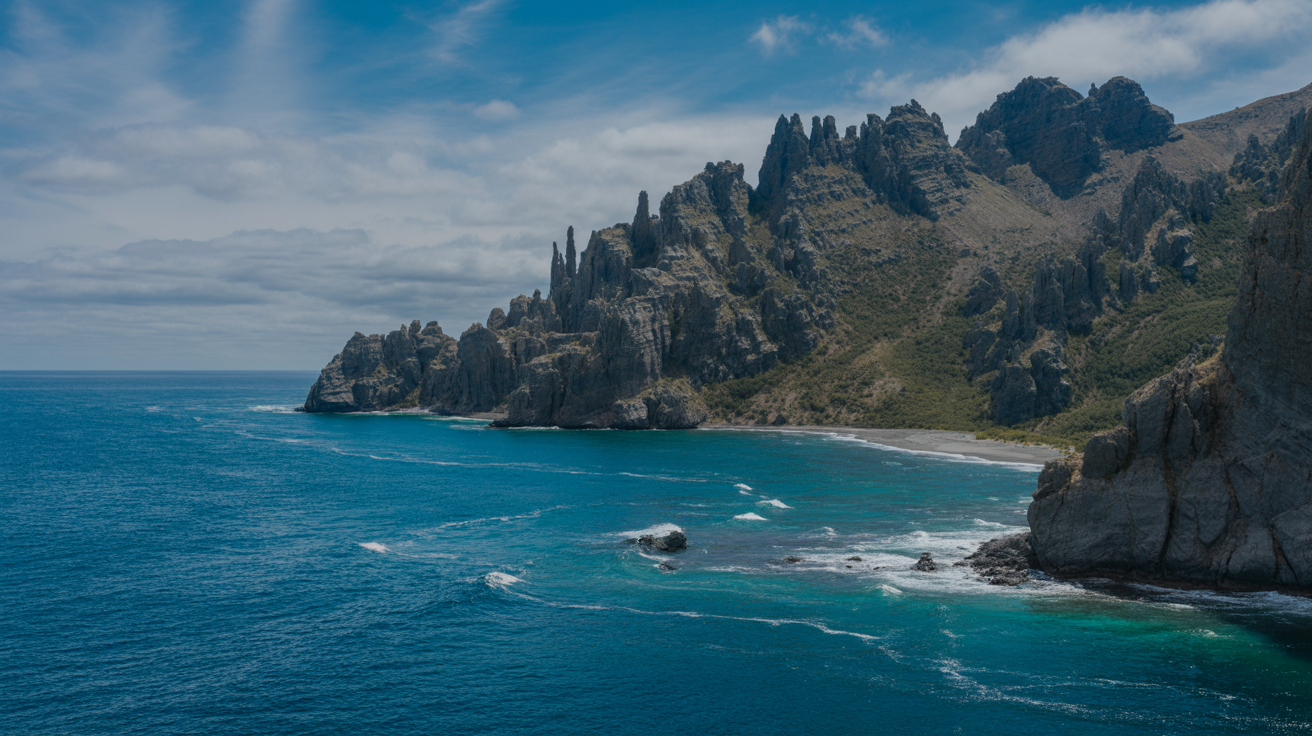
Coastal reefs and rocky seabeds
Conservation
The Decorator Crab is currently classified as Least Concern on the IUCN Red List.
Threats & challenges
Currently, Camposcia retusa is listed as Least Concern, with stable populations across its Indo-Pacific range. However, localized threats include habitat degradation due to coral reef destruction, pollution, and sedimentation. Overcollection for the aquarium trade is a minor concern in some regions. Climate change and ocean acidification pose long-term threats to coral reef habitats, potentially impacting decorator crab populations indirectly. Despite these challenges, the species' broad habitat tolerance and behavioral plasticity contribute to its resilience.
Taxonomy
Scientific name
Camposcia retusa
- Kingdom
- Animalia
- Phylum
- Arthropoda
- Class
- Malacostraca
- Order
- Decapoda
- Family
- Inachidae
- Genus
- Camposcia
- Species
- retusa
Community notes
Share your observations about the Decorator Crab.
No community notes yet. Be the first!
Discover more wildlife
More fascinating animals from the encyclopedia.