
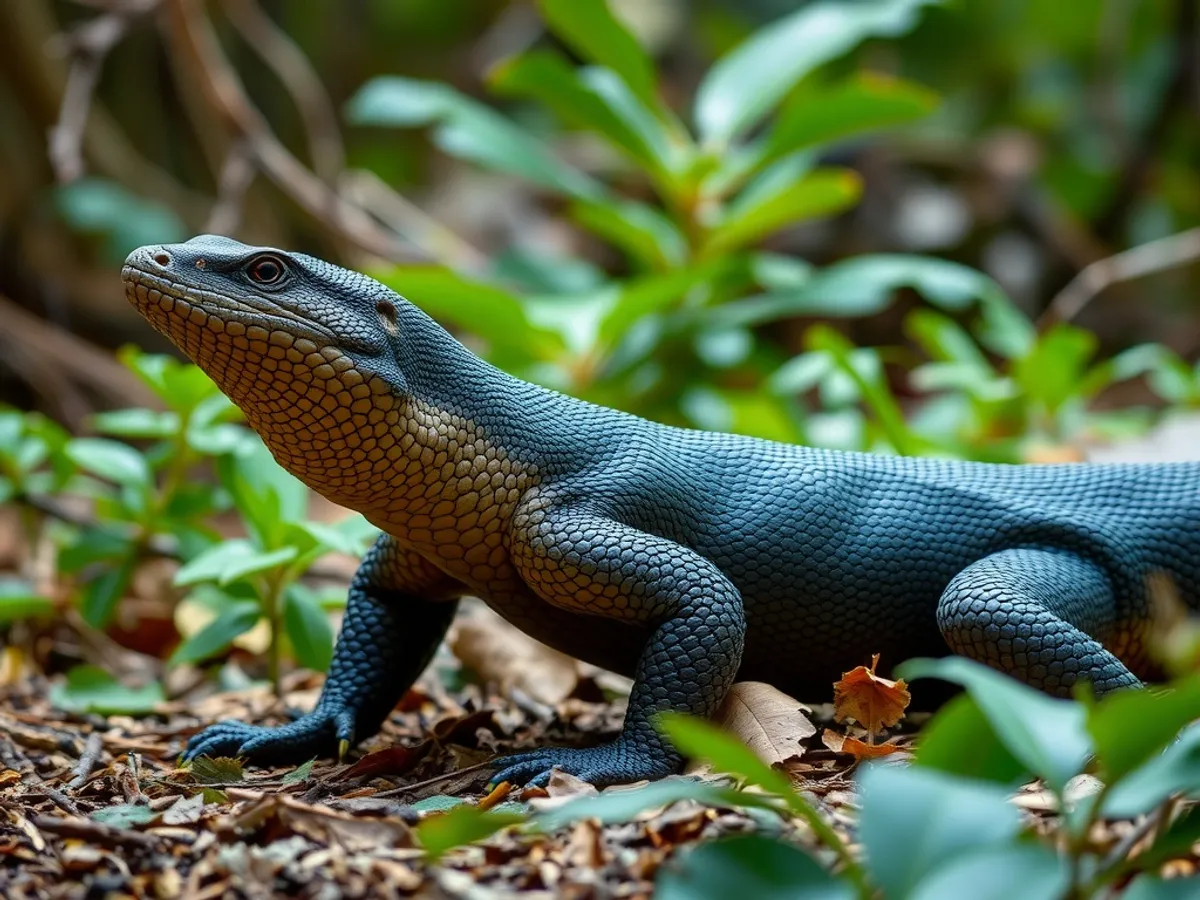
About the Dumeril's Monitor
Dumeril's Monitor is a large, semi-arboreal lizard native to the forests of Southeast Asia, particularly in Thailand, Malaysia, Sumatra, and Borneo. Recognizable by its robust build, olive to dark gray coloration, and creamy yellow spots and bands, this species is adept at both climbing and swimming. Dumeril's Monitors are typically shy and elusive, preferring humid lowland forests near water sources such as rivers and swamps. Their specialized diet and cryptic habits contribute to their mysterious reputation among herpetologists and reptile enthusiasts.
Fascinating facts
Arboreal Expert
Dumeril's Monitors spend much of their time in trees, using their prehensile tails and sharp claws to navigate branches with agility.
Crab Eater
Their diet is unique among monitors, as they frequently hunt and eat freshwater crabs, snails, and other invertebrates.
Rainforest Resident
They are closely tied to humid, lowland rainforests and are rarely found far from water sources like swamps and rivers.
Detailed description
Dumeril's Monitor (Varanus dumerilii) is a robust, medium-to-large monitor lizard, typically reaching total lengths of 100–130 cm (39–51 in), with some individuals exceeding 150 cm. Its body is heavily built, with a muscular tail that is laterally compressed and well-adapted for swimming. The skin is covered in small, granular scales, interspersed with larger, keeled scales along the back and tail. Coloration is generally olive, dark brown, or grayish-black, adorned with irregular creamy yellow or pale bands and spots, especially prominent in juveniles and fading with age. The head is broad and triangular, with a blunt snout and powerful jaws lined with sharp, recurved teeth. The limbs are strong and equipped with long, curved claws, facilitating both climbing and digging. Dumeril's Monitors are semi-arboreal and semi-aquatic, frequently found near water bodies within primary and secondary lowland rainforests. Their cryptic coloration and secretive behavior make them difficult to observe in the wild. This species is primarily solitary, with individuals maintaining overlapping home ranges but rarely interacting outside of the breeding season. Dumeril's Monitors are opportunistic carnivores, preying on a variety of small vertebrates and invertebrates, and are known for their ability to exploit both terrestrial and aquatic food sources. Their reproductive biology is characterized by oviparity, with females laying clutches of eggs in concealed, humid locations.
Did you know?
Dumeril's Monitor can remain submerged underwater for up to 30 minutes while hunting or hiding from predators.
Research & sources
Behaviour & social structure
Dumeril's Monitors are diurnal, exhibiting peak activity during the early morning and late afternoon when humidity is high and temperatures are moderate. They are highly secretive, often remaining motionless or hidden among dense vegetation, hollow logs, or root tangles near water. When threatened, they may flee into water or climb trees to evade predators. Their hunting strategy is primarily ambush-based, relying on stealth and rapid strikes to capture prey such as crustaceans, fish, amphibians, small mammals, birds, eggs, and large insects. They have been observed foraging along riverbanks and in shallow water, using their forked tongues to detect chemical cues. Social interactions are minimal outside of the breeding season, with occasional displays of territoriality, especially among males. In captivity, they may exhibit complex behaviors such as basking, burrowing, and exploratory climbing.
Reproduction & life cycle
Breeding in Varanus dumerilii typically coincides with the onset of the rainy season, varying locally but generally occurring from October to March. Courtship involves a series of ritualized behaviors, including head-bobbing, circling, and gentle biting. After successful copulation, females lay clutches of 6–15 eggs in well-concealed, humid nests, often in rotting logs, leaf litter, or burrows. Incubation lasts approximately 160–200 days at optimal temperatures of 28–30°C (82–86°F). Hatchlings emerge fully independent, measuring 25–30 cm (10–12 in) in total length, and display brighter coloration than adults. There is no parental care post-oviposition, and juvenile survival is highly dependent on their ability to remain hidden from predators.
Adaptations & survival
Dumeril's Monitor exhibits several adaptations for a semi-aquatic and semi-arboreal lifestyle. Its laterally compressed tail acts as an efficient paddle for swimming, while strong limbs and sharp claws enable climbing and digging. The cryptic coloration provides camouflage among leaf litter and forest debris. Its forked tongue and highly developed Jacobson's organ allow for acute chemosensory tracking of prey. The species has a high tolerance for humid, waterlogged environments, and can remain submerged for extended periods. Its diet is highly opportunistic, allowing it to exploit a wide range of prey in both terrestrial and aquatic habitats. The robust skull and powerful jaw muscles are specialized for crushing hard-shelled prey such as crustaceans and mollusks.
Cultural significance
Dumeril's Monitor is not as prominent in local folklore or mythology as some other Southeast Asian reptiles, but in certain indigenous communities, it may be regarded with a mixture of respect and apprehension due to its size and elusive habits. In some regions, it is hunted for food or traditional medicine, though this is less common than for larger monitor species. The species has gained popularity among reptile enthusiasts and herpetoculturists, valued for its striking appearance and rarity in captivity, but this demand has contributed to illegal collection pressures.
Recent research
Recent research has focused on the ecological role of Varanus dumerilii as both predator and scavenger within lowland rainforest ecosystems, highlighting its importance in controlling populations of aquatic and terrestrial prey. Genetic studies have begun to clarify its phylogenetic relationships within the subgenus Soterosaurus, revealing close affinities with Varanus salvator and other Southeast Asian water monitors. Ongoing field studies are investigating its habitat use, movement patterns, and population densities using radio telemetry and environmental DNA (eDNA) sampling. Conservation biologists are also assessing the impacts of habitat fragmentation and the effectiveness of protected areas in sustaining viable populations. Captive breeding programs are in early stages, with the goal of reducing pressure on wild populations.
Sources
Varanus dumerilii (Dumeril's Monitor): Natural History, Ecology, and Conservation
Böhme, W., Koch, A., Ziegler, T. (2014)
scientificVaranus dumerilii: The IUCN Red List of Threatened Species 2022
IUCN SSC Monitor Lizard Specialist Group
conservationVaranus dumerilii (Duméril's Monitor): Ecology, Distribution, and Conservation
Böhme, W. & Koch, A. (2010)
scientificVaranus dumerilii: The IUCN Red List of Threatened Species 2022
IUCN SSC Monitor Lizard Specialist Group
conservationVideos
Habitat
Tropical rainforest
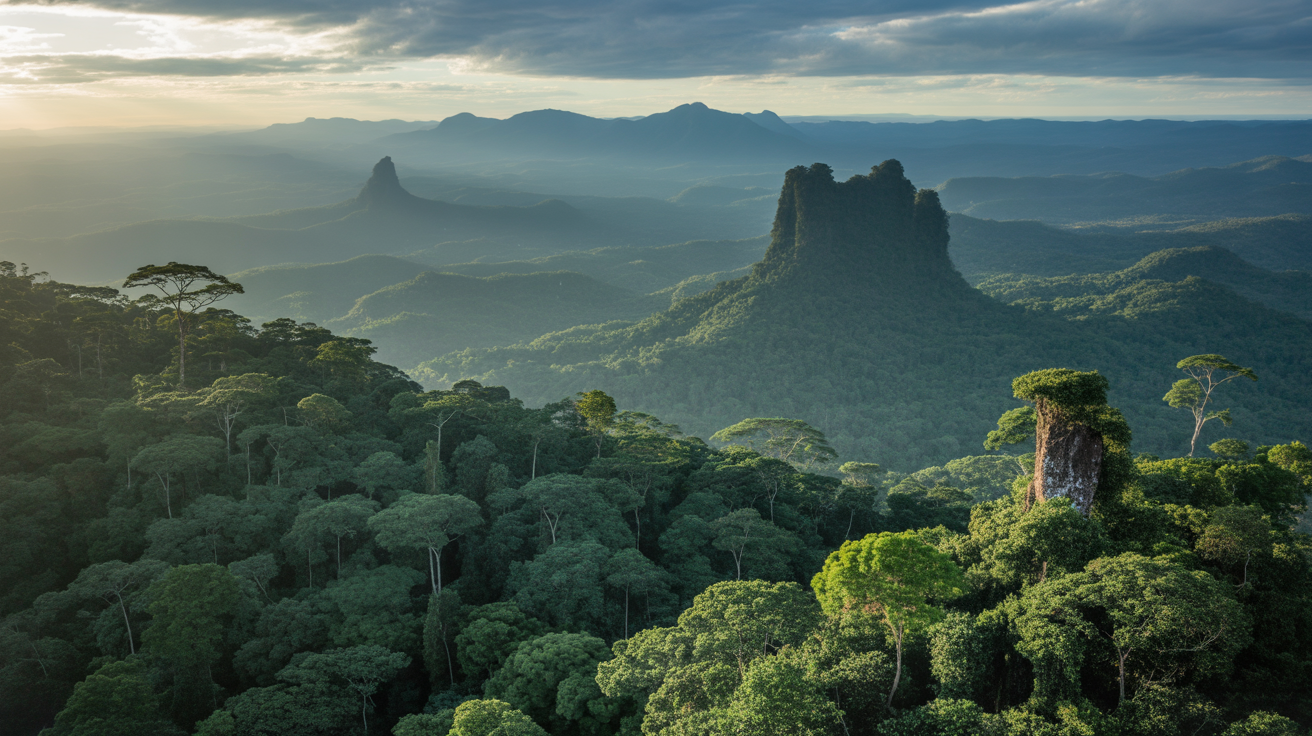 Tropical Regions
Rainforest
Dense, wet forests with the highest biodiversity on Earth, containing more than half of the world's plant and animal species.
 Global
Forest
Wooded areas with significant tree cover and diverse plant and animal communities.
 Global
Freshwater
Lakes, rivers, and wetlands with diverse aquatic ecosystems.
Conservation
The Dumeril's Monitor is currently classified as Near Threatened on the IUCN Red List.
Threats & challenges
Major threats to Dumeril's Monitor include habitat loss due to deforestation, conversion of lowland rainforests to agriculture and palm oil plantations, and drainage of wetlands. The species is also subject to illegal collection for the international pet trade and, in some regions, for local consumption. Population trends are believed to be declining, particularly in areas of intensive habitat disturbance. Fragmentation of suitable habitat further isolates populations, increasing vulnerability to local extirpation. Conservation efforts are hampered by the species' secretive nature and the lack of comprehensive population data. The IUCN currently lists Varanus dumerilii as Near Threatened, emphasizing the need for habitat protection and further ecological study.
Taxonomy
Scientific name
Varanus dumerilii
- Kingdom
- Animalia
- Phylum
- Chordata
- Class
- Reptilia
- Order
- Squamata
- Family
- Varanidae
- Genus
- Varanus
- Species
- dumerilii
Community notes
Share your observations about the Dumeril's Monitor.
No community notes yet. Be the first!
Discover more wildlife
More fascinating animals from the encyclopedia.