
About the Dwarf gourami
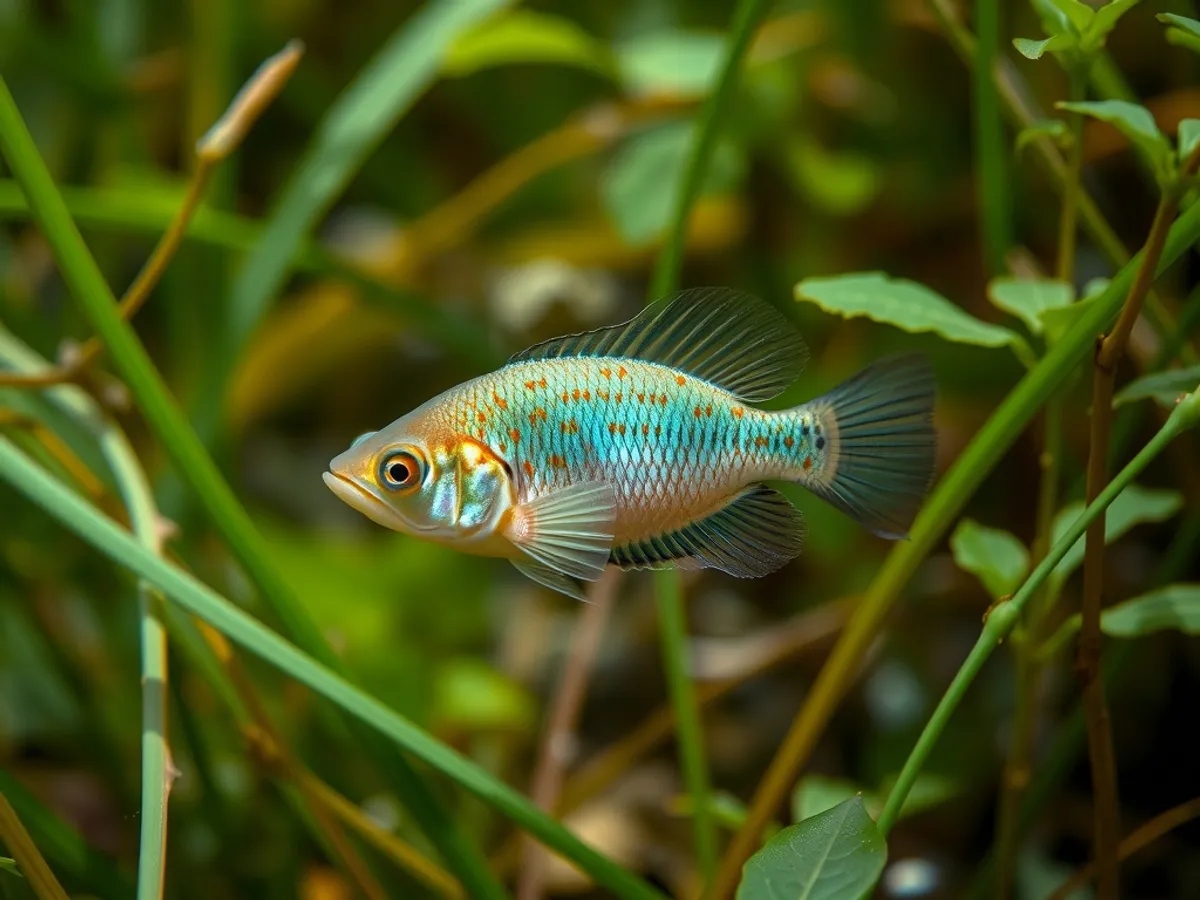
The dwarf gourami is a small, vibrantly colored freshwater fish native to South Asia. Its compact size and vivid hues, ranging from iridescent blue to red and orange, make it a popular choice for home aquariums. Dwarf gouramis are known for their peaceful temperament and elaborate courtship displays. They are labyrinth fish, possessing a specialized organ that allows them to breathe atmospheric air. In the wild, they inhabit slow-moving streams and densely vegetated waters.
Fascinating facts
Brilliant Colors
Dwarf gouramis are famous for their striking blue, red, and orange coloration, which intensifies during breeding.
Labyrinth Breathers
They have a labyrinth organ that allows them to breathe atmospheric air, an adaptation for low-oxygen habitats.
Bubble Nest Builders
Male dwarf gouramis construct floating bubble nests to protect and oxygenate their eggs during reproduction.
Detailed description
The dwarf gourami (Trichogaster lalius) is a small, laterally compressed freshwater fish, typically reaching 5–7 cm (2–2.8 inches) in standard length, with males often displaying more vivid coloration than females. The body is adorned with alternating vertical bands of iridescent blue and red-orange, and the fins are often edged with turquoise or red. Dwarf gouramis possess elongated, thread-like pelvic fins that function as tactile organs, allowing them to navigate and sense their environment. Their dorsal and anal fins are long and pointed, contributing to their distinctive silhouette. As labyrinth fish, they possess a specialized labyrinth organ above the gills, enabling them to breathe atmospheric oxygen—a crucial adaptation for surviving in hypoxic (low-oxygen) waters. In the wild, they are typically found in slow-moving streams, rice paddies, and ponds with abundant aquatic vegetation, which provides both cover and breeding sites. Dwarf gouramis are generally peaceful, though males may become territorial during breeding. Their social structure is loosely hierarchical, with dominant males establishing and defending territories. They are omnivorous, feeding on a variety of algae, detritus, small invertebrates, and insect larvae. Their elaborate courtship and bubble nest-building behaviors are hallmarks of the species, and parental care is provided exclusively by the male.
Did you know?
Dwarf gouramis possess a labyrinth organ, allowing them to breathe air directly, which helps them survive in oxygen-poor environments.
Research & sources
Wikipedia summary
The dwarf gourami is a species of gourami native to South Asia.
Behaviour & social structure
Dwarf gouramis are diurnal, most active during daylight hours. They exhibit exploratory and foraging behaviors, often seen picking at plant surfaces or sifting through substrate for food. Socially, they are best kept in pairs or small groups, as males can display aggression toward each other, especially in confined spaces or during breeding. Outside of breeding, they are generally peaceful and can coexist with other non-aggressive fish species. Their feeding behavior is opportunistic; in the wild, they consume filamentous algae, zooplankton, insect larvae, and detritus. In captivity, they readily accept flake, pellet, and live or frozen foods. Dwarf gouramis communicate using body postures, fin displays, and subtle color changes, particularly during courtship or territorial disputes. They frequently rise to the water surface to gulp air, utilizing their labyrinth organ.
Reproduction & life cycle
Dwarf gouramis are oviparous and exhibit a unique reproductive strategy involving bubble nest construction. During the breeding season, typically coinciding with the onset of the monsoon in their native range, the male constructs a floating nest of bubbles, often anchored among surface vegetation. Courtship involves the male displaying vibrant colors and performing a series of circling and fin-spreading behaviors to attract the female. Once receptive, the female releases eggs, which the male fertilizes externally. The male then collects the eggs in his mouth and deposits them into the bubble nest. Clutch sizes can range from 300 to 800 eggs. The male guards and tends the nest, repairing bubbles and protecting the eggs from predators. Incubation lasts 24–36 hours, after which the larvae hatch and remain in the nest for several days before becoming free-swimming. Parental care is provided solely by the male until the fry disperse.
Adaptations & survival
Key adaptations include the labyrinth organ, allowing survival in oxygen-poor environments, and the development of tactile pelvic fins for navigation in dense vegetation. Their laterally compressed body aids in maneuvering through thick aquatic plants. The vibrant coloration of males is an adaptation for sexual selection, signaling fitness to potential mates. Bubble nest-building is an evolutionary specialization among anabantoids, facilitating reproduction in stagnant or slow-moving waters where oxygen levels are low. Their omnivorous diet and flexible feeding strategies enable them to exploit a wide range of food sources in variable environments.
Cultural significance
The dwarf gourami is highly valued in the global aquarium trade for its manageable size, striking appearance, and peaceful disposition. In its native range, it is occasionally harvested for local consumption but holds greater significance as an ornamental fish. Its popularity has led to the development of numerous color morphs through selective breeding, such as the 'Powder Blue' and 'Flame Red' varieties. The species is sometimes featured in South Asian folklore as a symbol of tranquility and beauty, though it does not have major mythological or ritual significance.
Recent research
Recent research has focused on the genetics of color morphs and the impact of selective breeding on health and behavior. Studies have examined the spread and pathology of Dwarf Gourami Iridovirus, with implications for both wild and captive populations. Behavioral research has explored the role of the labyrinth organ in hypoxic adaptation and the neuroethology of bubble nest construction. Ongoing ecological studies monitor population trends in response to habitat changes and the effects of introduced populations outside their native range.
Videos
Habitat
Freshwater streams and ponds with dense vegetation


Conservation
The Dwarf gourami is currently classified as Least Concern on the IUCN Red List.
Threats & challenges
While the IUCN lists the dwarf gourami as Least Concern, the species faces localized threats such as habitat degradation from agricultural runoff, pollution, and water diversion in South Asia. Overcollection for the aquarium trade has historically impacted wild populations, though most specimens in trade are now captive-bred. In captive populations, the spread of Dwarf Gourami Iridovirus (DGIV) has become a significant concern, leading to high mortality rates and impacting both hobbyists and commercial breeders. Climate change and the loss of wetland habitats pose emerging threats. Despite these challenges, the species remains widespread and adaptable.
Taxonomy
Scientific name
Trichogaster lalius
- Kingdom
- Animalia
- Phylum
- Chordata
- Class
- Actinopterygii
- Order
- Anabantiformes
- Family
- Osphronemidae
- Genus
- Trichogaster
- Species
- lalius
Community notes
Share your observations about the Dwarf gourami.
No community notes yet. Be the first!
Discover more wildlife
More fascinating animals from the encyclopedia.