
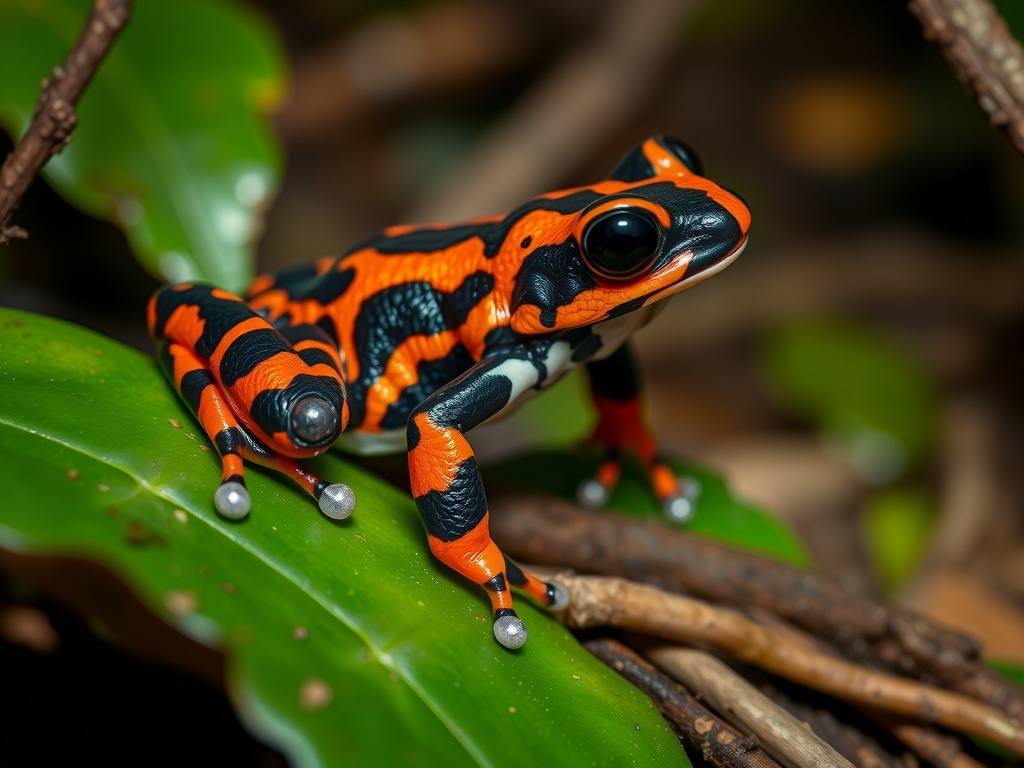
About the Dyeing Poison Dart Frog
The dyeing poison dart frog is not born poisonous, and a captive-bred one never becomes so. Its toxins are stolen: it takes alkaloids from the mites, ants and other small arthropods it eats in the wild, sequesters them in its skin, and loses the ability altogether on a captive diet of fruit flies — which is why the frogs in a vivarium are entirely harmless. Its extravagant blue-and-yellow pattern is aposematic: a billboard, not camouflage. It works because a predator that samples one frog rarely tries a second, so the whole population is defended by the lesson learned on a few individuals. Unusually for an amphibian it is a devoted parent — after the eggs hatch on the forest floor, an adult lets the tadpoles wriggle onto its back and ferries them, one at a time, up into small pools of water trapped in bromeliads high in the trees, where each is left to develop alone rather than eat its siblings. The name comes from a persistent story that indigenous peoples used the frogs to change the colour of parrot feathers. The "dart frog" association belongs to only a handful of species — and this is not one of the ones ever used to poison darts.
Fascinating facts
Brilliant Colors
The Dyeing Poison Dart Frog sports brilliant blue limbs and a yellow-and-black patterned back, acting as a warning to predators of its toxicity.
Potent Skin Toxins
Its skin contains powerful alkaloid toxins, which can cause paralysis or death in predators, though these toxins are only present when the frog eats certain wild insects.
Parental Care
Male frogs guard the eggs and transport hatched tadpoles to water-filled bromeliads or pools, ensuring their safety until they mature.
Detailed description
The Dyeing Poison Dart Frog (Dendrobates tinctorius) is a robust, medium-to-large dendrobatid frog, typically measuring 40–55 mm in snout–vent length, with some individuals exceeding 60 mm, making it among the largest poison dart frogs. Its skin exhibits a dazzling mosaic of cobalt blue limbs, a black or deep blue dorsum, and bold yellow or white stripes and spots, with patterns highly variable among populations and even individuals. The skin is smooth and moist, facilitating cutaneous respiration, and is laced with potent alkaloid toxins derived from their wild diet. D. tinctorius possesses large, forward-facing eyes providing excellent binocular vision for detecting small, fast-moving prey. The species has long, unwebbed fingers and toes with adhesive pads, enabling proficient climbing and maneuvering through leaf litter and low vegetation. Unlike many amphibians, this species is diurnal, being most active during daylight hours. It is primarily terrestrial but will ascend low vegetation, especially during reproductive activities. The frog's vivid coloration serves as aposematic warning to predators, a classic example of anti-predator adaptation. Sexual dimorphism is subtle, with females generally larger and more robust than males. D. tinctorius is known for its complex parental care, with males transporting tadpoles on their backs to suitable aquatic microhabitats.
Did you know?
Despite being deadly in the wild, Dyeing Poison Dart Frogs raised in captivity are completely harmless because they do not ingest the toxic insects that create their skin toxins.
Research & sources
Wikipedia summary
The dyeing poison dart frog, also known as the cobalt poison frog, tinc, is a species of poison dart frog. It is among the most variably colored and largest species of poison dart frogs, typically reaching snout–vent lengths of about 50 mm (2.0 in). It is distributed in the eastern portion of the Guiana Shield, including parts of French Guiana, Guyana, Suriname, and Brazil. These types of frogs usually like to stay in the ground as it is easier to catch prey. They tend to also stay in bodies of water like rivers or climb trees. Because of this they mostly inhabit near the Amazon Rainforest. To mate they have special rituals and leave their tadpoles in freshwater.
Behaviour & social structure
Dendrobates tinctorius is predominantly terrestrial, spending much of its time foraging among leaf litter and fallen logs on the rainforest floor, though it is capable of climbing low shrubs and tree trunks. It is a solitary species outside of the breeding season, with individuals maintaining small, overlapping territories. The frog's diet consists mainly of small invertebrates, including ants, termites, mites, beetles, and springtails, which it detects visually and captures with a rapid flick of its sticky tongue. Foraging is an active process, often punctuated by short bursts of movement and frequent stops to scan for prey. Social interactions are generally limited to courtship and territorial disputes, which may involve vocalizations, posturing, and occasional wrestling. D. tinctorius communicates using a series of soft trills and buzzes, primarily during mating or when establishing territory. The species is known for its site fidelity, often returning to the same foraging and breeding locations.
Reproduction & life cycle
Reproduction in D. tinctorius is characterized by elaborate courtship rituals, typically initiated by males calling from concealed locations to attract females. Once a female approaches, the pair engages in tactile interactions, including mutual stroking and circling. Oviposition occurs in moist, sheltered sites such as under leaves or within crevices, where the female deposits a clutch of 2–6 eggs. The male then fertilizes the eggs externally and remains nearby to keep them moist by transporting water in his cloaca or by urinating on them. After 10–14 days, the eggs hatch into tadpoles, which the male carries singly on his back to small pools of water, often in tree holes, bromeliad axils, or ground depressions. Tadpoles are omnivorous and may consume detritus, algae, and occasionally other tadpoles. Metamorphosis into juvenile frogs occurs after 50–70 days, depending on environmental conditions. Breeding is not strictly seasonal but is often correlated with periods of increased rainfall.
Adaptations & survival
D. tinctorius exhibits several remarkable adaptations for survival in the rainforest. Its bright aposematic coloration deters predators by signaling toxicity, a trait reinforced by the presence of batrachotoxins and pumiliotoxins in its skin. These alkaloids are sequestered from dietary sources, primarily certain ant and mite species. The frog's adhesive toe pads and strong limbs facilitate climbing and movement through complex forest substrates. Its diurnal activity pattern reduces competition with nocturnal amphibians and aligns with the activity of its primary prey. The species' reproductive strategy, involving parental transport of tadpoles to phytotelmata (water-filled plant structures), minimizes predation risk and reduces competition among larvae. Additionally, D. tinctorius has evolved resistance to its own toxins, allowing it to store high concentrations in its skin.
Cultural significance
Dyeing poison dart frogs have played a role in indigenous cultures of northern South America, where their skin secretions were occasionally used to poison blowgun darts, though this practice is more commonly associated with other dendrobatid species. The name 'dyeing' originates from reports that indigenous peoples would use the frog's skin to transfer color to the feathers of young parrots, although this is not widely documented. In modern times, D. tinctorius is a popular species in the exotic pet trade and is frequently featured in educational and conservation programs due to its striking appearance and unique biology. The frog has become a symbol of rainforest biodiversity and the importance of amphibian conservation.
Recent research
Recent research on D. tinctorius has focused on the genetic basis of its color polymorphism, revealing significant population structure and local adaptation across its range. Studies have also investigated the ecological role of alkaloid toxins, demonstrating that captive frogs lose toxicity when deprived of wild dietary sources, confirming the dietary origin of their chemical defenses. Ongoing research is examining the impact of habitat fragmentation on gene flow and population viability. Behavioral studies have shed light on the species' complex parental care and the role of acoustic communication in mate selection. D. tinctorius is also being used as a model organism for understanding the evolution of aposematism and chemical defense in amphibians.
Videos
Habitat
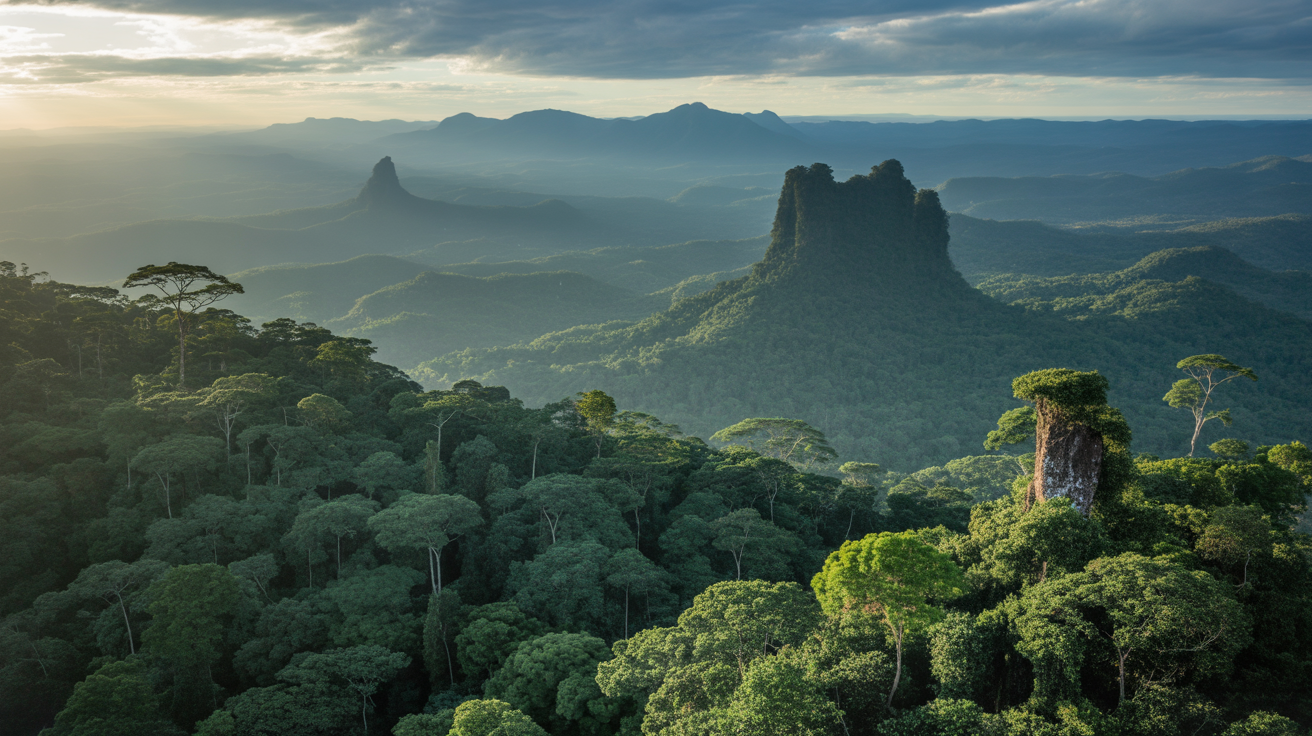
Tropical rainforest
 Tropical Regions
Rainforest
Dense, wet forests with the highest biodiversity on Earth, containing more than half of the world's plant and animal species.
 Global
Forest
Wooded areas with significant tree cover and diverse plant and animal communities.
 Global
Freshwater
Lakes, rivers, and wetlands with diverse aquatic ecosystems.
Conservation
The Dyeing Poison Dart Frog is currently classified as Least Concern on the IUCN Red List.
Threats & challenges
While currently classified as Least Concern by the IUCN, D. tinctorius faces several localized threats. Habitat loss due to deforestation, mining, and agricultural expansion in the Guiana Shield region poses a significant risk. Illegal collection for the international pet trade, despite regulations, remains a concern, particularly for morphologically distinct populations. Pollution and climate change may also impact microhabitats essential for breeding and larval development. Although populations are stable in protected areas, fragmentation and degradation of habitat could lead to declines in the future. Disease, such as chytridiomycosis caused by the fungal pathogen Batrachochytrium dendrobatidis, has not been widely reported in wild populations but remains a potential threat.
Taxonomy
Scientific name
Dendrobates tinctorius
- Kingdom
- Animalia
- Phylum
- Chordata
- Class
- Amphibia
- Order
- Anura
- Family
- Dendrobatidae
- Genus
- Dendrobates
- Species
- tinctorius
Where to see a dyeing poison dart frog
4 zoos and aquariums in 1 country are recorded as keeping this species.
 Honolulu Zoo🇺🇸 Honolulu, United States
 National Zoological Park🇺🇸 Washington, United States
- 🦁Tulsa Zoo🇺🇸 Tulsa, United States
 The Miami-Dade Zoological Park and Gardens🇺🇸 United States
Community notes
Share your observations about the Dyeing Poison Dart Frog.
No community notes yet. Be the first!
Discover more wildlife
More fascinating animals from the encyclopedia.