
About the Electric Catfish
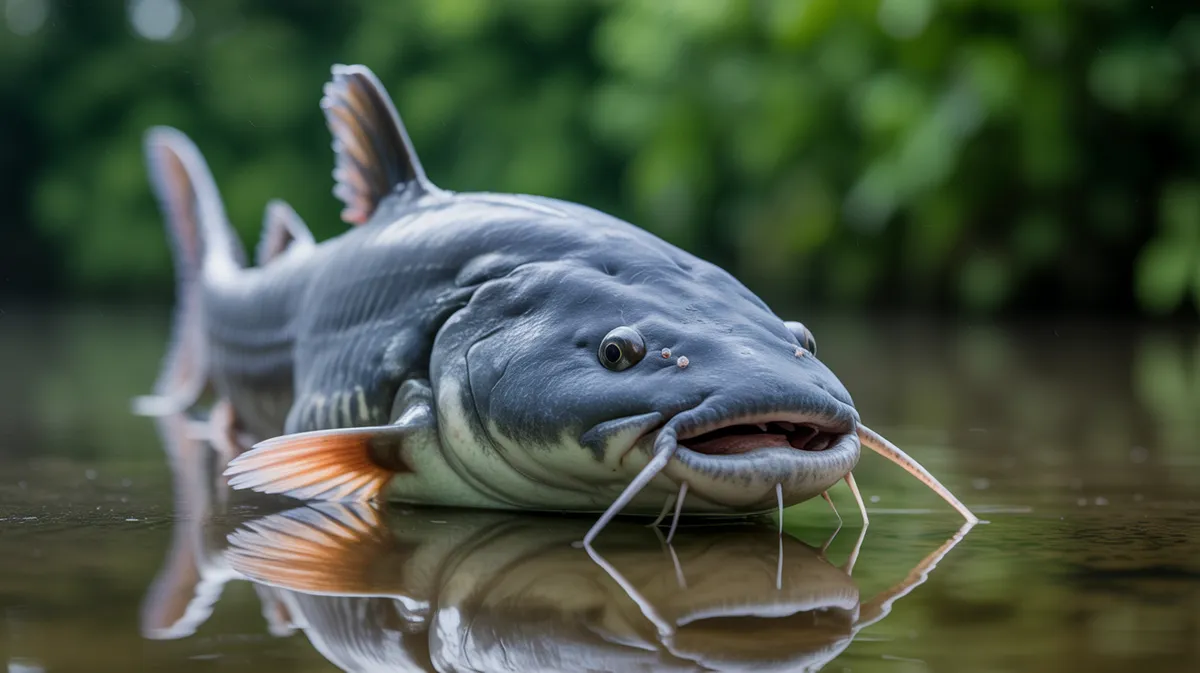
The electric catfish is a unique freshwater fish native to tropical Africa, famed for its ability to generate powerful electric shocks of up to 350 volts. These shocks are used both for hunting prey and for self-defense against predators. The fish has a cylindrical, elongated body, typically grayish-brown in color, and lacks scales. Electric catfish are nocturnal and often hide among rocks or submerged logs during the day. They are solitary and highly adapted to murky, slow-moving waters.
Fascinating facts
Powerful Discharge
The electric catfish can generate electric shocks of up to 350 volts, enough to stun fish and deter predators.
Nocturnal Hunter
Electric catfish are mostly active at night, using their electric sense to locate prey in dark, turbid waters.
Historical Significance
Depictions of electric catfish have been found in ancient Egyptian tombs, highlighting their cultural importance.
Detailed description
The electric catfish (Malapterurus electricus) is a robust, cylindrical fish reaching up to 1.2 meters in length, though most individuals are much smaller, typically ranging from 30 to 60 centimeters. Its skin is smooth and scaleless, covered in a thick, mucous layer that helps reduce friction and protect against pathogens. The coloration is generally grayish-brown to olive, sometimes with lighter underbellies, allowing for effective camouflage in turbid waters. The most distinctive anatomical feature is its electric organ, which envelops much of the body and is derived from modified muscle tissue; this organ can generate discharges of up to 350 volts. The head is broad and slightly flattened, with small eyes adapted for low-light conditions and three pairs of barbels that serve as tactile and chemical sensors. The dorsal and pectoral fins are small and rounded, aiding in maneuverability among submerged structures. Electric catfish are primarily nocturnal, emerging at night to hunt or scavenge. They are solitary and territorial, often occupying a specific shelter such as a submerged log or crevice. Reproduction occurs in secluded areas, with pairs engaging in brief courtship before spawning. The species is well-adapted to hypoxic (low-oxygen) environments, often surfacing to gulp air when necessary.
Did you know?
The electric catfish's entire body, except for its head and tail, is lined with specialized electric organs that make up nearly one-third of its mass.
Research & sources
Wikipedia summary
Electric catfish or Malapteruridae is a family of catfishes. This family includes two genera, Malapterurus and Paradoxoglanis, with 21 species. Several species of this family have the ability to generate electricity, delivering a shock of up to 350 volts from its electric organ. Electric catfish are found in tropical Africa and the Nile River. Electric catfish are usually nocturnal and carnivorous. Some species feed primarily on other fish, incapacitating their prey with electric discharges, but others are generalist bottom foragers, feeding on things like invertebrates, fish eggs, and detritus. The largest can grow to about 1.2 meters long, but most species are far smaller.
Behaviour & social structure
Electric catfish are predominantly nocturnal and display solitary behavior, rarely interacting with conspecifics outside of the breeding season. During the day, they remain hidden among rocks, submerged logs, or dense vegetation to avoid predation and conserve energy. At night, they actively patrol their territory in search of prey, using their sensitive barbels to detect movement and chemical cues. Their primary hunting strategy involves delivering a series of high-voltage electric shocks to stun or kill prey, which typically includes small fish, crustaceans, and aquatic invertebrates. After incapacitating prey, the catfish swallows it whole. Electric catfish are known to exhibit aggressive territoriality, using electric discharges as a deterrent against intruders or competitors. They are capable of modulating the intensity and frequency of their electric output depending on the situation—using lower voltages for navigation and higher voltages for predation or defense. Social interactions are minimal, and individuals maintain well-defined home ranges.
Reproduction & life cycle
Breeding in Malapterurus electricus generally coincides with the rainy season, when water levels rise and food becomes more abundant. Courtship involves tactile and chemical communication, with males and females engaging in close contact and synchronized swimming. Spawning typically occurs in secluded, sheltered locations such as burrows, crevices, or dense vegetation. Females lay adhesive eggs, which are fertilized externally by the male. The clutch size can range from several dozen to over a hundred eggs, depending on the size and condition of the female. Incubation lasts approximately 5 to 8 days, after which the larvae hatch and remain in the nest for several more days, absorbing their yolk sacs. Parental care is minimal; adults may guard the eggs briefly but generally do not provide extended care. Juveniles are independent soon after hatching and begin feeding on small invertebrates.
Adaptations & survival
The electric catfish exhibits several remarkable adaptations for survival in its environment. Its electric organ, which can occupy up to one-third of its body mass, allows it to generate powerful electric discharges for both predation and defense. This adaptation is particularly effective in the murky, low-visibility waters it inhabits, where visual hunting is limited. The catfish's barbels are highly sensitive, enabling it to detect prey and navigate in darkness or turbid conditions. Its thick, mucous-covered skin provides protection from parasites and abrasions. Physiologically, electric catfish can tolerate hypoxic conditions by utilizing a modified swim bladder and cutaneous respiration, and they are known to surface and gulp air when dissolved oxygen is low. Their cryptic coloration and nocturnal habits further reduce predation risk.
Cultural significance
Electric catfish have held a place in human culture since ancient times. In ancient Egypt, they were depicted in tomb art and referenced in medical texts for their ability to deliver electric shocks, which were sometimes used therapeutically to treat ailments such as arthritis and headaches. The species has also been featured in folklore and traditional beliefs across Africa, often regarded with awe or caution due to its unusual abilities. In modern times, electric catfish are occasionally kept in public aquaria and are subjects of scientific research into bioelectricity and neurobiology.
Recent research
Recent research on Malapterurus electricus has focused on the structure and function of its electric organ, providing insights into the evolution of bioelectrogenesis among fishes. Studies have mapped the distribution of electrocytes (electric cells) and analyzed the genetic basis for electric organ development. The species is also used as a model for studying neural control of electric discharge and electroreception. Ongoing research explores the ecological role of electric catfish in freshwater communities, particularly their impact on prey populations and competition with other predatory fishes. Advances in non-invasive monitoring techniques, such as environmental DNA (eDNA), are improving population assessments. There is also interest in the potential biomedical applications of electric organ proteins.
Videos
Habitat
Slow-moving freshwater rivers and lakes


Conservation
The Electric Catfish is currently classified as Least Concern on the IUCN Red List.
Threats & challenges
Currently, Malapterurus electricus is classified as Least Concern by the IUCN, with stable populations across much of its range. However, localized threats include habitat degradation due to dam construction, water pollution, and wetland drainage. Overfishing for the aquarium trade and local consumption can impact populations in some areas, though the species is not widely targeted. The introduction of invasive species and changes in water quality may also pose future risks. Climate change, with its effects on rainfall patterns and river flow, could alter breeding habitats and food availability. Conservation efforts focus on habitat protection and monitoring of wild populations.
Taxonomy
Scientific name
Malapterurus electricus
- Kingdom
- Animalia
- Phylum
- Chordata
- Class
- Actinopterygii
- Order
- Siluriformes
- Family
- Malapteruridae
- Genus
- Malapterurus
- Species
- electricus
Community notes
Share your observations about the Electric Catfish.
No community notes yet. Be the first!
Discover more wildlife
More fascinating animals from the encyclopedia.