
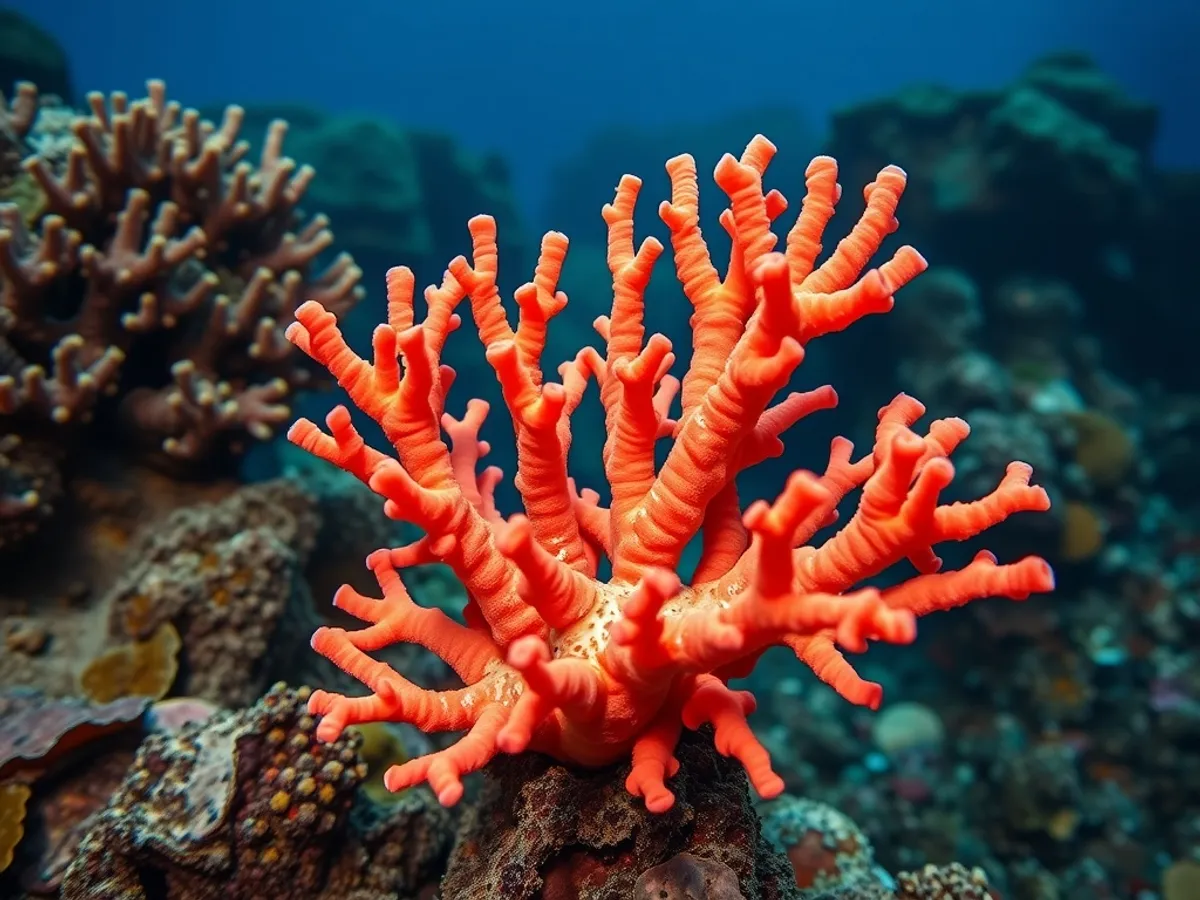
About the Fire coral
Fire corals are colonial marine organisms that resemble true corals but are actually more closely related to hydrozoans, such as jellyfish. They are named for their potent sting, which can cause a burning sensation upon contact with human skin due to specialized stinging cells called nematocysts. Fire corals have a hard, calcareous skeleton and are often found in shallow tropical reefs where they form branching, blade-like, or encrusting structures. They play a crucial role in reef ecosystems by providing habitat for various small marine creatures and contributing to reef building.
Fascinating facts
Painful Sting
Fire coral stings can cause intense burning, itching, and even blistering on human skin due to their nematocysts.
Not a True Coral
Although called 'fire coral,' Millepora species are hydrozoans rather than true corals (which are anthozoans).
Reef Builders
Fire corals contribute to reef building by secreting a hard skeleton of calcium carbonate, providing structure for reef habitats.
Detailed description
Fire corals (Millepora spp.) are colonial hydrozoans that superficially resemble true stony corals but are phylogenetically distinct, belonging to the class Hydrozoa rather than Anthozoa. Their colonies can take various forms, including branching, plate-like, or encrusting morphologies, often reaching up to 50 cm in diameter, though some species form much larger aggregations. The external skeleton is composed of aragonite (calcium carbonate), providing both rigidity and protection. The surface of fire coral colonies is covered in minute pores, each housing either feeding polyps (gastrozooids) or defensive/reproductive polyps (dactylozooids and gonozooids). Dactylozooids are equipped with potent nematocysts, which deliver a painful sting to deter predators and capture prey. Fire corals are primarily found in shallow tropical and subtropical reef environments, typically at depths of 1–30 meters, where they thrive in areas with strong water movement. They are mixotrophic, relying on both photosynthetic symbionts (zooxanthellae) and active predation on plankton. Colonies grow by a combination of asexual budding and skeletal accretion, contributing to reef structure and providing microhabitats for a variety of reef organisms. Their vivid yellow, brown, or greenish coloration is due to both their symbiotic algae and pigments in their tissues. Fire corals are ecologically important as secondary reef builders and as a food source for specialized predators such as certain butterflyfish.
Did you know?
Fire corals are capable of both sexual and asexual reproduction, enabling them to rapidly expand and colonize new areas of the reef.
Research & sources
Wikipedia summary
Fire corals (Millepora) are a genus of colonial marine organisms that exhibit physical characteristics similar to that of coral. The name coral is somewhat misleading, as fire corals are not true corals but are instead more closely related to Hydra and other hydrozoans, making them hydrocorals. They make up the only genus in the monotypic family Milleporidae.
Behaviour & social structure
Fire corals are largely sessile as adults, but their colonies exhibit dynamic growth patterns, expanding outward by budding new polyps and depositing calcium carbonate. Feeding occurs primarily at night, when the dactylozooids extend their tentacles to capture zooplankton and small invertebrates, which are then transferred to the gastrozooids for digestion. During the day, polyps often retract to avoid predation and desiccation. Fire corals are aggressive competitors for space on the reef, using their stinging cells to overgrow or deter neighboring organisms, including other corals. Social structure is based on division of labor among polyps: gastrozooids handle feeding, dactylozooids manage defense and prey capture, and gonozooids are responsible for reproduction. Colonies can rapidly recover from partial damage by regenerating lost tissue, and fragments can establish new colonies if broken off and deposited elsewhere.
Reproduction & life cycle
Fire corals reproduce both sexually and asexually. Asexual reproduction occurs via fragmentation and budding, allowing rapid colony expansion and dispersal. Sexual reproduction involves the release of medusoid reproductive structures (gonophores) from specialized polyps (gonozooids). These medusoids release gametes into the water column, where external fertilization occurs. The resulting planula larvae are planktonic for several days to weeks, depending on species and environmental conditions, before settling onto suitable substrates and metamorphosing into new polyps. There is little to no parental care, as larvae are dispersed by currents. Reproductive activity is often seasonal, peaking in warmer months and sometimes synchronized with lunar cycles.
Adaptations & survival
Key adaptations of fire corals include their potent nematocysts, which provide both defense and an effective means of prey capture. Their calcareous skeleton offers protection from physical damage and predation. The presence of symbiotic zooxanthellae enables them to photosynthesize, supplementing their diet in nutrient-poor tropical waters. Their ability to rapidly regenerate tissue and reproduce asexually through fragmentation allows them to recover from disturbances and colonize new areas efficiently. The division of labor among specialized polyps increases colony efficiency and survival. Their growth forms—branching, plate-like, or encrusting—are adapted to different hydrodynamic conditions, maximizing light capture and resistance to breakage.
Cultural significance
Fire corals are primarily known in human culture for their painful sting, which is a common hazard for divers and snorkelers. The burning sensation and skin irritation they cause have made them a subject of caution in marine safety literature. Unlike some true corals, fire corals are not widely used in jewelry or traditional crafts due to their stinging properties and brittle skeleton. In some coastal communities, knowledge of fire coral locations is important for fishing and tourism safety. They do not have significant roles in mythology or symbolism, but their ecological importance is increasingly recognized in conservation and reef management programs.
Recent research
Recent research has focused on the molecular biology of fire coral nematocysts, revealing unique toxins and proteins with potential biomedical applications. Studies on their symbiotic relationships with zooxanthellae have provided insights into their resilience and susceptibility to bleaching events. Genetic analyses have clarified species boundaries within Millepora, uncovering cryptic diversity and aiding in conservation assessments. Ongoing research is examining their role as secondary reef builders and their interactions with other reef organisms, including their competitive dynamics with scleractinian corals. Fire corals are also being studied as bioindicators of reef health due to their sensitivity to environmental changes.
Videos
Habitat
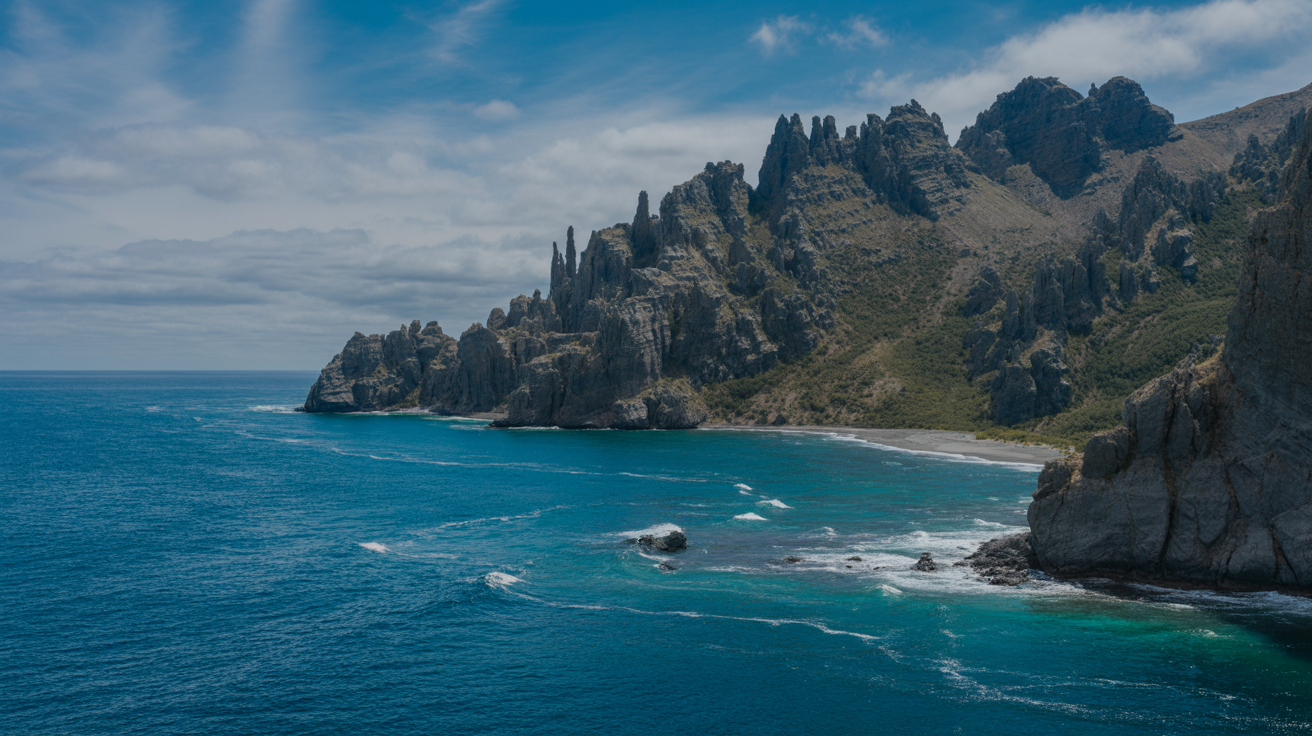
Shallow tropical and subtropical coral reefs
Conservation
The Fire coral is currently classified as Least Concern on the IUCN Red List.
Threats & challenges
Fire corals face several threats, including coral bleaching due to rising sea temperatures, ocean acidification that impairs skeletal formation, and physical damage from storms, anchors, and human activities. Overfishing and pollution can disrupt reef ecosystems, indirectly affecting fire coral populations. While they are generally resilient and can recover from moderate disturbances, severe or repeated stress events can lead to population declines. Some species are locally threatened by collection for the aquarium trade, though this is less common than for true corals. Despite these challenges, most fire coral species are currently listed as Least Concern, but their long-term outlook is closely tied to the health of coral reef ecosystems globally.
Taxonomy
Scientific name
Millepora spp.
- Kingdom
- Animalia
- Phylum
- Cnidaria
- Class
- Hydrozoa
- Order
- Anthoathecata
- Family
- Milleporidae
- Genus
- Millepora
- Species
- spp.
Community notes
Share your observations about the Fire coral.
No community notes yet. Be the first!
Discover more wildlife
More fascinating animals from the encyclopedia.