
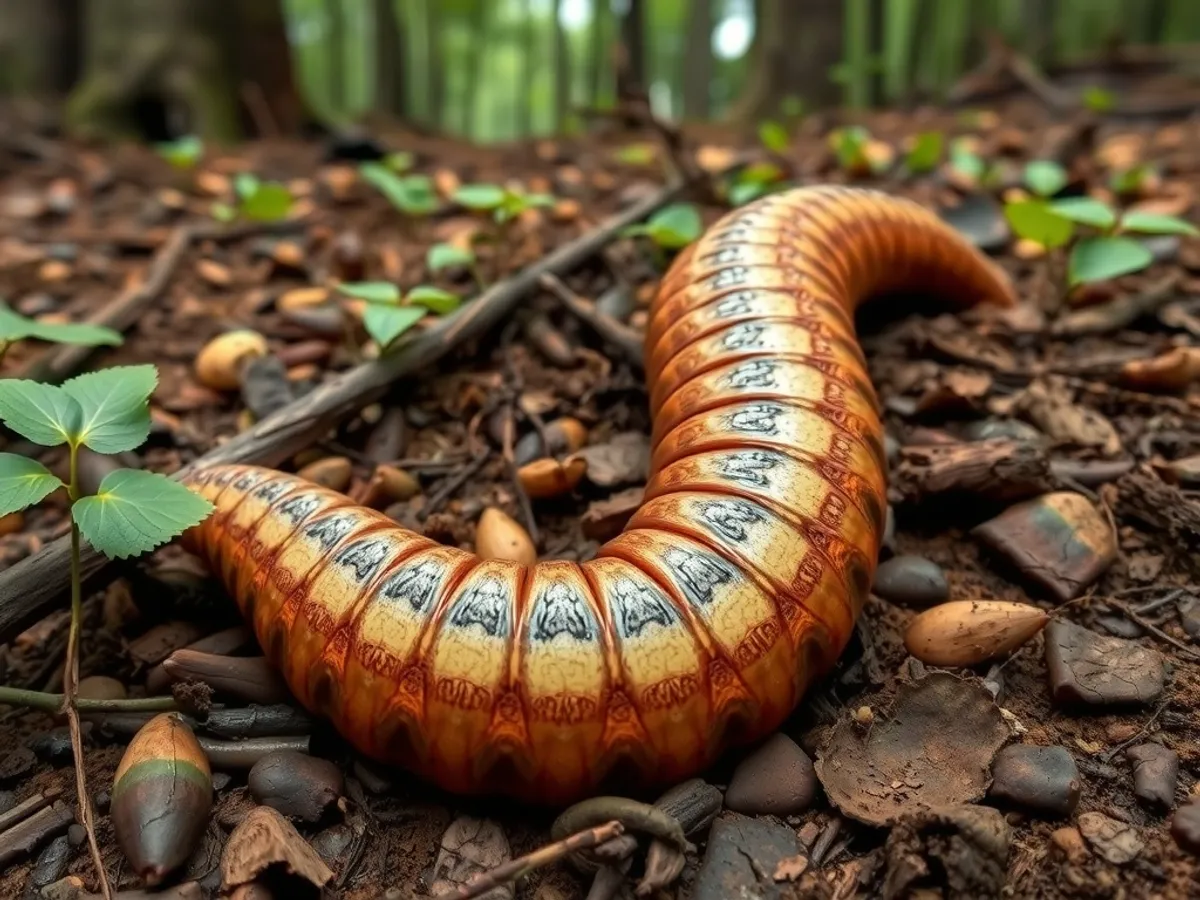
About the Giant Earthworm
The Giant Earthworm, specifically the Giant Gippsland Earthworm, is one of the world's largest earthworm species, reaching lengths of up to 3 meters (almost 10 feet). This remarkable invertebrate is native to a small region in southeastern Australia, where it lives deep underground in moist, clay-rich soils along riverbanks and in wet forests. Despite their intimidating size, these earthworms are shy, rarely seen above ground, and feed primarily on organic matter in the soil. Their enormous tunnels help aerate the earth and contribute to healthy ecosystems. Unfortunately, habitat destruction has made them increasingly rare and difficult to study in the wild.
Fascinating facts
Soil Engineers
Giant Earthworms play a crucial role in soil health by aerating the earth and recycling nutrients, benefiting surrounding plant life.
Record-Breaking Size
Some individuals have been measured at over 3 meters (10 feet) in length, making them among the longest earthworms in the world.
Underground Sounds
Their movement creates a unique gurgling or sucking noise underground, which can sometimes be heard above the soil.
Detailed description
The Giant Gippsland earthworm (Megascolides australis) is a remarkable annelid endemic to a restricted area of South Gippsland, Victoria, Australia. Adults typically measure between 80 cm and 1 meter in length, but some individuals have been recorded at lengths exceeding 2 meters, with exceptional specimens reaching up to 3 meters. Their bodies are cylindrical, segmented (up to 400 segments), and have a purplish-blue sheen on the dorsal surface with a pinkish hue ventrally. The skin is moist and slimy, facilitating gas exchange as these worms lack specialized respiratory organs. They possess a small, conical head with a simple mouth adapted for ingesting soil and organic matter. The species is fossorial, spending its entire life in deep, permanent burrow systems—often 1-2 meters below the surface—within moist, clay-rich soils along riverbanks and in wet eucalypt forests. These burrows can extend for several meters and are lined with mucus to prevent collapse. The worms are highly sensitive to vibration and disturbance, making them elusive and rarely seen above ground. Their movement through the soil is slow and deliberate, and they are known to produce audible gurgling or sucking sounds as water moves through their tunnels. As detritivores, they play a crucial role in soil aeration and nutrient cycling, contributing to the health of their native ecosystems.
Did you know?
The Giant Earthworm can live its entire life without ever coming to the surface, spending all its days in vast underground burrows.
Research & sources
Wikipedia summary
The giant Gippsland earthworm is one of Australia's 1,000 native earthworm species.
Behaviour & social structure
Giant Gippsland earthworms are solitary and largely sedentary, rarely leaving their extensive burrow systems except during periods of heavy rainfall or flooding. They feed by ingesting soil and extracting decomposed organic matter, such as leaf litter and decaying roots, which they digest with the aid of symbiotic gut bacteria. Feeding typically occurs within the safety of their burrows, and they may extend their anterior segments to the surface to collect organic debris. The worms are highly sensitive to ground vibrations, which they detect with specialized sensory cells, allowing them to retreat deeper into their burrows at the slightest disturbance. They are most active during periods of high soil moisture, particularly in the spring and autumn months. Social interactions are minimal, limited primarily to brief encounters during the breeding season. Their daily routine is governed by soil moisture and temperature, with activity decreasing during dry or cold periods.
Reproduction & life cycle
Megascolides australis is hermaphroditic, possessing both male and female reproductive organs, but cross-fertilization between two individuals is required for successful reproduction. Mating typically occurs in the spring and early summer when soil conditions are moist. During copulation, two worms align ventrally and exchange sperm, after which each produces a large, lemon-shaped cocoon (up to 4 cm long) that is deposited deep within the burrow. The development within the cocoon is slow; embryos may take up to 12 months to fully develop and hatch, a notably long incubation period for earthworms. Juvenile worms emerge as miniature versions of adults and remain in the natal burrow for several months before establishing their own tunnels. There is no parental care beyond the initial cocoon deposition.
Adaptations & survival
The Giant Gippsland earthworm exhibits several unique adaptations to its subterranean lifestyle. Its elongated, muscular body allows it to navigate and excavate deep, narrow tunnels in heavy clay soils. The skin is highly permeable, facilitating cutaneous respiration in the oxygen-poor environment underground. Mucus secretion not only aids movement and prevents desiccation but also stabilizes burrow walls. The species' sensitivity to vibration is an evolutionary response to predation and environmental disturbance, enabling rapid retreat. Its slow metabolism and long lifespan (estimated at 5-10 years, possibly longer) are further adaptations to the stable but resource-limited subterranean habitat. The extended incubation period of its cocoons may be an adaptation to the cool, stable temperatures of deep soil.
Cultural significance
While the Giant Gippsland earthworm is not widely featured in Aboriginal mythology or traditional use, it has become a symbol of the unique and often overlooked biodiversity of southeastern Australia. The species has attracted scientific and public interest due to its extraordinary size and rarity, featuring in local educational programs and ecotourism initiatives, such as the now-closed Giant Earthworm Museum in Bass, Victoria. It serves as an ambassador for soil conservation and the importance of preserving native invertebrate fauna.
Recent research
Recent research has focused on mapping the distribution of Megascolides australis using environmental DNA (eDNA) techniques, which allow for non-invasive detection of populations. Studies on its reproductive biology have revealed the unusually long incubation period and low reproductive output, informing conservation strategies. Ongoing research aims to better understand its ecological role in soil processes and the impact of land management practices on its survival. Genetic studies are underway to assess population structure and genetic diversity, crucial for effective conservation planning. The species remains a subject of interest in studies of annelid gigantism and subterranean adaptation.
Videos
Habitat
Moist, clay-rich soils in forested riverbanks
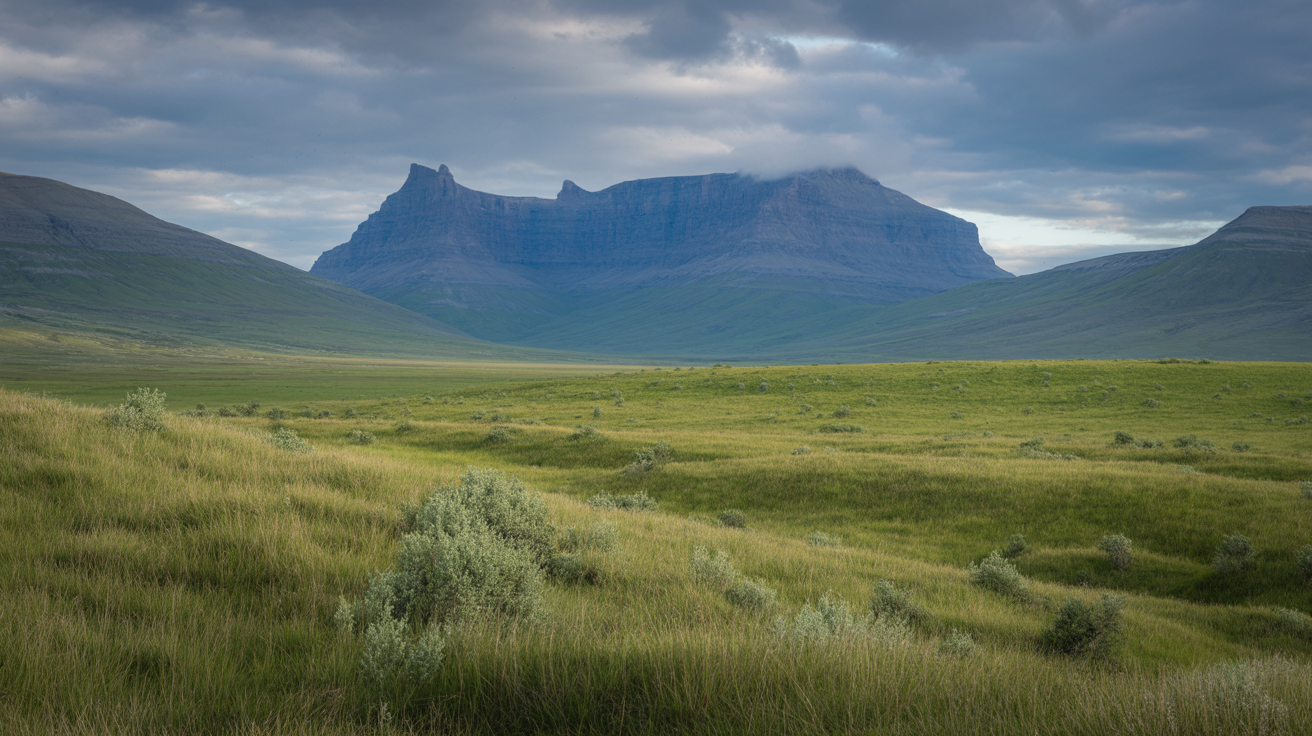 Various Continental Regions
Grassland
Open areas dominated by grasses rather than trees, supporting numerous herbivores and their predators.
 Global
Forest
Wooded areas with significant tree cover and diverse plant and animal communities.
 Global
Freshwater
Lakes, rivers, and wetlands with diverse aquatic ecosystems.
Conservation
The Giant Earthworm is currently classified as Vulnerable on the IUCN Red List.
Threats & challenges
The primary threats to Megascolides australis are habitat loss and degradation due to agricultural expansion, land clearing, and changes in land use, particularly the conversion of native forests to pasture. Soil compaction from livestock, altered drainage patterns, and chemical runoff further degrade its habitat. The species' extremely limited distribution (less than 1000 km²) and specialized habitat requirements make it highly vulnerable to environmental changes. Population fragmentation and low reproductive rates exacerbate its endangered status. Climate change, with its potential to alter rainfall patterns and soil moisture, poses an emerging threat. Conservation efforts are hampered by the worm's cryptic lifestyle and the difficulty of monitoring populations.
Taxonomy
Scientific name
Megascolides australis
- Kingdom
- Animalia
- Phylum
- Annelida
- Class
- Clitellata
- Order
- Megascolecidae
- Family
- Megascolecidae
- Genus
- Megascolides
- Species
- australis
Community notes
Share your observations about the Giant Earthworm.
No community notes yet. Be the first!
Discover more wildlife
More fascinating animals from the encyclopedia.