
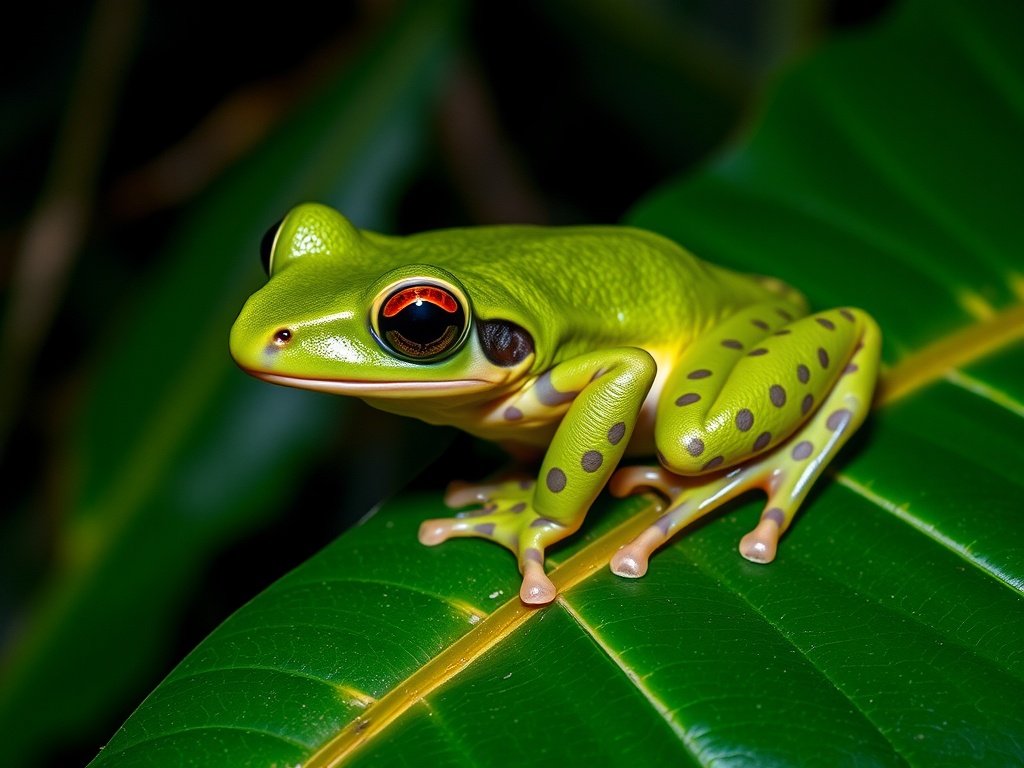
About the Giant Leaf Frog
The Giant Leaf Frog, also known as the monkey frog or waxy monkey tree frog, is one of the largest tree frogs in South America. It is recognized for its vibrant green coloration, creamy white underside, and strikingly large toes adapted for climbing. Nocturnal and arboreal, this amphibian spends much of its life in the forest canopy, descending only during the breeding season. Its skin secretes a waxy substance that helps prevent dehydration, an adaptation to its high-canopy lifestyle. The Giant Leaf Frog is also notable for its loud, distinctive calls that echo through the rainforest at night.
Fascinating facts
Waxy Skin Secretion
The Giant Leaf Frog secretes a waxy substance that it spreads over its skin to reduce water loss, an adaptation to living high in the rainforest canopy.
Loud Nocturnal Calls
Males produce deep, resonant calls at night to attract females, which can be heard from far distances in the dense Amazonian rainforest.
Medicinal Peptides
Indigenous peoples use the frog’s skin secretions in rituals and for their purported medicinal properties, and scientists are researching these peptides for pharmaceutical use.
Detailed description
The Giant Leaf Frog (Phyllomedusa bicolor) is a robust, medium-to-large arboreal amphibian, with adults typically measuring 91–119 mm (3.6–4.7 in) in snout-vent length and weighing up to 100 grams. Its dorsal skin is a vivid green, providing camouflage among foliage, while the ventral surface is creamy white to pale yellow. The species is distinguished by its prominent, opposable thumb-like toes, which, along with adhesive pads, facilitate a slow, deliberate climbing style reminiscent of primates—hence the name 'monkey frog.' The eyes are large and forward-facing, with horizontal pupils, optimizing nocturnal vision. The skin is thick and glandular, secreting a waxy lipid that the frog spreads over its body using its hind legs to reduce water loss in the exposed canopy microclimate. Phyllomedusa bicolor is primarily nocturnal, resting motionless on leaves during the day and becoming active at dusk. Its vocalizations are loud, guttural calls that serve both territorial and mating functions. The species is solitary outside of the breeding season, with individuals occupying overlapping home ranges in the forest canopy. During reproduction, it exhibits unique nesting behavior, folding leaves over water bodies to create protective nurseries for its eggs.
Did you know?
The skin secretions of the Giant Leaf Frog contain powerful bioactive peptides, some of which are being studied for medical applications.
Research & sources
Behaviour & social structure
Giant Leaf Frogs are predominantly solitary and territorial, especially outside the breeding season. They are nocturnal sit-and-wait predators, remaining motionless for long periods before ambushing prey such as insects, spiders, and occasionally small vertebrates. Their deliberate, slow movements help avoid detection by both predators and prey. Social interactions are limited, with males establishing calling sites and defending small territories through vocalizations and, occasionally, physical displays. During the day, they rest on the undersides of leaves, often in a crouched posture to minimize water loss and predation risk. At night, they become active, foraging and calling. Communication is primarily acoustic, but visual and chemical cues may also play roles in mate recognition and territoriality.
Reproduction & life cycle
Breeding occurs during the rainy season (typically November to April), when males congregate near temporary pools or slow-moving streams and emit loud, repetitive calls to attract females. Amplexus is axillary, with the male grasping the female behind her forelimbs. Females lay clutches of 600–2,000 eggs, which are deposited in gelatinous masses on leaves overhanging water. The pair then folds and glues the leaf edges together using secretions, creating a protective envelope. Embryonic development lasts 8–16 days, after which the tadpoles drop into the water below upon hatching. There is no parental care post-oviposition. Tadpoles are aquatic and undergo metamorphosis over 2–3 months, depending on environmental conditions.
Adaptations & survival
Phyllomedusa bicolor exhibits several notable adaptations to its arboreal lifestyle and the challenges of the rainforest canopy. Its opposable digits and enlarged toe pads provide exceptional grip for climbing. The unique waxy skin secretion, spread behaviorally over the body, is an evolutionary response to minimize evaporative water loss in a habitat where direct sunlight and wind can rapidly dehydrate amphibians. The frog's cryptic coloration aids in camouflage, while its nocturnal habits reduce predation risk and water loss. Its reproductive strategy—constructing leaf nests over water—protects eggs from aquatic predators and desiccation, increasing offspring survival. Additionally, the skin glands produce a complex array of bioactive peptides, some of which deter predators and have antimicrobial properties.
Cultural significance
The Giant Leaf Frog holds significant cultural importance among several Indigenous Amazonian groups, notably the Matsés, Mayoruna, and Katukina peoples. Its skin secretions, known as 'kambô' or 'sapo,' are used in traditional purification rituals and as a purported remedy for pain, infection, and fatigue. The ritual involves applying the secretion to small burns on the skin, inducing intense physiological effects. In Western contexts, the frog has attracted scientific and pharmaceutical interest due to the presence of potent bioactive peptides in its skin, some of which are being investigated for their analgesic, antimicrobial, and cardiovascular properties. The species also features in local folklore and is sometimes associated with rain and fertility.
Recent research
Recent research has focused on the pharmacological properties of the frog's skin secretions, which contain peptides such as dermorphin and deltorphin—potent opioid receptor agonists with potential medical applications. Studies have also examined the antimicrobial and immunomodulatory effects of other peptides, highlighting their potential in drug development. Ecological research has investigated the species' reproductive strategies and microhabitat preferences, revealing its sensitivity to canopy structure and water availability. Ongoing studies are assessing the impacts of habitat fragmentation and climate change on population dynamics, as well as the conservation implications of traditional and commercial harvesting of the species.
Sources
Systematics and Natural History of Phyllomedusa bicolor (Anura: Hylidae)
Duellman, W.E. & Trueb, L. (1994)
scientificPhyllomedusa bicolor: The IUCN Red List of Threatened Species 2020
IUCN SSC Amphibian Specialist Group
conservationVideos
Habitat
Tropical rainforests, particularly in the Amazon basin
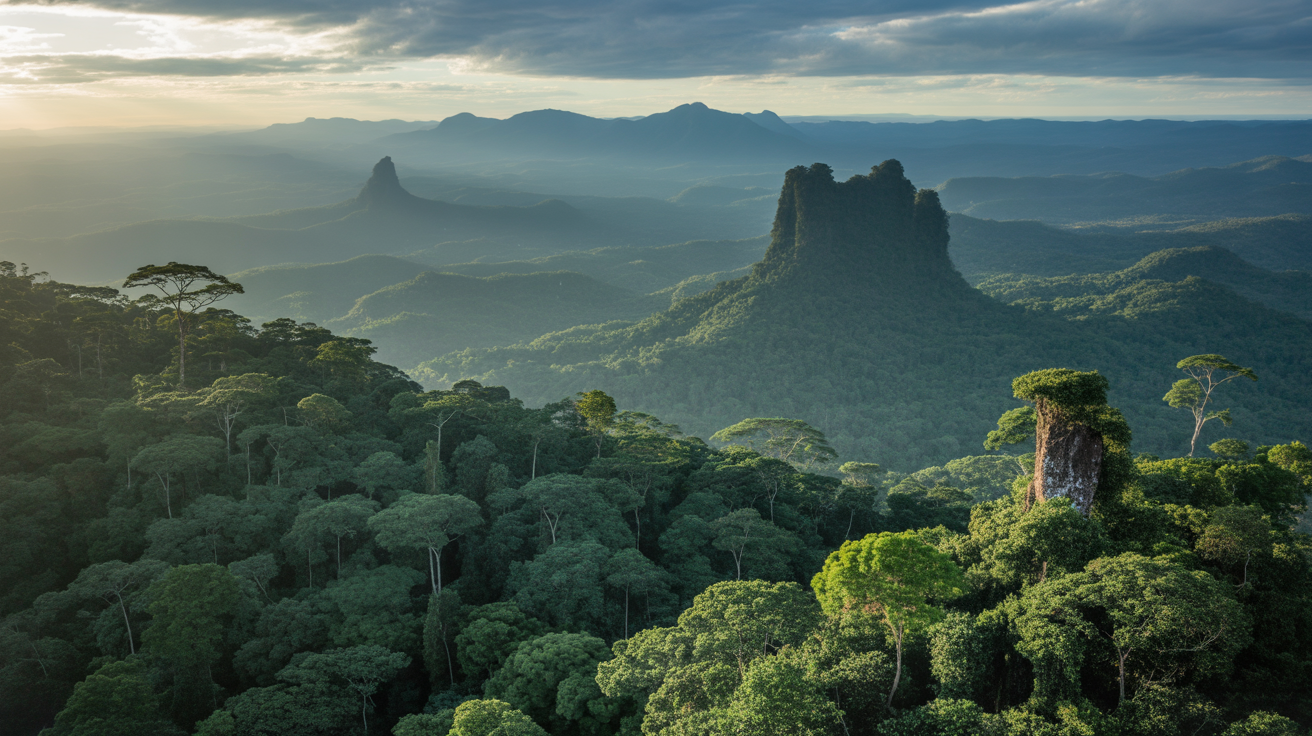

Conservation
The Giant Leaf Frog is currently classified as Least Concern on the IUCN Red List.
Threats & challenges
While currently classified as Least Concern by the IUCN, Phyllomedusa bicolor faces localized threats from habitat destruction due to deforestation, agricultural expansion, and infrastructure development in the Amazon basin. Collection for the international pet trade and for traditional medicinal uses also poses risks to some populations. Climate change, with its potential to alter rainfall patterns and canopy microclimates, may impact breeding success and larval development. Although the species remains widespread and relatively abundant, ongoing habitat loss and fragmentation could lead to future declines if not managed.
Taxonomy
Scientific name
Phyllomedusa bicolor
- Kingdom
- Animalia
- Phylum
- Chordata
- Class
- Amphibia
- Order
- Anura
- Family
- Phyllomedusidae
- Genus
- Phyllomedusa
- Species
- bicolor
Community notes
Share your observations about the Giant Leaf Frog.
No community notes yet. Be the first!
Discover more wildlife
More fascinating animals from the encyclopedia.