
About the Giant Tiger Land Leech
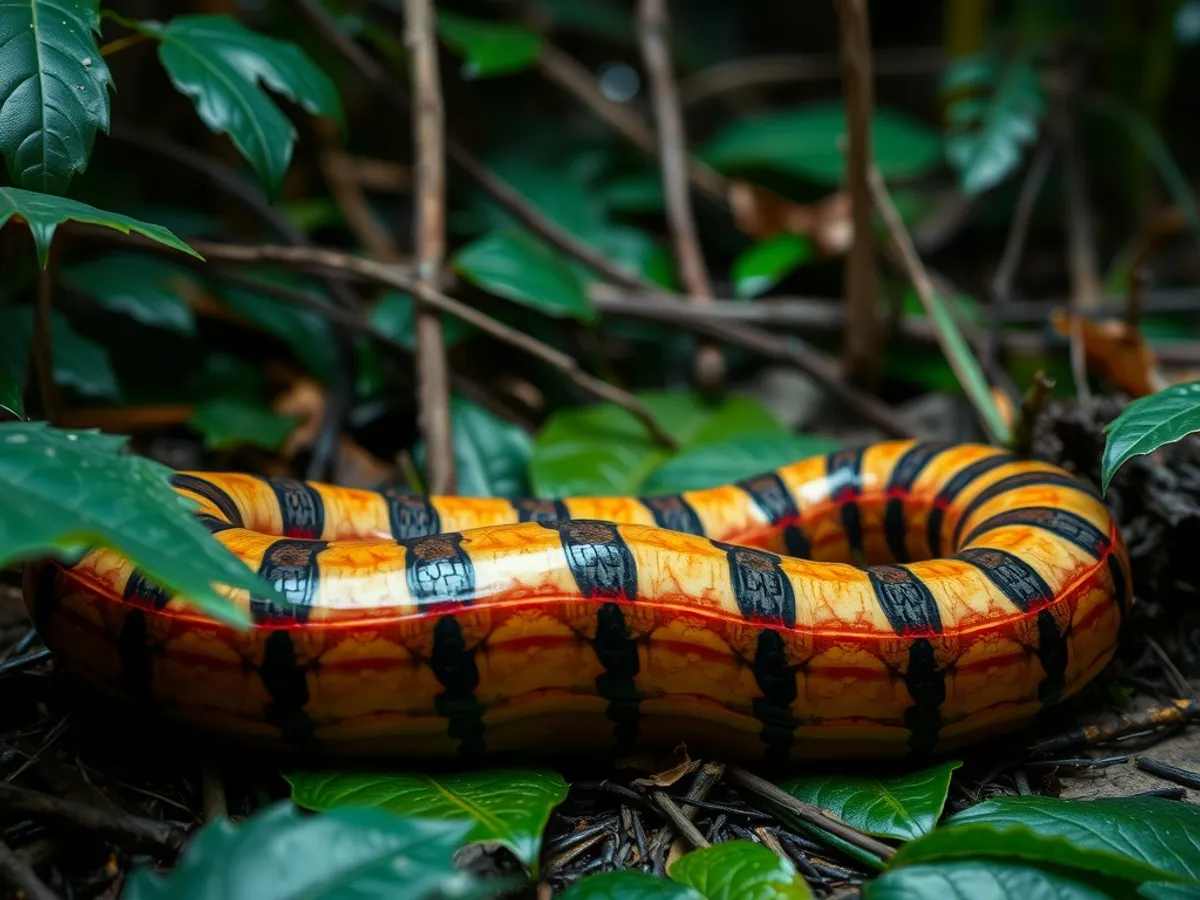
The Giant Tiger Land Leech is a large terrestrial leech species notable for its striking striped coloration, resembling a tiger’s pattern. Native to the forests of Southeast Asia, especially in Malaysia and surrounding regions, it is an active predator, moving across the forest floor in search of hosts. Unlike aquatic leeches, this species is fully terrestrial and is often encountered clinging to leaves or underbrush, waiting for passing animals or humans. Its bite can be surprisingly painless, but it feeds voraciously on the blood of mammals, birds, and sometimes reptiles.
Fascinating facts
Voracious Feeder
The Giant Tiger Land Leech can consume several times its own body weight in blood during a single feeding session.
Terrestrial Specialist
Unlike many leech species, it spends its entire life on land, thriving in moist, shaded forest environments.
Attracted to Motion
This leech uses specialized sensory organs to detect vibrations and body heat, allowing it to ambush passing animals.
Detailed description
The Giant Tiger Land Leech (Haemadipsa picta) is a large, vividly colored terrestrial leech, reaching lengths of 6–10 cm when fully extended, though it can contract to about half this size. Its dorsal surface is marked by alternating longitudinal orange, yellow, and black stripes, which serve as aposematic coloration, warning potential predators of its unpalatability. The body is dorsoventrally flattened, facilitating movement through dense leaf litter and undergrowth. Haemadipsa picta possesses two muscular suckers: an anterior sucker, which houses the mouth and is used for feeding, and a posterior sucker for anchoring to surfaces or hosts. The mouth contains three muscular jaws, each lined with numerous sharp teeth (up to 100 per jaw), enabling efficient penetration of host skin. Unlike aquatic leeches, H. picta is fully terrestrial, respiring through its moist skin and requiring humid environments to prevent desiccation. It is highly mobile, capable of rapid looping or 'inchworm' locomotion, and can detect hosts by sensing vibrations, heat, and chemical cues. This species is primarily solitary, with individuals dispersing widely to maximize feeding opportunities. Its feeding bouts are infrequent but can last up to 30 minutes, during which it ingests several times its body weight in blood. After feeding, the leech may not require another meal for several months, relying on stored nutrients. Reproduction is hermaphroditic, with individuals exchanging sperm during copulation and later depositing cocoons containing fertilized eggs in moist soil or leaf litter.
Did you know?
Despite their dramatic appearance and size, Giant Tiger Land Leeches can go several months between blood meals by storing nutrients efficiently.
Research & sources
Behaviour & social structure
Haemadipsa picta is an ambush predator, typically positioning itself on low vegetation or leaf litter along animal trails. It exhibits heightened activity during and after rainfall, when humidity is high and hosts are more active. The leech uses chemosensory and mechanosensory organs to detect carbon dioxide, body heat, and vibrations from potential hosts. Upon contact, it rapidly attaches using its anterior sucker and secretes anticoagulant and anesthetic compounds to facilitate painless feeding. Feeding is generally solitary, and there is little evidence of social behavior or aggregation outside of high-density feeding sites. The leech is primarily diurnal, with peak activity in the early morning and late afternoon. Between feedings, it remains hidden in moist microhabitats to avoid desiccation. It exhibits negative phototaxis, avoiding direct sunlight.
Reproduction & life cycle
Giant Tiger Land Leeches are simultaneous hermaphrodites, possessing both male and female reproductive organs. Mating occurs via reciprocal copulation, where two individuals exchange sperm by aligning ventrally and inserting their copulatory organs into each other's genital pores. Fertilization is internal, and after mating, each leech produces a series of cocoons, typically 2–5 per reproductive event. Each cocoon contains 1–3 eggs and is deposited in moist soil or under decaying leaves, where high humidity is maintained. Incubation lasts approximately 3–5 weeks, depending on environmental conditions. Juvenile leeches emerge as miniature versions of adults and are independent from birth, receiving no parental care. Breeding can occur year-round in equatorial regions, but peaks are often observed during the wet season when conditions are optimal for egg and juvenile survival.
Adaptations & survival
Haemadipsa picta has evolved several adaptations for terrestrial parasitism. Its aposematic coloration deters visual predators, while its flattened body aids in navigating dense undergrowth. The leech's jaws are highly specialized, with numerous sharp teeth enabling efficient skin penetration. Its saliva contains potent anticoagulants (notably hirudin-like compounds) and anesthetics, allowing it to feed undetected by the host. The leech's cuticle is permeable, facilitating gas exchange but also necessitating a humid environment to prevent water loss. Sensory papillae on the anterior end detect thermal and chemical cues, enhancing host detection. Its ability to store large volumes of blood enables long intervals between feedings, an adaptation to the unpredictable availability of hosts.
Cultural significance
In local cultures, land leeches are often regarded with a mixture of fascination and aversion due to their blood-feeding habits. While not generally featured in folklore or mythology to the extent of snakes or other forest animals, leeches like H. picta are sometimes used in traditional medicine, particularly in rural Southeast Asia, for their purported bloodletting properties. However, this practice is less common than the use of aquatic leeches. The presence of land leeches is often considered an indicator of healthy, undisturbed rainforest ecosystems.
Recent research
Recent research on Haemadipsa picta has focused on the biochemical properties of its saliva, identifying novel anticoagulant and anesthetic compounds with potential medical applications. Molecular studies have clarified its phylogenetic relationships within the family Haemadipsidae, revealing significant genetic diversity among populations across Southeast Asia. Ongoing ecological studies are examining the impact of habitat fragmentation on leech abundance and host-parasite dynamics. There is also growing interest in the role of terrestrial leeches as vectors for blood-borne pathogens, though H. picta is not currently known to transmit any major diseases to humans.
Sources
Land leeches of the genus Haemadipsa (Hirudinea: Haemadipsidae) from Southeast Asia, with descriptions of new species
Lai, Y.-T., Nakano, T., & Chen, J.-H. (2011)
scientificTaxonomy and Natural History of Terrestrial Blood-feeding Leeches (Haemadipsidae) in Southeast Asia
Lai, Y.T., Nakano, T., & Chen, J.H. (2011)
scientificVideos
Habitat
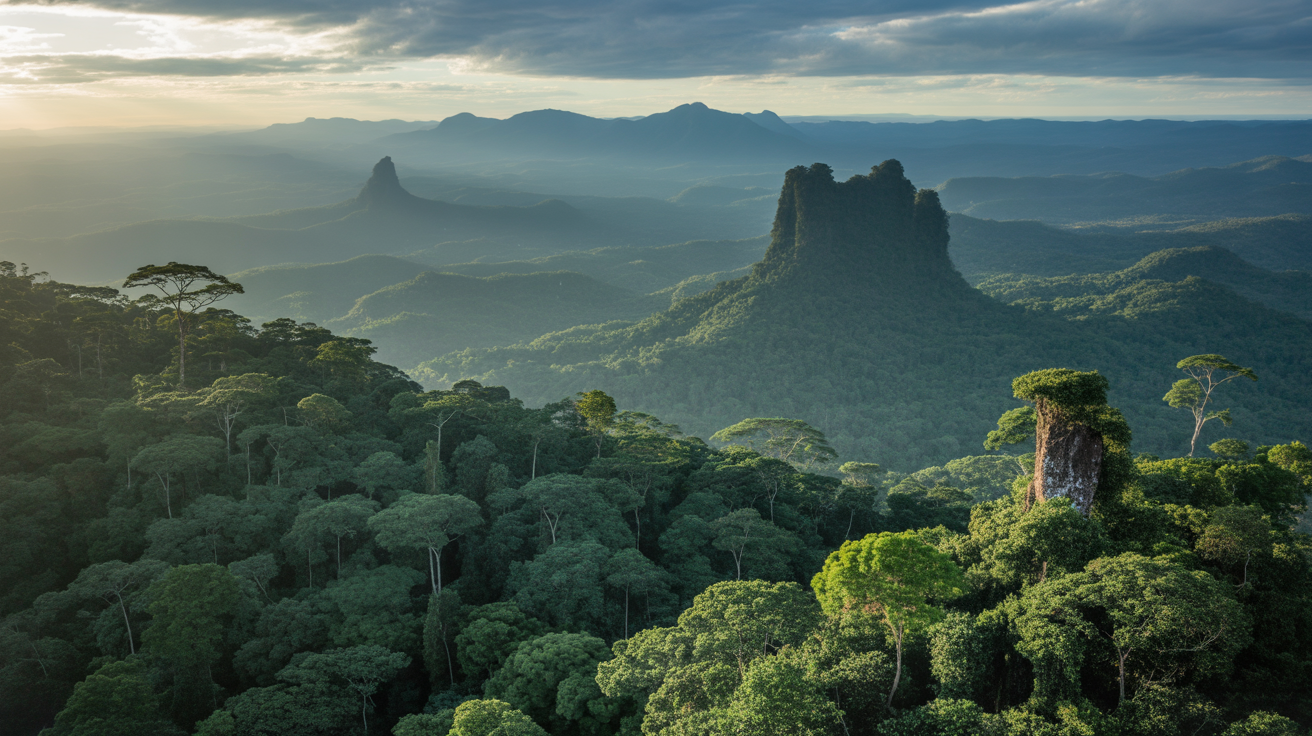
Tropical rainforest

Conservation
The Giant Tiger Land Leech is currently classified as Least Concern on the IUCN Red List.
Threats & challenges
Currently, Haemadipsa picta is classified as Least Concern, with stable populations across its range. However, habitat loss due to deforestation and land conversion in Southeast Asia poses a potential long-term threat. The species is sensitive to microclimatic changes, particularly humidity, making it vulnerable to habitat fragmentation and climate change. Human encounters are increasing due to expanding ecotourism, but direct persecution is rare. There is some evidence that pesticide use and pollution in forested areas may negatively impact local populations. Despite these challenges, the species remains widespread and adaptable within suitable habitats.
Taxonomy
Scientific name
Haemadipsa picta
- Kingdom
- Animalia
- Phylum
- Annelida
- Class
- Clitellata
- Order
- Arhynchobdellida
- Family
- Haemadipsidae
- Genus
- Haemadipsa
- Species
- picta
Community notes
Share your observations about the Giant Tiger Land Leech.
No community notes yet. Be the first!
Discover more wildlife
More fascinating animals from the encyclopedia.