
About the Goliath Frog
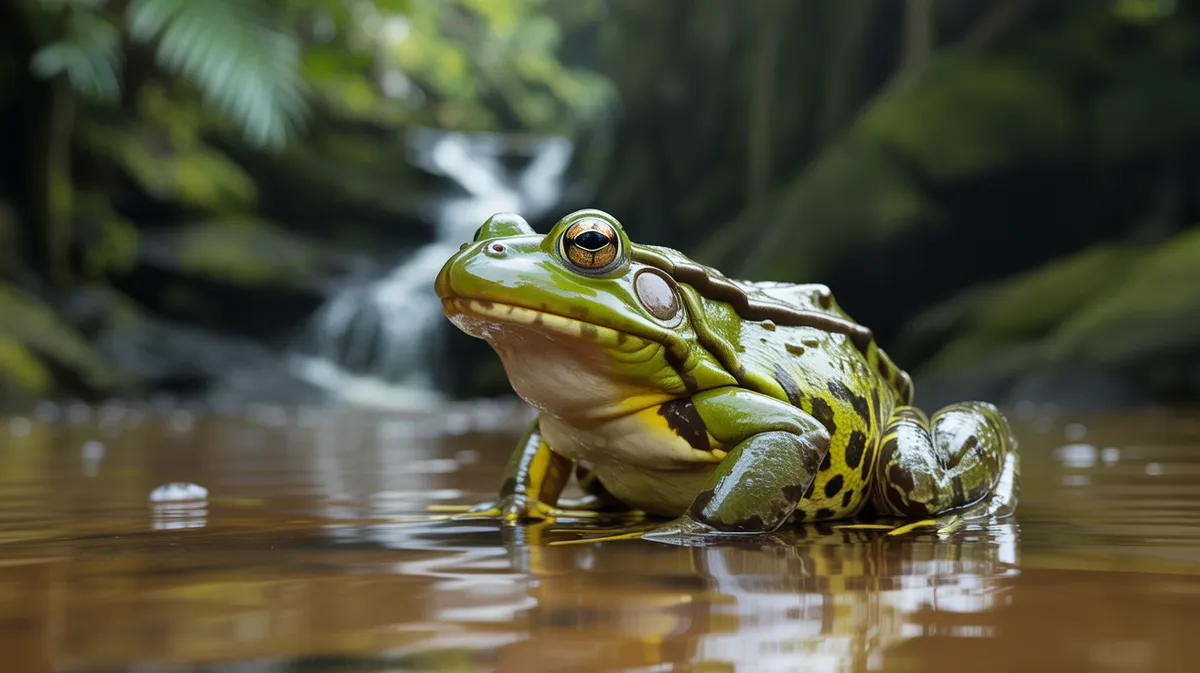
The Goliath Frog is the world's largest living frog species, reaching impressive lengths of over 32 centimeters (12.6 inches) and weighing up to 3.3 kilograms (7.3 pounds). Native to fast-flowing rivers and waterfalls in the rainforests of Cameroon and Equatorial Guinea, this amphibian is renowned for its enormous size and power. Goliath Frogs are primarily nocturnal and are highly aquatic, spending most of their lives in or near water. Their strong hind legs allow them to leap great distances and move large objects, a skill used during nest building for their eggs.
Fascinating facts
Record Size
The Goliath Frog can grow up to 32 cm (12.6 in) long, making it the largest frog species in the world.
Nest Builders
These frogs use their powerful legs to move rocks and create safe nests for their eggs along riverbanks.
Nocturnal Hunter
Goliath Frogs are mainly nocturnal, feeding on insects, crustaceans, fish, and other smaller amphibians at night.
Detailed description
The Goliath frog (Conraua goliath) is the largest extant species of frog, with adults typically measuring 32–35 cm (12.6–13.8 in) in snout–vent length and weighing between 2.5 and 3.3 kg (5.5–7.3 lb), though exceptional individuals may exceed these figures. Its robust, muscular hind limbs are highly specialized for powerful leaps and for manipulating heavy objects, such as stones and plant material, during nest construction. The skin is granular and olive-green to yellowish-brown dorsally, providing camouflage among river rocks and vegetation, while the ventral surface is lighter. The head is broad with prominent, laterally positioned eyes, and the tympanum (external eardrum) is visible. Goliath frogs possess no vocal sacs, and males do not produce mating calls, which is unusual among large anurans. They are primarily nocturnal and highly aquatic, inhabiting only the swift, oxygen-rich waters of clear, rocky rainforest streams and waterfalls. Their diet is diverse, consisting of insects, crustaceans, fish, other amphibians, and occasionally small mammals or reptiles. Goliath frogs are solitary outside the breeding season and exhibit territoriality, especially during reproduction. Their remarkable strength and size are unique adaptations to their turbulent aquatic environment, enabling them to move obstacles and create nesting pools for their offspring.
Did you know?
Despite being the largest frogs on Earth, Goliath Frog tadpoles are only about 1 cm long when they hatch.
Research & sources
Wikipedia summary
The goliath frog, otherwise known commonly as the giant slippery frog and the goliath bullfrog, is a species of frog in the family Conrauidae. The goliath frog is the largest living frog. Specimens can reach up to about 35 centimetres (14 in) in snout–vent length and 3.3 kilograms (7.3 lb) in weight. This species has a relatively small habitat range in Cameroon and Equatorial Guinea. Its numbers are dwindling due to habitat destruction, collection for food, and the pet trade.
Behaviour & social structure
Goliath frogs are predominantly nocturnal, emerging at dusk to hunt and patrol their territories along riverbanks. They rely on ambush predation, remaining motionless for extended periods before lunging at prey with rapid, powerful jumps. Their diet includes a wide array of invertebrates (such as beetles, dragonfly larvae, and crustaceans), as well as small vertebrates like fish, other frogs, and occasionally birds or rodents. Adults are generally solitary, with minimal social interaction outside of the breeding season. During the day, they seek shelter under rocks or submerged logs to avoid predators and desiccation. Goliath frogs are known for their remarkable ability to move and arrange stones and vegetation to construct breeding pools, a behavior not observed in most other frog species. This nest-building activity is performed by both males and females, and is believed to reduce predation on eggs and tadpoles by isolating them from the main river flow.
Reproduction & life cycle
Breeding occurs during the rainy season, typically from July to September, when water levels are highest. Unlike many frogs, Goliath frogs do not vocalize to attract mates; instead, males establish and defend territories near optimal nesting sites. Both sexes participate in the construction of shallow pools along river margins, moving stones and debris to create protected areas for egg deposition. Females lay large clutches, often exceeding 3,000 eggs, which are attached to submerged vegetation or stones within these pools. The eggs hatch after 10–14 days, depending on water temperature. Tadpoles are herbivorous, feeding primarily on aquatic plants and algae, and undergo a prolonged larval stage lasting up to 85 days. There is no direct parental care post-oviposition, but the initial nest construction provides some protection from predators and strong currents. Sexual maturity is reached at approximately 2–3 years of age.
Adaptations & survival
The Goliath frog exhibits several physical and behavioral adaptations to its fast-flowing, rocky habitat. Its large, muscular hind limbs enable powerful leaps and the ability to move heavy objects, facilitating nest construction and escape from predators. The granular, cryptically colored skin provides camouflage among rocks and aquatic vegetation. The absence of vocal sacs and mating calls may be an adaptation to the loud environment of waterfalls and rapids, where acoustic communication would be less effective. Tadpoles possess specialized mouthparts for scraping algae from rocks, and their large size at metamorphosis reduces vulnerability to aquatic predators. The species' strong swimming ability and preference for highly oxygenated water are further adaptations to its niche.
Cultural significance
In local communities of Cameroon and Equatorial Guinea, Goliath frogs have traditionally been hunted for food, considered a delicacy due to their large size. They are also occasionally used in traditional medicine or as status symbols. The species has attracted international attention due to its size and rarity, featuring in natural history exhibitions and media. However, there is limited evidence of deep-rooted mythological or symbolic roles in indigenous cultures. Ecotourism and scientific interest have the potential to foster local conservation incentives, but unsustainable exploitation remains a concern.
Recent research
Recent research has focused on the unique nest-building behavior of Goliath frogs, revealing that both sexes participate in constructing and maintaining breeding pools, a rare trait among amphibians. Genetic studies have highlighted low genetic diversity within populations, raising concerns about long-term viability. Ongoing ecological surveys aim to better understand habitat requirements, population dynamics, and the impacts of human activities. Conservation biologists are investigating captive breeding protocols and habitat restoration strategies. There is also interest in the frog's role as an indicator species for river ecosystem health, given its sensitivity to environmental changes.
Videos
Habitat
Fast-flowing rivers and waterfalls in tropical rainforest
 Global
Freshwater
Lakes, rivers, and wetlands with diverse aquatic ecosystems.
 Global
Forest
Wooded areas with significant tree cover and diverse plant and animal communities.
 Tropical Regions
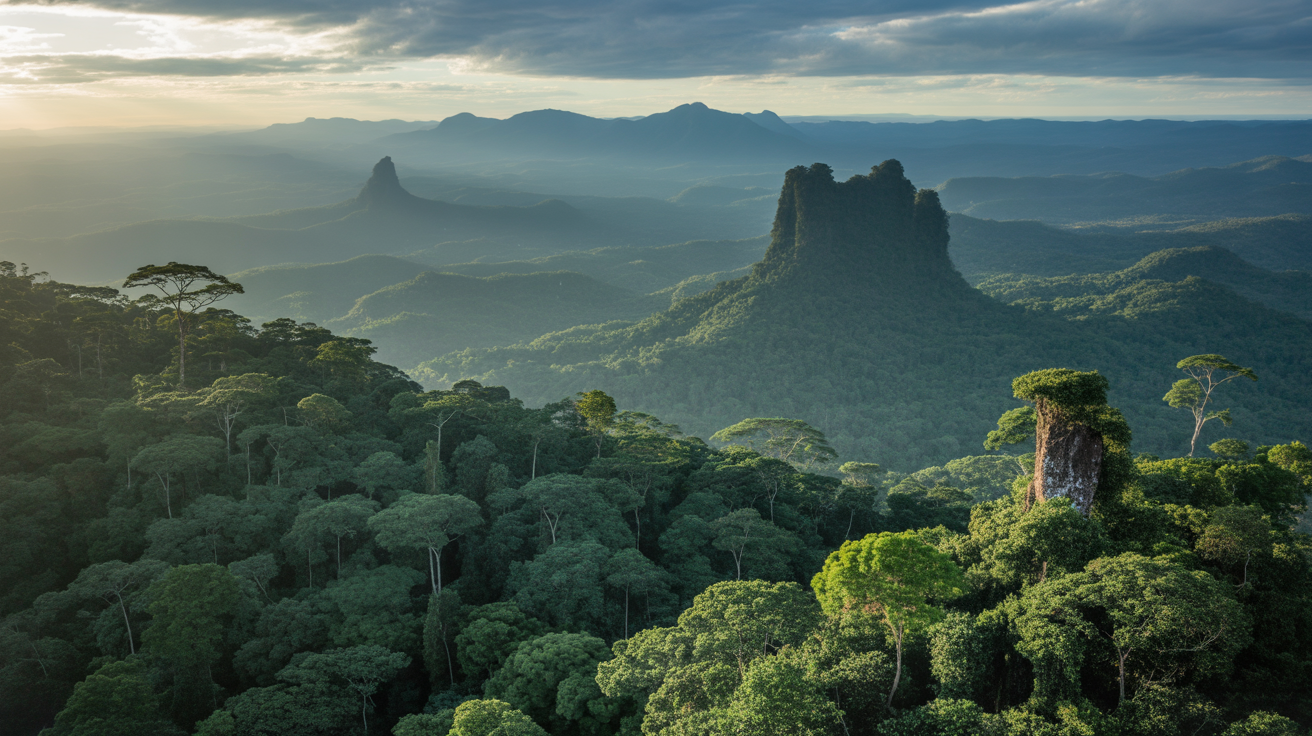
Rainforest
Dense, wet forests with the highest biodiversity on Earth, containing more than half of the world's plant and animal species.
Conservation
The Goliath Frog is currently classified as Endangered on the IUCN Red List.
Threats & challenges
The Goliath frog faces severe threats from habitat destruction due to deforestation, agricultural expansion, and infrastructure development, which degrade the pristine riverine environments it requires. Overharvesting for bushmeat and the international pet trade has led to significant population declines. The species is also sensitive to water pollution, sedimentation, and changes in river flow, which can disrupt breeding and larval development. Climate change poses additional risks by altering rainfall patterns and stream hydrology. The IUCN estimates that populations have declined by over 50% in recent decades, and the species is currently classified as Endangered. Conservation efforts are hampered by limited ecological data and the frog's restricted, fragmented range.
Taxonomy
Scientific name
Conraua goliath
- Kingdom
- Animalia
- Phylum
- Chordata
- Class
- Amphibia
- Order
- Anura
- Family
- Conrauidae
- Genus
- Conraua
- Species
- goliath
Community notes
Share your observations about the Goliath Frog.
No community notes yet. Be the first!
Discover more wildlife
More fascinating animals from the encyclopedia.