
About the Greater Amberjack
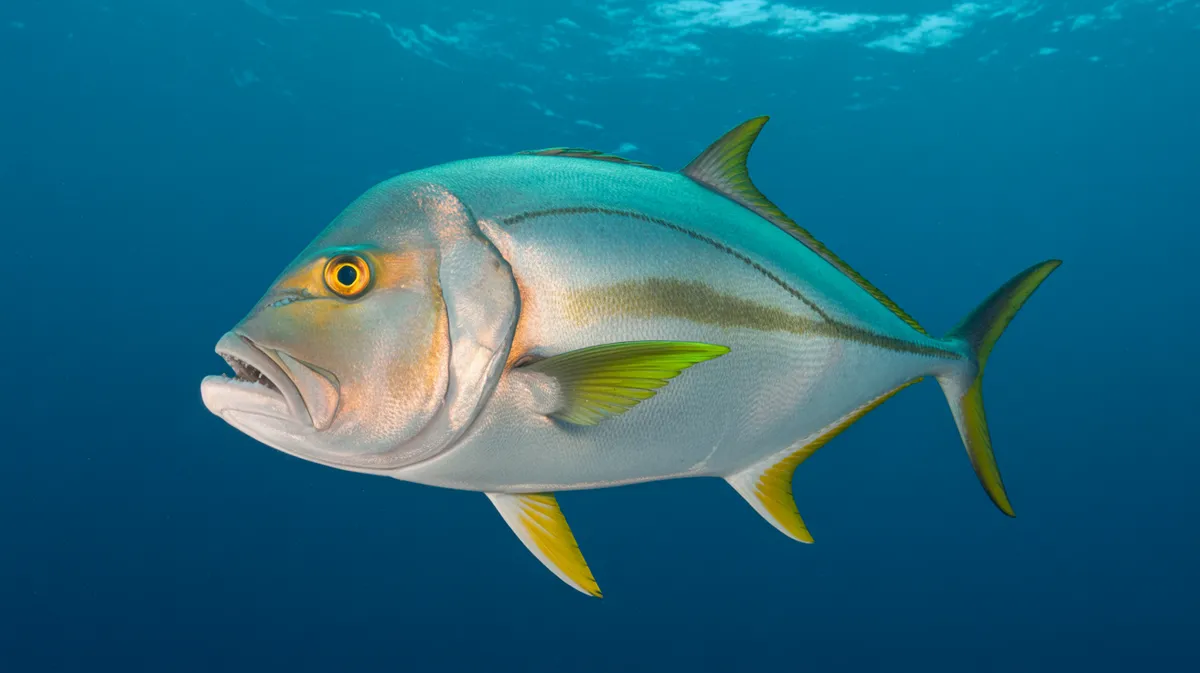
The Greater Amberjack is a large, fast-swimming predatory fish found in subtropical and tropical waters around the world. Recognized by their robust bodies, dark lateral stripe, and deeply forked tail, they are popular among commercial and recreational fishers for their strength and size. These fish typically inhabit offshore reefs, shipwrecks, and rocky outcrops, where they hunt for smaller fish, squid, and crustaceans. The Greater Amberjack is also known for its migratory behavior and can be found at depths ranging from 20 to over 300 meters.
Fascinating facts
Impressive Size
Greater Amberjacks can grow over 2 meters (6.6 feet) long and weigh more than 70 kg (154 lbs) in rare cases.
Deep Divers
They can be found in waters as deep as 360 meters (1,180 feet), often near shipwrecks and deep reefs.
Popular Game Fish
Anglers seek out Greater Amberjacks for their strength and fighting ability, making them a prized catch in sport fishing.
Detailed description
The Greater Amberjack (Seriola dumerili) is the largest member of the Carangidae family, reaching lengths of up to 190 cm (6.2 ft) and weights exceeding 80 kg (176 lbs), though most individuals encountered are between 40–100 cm. Its robust, elongated body is laterally compressed, with a distinctive dark stripe running obliquely from the snout through the eye to the dorsal fin, especially prominent in juveniles and stressed adults. The coloration is generally bluish-gray to olive dorsally, fading to silvery-white ventrally, with a faint amber or yellowish lateral band. The dorsal fin is divided into two parts: the anterior spiny section and the longer, softer posterior section. Greater Amberjacks are powerful, fast-swimming predators, equipped with deeply forked tails and streamlined bodies adapted for open-water pursuits. They possess small, villiform teeth and a protruding lower jaw. Socially, they are often solitary or form small groups, particularly around reefs, shipwrecks, and rocky outcrops. Juveniles may form larger schools for protection. Their life history is characterized by high mobility and extensive migrations, often associated with spawning or seasonal changes in prey distribution. They are long-lived, with some individuals reaching 17 years of age. This species exhibits sexual dimorphism, with females generally growing larger than males.
Did you know?
Despite their size and strength, Greater Amberjacks are susceptible to ciguatera poisoning in some regions, making their flesh occasionally unsafe for human consumption.
Research & sources
Wikipedia summary
The greater amberjack, also known as the allied kingfish, great amberfish, greater yellowtail, jenny lind, sea donkey, purplish amberjack, reef donkey, rock salmon, sailors choice, yellowtail, and yellow trevally, is a species of predatory ray-finned fish in the family carangidae, the jacks and pompanos. It is found in temperate, subtropical, and tropical seas around the world. It is a popular quarry species for recreational fisheries and is important in commercial fisheries. It is the largest species in the family carangidae.
Behaviour & social structure
Greater Amberjacks are diurnal predators, most active during daylight hours. They exhibit opportunistic feeding behavior, preying primarily on pelagic and demersal fishes (such as sardines, mackerels, and grunts), cephalopods (notably squid), and crustaceans. Hunting often involves swift, powerful bursts of speed to ambush prey near reefs or in open water. Adults are typically solitary or found in small, loose aggregations, especially around prominent underwater structures which serve as both hunting grounds and refuges. Juveniles exhibit more pronounced schooling behavior, likely as an anti-predator strategy. Territoriality is not strongly developed, but individuals may display dominance hierarchies when competing for food or mates. Greater Amberjacks are known for their migratory tendencies, moving between feeding and spawning grounds, sometimes covering hundreds of kilometers. Resting behavior is minimal; these fish are almost constantly on the move except during brief periods of sheltering near structures.
Reproduction & life cycle
Greater Amberjacks are broadcast spawners, with external fertilization occurring in the water column. Spawning typically takes place from late spring to early summer, varying by region (e.g., April–July in the Mediterranean, March–June in the Gulf of Mexico). During spawning, adults form loose aggregations in offshore waters, often near reefs or drop-offs. Females are highly fecund, capable of releasing several million pelagic eggs per season in multiple batches. There is no parental care; eggs and larvae are left to drift with the currents. Larvae are planktonic, feeding on zooplankton until they reach juvenile stages and settle near floating debris or shallow reefs. Sexual maturity is generally reached at 4–5 years of age, with females maturing slightly later and at larger sizes than males. Spawning success and recruitment are influenced by water temperature, food availability, and oceanographic conditions.
Adaptations & survival
Greater Amberjacks possess several adaptations for their predatory, pelagic lifestyle. Their streamlined, torpedo-shaped bodies and deeply forked tails enable sustained high-speed swimming and rapid acceleration, crucial for both hunting and evading predators. The lateral line is well developed, aiding in the detection of vibrations and movement in the water. Their coloration provides countershading camouflage, making them less visible from above and below. The species' large eyes enhance visual acuity in the variable light conditions of deeper waters. Physiologically, they exhibit high aerobic capacity and efficient gill structures to support active swimming. Behaviorally, their tendency to associate with reefs and shipwrecks offers both feeding opportunities and protection from larger predators.
Cultural significance
Greater Amberjack holds considerable value in recreational and commercial fisheries worldwide, prized for its fighting ability and quality flesh. It is a staple in Mediterranean and Japanese cuisines, where it is known as 'kanpachi' and served raw or cooked. In some cultures, the fish is associated with strength and endurance, symbolizing perseverance. Historically, amberjacks have featured in local folklore and fishing traditions, often regarded as a test of skill for anglers. The species is also important in the development of offshore aquaculture, particularly in Japan and the Mediterranean, where it is farmed for high-value seafood markets.
Recent research
Recent research on Seriola dumerili has focused on population genetics, revealing significant genetic structuring among Atlantic, Mediterranean, and Indo-Pacific populations, which has implications for management and conservation. Studies on larval development and aquaculture techniques have advanced the species' potential for sustainable farming, with ongoing work to improve growth rates, disease resistance, and feed efficiency. Tagging and telemetry studies have provided new insights into migration patterns, habitat use, and spawning aggregations, informing fisheries management. Additionally, investigations into the species' role in reef ecosystems highlight its importance as a top predator influencing community structure and trophic dynamics.
Videos
Habitat
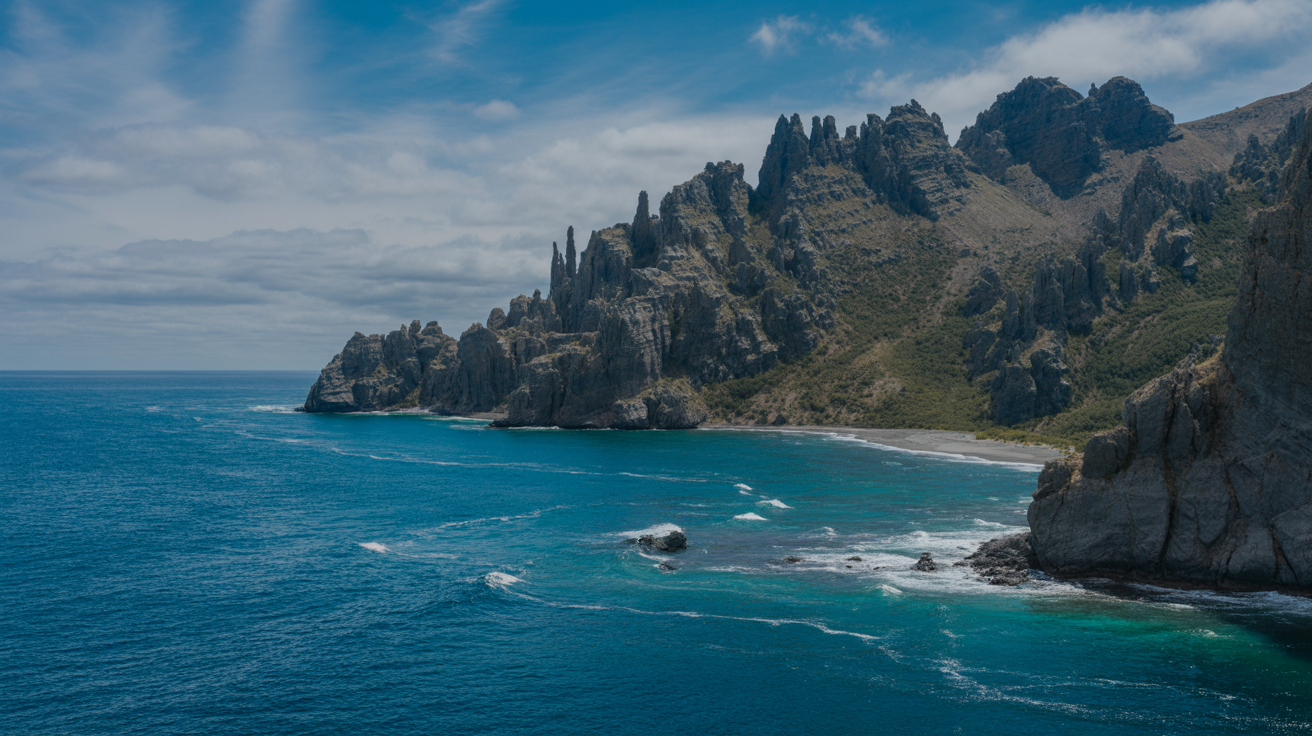
Open ocean, offshore reefs, and rocky areas
Conservation
The Greater Amberjack is currently classified as Least Concern on the IUCN Red List.
Threats & challenges
While currently listed as Least Concern by the IUCN, Greater Amberjacks face several threats. Overfishing is a significant concern, particularly in regions with intense commercial and recreational fisheries, leading to localized population declines and reduced average sizes. Bycatch in longline and trawl fisheries also impacts populations. Habitat degradation, especially the loss of offshore reefs and wrecks due to human activities, can reduce essential spawning and feeding grounds. Climate change may alter ocean currents and water temperatures, potentially affecting spawning success and larval dispersal. There is evidence of heavy metal and pollutant accumulation in some populations, raising concerns about long-term health and food safety. Management measures, such as size and bag limits, seasonal closures, and marine protected areas, are increasingly implemented to mitigate these challenges.
Taxonomy
Scientific name
Seriola dumerili
- Kingdom
- Animalia
- Phylum
- Chordata
- Class
- Actinopterygii
- Order
- Carangiformes
- Family
- Carangidae
- Genus
- Seriola
- Species
- dumerili
Community notes
Share your observations about the Greater Amberjack.
No community notes yet. Be the first!
Discover more wildlife
More fascinating animals from the encyclopedia.