
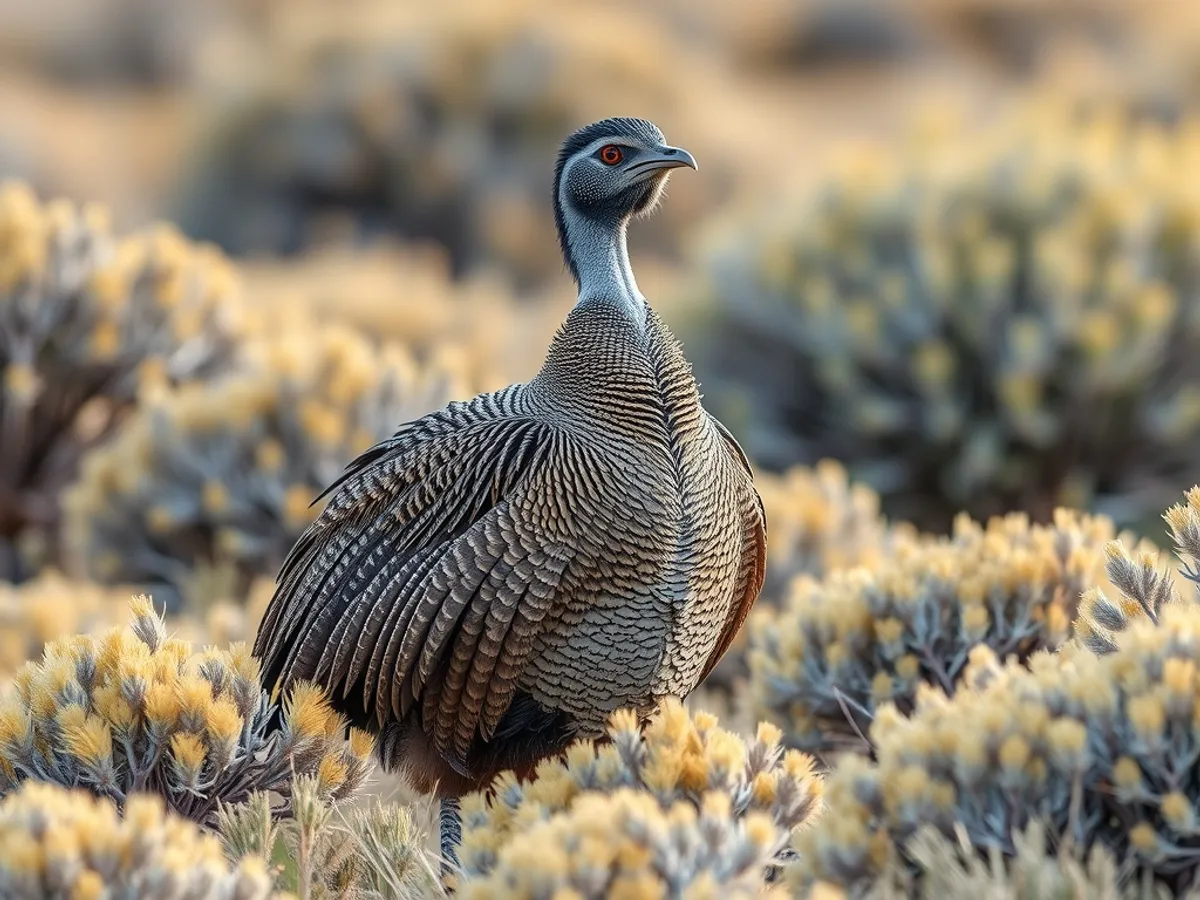
About the Greater Sage-Grouse
Centrocercus urophasianus is a sagebrush obligate: it eats sagebrush leaves through the entire winter, roosts under sagebrush, and nests under it, and it has no gizzard capable of grinding hard seeds, so it cannot switch to grain the way other grouse can. That single dependency makes it a living index of the sagebrush sea, and the collapse of that ecosystem has taken the bird from an estimated 16 million to a few hundred thousand. Its lek display is one of the great performances in the bird world: males strut on traditional dancing grounds used for generations, inflate two olive-yellow air sacs out of a white chest ruff, and pop them, producing a swishing, plopping, hollow "wub-wub-POP" audible across open sage at dawn. The acoustics are strongly directional, and a handful of dominant males near the lek centre may take 70 to 80 percent of all matings while dozens of others get nothing. Females select on strut rate and sound quality. The bird's fate is entangled with energy development, invasive cheatgrass and altered fire regimes; leks abandoned near well pads and infrastructure rarely recover, and a decision not to list it under the Endangered Species Act in 2015 remains one of the most contested calls in American conservation.
Fascinating facts
Impressive Displays
During the breeding season, males gather in leks and perform elaborate displays that include inflating air sacs and making popping noises to impress females.
Sagebrush Dependence
Greater Sage-Grouse depend almost entirely on sagebrush for food and shelter, especially in winter when other food sources are scarce.
Conservation Icon
The species’ decline has become a focal point for conservation efforts, as its health reflects the overall state of the sagebrush ecosystem.
Detailed description
The Greater Sage-Grouse (Centrocercus urophasianus) is a large, ground-dwelling bird, with males reaching up to 75 cm (30 in) in length and weighing 2–3 kg (4.4–6.6 lbs), while females are smaller, averaging 50–60 cm (20–24 in) and 1–1.5 kg (2.2–3.3 lbs). Males are distinguished by their ornate courtship plumage, featuring white breast feathers, black bellies, and long, pointed tail feathers that are fanned out during displays. Both sexes have mottled brown, gray, and white plumage, providing camouflage in sagebrush habitats. The species exhibits strong sexual dimorphism, with males possessing inflatable yellow air sacs on their chests used in elaborate lekking displays. Greater Sage-Grouse are primarily terrestrial, rarely flying except when startled or moving between feeding and roosting sites. Their anatomy is specialized for a herbivorous diet, with an enlarged crop and gizzard adapted for digesting tough sagebrush leaves. Socially, they are gregarious outside the breeding season, forming flocks that may number in the hundreds. Their life history is closely tied to the sagebrush ecosystem, which provides essential food and cover throughout the year. The species is notable for its low reproductive rate, high site fidelity, and sensitivity to habitat disturbance, making it an important indicator of sagebrush ecosystem health.
Did you know?
Despite their large size and elaborate displays, Greater Sage-Grouse are strong fliers and can travel over 80 km in a single day in search of suitable habitat.
Research & sources
Wikipedia summary
The greater sage-grouse, also known as the sagehen, is the largest grouse in North America. Its range is sagebrush country in the western United States and southern Alberta and Saskatchewan, Canada. It was known as simply the sage grouse until the Gunnison sage-grouse was recognized as a separate species in 2000. The Mono Basin population of sage grouse may also be distinct.
Behaviour & social structure
Greater Sage-Grouse are crepuscular, being most active during dawn and dusk when they feed and socialize. Their diet consists predominantly of sagebrush (Artemisia spp.), especially in winter, but in spring and summer, they supplement with forbs, flowers, and insects, particularly for chicks. Foraging is primarily on the ground, with birds moving slowly and methodically through the vegetation. Outside the breeding season, they form loose flocks segregated by sex and age. During the breeding season, males congregate on traditional display grounds known as leks, where they compete for female attention through complex visual and acoustic displays. Females are generally solitary during nesting and brood-rearing, exhibiting cryptic behavior to avoid predation. Roosting occurs on the ground, often under sagebrush or in open areas with sparse cover. Anti-predator behaviors include freezing, crouching, and short, explosive flights. Social hierarchies are apparent among males on leks, with dominant individuals occupying central, more desirable positions.
Reproduction & life cycle
The breeding season begins in early spring (March–May), with males arriving at leks before dawn to perform their displays. Females visit multiple leks before selecting a mate, typically choosing dominant males with the most vigorous displays. Greater Sage-Grouse are polygynous; a small proportion of males account for the majority of matings. After mating, females leave the lek to nest alone, selecting sites under dense sagebrush for concealment. Clutch size ranges from 6–9 eggs, with an incubation period of 25–29 days. Only the female provides parental care, incubating the eggs and leading the precocial chicks to feeding areas after hatching. Chicks are able to feed themselves almost immediately but rely on the mother for warmth and protection. Brood survival is highly dependent on habitat quality and predation pressure, with most mortality occurring within the first few weeks of life. Females may re-nest if the first clutch is lost early in the season.
Adaptations & survival
Greater Sage-Grouse possess several adaptations for survival in arid sagebrush environments. Their cryptic plumage provides effective camouflage against predators such as raptors, coyotes, and foxes. The large, muscular gizzard and specialized gut microbiota enable efficient digestion of fibrous sagebrush, which contains toxic compounds that many other species cannot tolerate. Seasonal shifts in diet and movement patterns allow them to exploit different food resources and microhabitats throughout the year. Males have evolved unique morphological and behavioral adaptations for lekking, including inflatable air sacs and specialized feathers that produce distinctive popping and whistling sounds. Their strong site fidelity ensures that individuals return to the same leks and nesting areas year after year, which is advantageous in stable environments but makes them vulnerable to habitat changes.
Cultural significance
The Greater Sage-Grouse is an iconic species of the American West, symbolizing the health and integrity of sagebrush ecosystems. It features prominently in the traditions and oral histories of many Indigenous peoples, who have long recognized its ecological importance. The bird has been referenced in early settler accounts, regional folklore, and even as a food source during periods of scarcity. In contemporary times, the sage-grouse has become a focal point for conservation policy and land management debates, serving as an 'umbrella species' whose protection benefits a wide array of other sagebrush-dependent flora and fauna. Its elaborate mating displays attract birdwatchers and naturalists, contributing to ecotourism in rural communities.
Recent research
Recent research has focused on the genetic structure of sage-grouse populations, revealing significant differentiation among isolated groups, such as the Mono Basin population, which may warrant subspecies or even species status. Advances in telemetry and remote sensing have improved understanding of seasonal movements, habitat use, and the impacts of anthropogenic disturbance. Studies on lek dynamics and sexual selection have provided insights into the evolution of complex mating systems. Ongoing research is investigating the effects of habitat restoration, fire management, and invasive species control on population recovery. Conservation genomics is being applied to assess genetic diversity and inform translocation and augmentation efforts. The species is also a model for studying the effects of landscape connectivity and large-scale conservation planning.
Videos
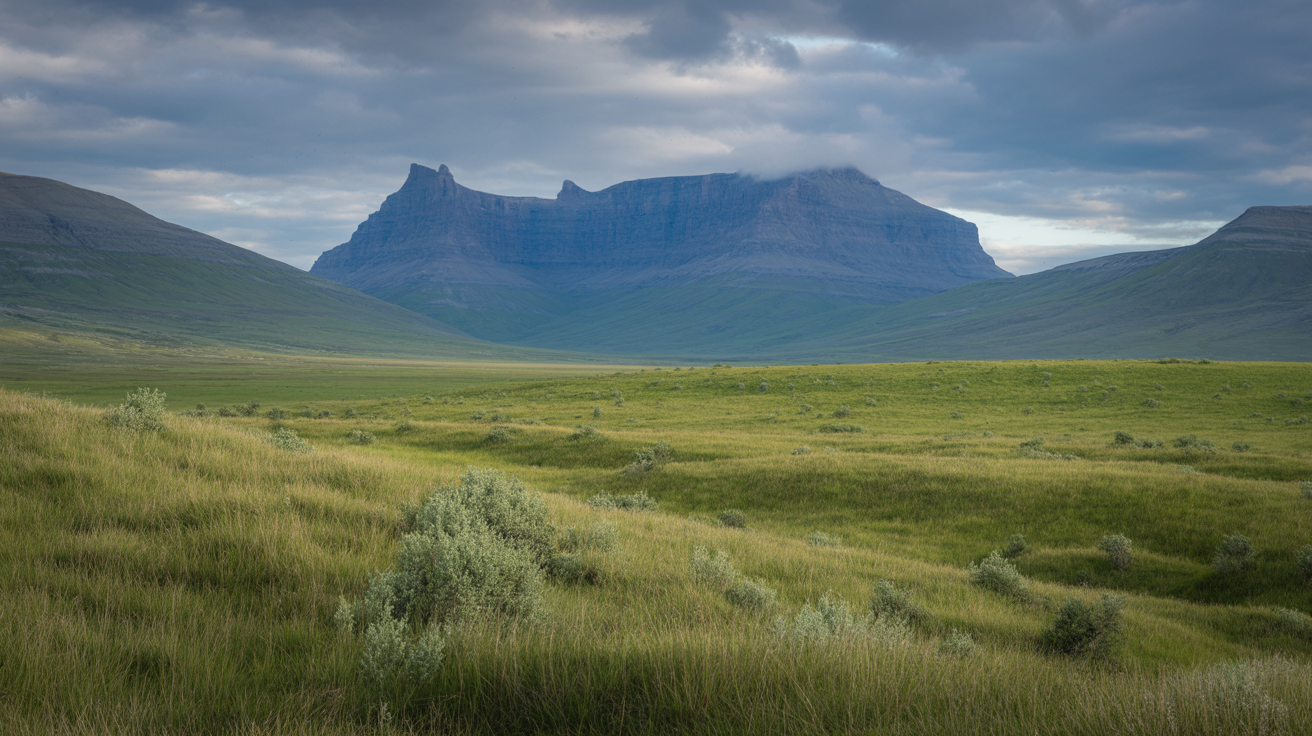
Habitat
Sagebrush steppe and shrubland
Conservation
The Greater Sage-Grouse is currently classified as Near Threatened on the IUCN Red List.
Threats & challenges
The primary threats to Greater Sage-Grouse are habitat loss, fragmentation, and degradation, largely due to agricultural conversion, energy development (oil, gas, wind), urbanization, and infrastructure such as roads and fences. Invasive plant species (e.g., cheatgrass) and altered fire regimes further reduce sagebrush cover. Climate change poses additional risks by altering precipitation patterns and increasing the frequency of drought and wildfire. Predation rates may increase in fragmented landscapes, and human disturbance can disrupt breeding behavior and reduce reproductive success. Population declines have been significant, with estimates suggesting a reduction of over 80% from historic levels. Conservation efforts are complicated by the species' large range, complex land ownership, and the need for large, contiguous tracts of sagebrush habitat. Despite these challenges, collaborative conservation initiatives involving federal, state, private, and tribal stakeholders have shown some success in stabilizing local populations.
Taxonomy
Scientific name
Centrocercus urophasianus
- Kingdom
- Animalia
- Phylum
- Chordata
- Class
- Aves
- Order
- Galliformes
- Family
- Phasianidae
- Genus
- Centrocercus
- Species
- urophasianus
Community notes
Share your observations about the Greater Sage-Grouse.
No community notes yet. Be the first!
Discover more wildlife
More fascinating animals from the encyclopedia.