
About the Green chromis
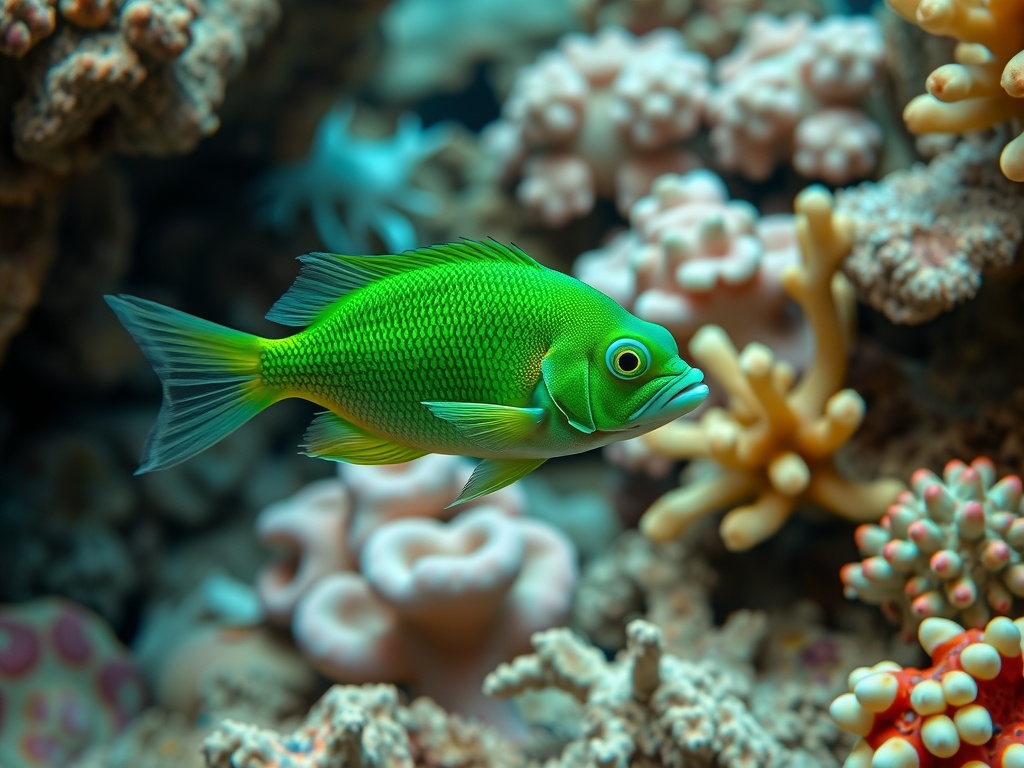
The green chromis is a small, vibrant marine fish known for its shimmering blue-green coloration and peaceful temperament. Found in large schools over coral reefs in the Indo-Pacific region, it is a popular species in both the wild and aquarium trade. The green chromis is characterized by its streamlined body, deeply forked tail, and iridescent scales that catch the light beautifully. These fish play a role in reef ecosystems by feeding on plankton and providing food for larger predators. Their social nature and adaptability make them a common sight in shallow lagoons and coral gardens.
Fascinating facts
Schooling Fish
Green chromis typically live in large, synchronized schools, which helps deter predators and increases their chances of survival.
Coral Reef Inhabitants
These fish are most commonly found hovering above coral heads in lagoons and outer reef slopes throughout the Indo-Pacific.
Unique Breeding Habits
Male green chromis prepare and guard nests for the eggs, showing parental care by fanning and protecting the clutch until they hatch.
Detailed description
The green chromis (Chromis viridis) is a small, laterally compressed damselfish, typically reaching a standard length of 8–10 cm, with a maximum recorded length of about 10 cm. Its streamlined body is covered in iridescent scales that shimmer in hues of apple-green to turquoise, often with a silvery underside and a slightly forked, translucent caudal fin. The dorsal fin is continuous, with 13–14 spines and 10–12 soft rays, while the anal fin has 2 spines and 10–12 soft rays. Green chromis are highly social and form large, loose aggregations or schools, sometimes numbering in the hundreds, which provide protection from predators and increase foraging efficiency. They are diurnal, spending daylight hours actively swimming above branching coral heads, particularly Acropora species, and retreating into the coral for shelter at night. Their large eyes are adapted for detecting movement and spotting planktonic prey in the water column. The mouth is small and slightly upturned, suited for picking zooplankton and phytoplankton from the water. Juveniles and adults are morphologically similar, though juveniles may display more pronounced blue hues. The species is renowned for its peaceful temperament, both in the wild and in captivity, making it a popular aquarium fish. Chromis viridis plays a crucial ecological role in coral reef systems by facilitating nutrient cycling and serving as prey for larger piscivores.
Did you know?
Despite their delicate appearance, green chromis are surprisingly hardy and can thrive in both wild and captive environments when cared for properly.
Research & sources
Wikipedia summary
Chromis viridis is a species of damselfish. Individuals tend to be iridescent apple-green and light blue, and reach a maximal length of 10 cm.
Behaviour & social structure
Green chromis exhibit pronounced schooling behavior, maintaining close proximity to conspecifics as a defense against predation. Their social structure is relatively egalitarian, with little evidence of strict dominance hierarchies, though larger individuals may occupy more central positions within the school. Feeding occurs primarily during daylight, with individuals darting from the safety of coral branches to snatch planktonic organisms from the water column. They are opportunistic omnivores, consuming a diet of copepods, amphipods, larval crustaceans, and various types of phytoplankton and algae. At dusk, schools disperse and individuals seek refuge deep within coral branches to avoid nocturnal predators. Communication is largely visual, relying on body postures and rapid color changes, especially during social interactions or in response to threats. Territorial aggression is minimal compared to other damselfish, though mild chasing may occur during breeding or when space is limited.
Reproduction & life cycle
Chromis viridis exhibits oviparous reproduction with distinct pair formation during the breeding season, which often coincides with the lunar cycle and peaks during warmer months. Males establish and defend small territories on branching corals, where they clear a patch of substrate for egg deposition. Courtship involves elaborate displays, including rapid swimming, body quivering, and color intensification. Females lay adhesive demersal eggs, often numbering several hundred per clutch, which are then fertilized externally by the male. The male guards the eggs, fanning them with his fins to ensure oxygenation and prevent fungal growth, until hatching occurs after 2–3 days, depending on water temperature. Larvae are planktonic, drifting in the open ocean for several weeks before settling onto the reef as juveniles. Parental care is limited to egg guarding; post-hatching, the larvae receive no further protection.
Adaptations & survival
Green chromis have evolved several adaptations for survival in complex coral reef environments. Their iridescent coloration provides camouflage against the dappled light of shallow reefs, helping them blend with the water and avoid predators. Schooling behavior is a key anti-predator adaptation, reducing individual risk through the 'dilution effect' and confusing predators with coordinated movements. Their small, upturned mouths are specialized for efficient plankton capture in midwater. The ability to rapidly change coloration, particularly during stress or courtship, aids in communication and predator evasion. Morphologically, their compressed bodies and deeply forked tails allow for agile, burst swimming, essential for both foraging and escape. The close association with branching corals not only provides shelter but may also facilitate access to microhabitats rich in planktonic food.
Cultural significance
While the green chromis does not hold significant roles in traditional mythology or folklore, it is highly valued in the marine aquarium trade for its vibrant coloration, peaceful nature, and adaptability. In some Pacific island communities, small damselfish species, including Chromis, may be used as bait or for subsistence fishing, though not specifically targeted. The species is also popular in ecotourism, as its schooling behavior and striking appearance make it a favorite among snorkelers and divers. Its presence is often used as an indicator of healthy reef systems in environmental education and conservation outreach.
Recent research
Recent research has focused on the ecological role of Chromis viridis in nutrient cycling and its interactions with coral hosts. Studies have shown that the excretion of nitrogenous waste by schooling chromis can enhance coral growth, highlighting a mutualistic relationship. Genetic analyses have revealed significant population connectivity across the Indo-Pacific, facilitated by the species' planktonic larval stage. Ongoing research is investigating the impacts of climate-induced coral bleaching on chromis populations, as well as the effects of microplastic ingestion on their health and reproductive success. Behavioral studies have explored the mechanisms underlying schooling cohesion and predator avoidance, contributing to broader understanding of collective animal behavior.
Videos
Habitat
Coral reefs

Conservation
The Green chromis is currently classified as Least Concern on the IUCN Red List.
Threats & challenges
Currently assessed as Least Concern by the IUCN, Chromis viridis populations are considered stable across their extensive Indo-Pacific range. However, they face indirect threats from coral reef degradation due to climate change, ocean acidification, and destructive fishing practices, which reduce available habitat and shelter. Overcollection for the aquarium trade is localized and not currently a major threat, but unsustainable practices can impact local populations. Predation by larger reef fish, such as groupers and snappers, is a natural challenge, especially for juveniles. Disease outbreaks and competition with invasive species may also pose risks in some regions. Conservation efforts focus on protecting coral reef habitats and promoting sustainable aquarium trade practices.
Taxonomy
Scientific name
Chromis viridis
- Kingdom
- Animalia
- Phylum
- Chordata
- Class
- Actinopterygii
- Order
- Perciformes
- Family
- Pomacentridae
- Genus
- Chromis
- Species
- viridis
Where to see a green chromis
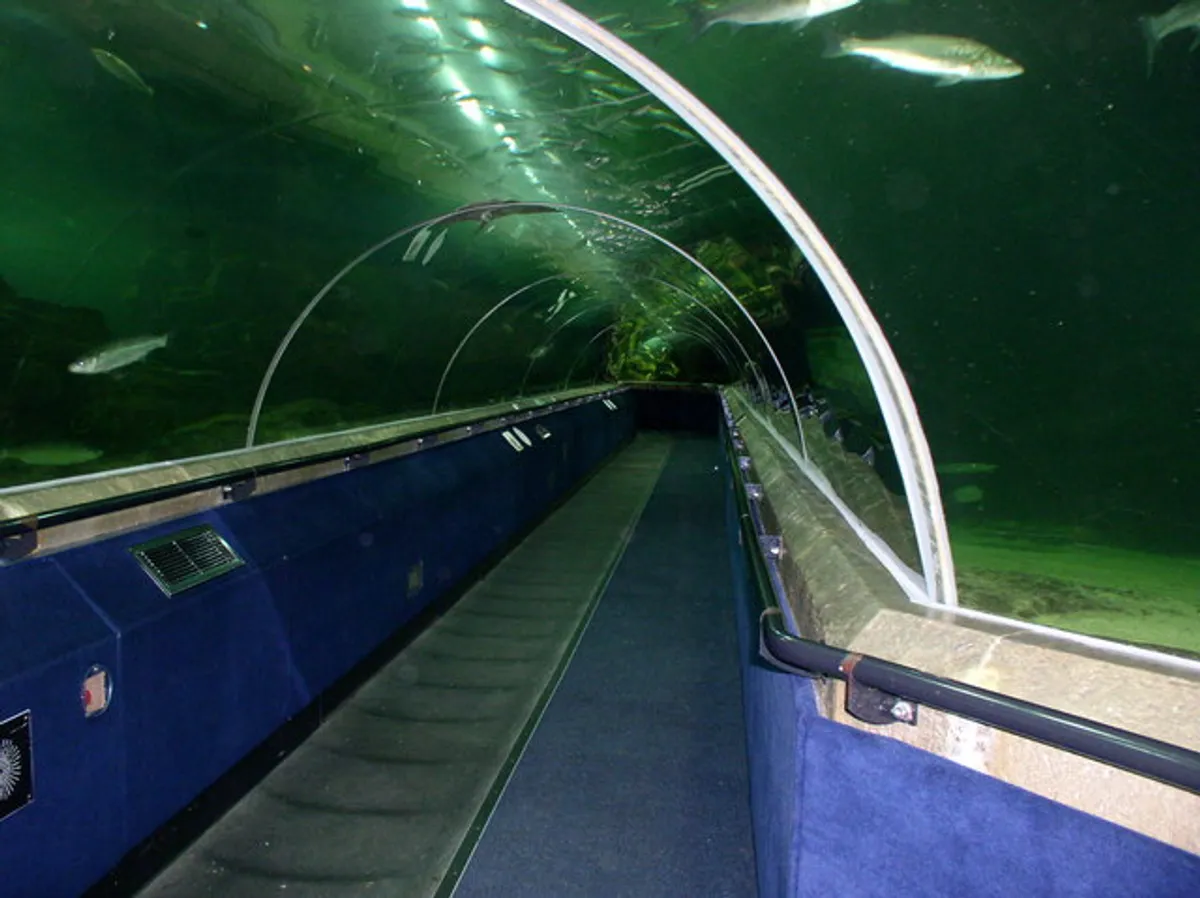
1 zoo and aquarium in 1 country are recorded as keeping this species.
Community notes
Share your observations about the Green chromis.
No community notes yet. Be the first!
Discover more wildlife
More fascinating animals from the encyclopedia.