
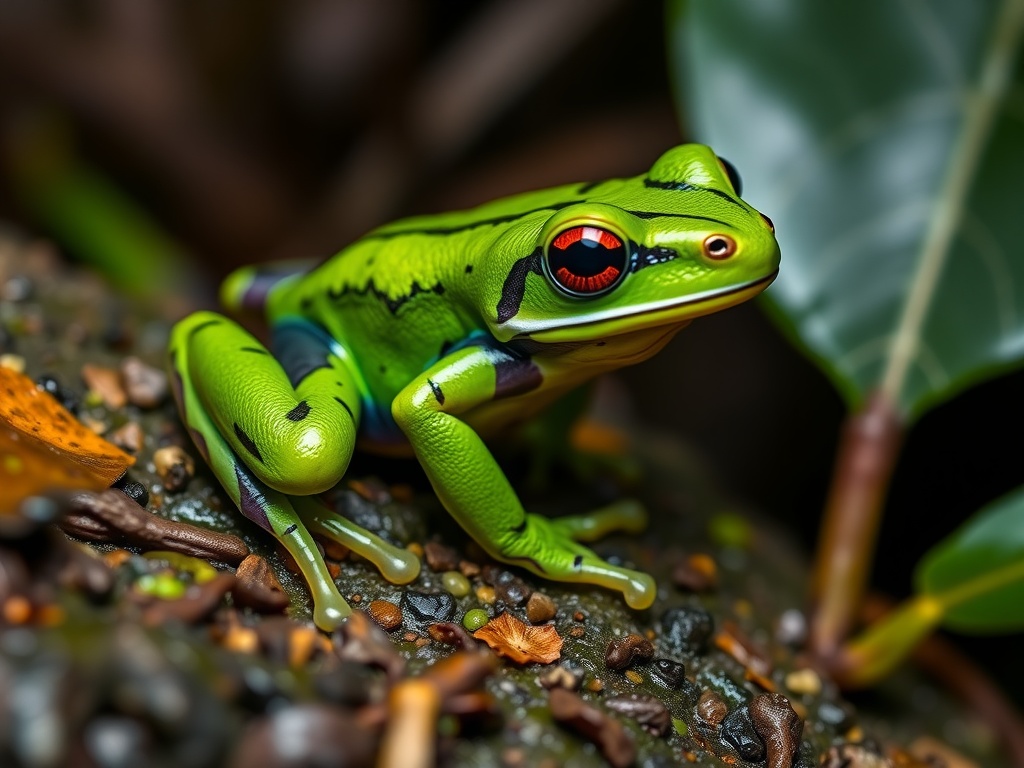
About the Green Poison Dart Frog
The Green Poison Dart Frog is a strikingly colorful amphibian native to Central and parts of South America. Its vivid green and black patterns serve as a warning to predators of its potent skin toxins. This small frog inhabits humid, tropical rainforests and is most often found near streams or other sources of fresh water. Despite its beauty, the species’ toxic skin secretions are used by indigenous people to poison blowgun darts for hunting. Captive-bred individuals lose much of their toxicity, as their poison is derived from their wild diet.
Fascinating facts
Vivid Warning Colors
Their bright green and black coloration serves as a warning signal (aposematism) to potential predators about their toxicity.
Natural Toxins
The skin of wild Green Poison Dart Frogs contains potent alkaloid toxins, which have been used by indigenous peoples to coat hunting darts.
Habitat Specialist
They thrive in humid, lowland rainforests and are often found on leaves and branches close to freshwater sources.
Detailed description
The Green Poison Dart Frog (Dendrobates auratus) is a small, vividly colored amphibian, typically measuring 3 to 4 cm in length, with females generally larger than males. Its skin displays a striking pattern of metallic green or turquoise patches interspersed with black or brown, a coloration that varies geographically and serves as aposematic (warning) signaling to potential predators. The skin is smooth and moist, facilitating cutaneous respiration, which is essential in the humid environments it inhabits. D. auratus possesses long, slender limbs with expanded toe pads, enabling it to climb vegetation and navigate slippery surfaces. Unlike many frogs, it is diurnal, being most active during daylight hours, particularly in the early morning and late afternoon. The species exhibits complex social behaviors, including territoriality among males, which use vocalizations and physical displays to defend their space. Reproduction involves intricate courtship rituals, with males emitting soft trilling calls to attract females. After mating, females lay clutches of 5–30 eggs on moist terrestrial surfaces, which are later transported by the male to water bodies. The species' potent alkaloid skin toxins, derived from its arthropod diet, serve as a chemical defense, deterring most vertebrate predators. In captivity, deprived of their natural diet, these frogs lose their toxicity, highlighting the ecological specificity of their chemical defenses.
Did you know?
The toxicity of the Green Poison Dart Frog is entirely dependent on its wild diet—frogs raised in captivity on non-toxic prey are harmless.
Research & sources
Behaviour & social structure
Green Poison Dart Frogs are primarily diurnal, spending much of their active time foraging for small invertebrates such as ants, mites, termites, and tiny beetles among leaf litter and low vegetation. They exhibit strong site fidelity, often remaining within a small home range. Males are territorial and use a series of soft, bird-like trills to communicate with rivals and attract mates. Aggressive encounters between males may involve wrestling and pushing. Social interactions are generally limited outside of the breeding season, though temporary aggregations can occur in areas with abundant food or breeding sites. These frogs rely heavily on visual and chemical cues for communication, particularly during courtship. Their daily routine includes periods of basking in filtered sunlight, foraging, and hiding under leaves or logs to avoid desiccation and predation.
Reproduction & life cycle
Breeding in D. auratus is closely tied to rainfall and humidity, with peaks during the wet season. Males establish and defend territories near suitable oviposition sites, such as moist leaf litter or bromeliad axils. Courtship involves the male leading the female to a chosen site, where she deposits a clutch of 5–30 eggs. The male then fertilizes the eggs externally and remains nearby to keep them moist by transporting water with his body or urinating on them. After 10–14 days, the male carries the hatched tadpoles on his back to small pools or water-filled plant axils, where they complete metamorphosis over 6–10 weeks. Parental care is primarily paternal, with males occasionally providing unfertilized eggs as food for the developing tadpoles in some populations.
Adaptations & survival
D. auratus has evolved several adaptations for survival in the rainforest. Its aposematic coloration warns predators of its toxicity, a defense mechanism derived from dietary alkaloids. The frog's skin is highly permeable, facilitating both respiration and water absorption, but also making it sensitive to environmental toxins and dehydration. Specialized toe pads allow for efficient climbing and adherence to wet, slippery surfaces. Behavioral adaptations include diurnal activity patterns, which reduce competition with nocturnal amphibians and exploit the abundance of daytime prey. The species' reproductive strategy, involving egg and tadpole transport, minimizes predation risk and ensures offspring access to suitable aquatic habitats.
Cultural significance
Green Poison Dart Frogs hold significant cultural value among indigenous peoples of Central and South America, who have historically used their skin toxins to poison blowgun darts for hunting. The species is emblematic of the biodiversity and ecological complexity of tropical rainforests and is frequently featured in conservation campaigns and ecotourism literature. In Western culture, it symbolizes both the allure and danger of the tropics, and its striking appearance has made it a popular subject in art and media. The frog's unique biology has also made it a model organism in scientific research on chemical ecology, pharmacology, and evolutionary biology.
Recent research
Recent research has focused on the chemical ecology of D. auratus, particularly the origin and diversity of its skin alkaloids, which are now known to be sequestered from specific arthropod prey. Studies have also examined the genetic basis of color morph variation and its role in mate selection and predator avoidance. Ongoing work investigates the impact of environmental changes on reproductive success and population dynamics. D. auratus is increasingly used in studies of amphibian disease resistance, especially regarding chytridiomycosis. Advances in captive breeding have improved understanding of dietary requirements and toxin biosynthesis, informing both conservation and biomedical research.
Sources
Dendrobates auratus (Green Poison Dart Frog): Natural History and Ecology
Myers, C.W. & Daly, J.W. (1976)
scientificDendrobates auratus: The IUCN Red List of Threatened Species 2020
IUCN SSC Amphibian Specialist Group
conservationVideos
Habitat
Tropical rainforest
 Tropical Regions
Rainforest
Dense, wet forests with the highest biodiversity on Earth, containing more than half of the world's plant and animal species.
 Global
Forest
Wooded areas with significant tree cover and diverse plant and animal communities.
 Global
Freshwater
Lakes, rivers, and wetlands with diverse aquatic ecosystems.
Conservation
The Green Poison Dart Frog is currently classified as Least Concern on the IUCN Red List.
Threats & challenges
Although currently listed as Least Concern by the IUCN, D. auratus faces localized threats from habitat loss due to deforestation, agricultural expansion, and urbanization. The illegal pet trade also poses a risk, particularly to certain color morphs. Pollution, especially pesticide runoff, can be lethal due to the frog's permeable skin. Climate change, resulting in altered rainfall patterns and increased temperatures, may impact breeding success and larval development. Disease, such as chytridiomycosis caused by the chytrid fungus (Batrachochytrium dendrobatidis), has been detected in some populations, though D. auratus appears less susceptible than other dendrobatids. Population trends remain stable in much of its range, but ongoing monitoring is recommended.
Taxonomy
Scientific name
Dendrobates auratus
- Kingdom
- Animalia
- Phylum
- Chordata
- Class
- Amphibia
- Order
- Anura
- Family
- Dendrobatidae
- Genus
- Dendrobates
- Species
- auratus
Where to see a green poison dart frog
9 zoos and aquariums in 2 countries are recorded as keeping this species.
 Georgia Aquarium🇺🇸 Atlanta, United States
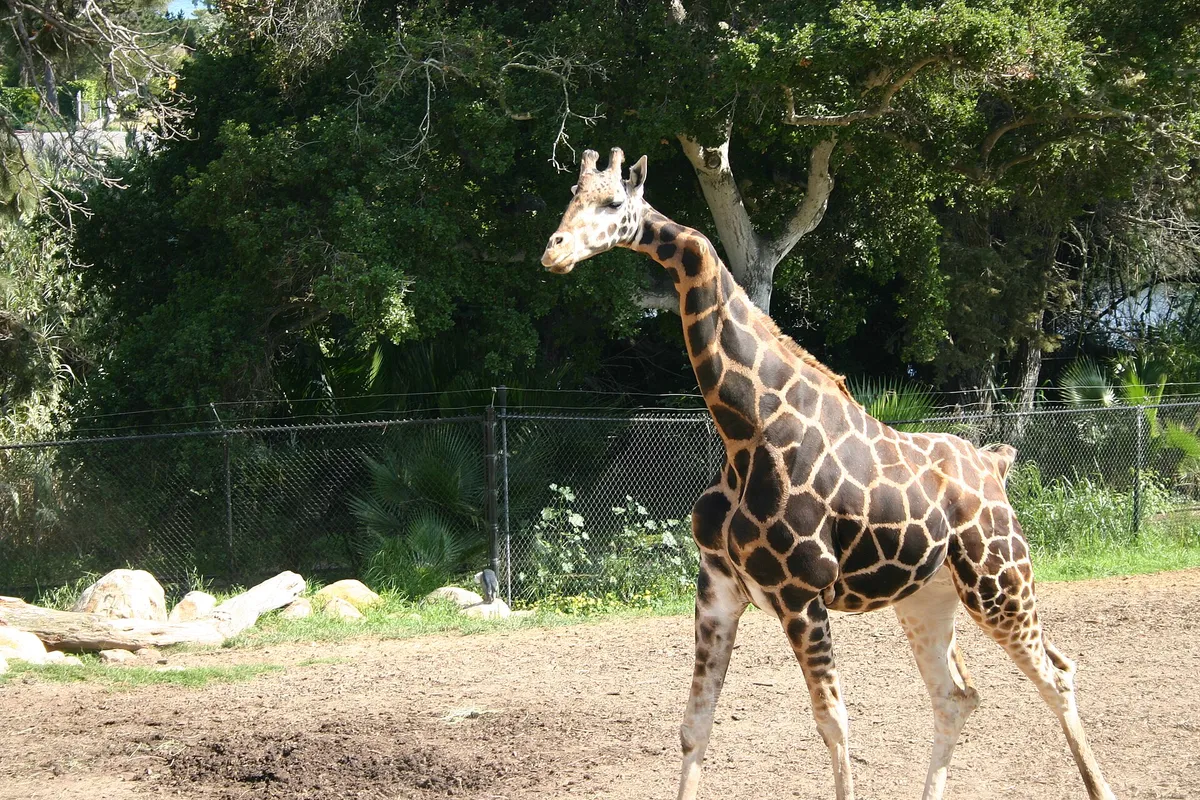 Santa Barbara Zoological Gardens🇺🇸 Santa Barbara, United States
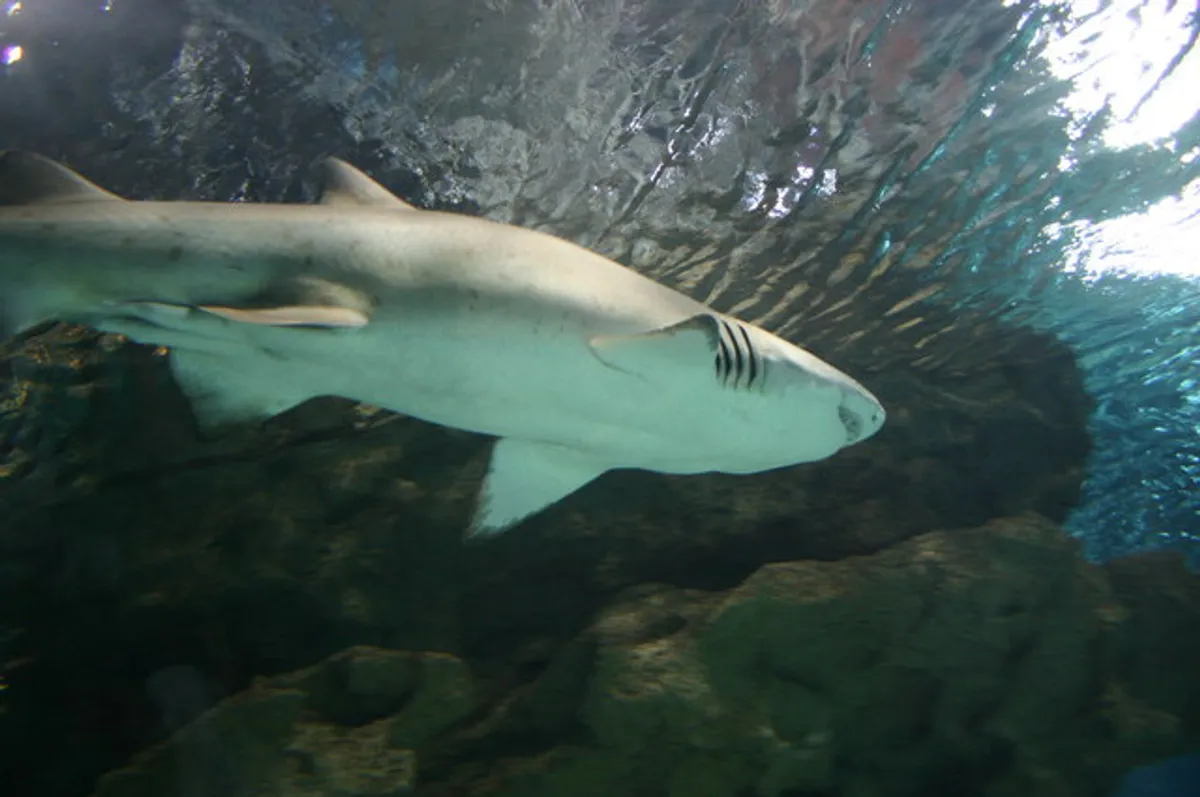 Blue Planet Aquarium🇬🇧 Ellesmere Port, United Kingdom
 Honolulu Zoo🇺🇸 Honolulu, United States
 National Zoological Park🇺🇸 Washington, United States
Community notes
Share your observations about the Green Poison Dart Frog.
No community notes yet. Be the first!
Discover more wildlife
More fascinating animals from the encyclopedia.