
About the Harlequin Poison Frog
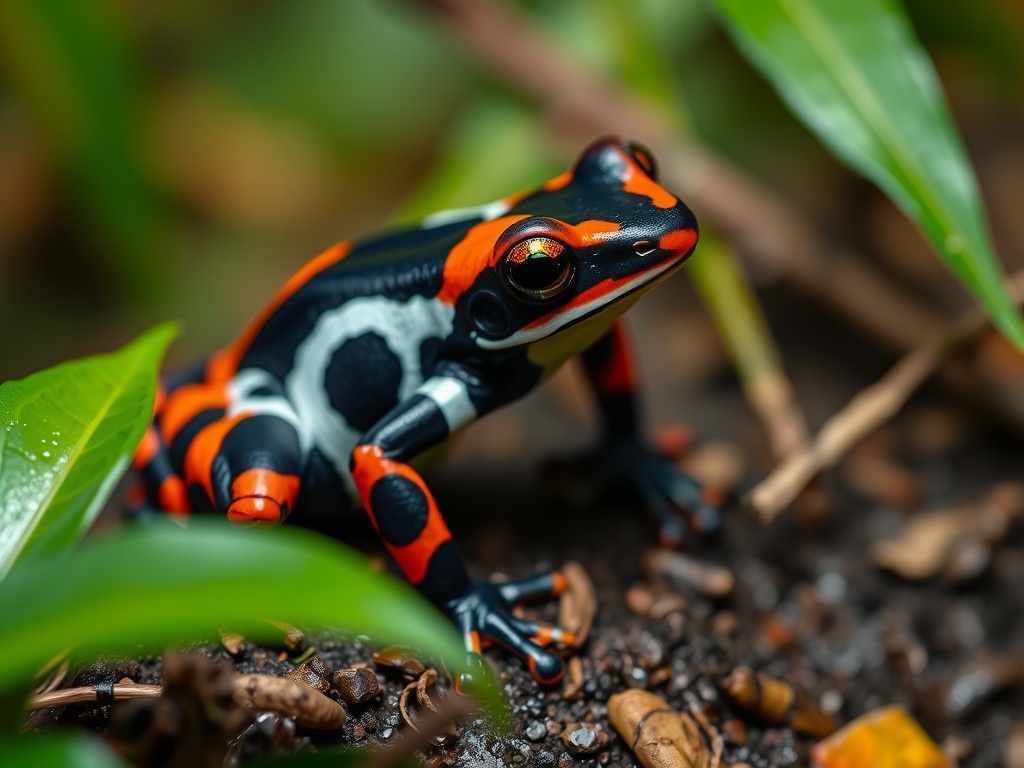
The Harlequin Poison Frog is a small, vividly colored amphibian native to the rainforests of western Colombia. Its striking coloration, featuring bold patterns of yellow, orange, and black, serves as a warning to predators about its potent skin toxins. This diurnal frog is often found in humid lowland and foothill forests, where it is highly dependent on moist environments for survival. The species practices remarkable parental care, with females transporting tadpoles to water-filled leaf axils. Sadly, habitat loss and collection for the pet trade have made the Harlequin Poison Frog critically endangered in the wild.
Fascinating facts
Colorful Warning
The Harlequin Poison Frog's vivid coloration warns predators of its highly toxic skin, which can be lethal if ingested.
Unique Parental Care
Females transport their tadpoles individually on their backs to water-filled plant axils, where they lay unfertilized eggs as food.
Rainforest Specialist
This species is highly specialized for humid rainforest habitats and is extremely vulnerable to habitat destruction and fragmentation.
Detailed description
The Harlequin Poison Frog (Oophaga histrionica) is a small dendrobatid amphibian, typically measuring 2.5–4 cm in snout-vent length, with females generally larger than males. Its skin displays a striking mosaic of black, yellow, orange, or red patterns, which vary considerably among populations and even individuals—a phenomenon known as polymorphism. The skin is smooth and moist, with specialized granular glands that secrete potent alkaloid toxins as a defense mechanism. The frog’s head is relatively broad with large, forward-facing eyes adapted for acute vision in the dim rainforest understory. Limbs are slender but muscular, equipped with expanded toe pads that facilitate climbing on wet foliage and navigating complex leaf litter. O. histrionica is diurnal, relying on its aposematic coloration to deter visually oriented predators. Its vocalizations are soft trills, used primarily by males to establish territories and attract mates. The species exhibits complex parental care, with females transporting newly hatched tadpoles on their backs to phytotelmata (water-filled leaf axils or bromeliads), where they continue to provision them with unfertilized eggs as a food source. This frog is highly sensitive to microclimatic changes, requiring consistently high humidity and stable temperatures for survival.
Did you know?
Female Harlequin Poison Frogs provide unfertilized eggs as food for their developing tadpoles, exhibiting a unique form of parental care among amphibians.
Research & sources
Wikipedia summary
The harlequin poison frog, also known as harlequin poison-dart frog, is a species of poison dart frog endemic to the Chocó region of western Colombia. The frog is normally found on the ground of tropical rain forests, among fallen limbs or leaf litter. Some frogs traditionally classified as Oophaga histrionica were separated as new species in 2018. These are Oophaga anchicayensis, Oophaga andresi and Oophaga solanensis.
Behaviour & social structure
Harlequin Poison Frogs are primarily terrestrial but exhibit some arboreal tendencies, especially during breeding. They are most active during daylight hours, foraging among leaf litter for small arthropods such as ants, mites, beetles, and springtails, which are thought to be the source of their skin toxins. Individuals are territorial, with males defending small patches of forest floor or low vegetation through vocalizations and occasional physical confrontations. Social interactions are generally limited outside of breeding, but complex courtship rituals involve tactile and acoustic signaling. Daily routines include periods of basking in filtered sunlight, foraging, and seeking shelter under logs or leaves during the hottest parts of the day. Their acute vision and sensitivity to vibrations help them detect both prey and potential threats.
Reproduction & life cycle
Breeding occurs year-round in the humid Chocó region, but peaks during the rainy season when water-filled microhabitats are abundant. Males establish and defend calling sites, emitting soft, repetitive trills to attract females. Courtship involves tactile stimulation, with the female following the male to a suitable oviposition site—typically a moist, sheltered spot on the forest floor. Clutches usually consist of 4–8 eggs, which are guarded and moistened by the female. After hatching (10–14 days), the female transports each tadpole individually on her back to a phytotelm, where she periodically returns to lay unfertilized eggs as a nutrient source for the developing larvae. Metamorphosis takes approximately 6–10 weeks, after which juvenile frogs disperse into the leaf litter. This high level of parental investment is rare among amphibians and is critical for offspring survival in the resource-limited rainforest environment.
Adaptations & survival
Oophaga histrionica has evolved several remarkable adaptations for survival. Its vivid aposematic coloration warns predators of its toxicity, a classic example of Müllerian mimicry among poison frogs. The alkaloid toxins in its skin, derived from dietary arthropods, disrupt nerve and muscle function in would-be predators. Specialized toe pads and limb musculature enable efficient climbing and movement through dense vegetation. Behavioral adaptations include complex parental care and the use of phytotelmata for tadpole development, reducing predation risk and competition. Acute vision and chemosensory abilities aid in prey detection and mate selection. The species’ ability to sequester and metabolize dietary toxins is a key evolutionary specialization.
Cultural significance
While Oophaga histrionica does not have a prominent role in indigenous mythology compared to some other poison frogs, its striking appearance has made it a symbol of Colombia’s unique biodiversity. The species is sometimes referenced in local conservation campaigns and ecotourism materials. Unlike some other dendrobatids, it is not traditionally used for poison extraction by indigenous peoples, as its toxins are less potent than those of the Phyllobates genus. However, its popularity in the exotic pet trade has contributed to its endangered status and raised awareness about the need for amphibian conservation.
Recent research
Recent taxonomic revisions (2018) have clarified the O. histrionica species complex, with several populations reassigned to new species based on genetic, morphological, and acoustic data (e.g., O. anchicayensis, O. andresi, O. solanensis). Ongoing research focuses on the chemical ecology of alkaloid sequestration, reproductive strategies, and the impact of habitat fragmentation on genetic diversity. Conservation genetics studies are underway to inform captive breeding and reintroduction programs. Novel studies are also examining the frog’s microbiome and its role in disease resistance, particularly against chytrid fungus. The species is a model organism for studying parental care evolution and aposematism in amphibians.
Videos
Habitat
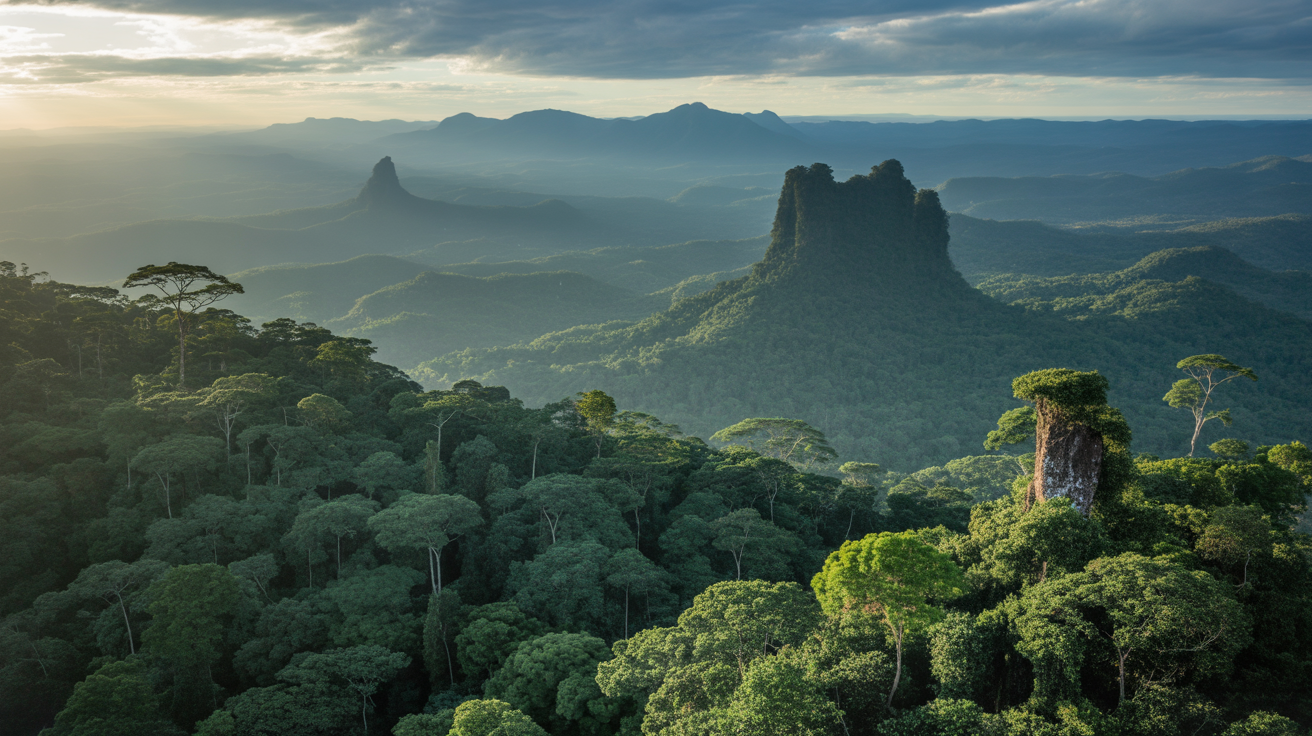
Humid lowland and foothill rainforests
 Tropical Regions
Rainforest
Dense, wet forests with the highest biodiversity on Earth, containing more than half of the world's plant and animal species.
 Global
Forest
Wooded areas with significant tree cover and diverse plant and animal communities.
 Global
Freshwater
Lakes, rivers, and wetlands with diverse aquatic ecosystems.
Conservation
The Harlequin Poison Frog is currently classified as Critically Endangered on the IUCN Red List.
Threats & challenges
The Harlequin Poison Frog faces severe threats from habitat loss due to deforestation, agricultural expansion, and mining in the Chocó region. Illegal collection for the international pet trade has further reduced wild populations. The species’ restricted range and specialized habitat requirements make it highly vulnerable to environmental changes, including climate change and disease outbreaks such as chytridiomycosis. Population declines have been rapid, with some local populations extirpated. Conservation efforts are hampered by limited enforcement of protective regulations and ongoing habitat degradation. Current estimates suggest that fewer than 2,000 mature individuals remain in the wild, with populations highly fragmented.
Taxonomy
Scientific name
Oophaga histrionica
- Kingdom
- Animalia
- Phylum
- Chordata
- Class
- Amphibia
- Order
- Anura
- Family
- Dendrobatidae
- Genus
- Oophaga
- Species
- histrionica
Community notes
Share your observations about the Harlequin Poison Frog.
No community notes yet. Be the first!
Discover more wildlife
More fascinating animals from the encyclopedia.