
About the Hoatzin
The hoatzin is the only bird known to digest its food the way a cow does. It ferments leaves in a hugely enlarged crop, using bacteria to break down cellulose long before the food reaches the stomach — foregut fermentation, otherwise unknown among birds. The trade-off is severe: the crop is so large that it crowds out the muscles that would power flight, leaving the hoatzin a clumsy, laboured flier that mostly clambers through the branches of flooded forest. The fermentation also gives it a strong manure-like smell, and its local name translates roughly as "stinkbird" — which, conveniently for the bird, makes it unappealing to hunt. Its chicks are stranger still: they hatch with two functional claws on each wing, and if a predator appears they drop from the nest into the water below, swim, then use those claws to haul themselves hand-over-hand back up into the tree. The claws are lost as the bird matures. It is such an evolutionary oddity that its place on the bird family tree has been argued over for well over a century.
Fascinating facts
Leaf-Eating Specialist
The Hoatzin's diet consists almost entirely of leaves, which it ferments in its enlarged crop, making it the only bird known to digest food this way.
Living Fossil Traits
Hoatzin chicks are born with two claws on each wing, a primitive feature that helps them climb and is not seen in most modern birds.
Stinky Bird
Hoatzins are often called 'stinkbirds' because their unique digestive process produces a strong, unpleasant odor.
Detailed description
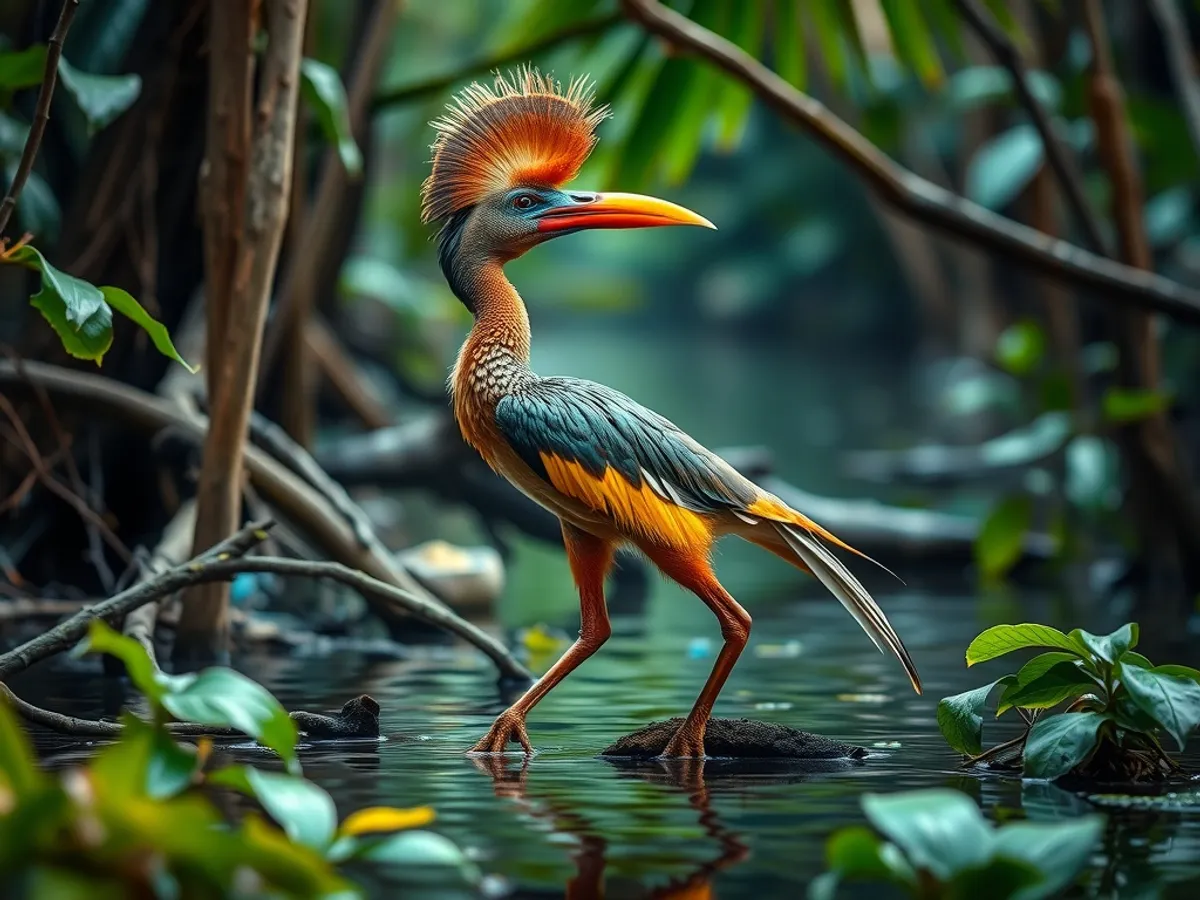
The Hoatzin (Opisthocomus hoazin) is a medium-sized bird, measuring 61–66 cm (24–26 in) in length and weighing approximately 700–900 grams (1.5–2 lbs). Its most distinctive features include a prominent spiky crest, bare blue facial skin, and deep red eyes. The plumage is predominantly chestnut-brown with buff streaks and a rufous underbelly, while the wings and tail are broad and rounded. Anatomically unique among birds, the Hoatzin possesses an enlarged crop and esophagus, adapted for foregut fermentation of leaves, which gives the bird its characteristic odor. Its sternum is reduced to accommodate the enlarged crop, resulting in weak flight muscles and a clumsy, labored flight. Hoatzins are highly arboreal, rarely descending to the ground, and are often observed perched in dense vegetation near water. Their digestive system is more similar to that of ruminant mammals than to other birds, as microbial fermentation in the crop breaks down cellulose. Juvenile Hoatzins are born with two functional claws on each wing, which they use to climb branches and escape predators—a trait lost as they mature. Socially, Hoatzins are gregarious, living in flocks of up to 40 individuals, and exhibit communal nesting and cooperative breeding behaviors.
Did you know?
Despite their awkward flight and poor flying ability, Hoatzin chicks can leap into water and swim to safety if threatened, using their wing claws to climb back up afterwards.
Research & sources
Wikipedia summary
The hoatzin or hoactzin is a species of tropical bird found in swamps, riparian forests, and mangroves of the Amazon and the Orinoco basins in South America. It is the only extant species in the genus Opisthocomus which is the only extant genus in the Opisthocomidae family under the order of Opisthocomiformes. Despite being the subject of intense debate by specialists, the taxonomic position of this family is still far from clear.
Behaviour & social structure
Hoatzins are diurnal and spend most of their day foraging in the canopy, feeding almost exclusively on young leaves, buds, and occasionally flowers and fruits from a variety of aquatic and riparian plants. They are slow-moving and deliberate in their movements, often seen clambering through branches with the aid of their feet and, in juveniles, their wing claws. Hoatzins are highly social, roosting and nesting in loose colonies, and communicate with a variety of vocalizations, including grunts, hisses, and croaks. They are territorial during the breeding season, with groups defending nesting sites from intruders. Bathing and sunning are common behaviors, and individuals often preen each other, reinforcing social bonds. Flight is generally weak and only used for short distances, as their large crop restricts the development of strong flight muscles.
Reproduction & life cycle
Hoatzins breed during the rainy season, which varies regionally but generally occurs from December to May. They are monogamous, and pairs cooperate with other group members in raising offspring—a form of cooperative breeding. Nests are constructed as loose platforms of sticks, typically 2–4 meters above water in dense vegetation. Females lay 2–3 pale, speckled eggs per clutch. Incubation lasts about 28–32 days, shared by both parents and sometimes helpers. Chicks are altricial and hatch blind and helpless, but within days, they develop functional claws on their wings, allowing them to climb if threatened. If disturbed, chicks may drop into the water below and swim to safety, later climbing back to the nest. Fledging occurs at 2–3 weeks, but juveniles remain dependent on adults for food for several more weeks.
Adaptations & survival
The Hoatzin's most remarkable adaptation is its foregut fermentation system, unique among birds, which allows it to digest tough, fibrous leaves by microbial breakdown in the crop. This adaptation is accompanied by a reduced keel on the sternum and a large, muscular crop, which limits flight capability but enables efficient folivory. Juvenile wing claws are an evolutionary throwback, aiding in arboreal locomotion and predator avoidance. Their cryptic coloration and tendency to remain motionless among foliage provide camouflage. Social living and cooperative breeding enhance reproductive success and defense against predators. The strong, musky odor produced by fermentation is thought to deter some predators.
Cultural significance
The Hoatzin holds a unique place in local folklore and indigenous cultures of the Amazon and Orinoco basins. Its unusual appearance and odor have inspired myths, with some groups viewing it as a symbol of the forest's mystery or as a 'spirit bird.' The bird's meat is generally avoided due to its unpleasant taste and smell, so it has little direct economic or subsistence value. In Western scientific culture, the Hoatzin is often cited as a 'living fossil' due to its primitive features and debated evolutionary relationships.
Recent research
Recent genetic and morphological studies have intensified debate over the Hoatzin's phylogenetic placement, with some analyses suggesting affinities to Galliformes, Cuculiformes, or even a distinct lineage within Neoaves. A 2015 whole-genome analysis supported its status as a unique early branch of modern birds, but consensus remains elusive. Ongoing research focuses on the microbiome of the Hoatzin's crop, which harbors a diverse community of cellulose-digesting bacteria, providing insights into convergent evolution with mammalian ruminants. Studies of juvenile wing claws have informed understanding of avian evolution and the transition from dinosaurian ancestors. Conservation research monitors population trends and habitat changes in response to environmental pressures.
Videos
Habitat
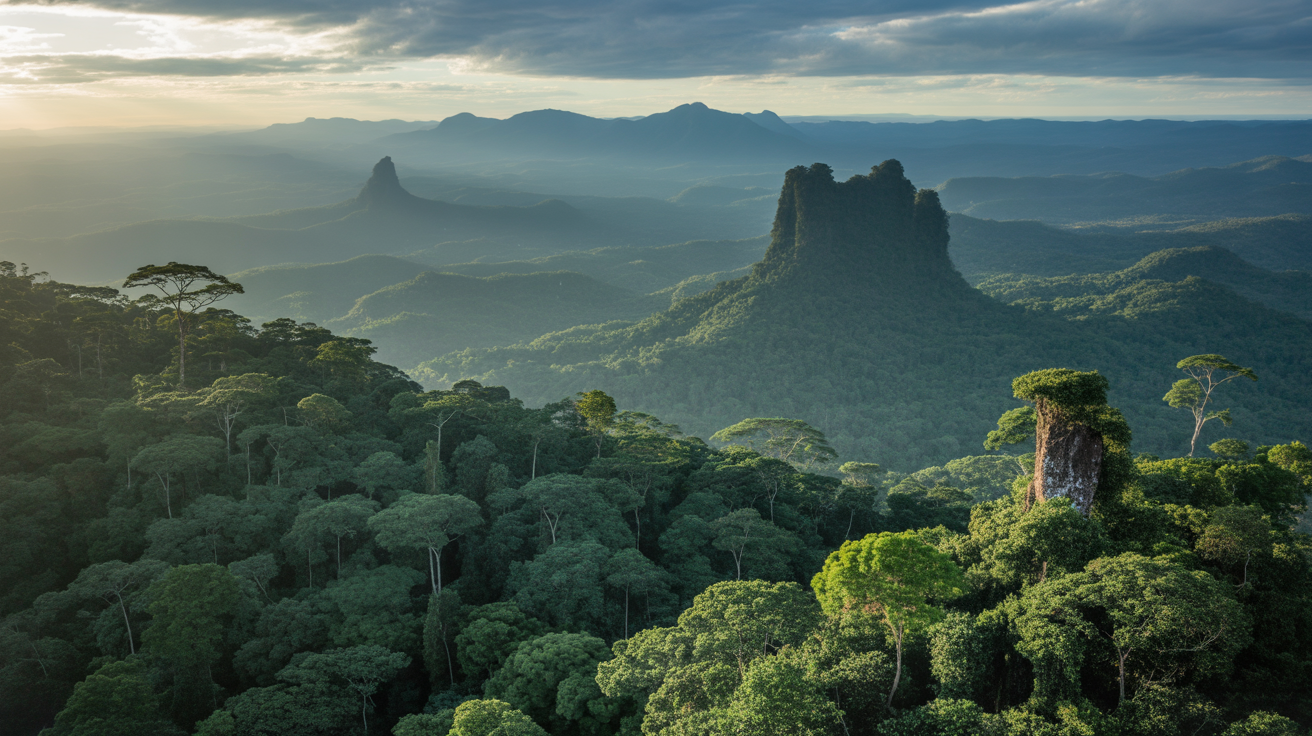
Tropical riverine forest, flooded forests, and mangroves
 Tropical Regions
Rainforest
Dense, wet forests with the highest biodiversity on Earth, containing more than half of the world's plant and animal species.
 Global
Forest
Wooded areas with significant tree cover and diverse plant and animal communities.
 Global
Freshwater
Lakes, rivers, and wetlands with diverse aquatic ecosystems.
Conservation
The Hoatzin is currently classified as Least Concern on the IUCN Red List.
Threats & challenges
Currently classified as Least Concern by the IUCN, Hoatzin populations are stable across much of their range, but they face localized threats from habitat destruction, particularly deforestation and wetland drainage for agriculture and development. Hunting pressure is minimal due to their unpalatable meat and strong odor. Climate change poses a long-term threat by altering flood regimes and vegetation patterns in Amazonian wetlands. Fragmentation of habitat can disrupt social structure and breeding success. Conservation efforts focus on preserving large tracts of flooded forest and riparian habitats.
Taxonomy
Scientific name
Opisthocomus hoazin
- Kingdom
- Animalia
- Phylum
- Chordata
- Class
- Aves
- Order
- Opisthocomiformes
- Family
- Opisthocomidae
- Genus
- Opisthocomus
- Species
- hoazin
Community notes
Share your observations about the Hoatzin.
No community notes yet. Be the first!
Discover more wildlife
More fascinating animals from the encyclopedia.