
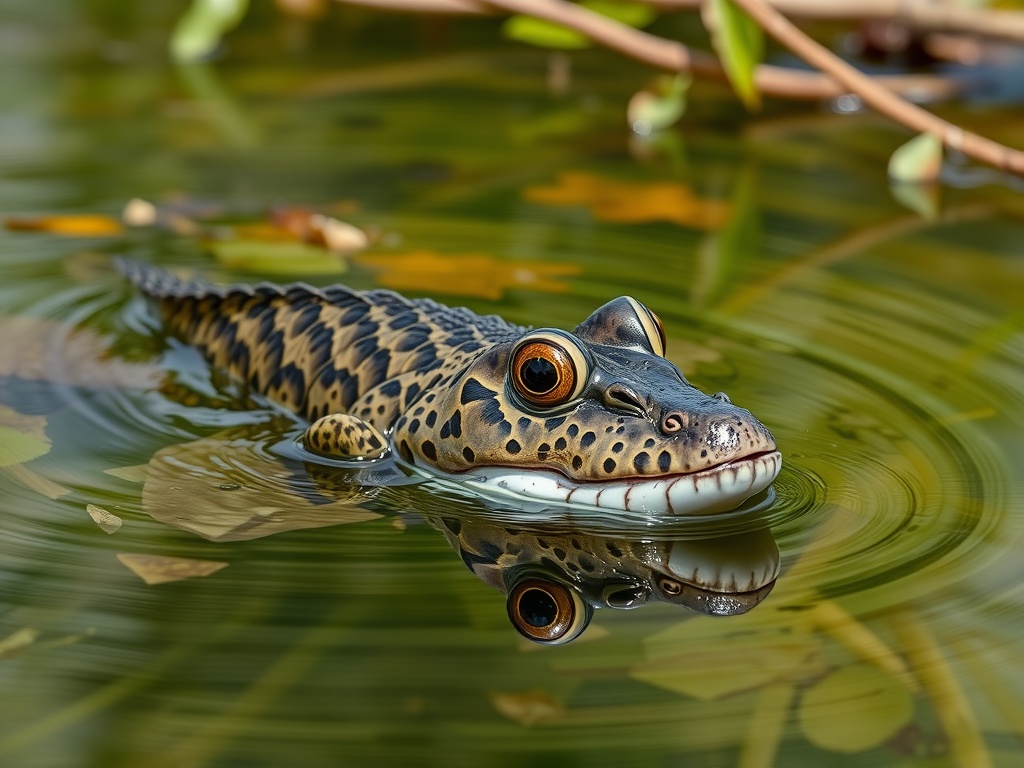
About the Jack Dempsey
The Jack Dempsey is a striking freshwater fish native to Central America, known for its iridescent blue, green, and gold flecks on a dark background. Named after the famous boxer due to its aggressive nature, the Jack Dempsey is a popular species in the aquarium trade. This cichlid can display a range of colors depending on its mood, age, and environment. In the wild, it prefers slow-moving, warm waters with plenty of hiding spots provided by submerged roots and vegetation.
Fascinating facts
Color Chameleons
Jack Dempsey fish can rapidly change their coloration to signal stress, dominance, or readiness to breed.
Aggressive Defenders
These cichlids are highly territorial, especially during breeding, and will fiercely defend their chosen space from intruders.
Parental Care
Both male and female Jack Dempseys participate in guarding and caring for their eggs and fry, often moving them to different locations for safety.
Detailed description
The Jack Dempsey (Rocio octofasciata) is a robust, laterally compressed cichlid, typically reaching 15–20 cm (6–8 in) in length, though larger specimens up to 25 cm (10 in) have been recorded in the wild. Its coloration is highly variable, with adults displaying a dark brown to grayish background adorned with iridescent blue, green, and gold spots, which intensify during courtship or aggression. Juveniles are generally paler with faint vertical bars, gradually developing their vivid adult hues. The species possesses a powerful jaw and conical teeth adapted for a carnivorous diet. Dorsal and anal fins are elongated, often with filamentous extensions in mature males, which also exhibit more intense coloration and longer fin rays than females. Jack Dempseys are territorial and exhibit pronounced sexual dimorphism, with males being larger and more colorful. Their lateral line system is well-developed, aiding in the detection of water movements and prey. In their native range, they inhabit slow-moving, warm (22–30°C/72–86°F) waters with soft, muddy substrates and abundant submerged vegetation or woody debris, which provide essential cover. Their adaptability to a range of water conditions has contributed to their success both in the wild and in captivity.
Did you know?
Jack Dempseys are mouthbrooders, meaning both parents may carry eggs and fry in their mouths for protection.
Research & sources
Wikipedia summary
William Harrison "Jack" Dempsey, nicknamed Kid Blackie and The Manassa Mauler, was an American boxer who competed from 1914 to 1927, and world heavyweight champion from 1919 to 1926. One of the most iconic athletes of his era, Dempsey is ranked sixth on The Ring magazine's list of all-time heavyweights and fourth among its Top 100 Greatest Punchers, while in 1950 the Associated Press voted him as the greatest fighter of the past 50 years. He is a member of the International Boxing Hall of Fame, and was in the previous Boxing Hall of Fame.
Behaviour & social structure
Jack Dempseys are known for their aggressive and territorial behavior, especially during breeding or when defending shelter sites. They are crepuscular, exhibiting peak activity during dawn and dusk. In the wild, they are ambush predators, feeding on smaller fish, crustaceans, insects, and occasionally plant matter. They use stealth and sudden bursts of speed to capture prey. Socially, they are typically solitary or form monogamous pairs, but may tolerate conspecifics in larger, structured environments with ample hiding places. Hierarchies are established through displays, posturing, and occasional physical confrontations. In captivity, their aggression can be exacerbated by overcrowding or insufficient cover, leading to dominance disputes. Jack Dempseys communicate through body coloration changes, fin displays, and rapid movements, which serve as warnings or courtship signals.
Reproduction & life cycle
Jack Dempseys are biparental substrate spawners, forming monogamous pairs during the breeding season, which can occur year-round in tropical environments. Courtship involves ritualized displays, including color intensification and lateral body quivering. Females lay 500–800 adhesive eggs on flat rocks, submerged wood, or excavated pits. Both parents guard the eggs, which hatch in 3–5 days at optimal temperatures (26–29°C/79–84°F). The fry are then moved to pre-dug pits and cared for by both parents, who fan the eggs and defend the brood vigorously. Parental care extends for several weeks post-hatching, with adults protecting and guiding the fry until they become independent. This high level of parental investment is typical of cichlids and contributes to relatively high survival rates of offspring.
Adaptations & survival
Jack Dempseys possess several adaptations for survival in variable freshwater habitats. Their cryptic coloration and ability to rapidly change hue help them avoid predators and communicate with conspecifics. Strong jaws and sharp teeth enable them to exploit a carnivorous diet, while a well-developed lateral line system enhances their ability to detect prey and navigate turbid waters. Behavioral plasticity allows them to thrive in both natural and artificial environments, tolerating a range of water chemistries and temperatures. Their aggressive territoriality reduces competition for resources and increases reproductive success. Parental care strategies, including egg guarding and fry herding, are evolutionary specializations that improve offspring survival.
Cultural significance
The Jack Dempsey is named after the famous American heavyweight boxer due to its combative nature and striking appearance. It is a staple in the aquarium trade, prized for its vivid coloration and interactive behavior. In some regions, it has been introduced as a game fish, though this has raised ecological concerns. The species is occasionally referenced in popular culture as a symbol of toughness or aggression. There are no significant traditional uses or mythological associations in its native range.
Recent research
Recent research has focused on the behavioral ecology and adaptive coloration of Rocio octofasciata, particularly the role of environmental factors in modulating aggression and reproductive success. Studies have examined the impact of water quality and habitat complexity on stress responses and social hierarchies. Genetic analyses have clarified its phylogenetic placement within the Cichlidae family and revealed low but present genetic diversity across its range. Ongoing research investigates its invasive potential and ecological impacts in non-native habitats, as well as the physiological mechanisms underlying its rapid color changes.
Videos
Habitat
Freshwater rivers, lakes, and swamps


Conservation
The Jack Dempsey is currently classified as Least Concern on the IUCN Red List.
Threats & challenges
Currently, Rocio octofasciata is classified as Least Concern by the IUCN, with stable populations across its native range in Mexico, Honduras, Guatemala, and Belize. However, localized threats include habitat degradation from pollution, deforestation, and water extraction. Invasive populations have been reported in Florida, Australia, and Thailand, where they may compete with native species. Overcollection for the aquarium trade is not considered a significant threat due to successful captive breeding. Climate change and habitat fragmentation could pose future risks by altering water regimes and reducing suitable habitats.
Taxonomy
Scientific name
Rocio octofasciata
- Kingdom
- Animalia
- Phylum
- Chordata
- Class
- Actinopterygii
- Order
- Cichliformes
- Family
- Cichlidae
- Genus
- Rocio
- Species
- octofasciata
Community notes
Share your observations about the Jack Dempsey.
No community notes yet. Be the first!
Discover more wildlife
More fascinating animals from the encyclopedia.