
About the Lesser Antillean Iguana
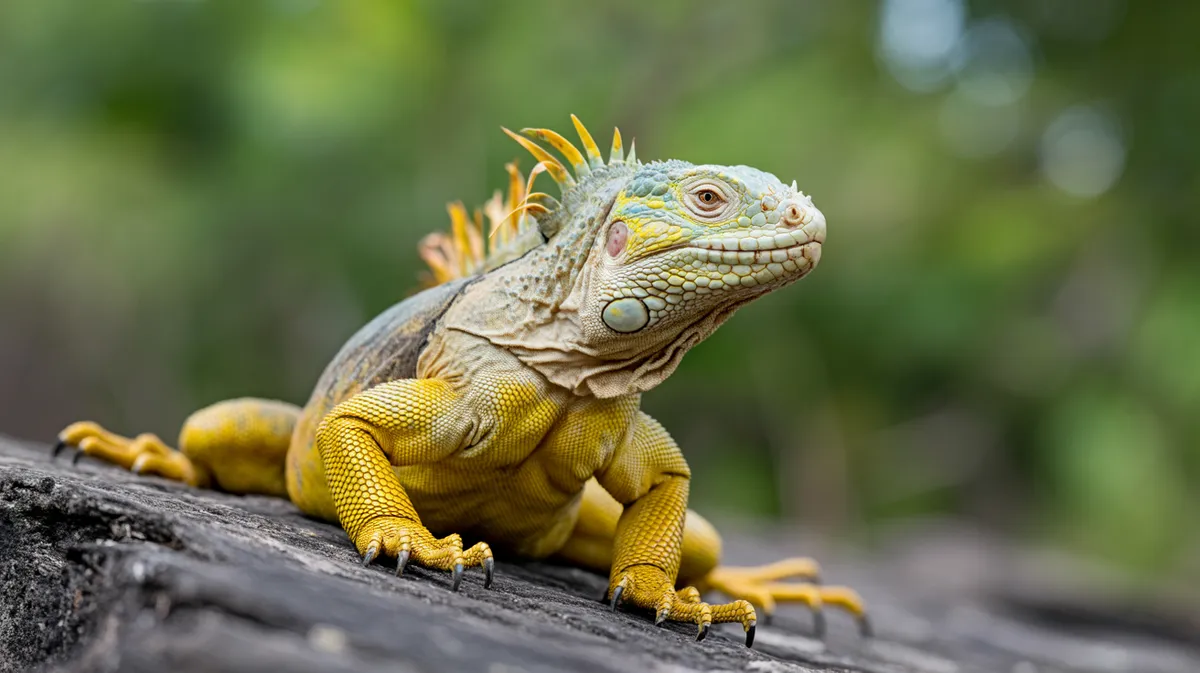
The Lesser Antillean Iguana is a large, herbivorous lizard native to the Caribbean islands of the Lesser Antilles. It is characterized by its robust body, uniform gray-green coloration, and a lack of the large throat dewlap found in its close relatives. This iguana inhabits subtropical forests, coastal woodlands, and scrublands, where it feeds on a wide variety of leaves, flowers, and fruits. Due to habitat loss, introduced predators, and hybridization with the invasive Green Iguana, its populations have dramatically declined, making it one of the most threatened lizards in the Caribbean.
Fascinating facts
Herbivorous Diet
The Lesser Antillean Iguana feeds almost exclusively on leaves, flowers, and fruits, playing an important role in seed dispersal in its native habitats.
Arboreal Lifestyle
This iguana spends much of its time in trees, especially for sleeping, which helps it avoid many terrestrial predators.
On the Brink
With populations fragmented and declining, the species is now classified as Critically Endangered and has disappeared from several islands where it once thrived.
Detailed description
The Lesser Antillean iguana (Iguana delicatissima) is a robust, medium-to-large arboreal lizard, with adults typically reaching 30–42 cm (12–16.5 in) in snout-vent length and a total length, including the tail, of up to 1.3 meters (4.3 ft). Its coloration is generally a uniform grayish-green to olive, lacking the pronounced banding and throat dewlap seen in the related Green Iguana (Iguana iguana). The head is angular with small, smooth scales, and the jowls are less developed, especially in males. Males are larger than females and may develop subtle blue or pinkish hues during the breeding season. The dorsal crest is modest, with small, evenly spaced spines. This species is primarily diurnal and arboreal, spending much of its time basking in the sun or foraging in the canopy. It is a strict herbivore, feeding on a diverse array of leaves, flowers, fruits, and occasionally seeds. Lesser Antillean iguanas are generally solitary outside of the breeding season, with individuals maintaining overlapping home ranges but rarely engaging in aggressive encounters. Their cryptic coloration and preference for dense foliage provide effective camouflage from predators. Reproduction occurs seasonally, with females descending to the ground to lay eggs in sandy or loose soil. Hatchlings are independent from birth and exhibit rapid growth during their first year. The species is highly sensitive to habitat disturbance and is now restricted to a few isolated populations on islands such as Dominica, Anguilla, and Saint Barthélemy.
Did you know?
Hybridization with invasive Green Iguanas is one of the greatest threats to the survival of the Lesser Antillean Iguana, leading to genetic dilution.
Research & sources
Wikipedia summary
The Lesser Antillean iguana is a large arboreal lizard endemic to the Lesser Antilles. It is one of two species of lizard of the genus Iguana and is in severe decline due to habitat destruction, introduced feral predators, hunting, and hybridization with its introduced sister species, the green iguana. Successful captive breeding of this species has been limited to only two instances, as most captive-laid eggs tend to be infertile.
Behaviour & social structure
Lesser Antillean iguanas are primarily arboreal, spending most of their lives in the upper canopy of forests and coastal woodlands. They are diurnal, with peak activity during the morning and late afternoon when basking and foraging are most efficient. Their diet consists exclusively of plant material, including young leaves, flowers, fruits, and occasionally shoots from over 50 documented plant species. Iguanas use their keen vision to locate food and avoid predators. Social interactions are limited, but during the breeding season, males may display territorial behaviors, including head-bobbing, dewlap extension (though less pronounced than in green iguanas), and tail-lashing. Outside of breeding, individuals are largely solitary and avoid conflict through visual signals and spatial separation. When threatened, they may drop from branches into water or dense undergrowth, relying on speed and camouflage for escape.
Reproduction & life cycle
Breeding occurs annually, typically at the onset of the wet season (April to July), though timing may vary by island. Males establish temporary territories and court females through visual displays. After mating, females develop eggs over several weeks and then descend to the ground to excavate nests in sandy or loose soil, often in open, sun-exposed areas. Clutch size ranges from 10 to 30 eggs, with incubation lasting 65–90 days depending on temperature and humidity. There is no parental care after egg-laying; hatchlings emerge fully independent and must quickly find cover to avoid predation. Sexual maturity is reached at 3–5 years of age. Captive breeding has proven extremely challenging, with only two documented successful instances, likely due to infertility of eggs in captivity and the species' sensitivity to environmental conditions.
Adaptations & survival
The Lesser Antillean iguana exhibits several adaptations for arboreal life, including long, muscular limbs and sharp claws for climbing, as well as a laterally compressed tail that aids in balance and swimming. Its cryptic coloration provides camouflage among leaves and branches, reducing predation risk. The species has a highly efficient digestive system specialized for processing fibrous plant material, including a large hindgut for microbial fermentation. Behavioral adaptations include basking to regulate body temperature and the use of visual signals for communication and territoriality. The ability to drop from trees into water or dense vegetation is an effective escape mechanism from predators.
Cultural significance
Historically, the Lesser Antillean iguana has been a source of food for indigenous peoples and local communities, though this practice has largely ceased due to legal protections and declining populations. The species features in local folklore and is sometimes seen as a symbol of the unique biodiversity of the Lesser Antilles. Conservation programs have used the iguana as a flagship species to promote habitat protection and environmental education. Its presence is often associated with healthy, intact forest ecosystems, making it an indicator species for conservation efforts.
Recent research
Recent research has focused on the genetic integrity of remaining populations, the extent and impact of hybridization with Green Iguanas, and the development of effective conservation strategies, including habitat restoration and biosecurity measures to prevent further introductions. Studies have also examined the species' reproductive biology, dietary preferences, and habitat use to inform captive breeding and reintroduction programs. Ongoing projects include population monitoring using mark-recapture and genetic analysis, as well as public education campaigns to reduce human impact. The species' low reproductive success in captivity remains a significant challenge for ex-situ conservation.
Videos
Habitat
Subtropical forests and coastal woodlands

Conservation
The Lesser Antillean Iguana is currently classified as Critically Endangered on the IUCN Red List.
Threats & challenges
The species faces severe threats from habitat loss due to agriculture, urbanization, and tourism development, leading to fragmentation and degradation of suitable environments. Introduced predators such as feral cats, dogs, and mongooses prey on eggs, juveniles, and adults. Hunting for food and the pet trade, though less common today, has historically contributed to declines. The most critical threat is hybridization with the invasive Green Iguana (Iguana iguana), which has been introduced to several islands; hybrids are fertile and can outcompete or genetically swamp native populations. Disease transmission from Green Iguanas is also a concern. As a result, populations are highly fragmented, with some island populations numbering fewer than 100 individuals. The IUCN lists the species as Critically Endangered, and it is included in CITES Appendix II.
Taxonomy
Scientific name
Iguana delicatissima
- Kingdom
- Animalia
- Phylum
- Chordata
- Class
- Reptilia
- Order
- Squamata
- Family
- Iguanidae
- Genus
- Iguana
- Species
- delicatissima
Where to see a lesser antillean iguana
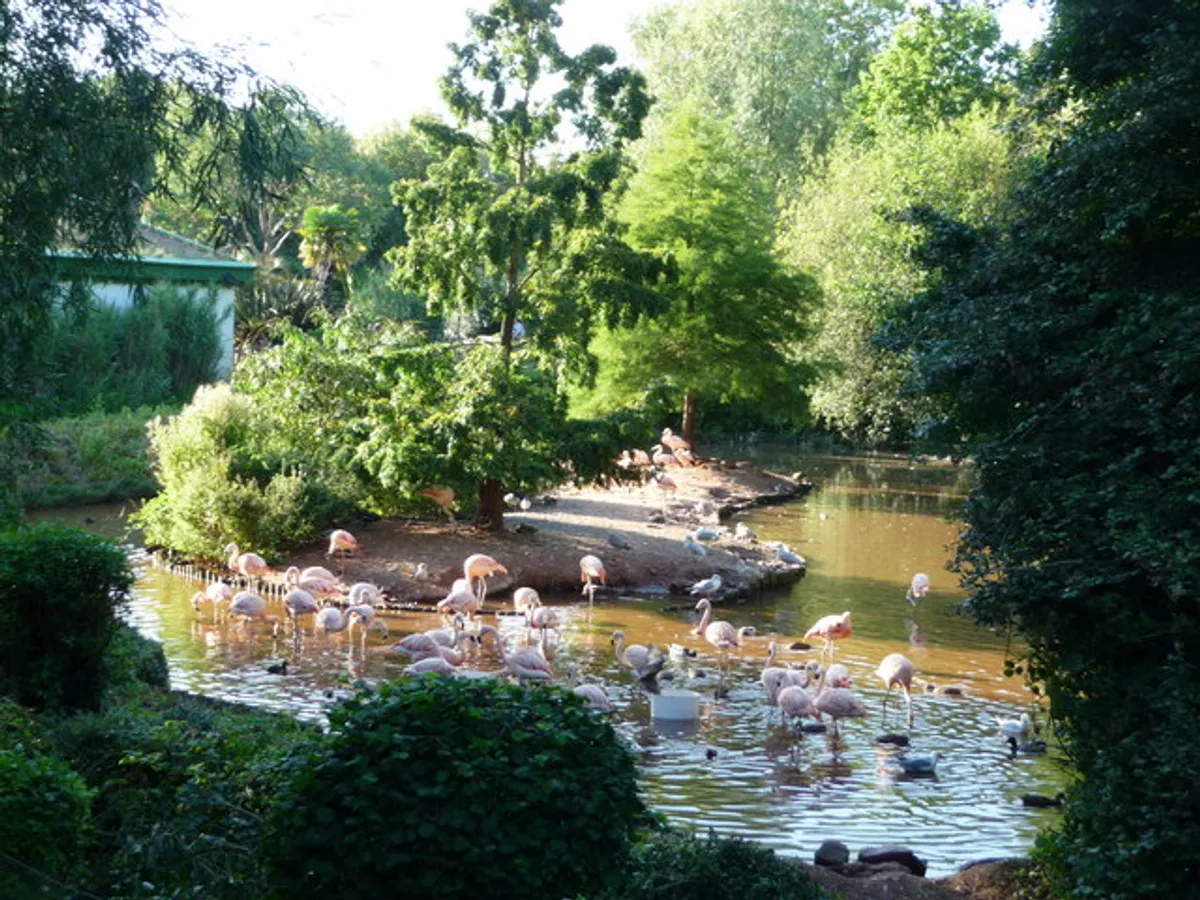
1 zoo and aquarium in 1 country are recorded as keeping this species.
Community notes
Share your observations about the Lesser Antillean Iguana.
No community notes yet. Be the first!
Discover more wildlife
More fascinating animals from the encyclopedia.