
About the Lesser Flamingo
Phoeniconaias minor is the smallest and by far the most numerous flamingo, with a global population in the millions, and it makes a living where almost nothing else can. Its core habitat is East Africa's soda lakes - Natron, Bogoria, Nakuru - where the water can reach pH 10 or higher, hot enough in places to strip flesh and caustic enough to burn skin. The flamingo survives on tough leathery leg skin and a thick nasal secretion, and it drinks by taking fresh water from hot springs and seeps at the lake edges, sometimes literally from near-boiling inflows. Its bill is a hyper-specialised filter, more deeply keeled than a greater flamingo's, and it strains microscopic cyanobacteria, mostly Arthrospira, from the surface film - it feeds essentially on a single food, and the pigment in that cyanobacterium is what turns the bird pink. The only significant breeding site for the entire East African population is Lake Natron in Tanzania, a single hostile mudflat where chicks walk many kilometres to fresh water; the concentration of an entire regional population into one site makes the species dangerously fragile, and a proposed soda ash plant at Natron drew fierce international opposition.
Fascinating facts
Striking Pink Plumage
The pink coloration of Lesser Flamingos comes from carotenoid pigments found in their diet of algae and cyanobacteria.
Massive Colonies
Lesser Flamingos can gather in colonies that surpass one million individuals, making them one of the most social bird species.
Unique Feeding Technique
They feed by filtering water through their specialized bills upside-down, efficiently straining microscopic food particles.
Detailed description
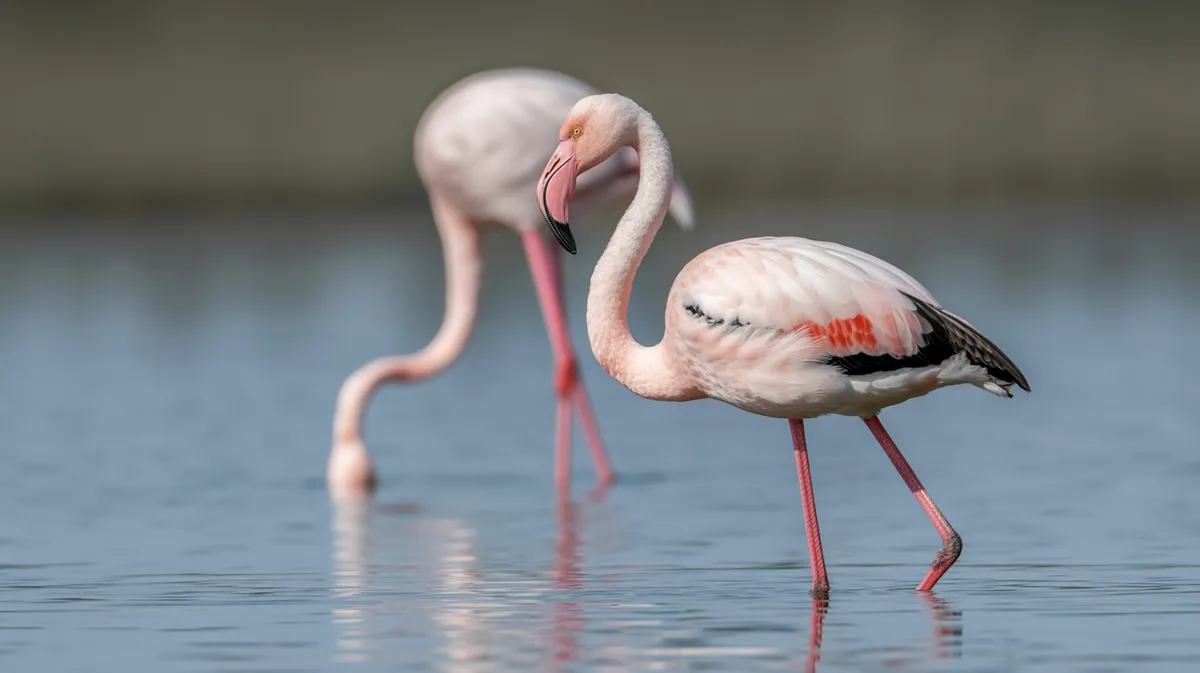
The Lesser Flamingo (Phoeniconaias minor) is the smallest member of the flamingo family, standing about 80–90 cm tall and weighing between 1.2 and 2.7 kg. Its plumage is a delicate pink, with deeper crimson highlights on the wings and a striking black-tipped bill that is uniquely adapted for filter-feeding. The legs are long and slender, pale pink in color, enabling the bird to wade through shallow, highly alkaline or saline waters. The eyes are yellow with a red orbital ring, providing acute vision for detecting predators and conspecifics. Lesser Flamingos are highly gregarious, forming dense colonies that can exceed a million individuals, making them among the most social of all bird species. Their vocalizations are complex, consisting of honking, grunting, and low-frequency calls that help maintain group cohesion. The species is almost entirely dependent on specialized habitats—primarily soda lakes with high concentrations of cyanobacteria and microalgae, which form the bulk of their diet and are responsible for their vivid coloration. Their feeding apparatus, including a deep-keeled bill and densely packed lamellae, is highly specialized for filtering minute food particles from the water. The Lesser Flamingo’s synchronized breeding and mass nesting events are triggered by environmental cues such as rainfall and water levels, reflecting a high degree of adaptation to their unpredictable habitats.
Did you know?
Despite their abundance in certain areas, the majority of Lesser Flamingos breed at only a handful of sites, making their populations vulnerable to habitat changes.
Research & sources
Wikipedia summary
The lesser flamingo is a species of flamingo occurring in sub-Saharan Africa and western India. Birds are occasionally reported from further north, but these are generally considered vagrants.
Behaviour & social structure
Lesser Flamingos are diurnal but may also feed at night, especially during the breeding season. They spend much of their day filter-feeding with their heads inverted in the water, using a unique piston-like tongue movement to draw water through their bills and trap microscopic food. Social behaviors are highly developed; birds engage in elaborate group displays, including synchronized marching, head-flagging, and wing-saluting, which serve both to strengthen pair bonds and stimulate breeding. Flocking provides safety in numbers, reducing predation risk from terrestrial and aerial predators. When not feeding, flamingos preen extensively to maintain feather condition and waterproofing, using a specialized uropygial gland. Resting is often done while standing on one leg, a behavior thought to reduce muscle fatigue and conserve body heat. During migration or dispersal, flocks fly in V-shaped formations, often covering hundreds of kilometers between feeding and breeding sites.
Reproduction & life cycle
Breeding in Lesser Flamingos is highly synchronized and typically occurs in response to seasonal rainfall, which creates suitable nesting conditions on exposed mudflats. Large colonies may contain tens to hundreds of thousands of nests. Each pair constructs a conical mud nest, elevated above the water to protect the single chalky-white egg from flooding and predation. Incubation lasts about 27–31 days, shared by both parents. After hatching, chicks are fed a nutrient-rich secretion known as 'crop milk,' produced in the parents' upper digestive tract. Chicks are highly precocial and soon join large crèches, sometimes numbering in the thousands, where they are guarded collectively while parents forage. Fledging occurs at 65–90 days, after which juveniles gradually acquire adult plumage and feeding skills. Breeding success is highly variable and closely linked to water levels and food availability.
Adaptations & survival
The Lesser Flamingo exhibits several remarkable adaptations for its extreme habitat. Its specialized bill contains up to 10,000 lamellae per centimeter, allowing efficient filtration of microscopic cyanobacteria and diatoms. The tongue is muscular and covered in bristles, acting as a pump to force water through the bill. Their legs and feet are resistant to caustic alkaline mud, and their skin secretes oils that protect against chemical burns. Physiologically, they can tolerate high salt concentrations and dehydration, aided by efficient kidney function. Social adaptations include complex group displays and synchronized nesting, which maximize reproductive success and minimize predation. Their pink coloration, derived from carotenoid pigments in their diet, may serve as a signal of health and breeding fitness.
Cultural significance
Lesser Flamingos hold cultural significance in several African and Indian societies, often symbolizing beauty, grace, and resilience. In East Africa, their spectacular gatherings are a major draw for eco-tourism, contributing to local economies and conservation awareness. Flamingos feature in local folklore and are sometimes depicted in traditional art. However, there is little evidence of direct traditional use, as their habitats are often remote and inhospitable to humans.
Recent research
Recent research has focused on the effects of environmental toxins, such as heavy metals and pesticides, on flamingo health and reproduction. Studies using satellite telemetry have revealed long-distance movements between breeding and feeding sites, highlighting the need for transboundary conservation efforts. Genetic analyses have shown low genetic diversity, likely due to population bottlenecks and reliance on a few major breeding sites. Ongoing studies are investigating the impact of climate change on soda lake ecosystems and the implications for flamingo population dynamics. Conservation programs are increasingly using remote sensing and drone technology to monitor colonies and assess habitat changes.
Sources
Videos
Habitat
Alkaline and saline lakes


Conservation
The Lesser Flamingo is currently classified as Near Threatened on the IUCN Red List.
Threats & challenges
Lesser Flamingos face a range of threats, including habitat loss from water extraction, pollution (especially heavy metals and pesticides), disturbance from human activity, and climate change-driven alterations in rainfall and water chemistry. Their dependence on a limited number of breeding sites—such as Lake Natron in Tanzania, which supports the majority of the global population—makes them highly vulnerable to localized disasters. Mass die-offs have occurred due to botulism, drought, and industrial pollution. Egg collection and disturbance at nesting sites further threaten breeding success. Although still numerous, population trends are declining, and the species is classified as Near Threatened by the IUCN.
Taxonomy
Scientific name
Phoeniconaias minor
- Kingdom
- Animalia
- Phylum
- Chordata
- Class
- Aves
- Order
- Phoenicopteriformes
- Family
- Phoenicopteridae
- Genus
- Phoeniconaias
- Species
- minor
Where to see a lesser flamingo
8 zoos and aquariums in 2 countries are recorded as keeping this species.
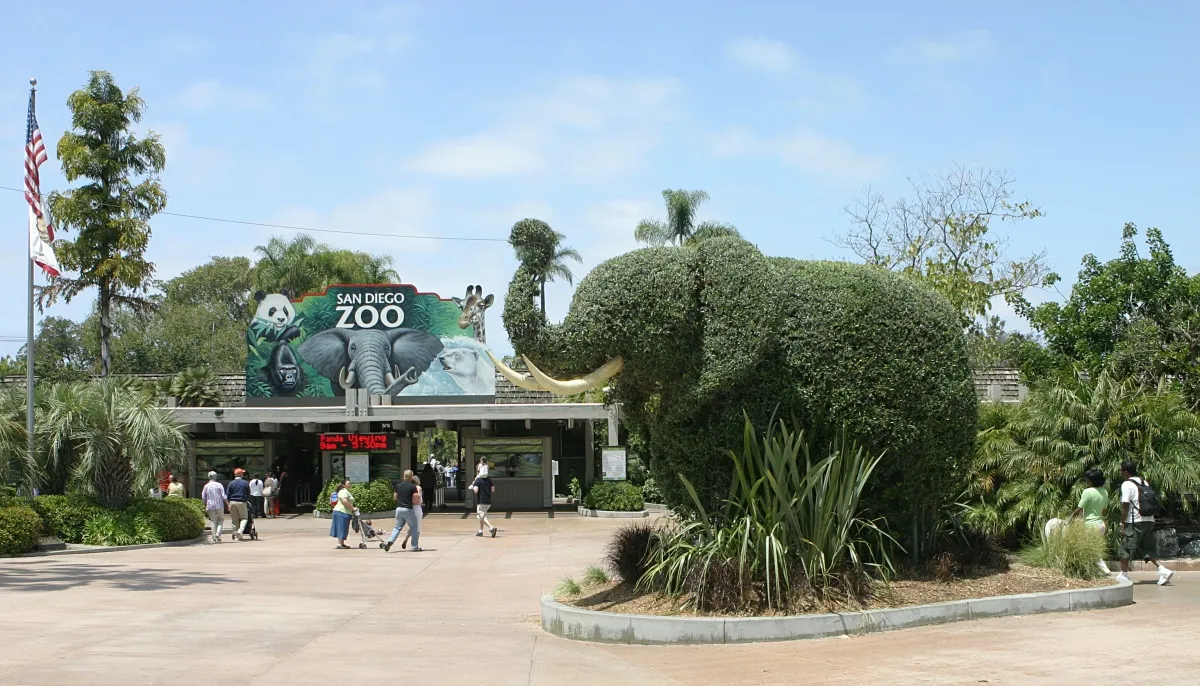 San Diego Zoo🇺🇸 San Diego, United States
 Kansas City Zoo & Aquarium🇺🇸 Kansas City, United States
 Caldwell Zoo🇺🇸 Tyler, United States
 Memphis Zoo🇺🇸 Memphis, United States
 Cleveland Metroparks Zoo🇺🇸 Cleveland, United States
Community notes
Share your observations about the Lesser Flamingo.
No community notes yet. Be the first!
Discover more wildlife
More fascinating animals from the encyclopedia.