
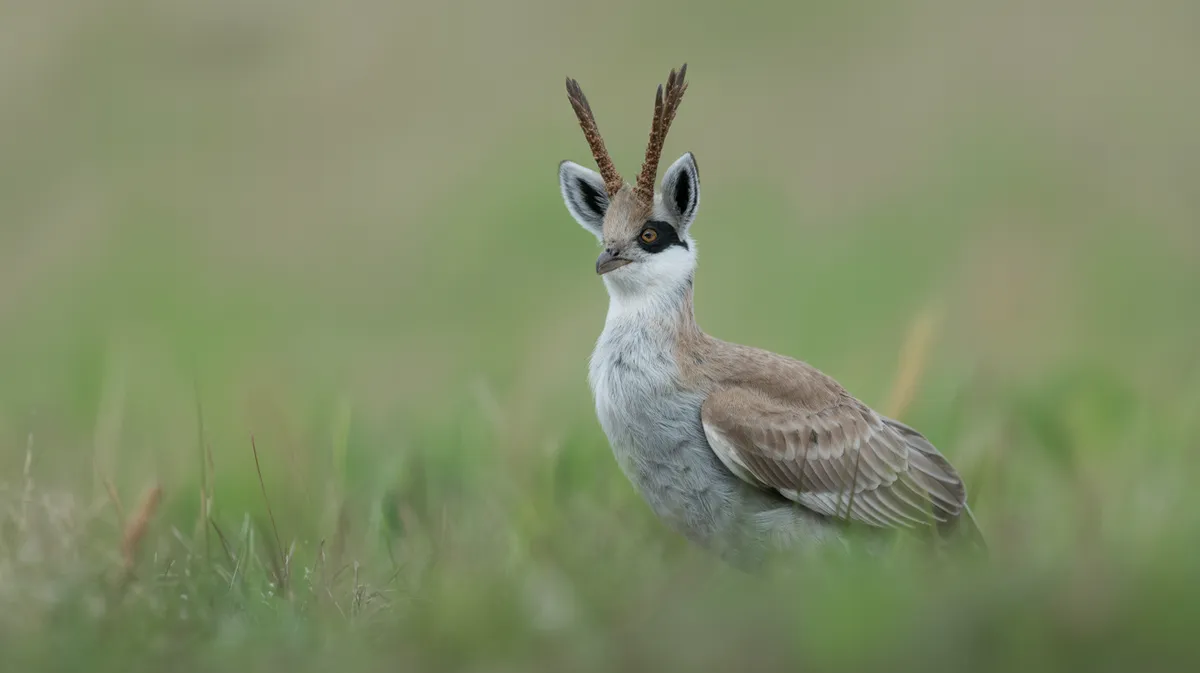
About the Lesser Grison
The Lesser Grison is a slender, weasel-like mammal native to South America, recognized for its elongated body, short legs, and bushy tail. Its fur is predominantly grayish on the back, contrasting with a darker face and belly, and a distinctive white stripe runs from above the eyes to the shoulders. Lesser Grisons are highly adaptable and can be found in a variety of habitats, including grasslands, scrublands, and forest edges. Known for their agility and fierce hunting abilities, they are skilled predators, preying on rodents, birds, and reptiles. Despite their secretive nature, they play a vital role in controlling pest populations in their native range.
Fascinating facts
Musky Defenses
When threatened, the Lesser Grison can release a pungent musk from its anal glands to deter predators.
Versatile Hunter
Their diet includes small mammals, birds, reptiles, and insects, showcasing their adaptability as hunters.
Habitat Flexibility
Lesser Grisons thrive in a wide range of environments, from open grasslands to the outskirts of forests and even agricultural fields.
Detailed description
The lesser grison (Galictis cuja) is a medium-sized mustelid, typically measuring 27–52 cm in body length with a bushy tail of 14–19 cm, and weighing between 1.2 and 2.4 kg. Its elongated, slender body and short, robust legs are well-adapted for moving through dense vegetation and burrows. The fur is coarse and grizzled gray dorsally, with a contrasting dark brown to black ventral side and a sharply defined white or pale stripe extending from above the eyes to the shoulders. The head is broad and flattened, with small, rounded ears and sharp, recurved claws suited for digging. Lesser grisons possess well-developed anal scent glands, which they use for territorial marking and defense. Their dentition is specialized for carnivory, with strong canines and carnassials for shearing flesh. They are highly agile and capable of rapid, sinuous movements, enabling them to pursue prey in confined spaces. The species exhibits a high degree of ecological flexibility, occupying habitats ranging from Andean foothills to lowland grasslands, and is often found near water sources. Their keen senses of smell and hearing compensate for relatively poor eyesight, particularly in low-light conditions.
Did you know?
In rural parts of South America, Lesser Grisons are sometimes tamed and used to control rodent pests, much like ferrets in Europe.
Research & sources
Wikipedia summary
The lesser grison is a species of mustelid from South America.
Behaviour & social structure
Lesser grisons are primarily diurnal, though some populations exhibit crepuscular or even nocturnal activity patterns, likely influenced by prey availability and human disturbance. They are solitary for most of the year, with individuals maintaining overlapping home ranges of 1–4 km², marked with scent from their anal glands. Grisons are highly territorial and may display aggressive behaviors toward conspecifics outside the breeding season. They are opportunistic hunters, employing a combination of stealth and rapid pursuit to capture prey, which includes small mammals (especially rodents), birds, reptiles, amphibians, and occasionally invertebrates. They are known to raid poultry and small livestock, bringing them into conflict with farmers. Lesser grisons cache surplus food and may use abandoned burrows or natural crevices as temporary dens. They are adept swimmers and climbers, though they spend most of their time on the ground. Vocalizations include hisses, growls, and sharp barks, used primarily in threat displays or during mating encounters.
Reproduction & life cycle
Breeding in lesser grisons typically occurs once per year, with the timing varying geographically but often peaking in late winter to early spring (August–October in southern South America). Courtship involves vocalizations and scent marking, followed by brief periods of social tolerance. After a gestation period of approximately 39–43 days, females give birth to litters of 2–5 altricial young in a secluded den. The young are born blind and sparsely furred, opening their eyes at around 4 weeks. Maternal care is intensive; the female nurses and grooms the kits, which begin to consume solid food at 6–8 weeks and are weaned by 10–12 weeks. Juveniles remain with the mother for several months before dispersing to establish their own territories. Sexual maturity is reached at about one year of age.
Adaptations & survival
The lesser grison exhibits several adaptations for a predatory, semi-fossorial lifestyle. Its elongated, flexible body and short limbs allow it to navigate through dense undergrowth and enter burrows in pursuit of prey. The coarse, water-resistant fur provides protection against the elements and abrasive substrates. Strong claws and muscular forelimbs facilitate digging and handling prey. The anal scent glands produce a potent musk used for territorial marking and as a deterrent against predators. Behavioral flexibility, including variable activity patterns and a broad diet, enables the species to exploit a wide range of habitats and food sources. Acute olfactory and auditory senses aid in detecting prey and avoiding danger, compensating for limited visual acuity.
Cultural significance
In rural South America, the lesser grison is sometimes regarded with suspicion or hostility due to its predation on domestic fowl. In some regions, it has been hunted for its fur or as a perceived threat to livestock. Conversely, its role as a controller of rodent populations is occasionally recognized and appreciated by farmers. There is limited representation of the lesser grison in indigenous folklore or mythology, but it is sometimes featured in local tales as a cunning or elusive animal. Its distinctive appearance and secretive habits have contributed to its reputation as a mysterious inhabitant of the South American countryside.
Recent research
Recent research on Galictis cuja has focused on its ecological role as a mesopredator and its interactions with human-altered landscapes. Studies using camera traps and genetic analysis have clarified aspects of its distribution, population structure, and habitat preferences. There is growing interest in its potential as a natural pest controller, particularly in agroecosystems. Ongoing research is examining the impact of habitat fragmentation and road networks on movement patterns and mortality. Comparative studies with the greater grison (Galictis vittata) are shedding light on niche differentiation and evolutionary history within the genus. Despite its wide range, many aspects of its biology, including detailed reproductive behavior and population dynamics, remain under-studied.
Videos
Habitat
Grasslands, scrublands, open forests, and agricultural areas
Conservation
The Lesser Grison is currently classified as Least Concern on the IUCN Red List.
Threats & challenges
Although currently assessed as Least Concern by the IUCN, the lesser grison faces localized threats, primarily from habitat loss due to agricultural expansion, urbanization, and wetland drainage. Persecution by farmers, who view them as pests due to predation on poultry, can result in direct killing. Road mortality is a significant threat in areas with high vehicle traffic. The use of rodenticides and pesticides may also impact populations indirectly through prey reduction or secondary poisoning. Despite these challenges, the species' adaptability and wide distribution have helped maintain stable populations across much of its range. However, population trends are poorly monitored, and regional declines may go undetected.
Taxonomy
Scientific name
Galictis cuja
- Kingdom
- Animalia
- Phylum
- Chordata
- Class
- Mammalia
- Order
- Carnivora
- Family
- Mustelidae
- Genus
- Galictis
- Species
- cuja
Community notes
Share your observations about the Lesser Grison.
No community notes yet. Be the first!
Discover more wildlife
More fascinating animals from the encyclopedia.