
About the Madagascar Day Gecko
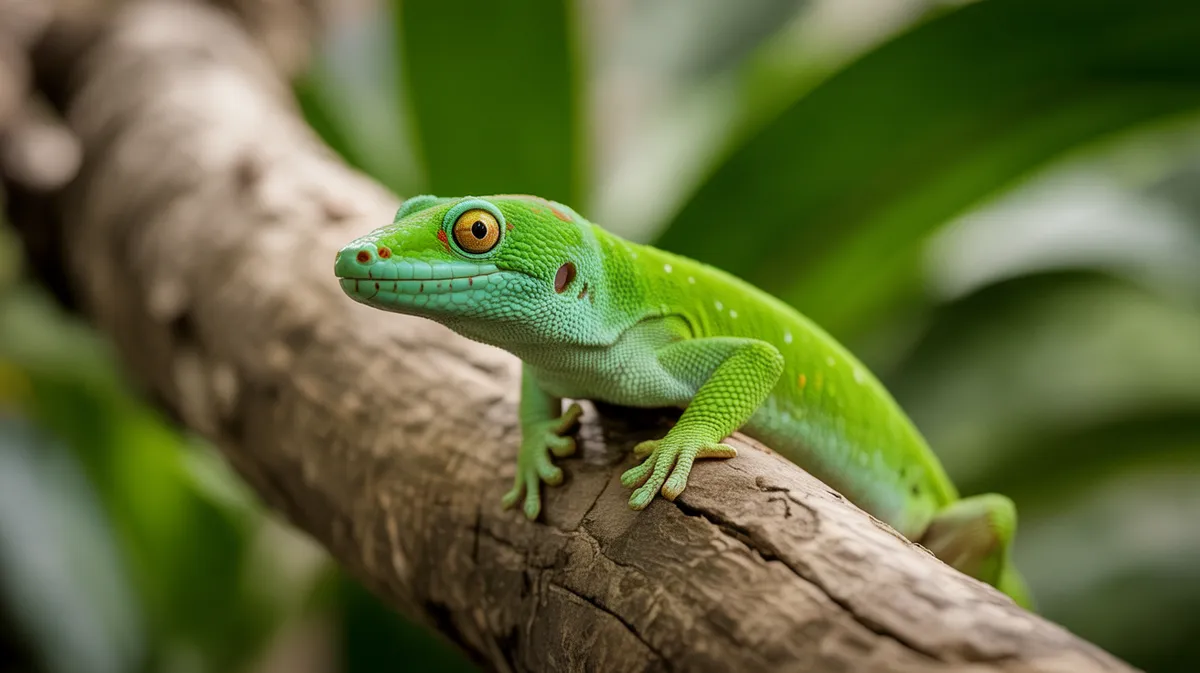
The Madagascar Day Gecko is a strikingly vibrant lizard native to the eastern rainforests of Madagascar. Known for its brilliant green body, red markings, and blue eye rings, this arboreal gecko is active during the day, unlike most gecko species. It uses its specialized toe pads to climb smooth surfaces and primarily inhabits trees and bamboo forests. The Madagascar Day Gecko is an omnivore, feeding on insects, nectar, and fruit, and plays an important role in pollination within its ecosystem.
Fascinating facts
Sticky Toes
Their specialized toe pads allow them to climb vertical glass and smooth surfaces with ease.
Pollinator
They help pollinate tropical flowers by transferring pollen while feeding on nectar.
Colorful Camouflage
Their bright green and red coloration helps them blend into the lush foliage of Madagascar’s rainforests.
Detailed description
The Madagascar Day Gecko (Phelsuma madagascariensis) is one of the largest day geckos, reaching lengths of up to 25–30 cm (10–12 in) including the tail. Its body is a vivid, emerald green, often adorned with irregular red or orange spots and bars along the back, and a distinctive blue or turquoise ring around each eye. The skin is smooth and delicate, lacking eyelids, and the gecko cleans its eyes with its tongue. This species is diurnal, exhibiting peak activity during early morning and late afternoon. Its toes are equipped with specialized adhesive lamellae, allowing it to climb vertical and even inverted surfaces with ease. The tail is prehensile and can be autotomized (shed) as a defense mechanism, later regenerating. Madagascar Day Geckos are arboreal, spending most of their lives in the forest canopy, where they are well-camouflaged among leaves and bamboo. They possess a keen sense of vision, which aids in detecting prey and rivals. Socially, they are generally solitary or form loose pairs, with males displaying territorial aggression, especially during the breeding season. Their bright coloration not only serves as camouflage among foliage but also plays a role in intraspecific communication.
Did you know?
Unlike most geckos, the Madagascar Day Gecko is diurnal—active during the day rather than at night.
Research & sources
Behaviour & social structure
Madagascar Day Geckos are primarily solitary and territorial, with males defending overlapping territories that may include several females. They communicate through visual signals, such as body posturing, head bobbing, and color changes, as well as through pheromones. Feeding behavior is opportunistic; they actively hunt insects like crickets, flies, and moths, using rapid tongue flicks to capture prey. They also consume nectar, pollen, and soft fruits, often visiting flowers and inadvertently acting as pollinators for several endemic plant species. During the day, they bask in sunlight to thermoregulate, retreating to shaded or hidden spots when temperatures rise excessively. At night, they seek shelter in tree crevices or under bark. Aggressive encounters between males can involve chasing, biting, and tail displays, while females may also exhibit aggression when defending nesting sites.
Reproduction & life cycle
Breeding in Phelsuma madagascariensis typically occurs during the wet season (November to April), coinciding with increased food availability. Courtship involves the male approaching the female with head bobbing and gentle nipping. Females lay 2 adhesive eggs per clutch, often gluing them to leaves or within bamboo hollows, and may produce multiple clutches per season. Incubation lasts 45–70 days, depending on ambient temperature, with higher temperatures accelerating development. There is no parental care post-oviposition; hatchlings are independent and must fend for themselves immediately. Sexual maturity is reached at 1–2 years of age. In captivity, reproductive success is influenced by temperature, humidity, and the availability of suitable egg-laying sites.
Adaptations & survival
Key adaptations include expanded toe pads with microscopic setae, enabling adhesion to smooth surfaces via van der Waals forces. The prehensile tail aids in balance and arboreal locomotion. Their diurnal activity is supported by acute color vision, including sensitivity to ultraviolet light, which assists in foraging and mate selection. The ability to autotomize the tail provides an escape mechanism from predators. Their omnivorous diet and capacity to exploit nectar and pollen allow them to thrive in diverse microhabitats and contribute to pollination. Cryptic coloration and the ability to flatten their bodies against surfaces help avoid detection by predators.
Cultural significance
In Malagasy culture, geckos are often regarded with curiosity and are sometimes associated with good luck or omens, though the Madagascar Day Gecko does not have a prominent role in folklore compared to other reptiles. Its striking appearance has made it a popular species in the international pet trade and a flagship species for ecotourism and conservation education in Madagascar. The gecko's image is frequently used in local art and promotional materials for biodiversity conservation.
Recent research
Recent research has focused on the gecko's adhesive toe pad microstructure, providing insights into biomimetic applications for synthetic adhesives. Studies have also examined its role as a pollinator, particularly for endemic plants such as Ravenala madagascariensis (traveler's palm). Genetic analyses have revealed significant intraspecific variation, suggesting the presence of cryptic species within the Phelsuma madagascariensis complex. Ongoing research is investigating the impacts of habitat fragmentation on genetic diversity and dispersal. Captive breeding programs are being refined to support both the pet trade and potential reintroduction efforts.
Sources
A Field Guide to the Amphibians and Reptiles of Madagascar
Frank Glaw & Miguel Vences (2007)
scientificPhelsuma madagascariensis: The IUCN Red List of Threatened Species 2011
IUCN SSC Amphibian Specialist Group
conservationA Field Guide to the Amphibians and Reptiles of Madagascar
Frank Glaw & Miguel Vences (2007)
scientificPhelsuma madagascariensis: The IUCN Red List of Threatened Species 2011
IUCN SSC Amphibian Specialist Group
conservationA Field Guide to the Amphibians and Reptiles of Madagascar
Frank Glaw & Miguel Vences (2007)
scientificVideos
Habitat
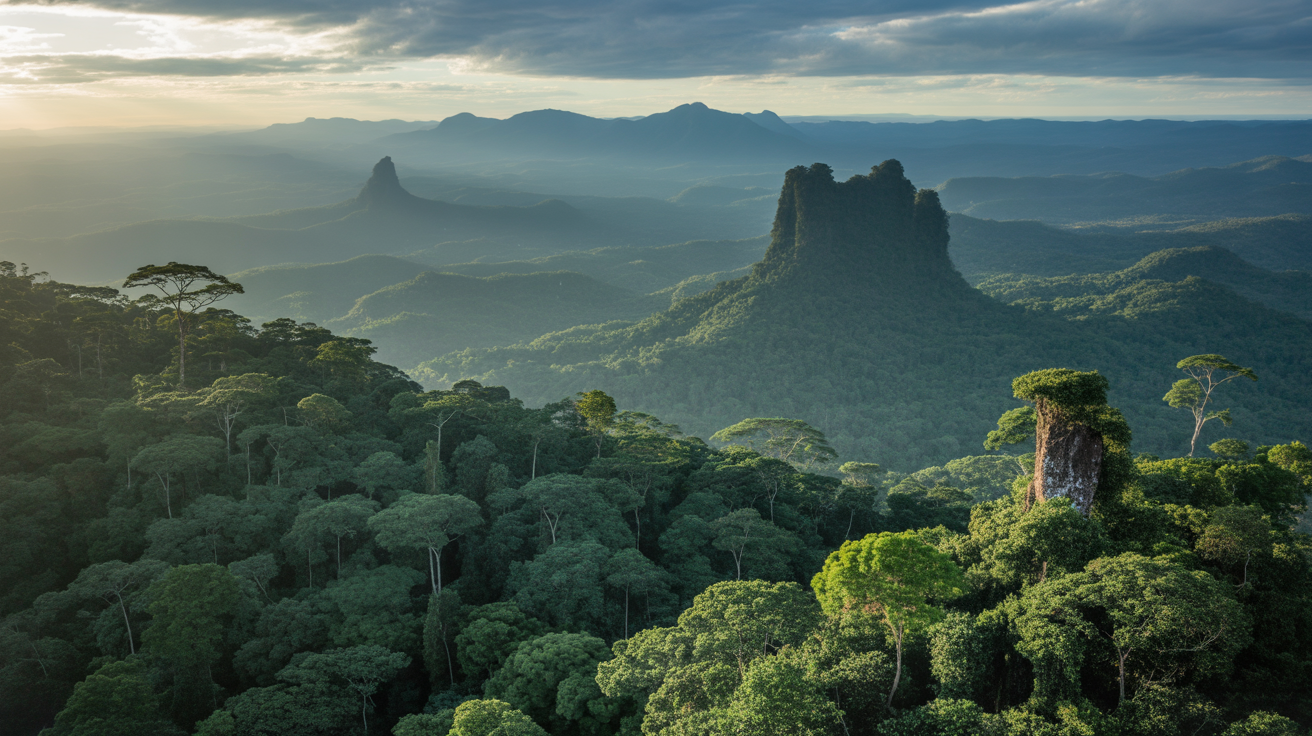
Tropical rainforest

Conservation
The Madagascar Day Gecko is currently classified as Least Concern on the IUCN Red List.
Threats & challenges
Although currently listed as Least Concern by the IUCN, Madagascar Day Geckos face localized threats from habitat loss due to deforestation, agricultural expansion, and logging. Collection for the international pet trade, while regulated, can impact wild populations if not managed sustainably. Introduced predators such as cats and rats pose additional risks. Climate change may alter the distribution of suitable habitats and affect food availability. Population trends remain stable in protected areas, but fragmentation and degradation of rainforest habitats are ongoing conservation challenges.
Taxonomy
Scientific name
Phelsuma madagascariensis
- Kingdom
- Animalia
- Phylum
- Chordata
- Class
- Reptilia
- Order
- Squamata
- Family
- Gekkonidae
- Genus
- Phelsuma
- Species
- madagascariensis
Where to see a madagascar day gecko
2 zoos and aquariums in 2 countries are recorded as keeping this species.


Community notes
Share your observations about the Madagascar Day Gecko.
No community notes yet. Be the first!
Discover more wildlife
More fascinating animals from the encyclopedia.